NEET Exam > NEET Videos > Biology Class 11 > Audio Notes: Body Fluids and Circulation
Audio Notes: Body Fluids and Circulation
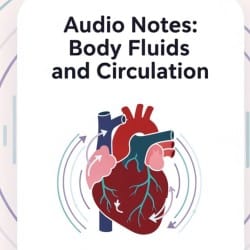
EduRev
FAQs on Audio Notes: Body Fluids and Circulation
| 1. What are the main components of body fluids? |  |
Ans. The main components of body fluids include water, electrolytes, proteins, nutrients, hormones, and waste products. Water makes up a significant portion of body fluids, acting as a solvent and medium for biochemical reactions. Electrolytes such as sodium, potassium, calcium, and chloride are crucial for maintaining osmotic balance and proper cellular function. Proteins, including antibodies and enzymes, play roles in immune response and metabolic processes.
| 2. How does blood circulation function in the human body? | |
Ans. Blood circulation in the human body functions through a closed circulatory system, consisting of the heart, blood vessels, and blood. The heart pumps oxygenated blood from the left ventricle into the aorta, which distributes it throughout the body via arteries. As blood reaches the tissues, oxygen and nutrients are exchanged for carbon dioxide and waste products. Deoxygenated blood returns to the heart through veins, entering the right atrium and then flowing to the lungs for re-oxygenation before being pumped back to the body.
| 3. What is the significance of the lymphatic system in body fluids and circulation? | |
Ans. The lymphatic system is significant in body fluids and circulation as it helps maintain fluid balance, absorbs fats from the digestive system, and plays a vital role in immune function. It collects excess interstitial fluid and returns it to the bloodstream, preventing fluid accumulation in tissues. The lymphatic vessels transport lymph, which contains lymphocytes and other immune cells, aiding in the body's defence against infections and diseases.
| 4. What role do electrolytes play in maintaining body fluid balance? | |
Ans. Electrolytes play a crucial role in maintaining body fluid balance by regulating osmotic pressure and ensuring proper hydration of cells. They help control nerve conduction, muscle contractions, and acid-base balance. Key electrolytes, such as sodium, potassium, and chloride, work together to maintain cellular homeostasis. An imbalance in these electrolytes can lead to conditions such as dehydration, muscle cramps, or arrhythmias.
| 5. What are the different types of blood circulation in humans? | |
Ans. In humans, there are two main types of blood circulation: systemic and pulmonary circulation. Systemic circulation involves the movement of oxygenated blood from the left side of the heart to the rest of the body, delivering oxygen and nutrients to tissues. Pulmonary circulation refers to the flow of deoxygenated blood from the right side of the heart to the lungs, where carbon dioxide is exchanged for oxygen before the blood returns to the left side of the heart for systemic circulation.
About this Audio

4.77/5 Rating

Apr 18, 2026 Last updated
Audio Description: Audio Notes: Body Fluids and Circulation for NEET 2026 is part of Biology Class 11 preparation. The notes and questions for Audio Notes: Body Fluids and Circulation have been prepared according to the NEET exam syllabus. Information about Audio Notes: Body Fluids and Circulation covers all important topics for NEET 2026 Exam. Find important definitions, questions, notes, meanings, examples, exercises and tests below for Audio Notes: Body Fluids and Circulation.
Introduction of Audio Notes: Body Fluids and Circulation in English is available as part of our Biology Class 11 for NEET & Audio Notes: Body Fluids and Circulation in Hindi for Biology Class 11 course. Download more important topics related with notes, lectures and mock test series for NEET Exam by signing up for free.
Description
Audio Notes: Body Fluids & Circulation of Biology Class 11 have been curated by the NEET experts, helping you revise the topic quickly for exam preparation. Listen on EduRev.
Information about Audio Notes: Body Fluids and Circulation
Here you can find the meaning of Audio Notes: Body Fluids and Circulation defined & explained in the simplest way possible. Besides explaining types of Audio Notes: Body Fluids and Circulation theory, EduRev gives you an ample number of questions to practice Audio Notes: Body Fluids and Circulation tests, examples and also practice NEET tests.


Related Searches
Summary, MCQs, Viva Questions, Audio Notes: Body Fluids and Circulation, practice quizzes, study material, Free, Extra Questions, Audio Notes: Body Fluids and Circulation, Previous Year Questions with Solutions, past year papers, Exam, shortcuts and tricks, Semester Notes, pdf , Sample Paper, mock tests for examination, Objective type Questions, Audio Notes: Body Fluids and Circulation, Important questions, ppt, video lectures;