NCERT Textbook & Solutions Hindi for (वीणा: New NCERT) - Class 4 Free PDF Download

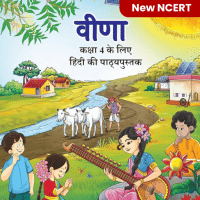
NCERT Solutions for NCERT Textbook & Solutions
NCERT Class 4 Hindi वीणा Best Solutions and Textbook PDF Download Free
The NCERT Class 4 Hindi textbook वीणा introduces young learners to diverse literary forms through carefully selected poems and stories. Students at this level often struggle with understanding figurative language in poetry, such as the metaphorical comparisons found in चिड़िया का गीत where the bird's song represents freedom and joy. The textbook covers essential topics including nature-based narratives, cultural celebrations, and moral stories that build vocabulary while developing reading comprehension skills. Parents seeking comprehensive study materials will find both textbook content and detailed solutions crucial for helping children grasp grammatical concepts like gender identification and sentence construction. The combination of prose and poetry helps fourth-graders develop critical thinking abilities, particularly when analyzing character motivations in stories like नकली हीरे, where students learn to distinguish between appearance and reality. Accessing quality resources ensures that children can practice question-answer formats independently while building confidence in Hindi language proficiency.
NCERT Solutions Class 4 Hindi Chapter 1 चिड़िया का गीत
This opening poem presents a bird's perspective on the natural world, teaching students about rhythm, rhyme schemes, and personification in Hindi poetry. The chapter helps children identify action verbs and descriptive adjectives while appreciating how poets use nature imagery to convey emotions. Students learn to answer comprehension questions about the bird's activities and feelings, developing their ability to extract meaning from lyrical text.
NCERT Solutions Class 4 Hindi Chapter 2 बगीचे का घोंघा
This chapter introduces the slow-moving snail as a character, teaching children about observation and patience through simple narrative prose. Students commonly find it challenging to understand the snail's unique characteristics and lifestyle described in the text. The lesson focuses on vocabulary related to garden creatures and natural habitats, while comprehension questions encourage learners to compare the snail's pace with other animals, developing analytical thinking skills.
NCERT Solutions Class 4 Hindi Chapter 3 नीम
This informative chapter explores the neem tree's medicinal properties and environmental importance, introducing students to non-fiction Hindi writing. Children learn specific vocabulary related to plants, health benefits, and traditional Indian knowledge systems. The chapter commonly requires students to list the various uses of neem, from dental care to pest control, helping them understand how informational texts differ from narrative stories in structure and purpose.
NCERT Solutions Class 4 Hindi Chapter 4 हमारा आहार
This practical chapter discusses nutritious food choices and balanced diet concepts, connecting language learning with health education. Students often need extra support identifying food groups and understanding why certain foods are more nutritious than others. The lesson includes vocabulary related to fruits, vegetables, grains, and dairy products, while comprehension activities ask children to categorize foods and explain their nutritional benefits, making abstract health concepts concrete and relatable.
NCERT Solutions Class 4 Hindi Chapter 5 आसमान गिरा
This imaginative story presents a humorous take on a chicken's misconception about the sky falling, teaching children about perspective and critical thinking. The narrative structure helps students understand cause-and-effect relationships and how fear can spread without verification. Many fourth-graders find the moral lesson challenging—distinguishing between reality and misunderstanding—making this chapter excellent for developing reasoning skills while practicing dialogue writing and character analysis in Hindi.
NCERT Solutions Class 4 Hindi Chapter 6 जयपुर से पत्र
This chapter introduces the epistolary format through a letter describing Jaipur's famous landmarks, teaching students formal letter-writing conventions in Hindi. Children learn specific vocabulary related to monuments, travel, and correspondence while understanding how to structure greetings, body paragraphs, and closing remarks. The chapter specifically mentions Hawa Mahal and Amber Fort, requiring students to extract geographical and cultural information from descriptive text.
NCERT Solutions Class 4 Hindi Chapter 7 नकली हीरे
This engaging story contrasts genuine and fake diamonds, teaching children about honesty and the consequences of deception. Students frequently struggle with understanding the story's turning point where the fake diamonds are discovered, making it crucial for developing plot analysis skills. The chapter includes vocabulary related to jewelry, markets, and moral choices, while comprehension questions focus on character intentions and the difference between appearance and reality.
NCERT Solutions Class 4 Hindi Chapter 8 ओणम के रंग
This cultural chapter explores Kerala's harvest festival Onam, introducing students to regional celebrations and traditions across India. The lesson specifically describes the flower carpet tradition (pookalam) and the elaborate feast (onasadya), helping children appreciate cultural diversity. Students learn vocabulary related to festivals, flowers, and traditional foods while answering questions about customs and their significance, connecting language learning with social studies concepts.
NCERT Solutions Class 4 Hindi Chapter 9 मिठाइयों का सम्मेलन
This creative chapter personifies different Indian sweets gathering for a conference, using humor to teach about India's diverse culinary traditions. Students often find it amusing yet challenging to understand how ladoo, jalebi, and rasgulla are given human characteristics to debate their importance. The chapter builds vocabulary related to sweets, ingredients, and regional specialties while developing comprehension of allegorical writing where food items represent different viewpoints and personalities.
NCERT Solutions Class 4 Hindi Chapter 10 कैमरा
This poem explores photography and memory preservation through rhythmic verses, teaching children about technology's role in capturing moments. The chapter introduces vocabulary related to cameras, photographs, and visual memory while using poetic devices like repetition and imagery. Students commonly struggle with understanding the abstract concept of how photographs preserve time, making this lesson valuable for developing interpretive reading skills and understanding metaphorical language in Hindi poetry.
NCERT Solutions Class 4 Hindi Chapter 11 कविता का कमाल
This meta-poetic chapter discusses the power and magic of poetry itself, introducing students to the concept of literature reflecting on literature. Children learn how poets use words to create emotions and images, developing an appreciation for literary craft. The lesson specifically requires students to identify poetic elements like rhyme and rhythm, helping them understand that poetry follows specific structural patterns while expressing creative ideas and feelings.
NCERT Solutions Class 4 Hindi Chapter 12 शतरंज में मात
This strategic story uses a chess game as a metaphor for planning and foresight, teaching children about patience and thinking ahead. Students frequently need guidance understanding chess terminology and how the game's rules parallel life decisions. The chapter introduces vocabulary related to board games, strategy, and competition while developing comprehension of how narratives can teach abstract concepts through concrete examples like checkmate representing ultimate victory.
NCERT Solutions Class 4 Hindi Chapter 13 हमारा आदित्य
This informative chapter explores the sun's scientific and cultural significance, combining astronomy with traditional Indian reverence for Surya. Students learn specific facts about solar energy, the sun's role in weather patterns, and photosynthesis while building vocabulary related to science and nature. The chapter commonly requires children to explain the sun's importance in multiple contexts—scientific, agricultural, and religious—helping them integrate knowledge across different subject areas through Hindi language instruction.
Best NCERT Class 4 Hindi वीणा Chapter-Wise Solutions for Exam Preparation
Mastering Class 4 Hindi requires systematic chapter-wise practice, particularly because the वीणा textbook alternates between poetry and prose, demanding different comprehension strategies. Students preparing for exams benefit significantly from solutions that explain answer formats, especially for descriptive questions about story themes and poetic meanings. Many children struggle specifically with writing complete answers in proper Hindi sentence structure, often omitting necessary verb forms or gender agreements. Chapter-wise solutions address this by providing model answers that demonstrate correct grammatical construction while explaining vocabulary in context. For instance, when answering questions about मिठाइयों का सम्मेलन, students must understand both the literal description of sweets and the underlying message about unity in diversity. Targeted practice with verified solutions helps children identify patterns in question types—whether they're being asked to recall factual information from chapters like नीम or interpret figurative language from poems like चिड़िया का गीत. This structured approach builds both language proficiency and examination confidence systematically.
Complete Guide to NCERT Class 4 Hindi Textbook and Answer Key Resources
The NCERT Class 4 Hindi वीणा curriculum demands balanced attention to both reading comprehension and creative expression skills. Students commonly make errors in gender agreement when describing characters from stories like बगीचे का घोंघा, where masculine and feminine forms must match correctly. Comprehensive answer keys prove essential because they demonstrate not just what to answer but how to structure responses using appropriate vocabulary and grammatical forms. For example, when explaining the moral lesson in आसमान गिरा, students must construct complex sentences that express cause-effect relationships—a skill that requires modeling through quality solutions. The textbook's integration of cultural content, such as the detailed descriptions in जयपुर से पत्र and ओणम के रंग, necessitates resources that explain regional contexts alongside language concepts. Access to both original textbook content and detailed solution explanations enables students to work independently, identifying their mistakes in comprehension or expression. This self-directed learning approach particularly benefits children who need additional time processing new vocabulary or understanding narrative structures beyond classroom instruction hours.
More Chapters in Hindi for Class 4 (वीणा: New NCERT)
NCERT Textbook & Solutions | Hindi for Class 4 (वीणा: New NCERT)

Top Courses for Class 4

Frequently asked questions About Class 4 Examination
- What are the main chapters in Hindi for Class 4 वीणा NCERT textbook?Ans. वीणा Class 4 Hindi textbook contains 14 chapters covering stories, poems, and language exercises designed to build reading comprehension and writing skills. Each chapter introduces new vocabulary, grammar concepts, and cultural themes through engaging narratives and verses. The NCERT Hindi curriculum for Class 4 emphasizes practical communication alongside literary appreciation, helping students develop confidence in speaking and understanding Hindi naturally.
- How do I solve Hindi Class 4 NCERT textbook questions correctly?Ans. Start by reading each chapter thoroughly, then answer questions in complete sentences using vocabulary from the text. Focus on understanding context before writing responses. Reference the NCERT Hindi solutions for Class 4 to check your work and learn proper formatting. Breaking down complex questions into smaller parts and using examples from the chapter strengthens answers significantly.
- Where can I find detailed NCERT Hindi Class 4 solutions online?Ans. Comprehensive NCERT Hindi Class 4 textbook solutions are available through educational platforms offering chapter-wise breakdowns. EduRev provides complete Hindi for Class 4 solutions with detailed explanations, PPTs, and flashcards for each lesson. These resources help clarify difficult concepts and offer step-by-step answers aligned with the official वीणा curriculum standards.
- What grammar topics are covered in Class 4 Hindi NCERT?Ans. Class 4 Hindi grammar includes noun types, verb forms, pronouns, tenses, singular-plural variations, and sentence construction fundamentals. The NCERT Hindi Class 4 syllabus teaches these concepts through practical examples within chapter stories. Understanding these grammar basics prepares students for more advanced language skills and improves writing accuracy in Hindi language tasks.
- How should I prepare for Hindi Class 4 exams using NCERT textbooks?Ans. Read each वीणा chapter multiple times, focus on vocabulary building, and complete all textbook exercises thoroughly. Practice writing answers to NCERT Hindi Class 4 questions regularly and refer to official solutions for accuracy. Create summary notes of key points, practise pronunciation, and test yourself with MCQ-style questions covering all chapters studied.
- What's the difference between वीणा and other Hindi textbooks for Class 4?Ans. वीणा is the official NCERT Hindi textbook designed specifically for Class 4 students, emphasizing holistic language development through stories and cultural content. Unlike supplementary books, the NCERT Hindi Class 4 textbook follows the standardized curriculum prescribed by CBSE. It integrates reading, writing, listening, and speaking skills systematically across chapters.
- Are there Hindi Class 4 NCERT solutions with explanations in English?Ans. Yes, many NCERT Hindi Class 4 solutions provide both Hindi and English explanations for complex questions. These bilingual solutions help students understand meaning and context more clearly while building Hindi comprehension. Detailed Hindi textbook answers with English translations are particularly useful for grasping idioms, cultural references, and nuanced language concepts embedded in chapters.
- How can I improve my Hindi reading comprehension for Class 4?Ans. Read वीणा chapters aloud to develop pronunciation and listening skills alongside comprehension. Answer comprehension questions after each section, maintain a vocabulary notebook, and discuss chapter themes with peers or teachers. Regular practice with NCERT Hindi Class 4 passages strengthens understanding of context, character motivation, and literary devices used in stories and poems.
- What poem and story types appear in Hindi Class 4 वीणा NCERT?Ans. The NCERT Hindi Class 4 textbook includes folk tales, moral stories, contemporary narratives, and traditional Hindi poems covering themes like friendship, nature, and cultural values. वीणा chapters blend literary genres to maintain student interest while teaching language fundamentals. These diverse story types and verse forms develop appreciation for Hindi literature while reinforcing grammar and vocabulary.
- How do I use Hindi Class 4 NCERT notes and mind maps for better revision?Ans. Mind maps visually organize chapter themes, characters, and key vocabulary, making revision faster and more effective. Creating or using pre-made Hindi Class 4 mind maps helps identify connections between concepts and improves retention. EduRev offers structured mind maps and revision notes specifically designed for NCERT Hindi Class 4, enabling efficient last-minute preparation and stronger exam performance.


 | Explore Courses for Class 4 Exam |  |
