PPTs Maths (Maths Mela) - New NCERT Class 5 Download PDF Powerpoint Presentation

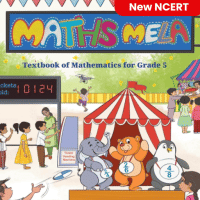
Class 5 Notes for PPTs
Best Class 5 Maths PPTs Free PDF Download
PowerPoint presentations for Class 5 Mathematics transform abstract concepts into visual learning experiences that young students can easily grasp. These PPTs cover essential topics like numeration, fractions, basic operations, and measurement, using colorful graphics and interactive elements that hold children's attention. Many students struggle with understanding place value in large numbers-the PPTs break down numeration systematically, showing how digits change positions and values. The quiz-based presentations on addition, subtraction, multiplication, and division offer immediate feedback, helping students identify calculation errors instantly. For CBSE Class 5 students, these presentation slides align perfectly with the NCERT Maths Mela curriculum, providing structured content that supports classroom learning. Teachers often recommend these resources because they present geometric concepts like perimeter and area through visual shapes rather than just formulas, making spatial understanding more intuitive for 10-11 year olds.
PPT for Class 5 Maths Chapter: Numeration
This chapter introduces students to the number system, focusing on reading, writing, and understanding large numbers up to lakhs and crores. It covers place value concepts, expanded form, and standard form of numbers. Students learn to compare and order numbers, which builds the foundation for all mathematical operations they will perform throughout the year.
PPT for Class 5 Maths Chapter: Fractions
Fractions represent one of the most challenging topics for Class 5 students, as it introduces the concept of parts of a whole. This chapter covers identifying fractions, comparing like and unlike fractions, converting improper fractions to mixed numbers, and performing basic addition and subtraction of fractions. The visual representation in PPTs helps students understand how fractions relate to real-world situations like sharing food or measuring ingredients.
PPT for Class 5 Maths Chapter: Addition and Subtraction
This chapter reinforces and extends addition and subtraction skills with larger numbers, including those with up to 5-6 digits. Students learn to add and subtract numbers using column method, understand carrying over and borrowing, and solve word problems requiring these operations. The separate presentations for addition and subtraction allow focused practice, while the quiz component tests students' speed and accuracy-a common area where children make careless mistakes under time pressure.
- PPT: Addition and Subtraction (Addition)
- PPT: Addition and Subtraction (Subtraction)
- PPT: Addition and Subtraction (Quiz)
PPT for Class 5 Maths Chapter: Multiplication
Multiplication in Class 5 extends to multi-digit numbers and introduces array models that help visualize the multiplication process. Students learn multiplication tables beyond 10, multiply 3-digit by 2-digit numbers, and understand properties like commutative and associative laws. The array multiplication presentation is particularly helpful because many students find it difficult to understand why multiplication works-arrays show the rectangular arrangement of objects being counted. The quiz format tests table memorization and calculation accuracy simultaneously.
PPT for Class 5 Maths Chapter: Division
Division introduces students to the concept of sharing equally and grouping, progressing to long division with remainders. This chapter covers dividing 3-digit and 4-digit numbers by 1-digit and 2-digit divisors, understanding quotient and remainder, and solving division word problems. Many students struggle with placing digits correctly in the quotient during long division, which these PPTs address through step-by-step visual examples.
PPT for Class 5 Maths Chapter: Perimeter and Area
This measurement chapter introduces students to calculating perimeter and area of basic shapes like rectangles, squares, and triangles. Students learn the difference between perimeter (distance around) and area (surface covered), apply formulas, and solve practical problems involving fencing, flooring, and tiling. The visual nature of PPTs is especially beneficial here, as students can see shapes being measured rather than just working with abstract formulas.
PPT for Class 5 Maths Chapter: Time and Calendar
This chapter covers reading time in 12-hour and 24-hour formats, calculating elapsed time, understanding AM and PM, and working with calendars. Students learn to calculate time intervals across hours and days, understand leap years, and solve problems involving schedules and timetables-skills directly applicable to their daily lives and an area where many make calculation errors when time spans across midnight or month boundaries.
PPT for Class 5 Maths Chapter: Mapping Your Way
This spatial reasoning chapter introduces basic map reading, understanding directions (North, South, East, West), scale, and grid systems. Students learn to locate positions using grid references, interpret simple maps, and understand distance representation on maps. This topic develops spatial intelligence and practical navigation skills that extend beyond mathematics into geography and real-world orientation.
CBSE Class 5 Maths PowerPoint Presentations for Exam Preparation
Using PPTs for CBSE Class 5 Mathematics exam preparation offers several advantages over traditional textbook study. The presentations break complex topics into bite-sized slides, making revision sessions more manageable for young learners with shorter attention spans. Quiz-based PPTs provide immediate self-assessment opportunities-students can identify which multiplication tables need more practice or which division steps they consistently miss. The visual format helps students retain information better; for instance, seeing fraction circles divided into parts creates stronger mental images than reading fraction notation alone. These presentations complement NCERT Maths Mela textbook exercises, offering varied practice formats that prevent study monotony and build mathematical confidence through interactive learning.
Interactive Mathematics Learning Resources for Primary Students
PowerPoint-based mathematics resources address the specific learning needs of Class 5 students who are transitioning from concrete to more abstract mathematical thinking. The array multiplication model, for example, bridges the gap between counting individual objects and understanding multiplication as repeated addition. Time calculation presentations often include clock animations that show hour and minute hands moving, helping students visualize time intervals rather than just memorizing calculation rules. For topics like perimeter and area, interactive slides allow students to see shapes being measured step-by-step, reinforcing the connection between geometric figures and numerical formulas. These digital resources on EduRev make mathematics accessible and engaging for diverse learning styles in primary education.
More Chapters in Mathematics (Maths Mela) Class 5 - New NCERT
PPTs | Mathematics (Maths Mela) Class 5 - New NCERT

Top Courses for Class 5



 | Explore Courses for Class 5 Exam |  |
