Chapter Notes Science Curiosity - New NCERT Class 8 Free PDF Download

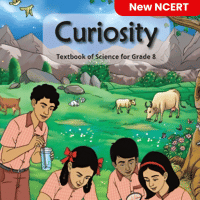
CBSE Notes Class 8 Chapter PDF Download
Class 8 Chapter Notes PPTs PDF Download
Class 8 Science Chapter Notes: Download Free PDF
The New NCERT Science Curiosity curriculum for Class 8 introduces students to foundational scientific concepts through fourteen comprehensive chapters. These chapter notes cover diverse topics from microbiology to astronomy, helping students grasp complex ideas such as the particulate nature of matter, magnetic effects of electricity, and the unique characteristics that make Earth habitable. Many students struggle with distinguishing between elements, compounds, and mixtures in Chapter 8, often confusing homogeneous mixtures with compounds because both appear uniform. Similarly, understanding atmospheric pressure gradients in Chapter 6 proves challenging, as students find it difficult to visualize how pressure differences drive wind formation and storm development. These chapter notes on EduRev break down each topic systematically, providing clear explanations with diagrams and real-world examples that connect classroom learning to everyday phenomena like cyclone formation or the working of electromagnets in electric bells.
Chapter Notes for Class 8 Science Chapter 1: Exploring the Investigative World of Science
This introductory chapter establishes the foundation of scientific inquiry by teaching students the systematic approach scientists use to investigate natural phenomena. Students learn about formulating hypotheses, designing controlled experiments, and distinguishing between independent and dependent variables—concepts many confuse initially. The chapter emphasizes observation skills, measurement techniques, and the importance of recording data accurately. Real-world applications include understanding how pharmaceutical companies test new medicines through controlled trials and how environmental scientists study pollution levels.
Chapter Notes for Class 8 Science Chapter 2: The Invisible Living World: Beyond Our Naked Eye
This chapter unveils the microscopic realm of bacteria, viruses, fungi, and protozoa that remain invisible without magnification. Students discover how microorganisms can be both beneficial (like yeast in bread-making and lactobacillus in curd formation) and harmful (causing diseases like malaria and tuberculosis). A common misconception addressed here is that all bacteria are disease-causing, when in fact most are harmless or beneficial. The chapter explains the structure of prokaryotic cells and introduces students to the concept of antibiotics and their role in fighting bacterial infections, while clarifying why antibiotics don't work against viral diseases like the common cold.
Chapter Notes for Class 8 Science Chapter 3: Health: The Ultimate Treasure
This chapter redefines health beyond mere absence of disease to include physical, mental, and social well-being. Students learn about communicable diseases spread through air, water, and vectors like mosquitoes, versus non-communicable diseases such as diabetes and heart conditions linked to lifestyle factors. The chapter details vaccination mechanisms—how weakened pathogens trigger antibody production without causing illness—a process students often find counterintuitive. Practical topics include understanding balanced nutrition, the dangers of substance abuse, and preventive health measures like proper sanitation and personal hygiene that significantly reduce disease transmission in communities.
Chapter Notes for Class 8 Science Chapter 4: Electricity: Magnetic and Heating Effects
This chapter explores two critical effects of electric current that power numerous everyday devices. Students learn how current-carrying conductors generate magnetic fields—the principle behind electromagnets used in electric bells, magnetic cranes, and MRI machines. The heating effect explains why electric irons, geysers, and toasters work, with the amount of heat produced depending on resistance and current squared (often students mistakenly think it's directly proportional to current alone). The chapter covers Oersted's experiment demonstrating the magnetic effect and introduces applications like electric fuses that protect circuits by melting when excessive current flows, preventing house fires.
Chapter Notes for Class 8 Science Chapter 5: Exploring Forces
Forces shape every physical interaction in our universe, from pushing a door to planets orbiting the sun. This chapter distinguishes between contact forces (friction, tension, normal force) and non-contact forces (gravitational, magnetic, electrostatic), helping students understand why astronauts float in space despite gravity's presence. A critical concept many students struggle with is Newton's Third Law—they often think the action and reaction forces cancel each other, not realizing these forces act on different objects. Practical applications include understanding how friction enables walking yet causes wear in machinery, and why lubricants reduce energy loss in engines.
Chapter Notes for Class 8 Science Chapter 6: Pressure, Winds, Storms, and Cyclones
This chapter connects atmospheric pressure differences to dramatic weather phenomena. Students learn why warm air rises (creating low pressure) while cool air sinks (creating high pressure), driving wind formation from high to low pressure zones. The Coriolis effect, which causes cyclonic rotation, proves particularly challenging as students must visualize how Earth's rotation deflects moving air masses. The chapter explains cyclone formation over warm ocean waters, their destructive potential, and safety measures during such disasters. Real-world connections include understanding sea breeze and land breeze patterns that coastal residents experience daily, and why mountainous regions experience lower atmospheric pressure.
Chapter Notes for Class 8 Science Chapter 7: Particulate Nature of Matter
This foundational chapter revolutionizes students' understanding by revealing that all matter consists of tiny, constantly moving particles. Students explore how particle spacing explains why solids maintain fixed shapes while gases expand to fill containers, and why liquids take container shapes but maintain fixed volumes. The kinetic theory explains diffusion—why perfume spreads across a room or ink disperses in water without stirring. A common error students make is thinking particles in solids are stationary; they actually vibrate in fixed positions. Temperature's relationship with particle kinetic energy explains expansion and contraction, crucial for understanding railway track gaps and mercury thermometer operation.
Chapter Notes for Class 8 Science Chapter 8: Nature of Matter: Elements, Compounds, and Mixtures
This chapter classifies matter into pure substances (elements and compounds) and mixtures based on composition and properties. Students learn that elements contain only one type of atom (like gold or oxygen), compounds form when elements chemically combine in fixed ratios (water is always H₂O), while mixtures contain substances physically combined in variable proportions. A persistent confusion arises distinguishing compounds from mixtures: students often mistakenly classify saltwater as a compound rather than a mixture because salt fully dissolves. The chapter introduces separation techniques like filtration, evaporation, and distillation, explaining how crude oil refineries use fractional distillation to separate petrol, diesel, and kerosene based on boiling points.
Chapter Notes for Class 8 Science Chapter 9: The Amazing World of Solutes, Solvents, and Solutions
Solutions represent homogeneous mixtures where solutes dissolve completely in solvents at the particle level. This chapter explores factors affecting solubility: temperature increases solid solubility (more sugar dissolves in hot tea than cold water) but decreases gas solubility (why soda fizzes more when warm). Students learn to calculate concentration using mass/volume percentages and understand saturation—the point where no more solute dissolves at given conditions. A practical misconception is that stirring increases solubility; it actually only speeds dissolution rate. Applications include understanding how intravenous saline solutions must match blood concentration to prevent cell damage, and why kidney patients require dialysis to remove excess solutes.
Chapter Notes for Class 8 Science Chapter 10: Light: Mirrors and Lenses
This chapter explores how mirrors and lenses manipulate light through reflection and refraction to form images. Students learn the difference between real images (formed by actual light convergence, projectable on screens) and virtual images (formed by apparent light divergence, visible only in mirrors). Concave mirrors converge light and can produce both magnified and diminished images depending on object distance—a concept tested in applications like solar cookers and dentist mirrors. Convex lenses correct myopia (nearsightedness) while concave lenses address hypermetropia (farsightedness), with students often reversing these corrections. The chapter includes ray diagram construction and the mirror/lens formula, essential for calculating image positions mathematically.
Chapter Notes for Class 8 Science Chapter 11: Keeping Time with the Skies
Ancient civilizations tracked time using celestial movements long before mechanical clocks existed. This chapter explains Earth's rotation creating day-night cycles every 24 hours, while its revolution around the Sun produces yearly seasons. Students discover why seasons occur—Earth's 23.5° axial tilt means the Northern Hemisphere receives direct sunlight during summer (June) while the Southern Hemisphere experiences winter. Many students incorrectly attribute seasons to Earth's varying distance from the Sun rather than axial tilt. The chapter covers lunar phases resulting from the Moon's orbit around Earth, eclipse mechanics (why solar eclipses only occur during new moons), and how sundials, water clocks, and astronomical observations enabled early timekeeping before modern chronometers.
Chapter Notes for Class 8 Science Chapter 12: How Nature Works in Harmony
Ecosystems function through intricate relationships between living organisms and their physical environment. This chapter explores food chains (linear energy pathways) versus food webs (interconnected feeding relationships that more accurately represent nature's complexity), explaining why removing one species can cascade through entire ecosystems. Students learn about trophic levels and the 10% energy transfer rule—only one-tenth of energy passes between levels, limiting food chain length to typically four or five levels. The chapter covers biogeochemical cycles, particularly the carbon and nitrogen cycles essential for life. Decomposers like fungi and bacteria play crucial roles that students often undervalue, breaking down dead matter and recycling nutrients that producers need for photosynthesis.
Chapter Notes for Class 8 Science Chapter 13: Our Home: Earth, a Unique Life-Sustaining Planet
Earth possesses exceptional characteristics that make it the only known planet supporting life. This chapter examines Earth's optimal distance from the Sun (maintaining temperatures for liquid water), protective atmosphere (filtering harmful UV radiation while trapping heat through greenhouse gases), and magnetic field (deflecting solar wind). Students explore Earth's layered structure: crust (where we live), mantle (semi-molten rock driving plate tectonics), and core (generating the protective magnetic field). The water cycle's continuous circulation through evaporation, condensation, and precipitation sustains all terrestrial life. A key environmental concern addressed is the enhanced greenhouse effect—how excessive carbon dioxide from fossil fuel combustion intensifies natural warming, potentially destabilizing climate patterns that human civilization depends upon.
Comprehensive Chapter Notes for Class 8 Science New NCERT Curriculum
The Science Curiosity textbook for Class 8 represents NCERT's updated approach to science education, integrating physics, chemistry, and biology concepts through thematic chapters that emphasize inquiry-based learning. These comprehensive notes cover all thirteen core chapters, providing structured summaries that align with the latest curriculum revisions. Students particularly benefit from notes that clarify interconnected concepts across chapters—for instance, understanding particle theory from Chapter 7 strengthens comprehension of solution formation in Chapter 9, while knowledge of forces from Chapter 5 enhances understanding of pressure concepts in Chapter 6. The notes include topic-wise explanations, important definitions highlighted for quick revision, and connections to real-world applications that make abstract concepts tangible and memorable for exam preparation.
Master Science Concepts with Structured Class 8 Notes
Effective science learning in Class 8 requires more than memorization—it demands conceptual understanding that connects theoretical knowledge with observable phenomena. These structured chapter notes address common conceptual barriers students encounter, such as distinguishing between heat and temperature, understanding why antibiotics fail against viruses, or visualizing how electromagnets differ from permanent magnets. Each chapter's notes break complex topics into digestible sections with clear headings, making revision efficient during exam preparation. For instance, when studying ecosystems, notes distinguish between similar terms like food chain and food web, or habitat and niche, preventing the terminology confusion that costs marks in examinations. The systematic organization helps students quickly locate specific topics, making these notes invaluable for homework completion and test preparation throughout the academic year.
Chapter Notes - Class 8
More Chapters in Science Curiosity Class 8 - New NCERT
Chapter Notes | Science Curiosity Class 8 - New NCERT

Top Courses for Class 8

Frequently asked questions About Class 8 Examination
- What are the main topics covered in Class 8 science NCERT?Ans. Class 8 science NCERT covers eight major chapters including matter, combustion, microorganisms, cells, reproduction, light and sound, electricity, and natural resources. These foundational topics build essential scientific literacy and conceptual understanding for higher classes. The curriculum emphasises observable phenomena and real-world applications through experiments and practical demonstrations that help learners grasp abstract concepts effectively.
- How can I make effective chapter notes for Class 8 science exams?Ans. Create chapter notes by reading sections carefully, highlighting key definitions and processes, and writing summaries in your own words. Organise notes with headings, bullet points, and diagrams to improve retention and quick revision. Include examples and applications relevant to daily life, then review them regularly before exams to reinforce memory and build confidence during assessment preparation.
- What is the best way to understand photosynthesis and respiration in Class 8?Ans. Photosynthesis converts sunlight into chemical energy, while respiration releases this energy for cellular activities. Study the equations, reactants, and products separately, then compare them as complementary processes. Draw labelled diagrams of chloroplasts and mitochondria, practise writing word equations, and relate these processes to plant and animal survival in ecosystems to deepen comprehension.
- How do I prepare chapter notes for reproduction topics in Class 8 science?Ans. Begin with fundamental definitions of asexual and sexual reproduction, then distinguish between processes in plants and animals using diagrams. Note binary fission, budding, and fragmentation in simpler organisms before covering flower anatomy and fertilisation. Use flowcharts showing developmental stages, include terminology like gametes and zygotes, and cross-reference with visual worksheets from EduRev for comprehensive preparation.
- Why is understanding the structure of cells important for Class 8 students?Ans. Cell structure knowledge forms the foundation for understanding all biological processes, tissues, and organs studied later. Learning organelle functions-nucleus controls activity, mitochondria provides energy, chloroplasts produce food-explains how organisms function at microscopic levels. This conceptual base is essential for advanced biology, making cell study non-negotiable for building scientific reasoning and achieving strong exam performance.
- What are common misconceptions students have about light and sound in Class 8?Ans. Students often confuse light as needing a medium to travel-light travels through vacuum while sound requires one. Another misconception: all sounds travel at identical speeds regardless of medium, when actually sound travels fastest through solids. Clarify these distinctions with practical demonstrations, use velocity equations, and emphasise the wave nature of both phenomena to prevent confusion during assessments.
- How should I approach learning about electricity and circuits for Class 8 exams?Ans. Start with fundamental definitions: current is charge flow, voltage drives it, resistance opposes it. Learn Ohm's Law and series versus parallel circuit arrangements through circuit diagrams and practical activity records. Practise drawing circuits with switches, bulbs, and resistors, then solve numerical problems applying formulas. Memorising circuit symbols and understanding circuit behaviour strengthens problem-solving abilities significantly.
- What study methods help memorise chemical reactions and equations for Class 8 science?Ans. Write chemical equations repeatedly, breaking them into balanced components while understanding reactant and product relationships. Create flashcards linking chemical names to formulas and reaction types-combustion, decomposition, displacement. Group similar reactions together by recognising patterns in element behaviour. Regular practice with burning, rusting, and neutralisation examples reinforces memory while building conceptual understanding simultaneously.
- How can mind maps improve my understanding of Class 8 science chapters?Ans. Mind maps organise information hierarchically with central concepts branching into subtopics, relationships, and examples visually. They highlight connections between topics-photosynthesis links to respiration, cells to tissues to organs-improving holistic understanding. Creating custom mind maps during revision aids memory retention, and studying pre-made mind maps on EduRev saves time while providing structured, comprehensive overviews of each chapter.
- What practise questions should I solve to prepare for Class 8 science evaluations?Ans. Solve objective questions testing factual recall, short-answer questions requiring explanations of processes, and application-based problems linking concepts to real situations. Practise diagram labelling, equation balancing, and numerical calculations regularly. Work through previous worksheets and MCQ tests covering all chapters systematically, analyse errors, and revisit weak topics before final assessments to build examination readiness confidently.


$34/month

 | Explore Courses for Class 8 Exam |  |
