UPSC Exam  >  UPSC Test  >   Prelims Paper 2 CSAT - Quant, Verbal & Decision Making  >  Analytical Reasoning MCQ Quiz - 1 - UPSC MCQ

Analytical Reasoning MCQ Quiz - 1 UPSC Prelims Paper 2 CSAT MCQs & solutions


MCQ Practice Test & Solutions: Analytical Reasoning MCQ Quiz - 1 (10 Questions)

You can prepare effectively for UPSC UPSC Prelims Paper 2 CSAT - Quant, Verbal & Decision Making with this dedicated MCQ Practice Test (available with solutions) on the important topic of "Analytical Reasoning MCQ Quiz - 1". These 10 questions have been designed by the experts with the latest curriculum of UPSC 2026, to help you master the concept.

Test Highlights:

  • - Format: Multiple Choice Questions (MCQ)
  • - Duration: 10 minutes
  • - Number of Questions: 10

Sign up on EduRev for free to attempt this test and track your preparation progress.

Analytical Reasoning MCQ Quiz - 1 - Question 1

Find the number of triangles in the given figure.
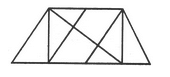
 

Detailed Solution: Question 1
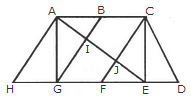
The figure may be labelled as shown.

The simplest triangles are AHG, AIG, AIB, JFE, CJE and CED i.e. 6 in number.

The triangles composed of two components each are ABG, CFE, ACJ and EGI i.e. 4 in number.

The triangles composed of three components each are ACE, AGE and CFD i.e. 3 in number.

There is only one triangle i.e. AHE composed of four components.

Therefore, There are 6 + 4 + 3 + 1 = 14 triangles in the given figure.

Analytical Reasoning MCQ Quiz - 1 - Question 2

Find the number of triangles in the given figure.


Detailed Solution: Question 2
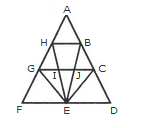
The figure may be labelled as shown.

The simplest triangles are AHB, GHI, BJC, GFE, GIE, IJE, CEJ and CDE i.e. 8 in number.

The triangles composed of two components each are HEG, BEC, HBE, JGE and ICE i.e. 5 in number.

The triangles composed of three components each are FHE, GCE and BED i.e. 3 in number.

There is only one triangle i.e. AGC composed of four components.

There is only one triangle i.e. AFD composed of nine components.

Thus, there are 8 + 5 + 3 + 1 + 1 = 18 triangles in the given figure.  

Analytical Reasoning MCQ Quiz - 1 - Question 3

Find the number of triangles in the given figure.


Detailed Solution: Question 3
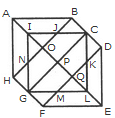
The figure may be labelled as shown. 

The simplest triangles are IJO, BCJ, CDK, KQL, MLQ, GFM, GHN and NIO i.e. 8 in number.

The triangles composed of two components each are ABO, AHO, NIJ, IGP, ICP, DEQ, FEQ, KLM, LCP and LGP i.e.10 in number.

The triangles composed of four components each are HAB, DEF, LGI, GIC, ICL and GLC i.e. 6 in number.

Total number of triangles in the figure = 8 + 10 + 6 = 24.

Analytical Reasoning MCQ Quiz - 1 - Question 4

Find the number of triangles in the given figure. 
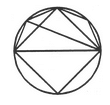
  

Detailed Solution: Question 4
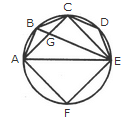
The figure may be labelled as shown.

The simplest triangles are ABG, BCG, CGE, CDE, AGE and AEF i.e. 6 in number.

The triangles composed of two components each are ABE, ABC, BCE and ACE i.e. 4 in number.

There are 6 + 4 = 10 triangles in the figure.

Analytical Reasoning MCQ Quiz - 1 - Question 5

Find the number of triangles in the given figure. 


Detailed Solution: Question 5
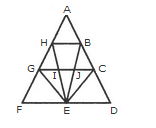
The figure may be labelled as shown.

The simplest triangles are BFG, CGH, EFM, FMG, GMN, GHN, HNI, LMK, MNK and KNJ i.e. 10 in number.

The triangles composed of three components each are FAK and HKD i.e. 2 in number.

The triangles composed of four components each are BEN, CMI, GLJ and FHK i.e. 4 in number.

The triangles composed of eight components each are BAJ and OLD i.e. 2 in number.

Thus, there are 10 + 2 + 4 + 2 = 18 triangles in the given figure.

Analytical Reasoning MCQ Quiz - 1 - Question 6

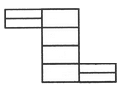
Count the number of rectangles in the given figure.
  

Detailed Solution: Question 6
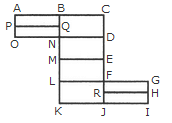
The figure may be labelled as shown.


The simplest rectangles are ABQP, PQNO, BCDN, NDEM, MEFL, LFJK, FGHR and RHIJ i.e. 8 in number.

The rectangles composed of two components each are ABNO, BCEM, NDFL, MEJK and FGIJ i.e. 5 in number.

The rectangles composed of three components each are ACDO, BCFL, NDJK and LGIK i.e. 4 in number.

There is only one rectangle i.e. BCJK composed of four components.

Total number of rectangles in the figure = 8 + 5 + 4 + 1 = 18.

Analytical Reasoning MCQ Quiz - 1 - Question 7

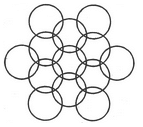
How many circles are there in the adjoining figure.
Detailed Solution: Question 7
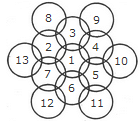
The figure may be labelled as shown.

There are 13 circles in the given figure. This is clear from the adjoining figure in which the centres of all the circles in the given figure have been numbered from 1 to 13.

Analytical Reasoning MCQ Quiz - 1 - Question 8

What is the minimum number of straight lines that is needed to construct the figure? 


Detailed Solution: Question 8
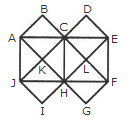
The figure may be labelled as shown.

The horizontal lines are AE and JF i.e. 2 in number. The vertical lines are AJ, CH and EF i.e. 3 in number.

The slanting lines are AG, BF, JD, IE, AB, DE, JI and FG i.e. 8 in number.

Total number of straight lines needed to construct the figure = 2 + 3 + 8 = 13.

Analytical Reasoning MCQ Quiz - 1 - Question 9

Determine the number of rectangles and hexagons in the given figure.
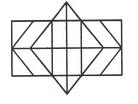
 

Detailed Solution: Question 9
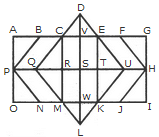
The figure may be labelled as shown.

Rectangles:

The simplest rectangles are CVSR, VETS, RSWM and STKW i.e. 4 in number.

The rectangles composed of two components each are CETR, VEKW, RTKM and CVWM i.e. 4 in number.

The rectangles composed of three components each are ACRP, PRMO, EGHT and THIK i.e. 4 in number.

The rectangles composed of four components each are CEKM, AVSP,PSWO, VGHS and SHIW i.e. 5 in number.

The rectangles composed of five components each are AETP, PTKO, CGHR and RHIM i.e. 4 in number.

The rectangles composed of six components each are ACMO and EGIK i.e. 2 in number.

The rectangles composed of eight components each are AGHP, PHIO, AVWO and VGIW i.e. 4 in number.

The rectangles composed of ten components each are AEKO and CGIM i.e. 2 in number.

AGIO is the only rectangle having sixteen components.

Total number of rectangles in the given figure

= 4 + 4 + 4 + 5 + 4 + 2 + 4 + 2 + 1 = 30.

Hexagons:

The hexagons in the given figure are CDEKLM, CEUKMQ, CFHJMQ, BEUKNP and BFHJNP.

So, there are 5 hexagons in the given figure.

Analytical Reasoning MCQ Quiz - 1 - Question 10

Count the number of triangles and squares in the given figure. 


Detailed Solution: Question 10
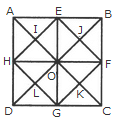
The figure may be labelled as shown.

Triangles :

The simplest triangles are AEI, EOI, OHI, HAI, EBJ, BFJ, FOJ, OEJ, HOL, OGL, GDL, DHL, OFK, FCK, CGK and GOK i.e. 16 in number.

The triangles composed of two components each are HAE, AEO, EOH, OHA, OEB, EBF, BFO, FOE, DHO, HOG, OGD, GDH, GOF, OFC, FCG and CGO i.e. 16 in number.

The triangles composed of four components each are HEF, EFG, FGH, GHE, ABO, BGO, CDO and DAO i.e. 8 in number.

The triangles composed of eight components each are DAB, ABC, BCD and CDA i.e. 4 in number.

Total number of triangles in the figure = 16 + 16 + 8 + 4 = 44.

Squares :

The squares composed of two components are HIOL, IEJO, JFKO and KGLO i.e. 4 in number.

The squares composed of four components are AEOH, EBFO, OFGC and HOGD i.e.4 in number.

There is only one square EFGH which is composed of eight components.

There is only one square ABCD which is composed of sixteen components.

Total number of squares in the figure = 4 + 4 + 1 + 1 = 10.

69 videos|50 docs|151 tests
Information about Analytical Reasoning MCQ Quiz - 1 Page
In this test you can find the Exam questions for Analytical Reasoning MCQ Quiz - 1 solved & explained in the simplest way possible. Besides giving Questions and answers for Analytical Reasoning MCQ Quiz - 1, EduRev gives you an ample number of Online tests for practice
Download as PDF