
Physics CUET UG Assertion & Reason Test: Electrostatic Potential Capacitance
MCQ Practice Test & Solutions: Assertion & Reason Test: Electrostatic Potential & Capacitance - 1 (15 Questions)
You can prepare effectively for JEE Physics CUET UG Mock Test Series 2026 with this dedicated MCQ Practice Test (available with solutions) on the important topic of "Assertion & Reason Test: Electrostatic Potential & Capacitance - 1". These 15 questions have been designed by the experts with the latest curriculum of JEE 2026, to help you master the concept.
Test Highlights:
- - Format: Multiple Choice Questions (MCQ)
- - Duration: 30 minutes
- - Number of Questions: 15
Sign up on EduRev for free to attempt this test and track your preparation progress.

Directions: In the following questions, A statement of Assertion (A) is followed by a statement of Reason (R). Mark the correct choice as.
Assertion (A): Electric field is always normal to equipotential surfaces and along the direction of decreasing order of potential.
Reason (R): Negative gradient of electric potential is electric field.
Detailed Solution: Question 1

Directions: In the following questions, A statement of Assertion (A) is followed by a statement of Reason (R). Mark the correct choice as.
Assertion (A): Work done in moving a charge between any two points in a uniform electric field is independent of the path followed by the charge between these two points.
Reason (R): Electrostatic forces are nonconservative.
Detailed Solution: Question 2

Directions: In the following questions, A statement of Assertion (A) is followed by a statement of Reason (R). Mark the correct choice as.
Assertion (A): When the distance between the parallel plates of a parallel plate capacitor is halved and the dielectric constant of the dielectric used is made three times, then the capacitance becomes three times.
Reason (R): Capacitance does not depend on the nature of material.
Detailed Solution: Question 3


Directions: In the following questions, A statement of Assertion (A) is followed by a statement of Reason (R). Mark the correct choice as.
Assertion (A): Capacity of a conductor is independent of the amount of charge on it.
Reason (R): Capacitance depends on the dielectric constant of the surrounding medium, shape and size of the conductor.
Detailed Solution: Question 4
Directions: These questions consist of two statements, each printed as Assertion and Reason. While answering these questions, you are required to choose any one of the following four responses.
Assertion : If the distance between parallel plates of a capacitor is halved and dielectric constant is three times, then the capacitance becomes 6 times.
Reason : Capacity of the capacitor does not depend upon the nature of the material.
Detailed Solution: Question 5
Directions: These questions consist of two statements, each printed as Assertion and Reason. While answering these questions, you are required to choose any one of the following four responses.
Assertion : The total charge stored in a capacitor is zero.
Reason : The field just outside the capacitor is σ/ε0. (σ is the charge density).
Detailed Solution: Question 6
Directions: These questions consist of two statements, each printed as Assertion and Reason. While answering these questions, you are required to choose any one of the following four responses.
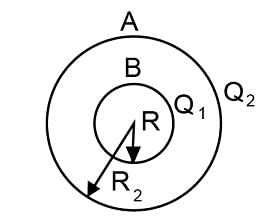
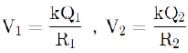
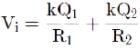
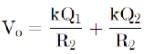
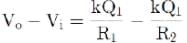
Assertion : Two concentric charged shells are given. The potential difference between the shells depends on the charge of the inner shell.
Reason : Potential due to charge of outer shell remains same at every point inside the sphere.
Detailed Solution: Question 7
Directions: These questions consist of two statements, each printed as Assertion and Reason. While answering these questions, you are required to choose any one of the following four responses.
Assertion: The potential difference between any two points in an electric field depends only on initial and final position.
Reason: Electric field is a conservative field so the work done per unit positive charge does not depend on the path followed.
Detailed Solution: Question 8
Directions: These questions consist of two statements, each printed as Assertion and Reason. While answering these questions, you are required to choose any one of the following four responses.
Assertion : Electric field is discontinuous across the surface of a spherical charged shell.
Reason : Electric potential is continuous across the surface of a spherical charged shell.
Detailed Solution: Question 9
 outside. So it is discontinuous across the surface . Electric potential is continuous across the surface. As,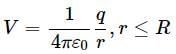
Directions: These questions consist of two statements, each printed as Assertion and Reason. While answering these questions, you are required to choose any one of the following four responses.
Assertion : Two adjacent conductors of unequal dimensions, carrying the same positive charge have a potential difference between them.
Reason : The potential of a conductor depends upon the charge given to it.
Detailed Solution: Question 10
Directions: These questions consist of two statements, each printed as Assertion and Reason. While answering these questions, you are required to choose any one of the following four responses.
Assertion : For a non-uniformly charged thin circular ring with net charge is zero, the electric field at any point on the axis of the ring is zero.
Reason : For a non-uniformly charged thin circular ring with net charge zero, the electric potential at each point on the axis of the ring is zero.
Detailed Solution: Question 11
Directions: These questions consist of two statements, each printed as Assertion and Reason. While answering these questions, you are required to choose any one of the following four responses.
Assertion : Polar molecules have permanent dipole moments.
Reason : In polar molecules, the centres of positive and negative charges coincide even when there is no external field.
Detailed Solution: Question 12
Directions: These questions consist of two statements, each printed as Assertion and Reason. While answering these questions, you are required to choose any one of the following four responses.
Assertion : In the absence of an external electric field, the dipole moment per unit volume of a polar dielectric is zero.
Reason : The dipoles of a polar dielectric are randomly oriented.
Detailed Solution: Question 13
Directions: These questions consist of two statements, each printed as Assertion and Reason. While answering these questions, you are required to choose any one of the following four responses.
Assertion : Electric energy resides out of the spherical isolated conductor.
Reason : The electric field at any point inside the conductor is zero.
Detailed Solution: Question 14
Directions: These questions consist of two statements, each printed as Assertion and Reason. While answering these questions, you are required to choose any one of the following four responses.
Assertion: Two equipotential surfaces can be orthogonal.
Reason: Electric field lines are normal to the equipotential surface.
Detailed Solution: Question 15
4 docs|149 tests |
