
Chapter Test: Basic Mathematics for Physics - 1 JEE Free MCQs
MCQ Practice Test & Solutions: Chapter Test: Basic Mathematics for Physics - 1 (30 Questions)
You can prepare effectively for JEE Physics for JEE Main & Advanced with this dedicated MCQ Practice Test (available with solutions) on the important topic of "Chapter Test: Basic Mathematics for Physics - 1". These 30 questions have been designed by the experts with the latest curriculum of JEE 2026, to help you master the concept.
Test Highlights:
- - Format: Multiple Choice Questions (MCQ)
- - Duration: 60 minutes
- - Number of Questions: 30
Sign up on EduRev for free to attempt this test and track your preparation progress.

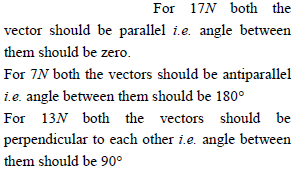
There are two force vectors, one of 5 N and other of 12 N at what angle the two vectors be added to get resultant vector of 17 N, 7 N and 13 N respectively-
Detailed Solution: Question 1
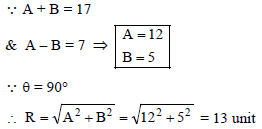
The maximum and the minimum magnitudes of the resultant of two given vectors are 17 unit and 7 unit respectively. If these two vectors are at right angles to each other, the magnitude of their resultant is -
Detailed Solution: Question 2


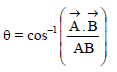
Detailed Solution: Question 3
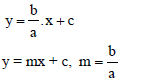
An equation of straight line ay = bx + c is given, Where a, b and c are constants. The slope of the given straight line is -
Detailed Solution: Question 4
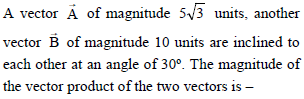
Detailed Solution: Question 5
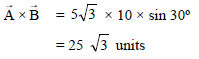
The minimum value of y = 2x2 – x + 1 is -
Detailed Solution: Question 6
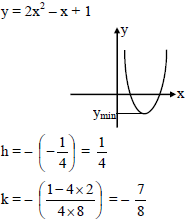

Detailed Solution: Question 7
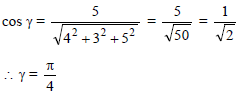
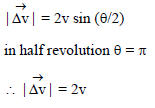
An aeroplane is moving in a circular path with a speed 250 km/hr. What is the change in velocity in half revolution ?
Detailed Solution: Question 8
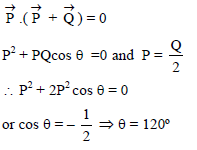
The resultant of two forces, one double the other in magnitude, is perpendicular to the smaller of the two forces. The angle between the two forces is -
Detailed Solution: Question 9
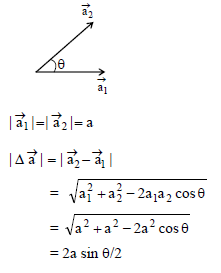
A vector of magnitude a is rotated through an angle θ. What is the magnitude of the change in the vector?
Detailed Solution: Question 10
Detailed Solution: Question 11
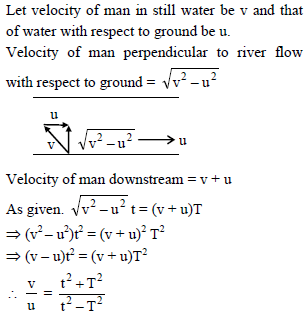
A man crosses the river perpendicular to river flow in time t seconds and travels an equal distance down the stream in T seconds. The ratio of man's speed in still water to the speed of river water will be :
Detailed Solution: Question 12
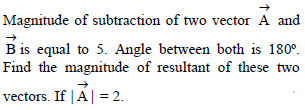
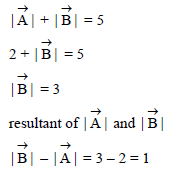
Detailed Solution: Question 13
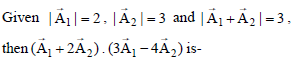
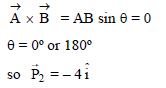
Detailed Solution: Question 14
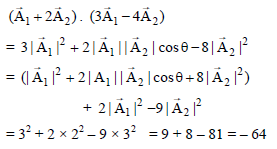
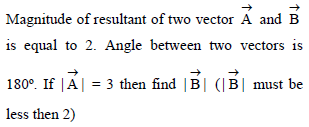
Detailed Solution: Question 15
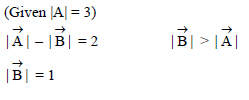
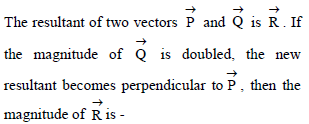
Detailed Solution: Question 16
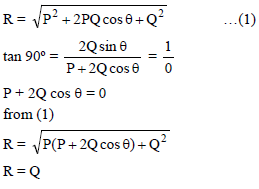

Detailed Solution: Question 17
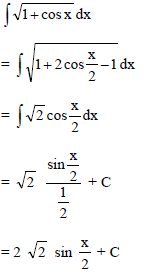
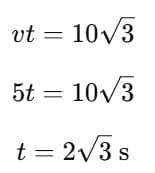
Two motor vehicles run at constant speeds 5 m/s each along highways intersecting at an angle 60º. In what time after they meet at the intersection will the distance between the vehicles be 10 √3 m.
Detailed Solution: Question 18

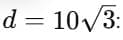
Detailed Solution: Question 19
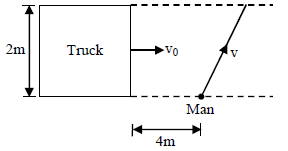
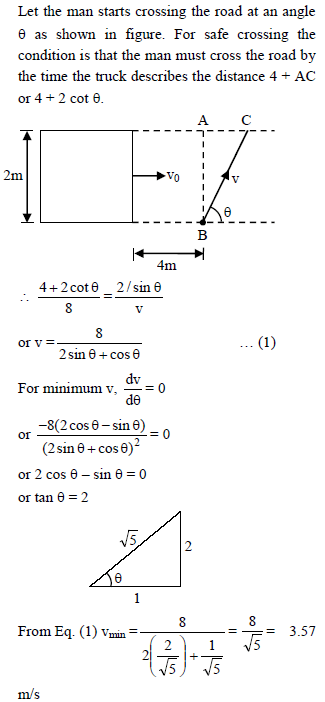
A 2 m wide truck is moving with a uniform speed v0 = 8 m/s along a straight horizontal road. A pedestrian starts to cross the road with a uniform speed v when the truck is 4 m away from him. The minimum value of v so that he can cross the road safely is -
Detailed Solution: Question 20
Detailed Solution: Question 21
In the above question if width of the river is 500 m, then length of shortest path is -
Detailed Solution: Question 22
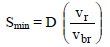
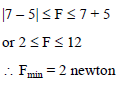
Two forces of magnitude 7 newton and 5 newton act on a particle at an angle θ to each other. θ can have any possible value the minimum magnitude of the resulatant force is -
Detailed Solution: Question 23
A force of 6 kgf and another of 8 kgf can be applied to produce the effect of a single force equal to –
Detailed Solution: Question 24

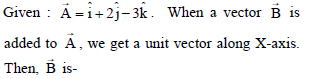
Detailed Solution: Question 25
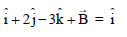
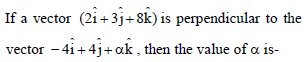
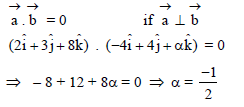
Detailed Solution: Question 26
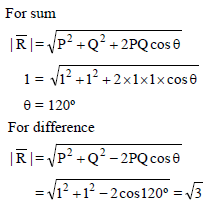
If the sum of two unit vectors is also a unit vector, then the magnitude of their difference is -
Detailed Solution: Question 27
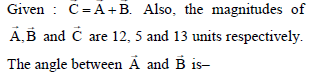
Detailed Solution: Question 28
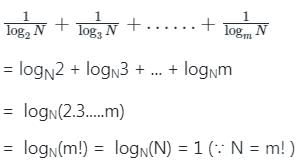
If N = m! Where m is any fixed positive integer greater than 2 then

Detailed Solution: Question 29
If log10 2 = 0.3010 and log10 3 = 0.4771. Find the value of log10 4.5 ?
Detailed Solution: Question 30
258 videos|856 docs|206 tests |
