
Chapter Test: Newton's Laws of Motion JEE Physics Free MCQs
MCQ Practice Test & Solutions: Chapter Test: Newton's Laws of Motion (30 Questions)
You can prepare effectively for JEE Physics for JEE Main & Advanced with this dedicated MCQ Practice Test (available with solutions) on the important topic of "Chapter Test: Newton's Laws of Motion". These 30 questions have been designed by the experts with the latest curriculum of JEE 2026, to help you master the concept.
Test Highlights:
- - Format: Multiple Choice Questions (MCQ)
- - Duration: 60 minutes
- - Number of Questions: 30
Sign up on EduRev for free to attempt this test and track your preparation progress.


Detailed Solution: Question 1
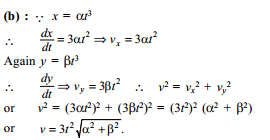
The ceiling of a tunnel is of 5m high. What is the maximum horizontal distance that a ball thrown with a speed of 20 m/s, can go without hitting the ceiling of the tunnel ? (Take g = 10 m/s2)
Detailed Solution: Question 2
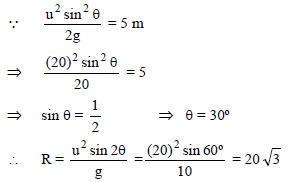

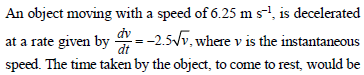
Detailed Solution: Question 3
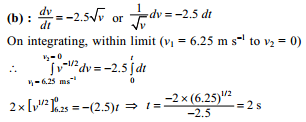
Detailed Solution: Question 4
Detailed Solution: Question 5
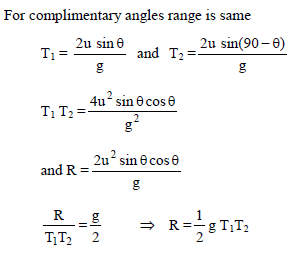
If T1 and T2 are the times of flight for two complementary angles, then the range of projectile R is given by -
Detailed Solution: Question 6
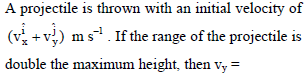
Detailed Solution: Question 7
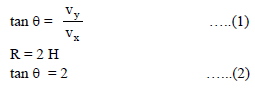
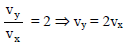
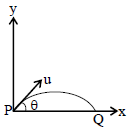
Average torque on a projectile of mass m, initial speed u and angle of projection θ between initial and final positions P and Q as shown in figure about the point of projection is –
Detailed Solution: Question 8
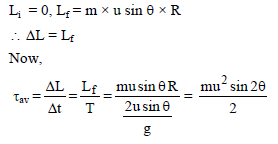
Rank the launch angles for the five paths in the figure below with respect to time of flight, from the shortest time of flight to the longest –
Detailed Solution: Question 9
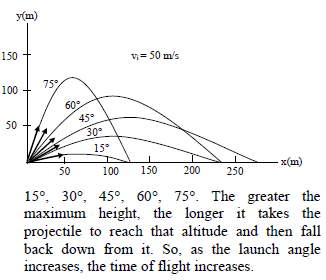
A ball is thrown from a point with a speed v0 at an angle of projection θ. From the same point and at the same instant, a person starts running with a constant speed v0/2 to catch the ball. Will the person be able to catch the ball ? If yes, what should be the angle of projection ?
Detailed Solution: Question 10
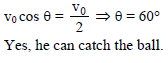
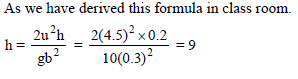
A ball rolls off the top of a stair way with a horizontal velocity of 4.5 m/s. If each step is 0.2 m high and 0.3 m broad, then the ball will strike the nth step where n is equal to : (g = 10 m/s2)
Detailed Solution: Question 11
A projectile can have the same range 'R' for two angles of projection. If 't1' and 't2' be the times of flights in the two cases, then the product of the two time of flights is proportional to -
Detailed Solution: Question 12

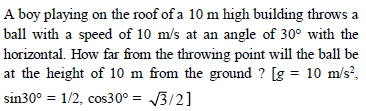
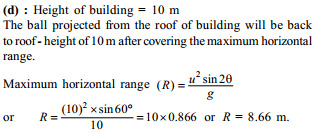
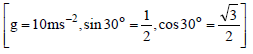
A boy playing on the roof of a 10 m high building throws a ball with a speed of 10ms–1 at an angle of 30° with the horizontal. How far from the throwing point will the ball be the height of 10 m from the ground ?
Detailed Solution: Question 13

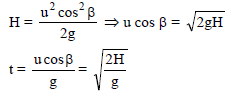
A projectile is thrown at angle β with vertical. It reaches a maximum height H. The time taken to reach highest point of its path is –
Detailed Solution: Question 14
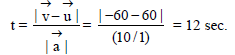
A body of mass 1kg crosses a point O with a velocity 60 ms–1. A force of 10N directed towards O begins to act on it. It will again cross O in -
Detailed Solution: Question 15
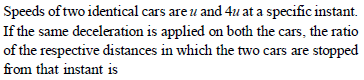
Detailed Solution: Question 16
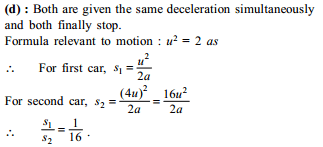
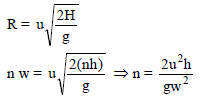
A ball rolls off the top of a strairway horizontally with a velocity of 4.5 m s–1. Each step is 0.2 m high and 0.3 m wide. If g is 10 m s–2, then the ball strike the nth step where n is equal to -
Detailed Solution: Question 17
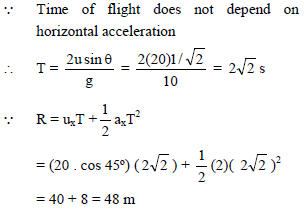
A body is projected at angle 45º to horizontal with velocity 20 m/s from ground. If there is an acceleration in horizontal direction of 2 m/s2, then calculate horizontal range of this particle-
Detailed Solution: Question 18
A cricket ball is thrown at 60° to the horizontal with kinetic energy E. Then the kinetic energy at the highest point is -
Detailed Solution: Question 19

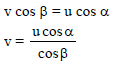
A particle projected with the speed u at an angle α with the horizontal acquires a velocity v when it is at an angle β with the horizontal. Then -
Detailed Solution: Question 20
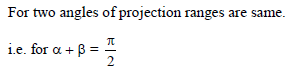
It was calculated that a shell when fired from a gun with a certain velocity and at an angle of elevation 5π/36 radians should strike a given target. In actual practice it was found that a hill just prevented in the trajectory. At what angle of elevation should the gun be fired to hit the target.
Detailed Solution: Question 21
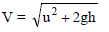
A stone is thrown form a cliff of height h in a given direction then the speed with which it hits ground -
Detailed Solution: Question 22
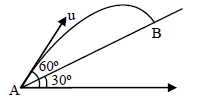
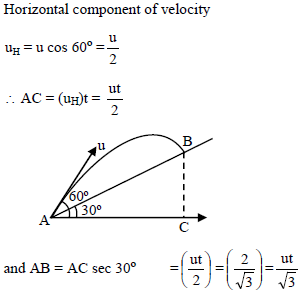
Time taken by the projectile to reach from A to B is t. Then the distance AB is equal to :
Detailed Solution: Question 23
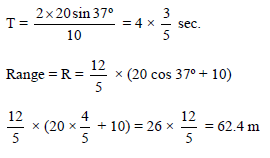
Consider a boy on a trolley who throws a ball with speed 20 m/s at an angle 37º with respect to trolley in direction of motion of trolley which moves horizontally with speed 10 m/s then what will be maximum distance travelled by ball parallel to road -
Detailed Solution: Question 24
An aeroplane flying horizontally with a speed of 360 km h–1 releases a bomb at a height of 490 m from the ground. When will the bomb strike the ground ?
Detailed Solution: Question 25

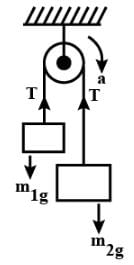
A student calculates the acceleration of m1 in figure shown as a1 =  . Which assumption is not required to do this calculation.

. Which assumption is not required to do this calculation.Detailed Solution: Question 26
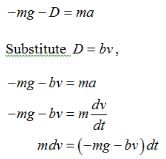
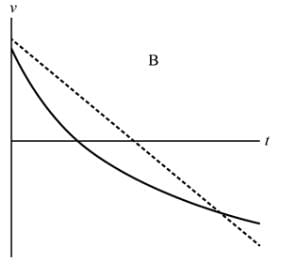
Which graph shows best the velocity-time graph for an object launched vertically into the air when air resistance is given by |D| = bv? The dashed line shows the velocity graph if there were no air resistance.
Detailed Solution: Question 27
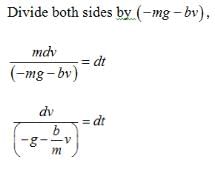
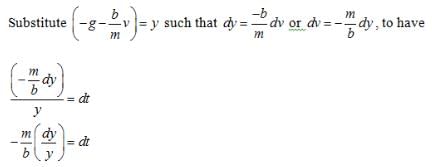
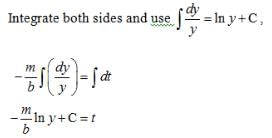
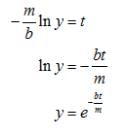
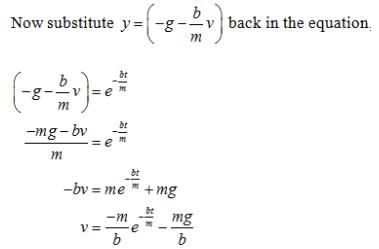
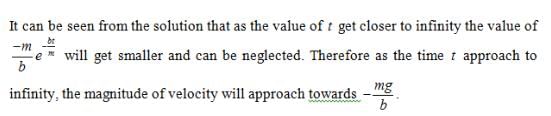
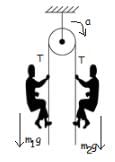
Two men of unequal masses hold on to the two sections of a light rope passing over a smooth light pulley. Which of the following are possible?

Detailed Solution: Question 28
Adjoining figure shows a force of 40 N acting at 30° to the horizontal on a body of mass 5 kg resting on a smooth horizontal surface. Assuming that the acceleration of free-fall is 10 ms_2, which of the following statements A, B, C, D, E is (are) correct?
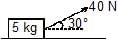
[1] The horizontal force acting on the body is 20 N
[2] The weight of the 5 kg mass acts vertically downwards
[3] The net vertical force acting on the body is 30 N
Detailed Solution: Question 29
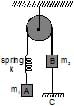
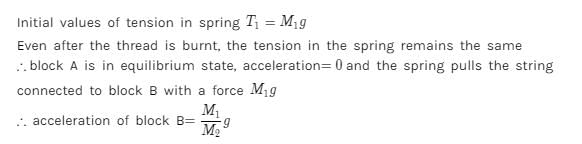
In the system shown in the figure m1 > m2. System is held at rest by thread BC. Just after the thread BC is burnt :
Detailed Solution: Question 30
258 videos|856 docs|206 tests |
