
EMRS Junior Secretariat Assistant Exam Mock Test - 9 Free Online Test 2026
Full Mock Test & Solutions: EMRS Junior Secretariat Assistant Mock Test - 9 (130 Questions)
You can boost your EMRS 2026 exam preparation with this EMRS Junior Secretariat Assistant Mock Test - 9 (available with detailed solutions).. This mock test has been designed with the analysis of important topics, recent trends of the exam, and previous year questions of the last 3-years. All the questions have been designed to mirror the official pattern of EMRS 2026 exam, helping you build speed, accuracy as per the actual exam.
Mock Test Highlights:
- - Format: Multiple Choice Questions (MCQ)
- - Duration: 150 minutes
- - Total Questions: 130
- - Analysis: Detailed Solutions & Performance Insights
- - Sections covered: Reasoning, Quantitative Aptitude, General Awareness, English, Hindi, Computer Awareness
Sign up on EduRev for free and get access to these mock tests, get your All India Rank, and identify your weak areas to improve your marks & rank in the actual exam.

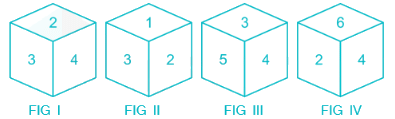
Four positions of a dice are given below. Identify which number is on the face opposite 2.
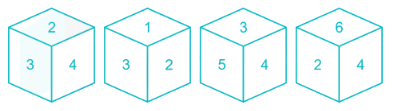
Detailed Solution: Question 1
From the given answer figures, select the one in which the question figure is hidden/embedded.

Detailed Solution: Question 2

A piece of paper is folded and punched as shown below in the question figures. From the given answer figures, indicate how it will appear when opened.
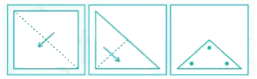
Detailed Solution: Question 3

The writer can get good ideas only when he constantly rejuvenates himself. This rejuvenation comes from new experiences that the writer must take part in.
Q. Which of the following supports the thought?
Detailed Solution: Question 4
Select the odd letters from the given alternatives.
Detailed Solution: Question 5
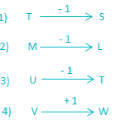
Select the related letters from the given alternatives.
AD : N : : BD : ?
AD : N : : BD : ?
Detailed Solution: Question 6
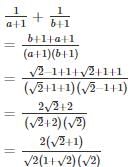
If a = √2 + 1, b = √2 – 1, then the value of 
Detailed Solution: Question 7
If (x - 2) and (x + 3) are the factors of x2 + k1x + k2 then
Detailed Solution: Question 8
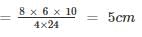
In a Δ PQR, ∠RPQ = 90°, PR = 8 cm and PQ = 6 cm, then the radius of the circumcircle of Δ PQR is
Detailed Solution: Question 9

Directions: Study the following table carefully and answer the questions.
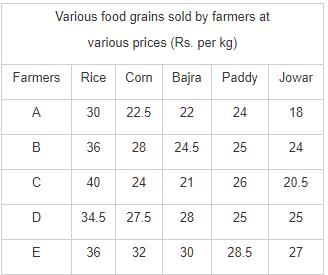
Q. Earnings on 150 kg of paddy sold by farmer B are approximately what percent of the earnings on the same amount of rice sold by the same farmer?
Q. Earnings on 150 kg of paddy sold by farmer B are approximately what percent of the earnings on the same amount of rice sold by the same farmer?
Detailed Solution: Question 10
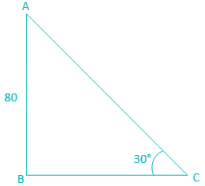
A kite is flying at a height of 80 m from the level ground, attached to a string inclined at 30° to the horizontal. The length of the string is?
Detailed Solution: Question 11
An emulsion is a colloidal solution of
Detailed Solution: Question 12
Detailed Solution: Question 13
What is the minimum age required to become a sarpanch?
Detailed Solution: Question 14
Classes comprising Fungi, Bacteria, Protists constitute the category called?
Detailed Solution: Question 15
Foam is a colloidal solution in which _______ is the dispersed phase and _______ is the dispersion medium.
Detailed Solution: Question 16
Which one of the following is a solution that is concentrated more than its saturated solution at a particular temperature?
Detailed Solution: Question 17
What is the maximum age for an Indian citizen to join Atal Pension Yojana (APY)?
Detailed Solution: Question 18
Who won the women’s singles in Indonesia masters title?
Detailed Solution: Question 19
By the time we get there, they __________ all the food.
Detailed Solution: Question 20
Choose the option that best corrects the sentence:
Salt is often added to food to make it taste better.
Detailed Solution: Question 21
Detailed Solution: Question 22
Passage
- The report, progress on household drinking water, sanitation and hygiene (2000-2017): Special focus on inequalities, is the most recent publication by the WHO/UNICEF Joint Monitoring Programme, which tracks global progress in achieving the water and sanitation portion of the UN’s Sustainable Development Goals (SDGs).
- The 17 SDGs aim is to “end poverty in all its forms everywhere” by 2030. Goal 6 calls for universal access to safe and adequate access to drinking water and sanitation services.
- According to the new report, progress has been made since 2000, yet billions of people are still underserved. The report delineates between access to basic services, which has greatly improved, and access to “safely managed” services, which is inadequate in many parts of the world. Only about 45 per cent of the global population has access to safely- managed sanitation services. In 2017, an estimated 673 million people continued to openly defecate, most of them in 61 “high burden” countries where the practice remained common among more than 5 per cent of the population.
- To qualify as being “safely managed”, drinking water must meet three criteria: be accessible on the premises, be available for at least 12 hours per day, and be free from E. coli, arsenic, or fluoride contamination. Sanitation is considered safely managed when facilities are not shared with other households, and waste is safely treated on-site or at an off-site facility.
- In 2017, an estimated 5.3 billion people had access to safely-managed drinking water. Of that number, 1.4 billion used basic services, 206 million used limited services, 435 used unimproved sources, and the remaining 144 million relied on untreated surface water.
- Poor and rural populations are at the greatest risk of being left behind. In 2017, urban access to basic drinking water services was at 97 per cent, while rural coverage was at 81 per cent.
- In terms of sanitation, an estimated 2.1 billion people gained access to basic services between 2000 and 2017, but 2 billion remain without access.
- The report also focuses on improvements in eliminating open defecation. Between 2000 and 2017, the global rate of open defecation fell from 21 percent to 9 per cent.
Q. What is the percentage of population which has access to sanitation services?
Passage
- The report, progress on household drinking water, sanitation and hygiene (2000-2017): Special focus on inequalities, is the most recent publication by the WHO/UNICEF Joint Monitoring Programme, which tracks global progress in achieving the water and sanitation portion of the UN’s Sustainable Development Goals (SDGs).
- The 17 SDGs aim is to “end poverty in all its forms everywhere” by 2030. Goal 6 calls for universal access to safe and adequate access to drinking water and sanitation services.
- According to the new report, progress has been made since 2000, yet billions of people are still underserved. The report delineates between access to basic services, which has greatly improved, and access to “safely managed” services, which is inadequate in many parts of the world. Only about 45 per cent of the global population has access to safely- managed sanitation services. In 2017, an estimated 673 million people continued to openly defecate, most of them in 61 “high burden” countries where the practice remained common among more than 5 per cent of the population.
- To qualify as being “safely managed”, drinking water must meet three criteria: be accessible on the premises, be available for at least 12 hours per day, and be free from E. coli, arsenic, or fluoride contamination. Sanitation is considered safely managed when facilities are not shared with other households, and waste is safely treated on-site or at an off-site facility.
- In 2017, an estimated 5.3 billion people had access to safely-managed drinking water. Of that number, 1.4 billion used basic services, 206 million used limited services, 435 used unimproved sources, and the remaining 144 million relied on untreated surface water.
- Poor and rural populations are at the greatest risk of being left behind. In 2017, urban access to basic drinking water services was at 97 per cent, while rural coverage was at 81 per cent.
- In terms of sanitation, an estimated 2.1 billion people gained access to basic services between 2000 and 2017, but 2 billion remain without access.
- The report also focuses on improvements in eliminating open defecation. Between 2000 and 2017, the global rate of open defecation fell from 21 percent to 9 per cent.
Q. Which country has maximum access to basic drinking water?
‘अधि’ उपसर्ग युक्त कौन-सा शब्द नहीं है ?
दिए गए समरूपी भिन्नार्थक शब्दों के सही विकल्प वाले समूह बताइये।
चिर-चीर-
Type of software that can be described as “end-user” software
Detailed Solution: Question 27
______________ utility identifies non-essential files on the hard disk and erases them only when the user allows their erasure.
Detailed Solution: Question 28
Which of these operating systems does not have a graphical user interface?
Detailed Solution: Question 29
ALU performs two types of operations,_____
Detailed Solution: Question 30
