EMRS Exam  >  EMRS Test  >   TGT Mock Test Series 2026  >  EMRS TGT Hindi Mock Test - 1 - EMRS MCQ

EMRS TGT Hindi Mock Test - 1 Free Online Test 2026


Full Mock Test & Solutions: EMRS TGT Hindi Mock Test - 1 (130 Questions)

You can boost your EMRS 2026 exam preparation with this EMRS TGT Hindi Mock Test - 1 (available with detailed solutions).. This mock test has been designed with the analysis of important topics, recent trends of the exam, and previous year questions of the last 3-years. All the questions have been designed to mirror the official pattern of EMRS 2026 exam, helping you build speed, accuracy as per the actual exam.

Mock Test Highlights:

  • - Format: Multiple Choice Questions (MCQ)
  • - Duration: 180 minutes
  • - Total Questions: 130
  • - Analysis: Detailed Solutions & Performance Insights
  • - Sections covered: General Awareness, Reasoning Ability, Knowledge of ICT, Teaching Aptitude, Domain Knowledge, General English, English

Sign up on EduRev for free and get access to these mock tests, get your All India Rank, and identify your weak areas to improve your marks & rank in the actual exam.

EMRS TGT Hindi Mock Test - 1 - Question 1

To which of the following crops does the Rashtriya Krishi Bima Yojana (NAIS) provide insurance?

Detailed Solution: Question 1

The Government introduced in 1999-2000, a new scheme titled “National Agricultural Insurance Scheme” (NAIS) or “Rashtriya Krishi Bima Yojana” (RKBY). NAIS envisages coverage of all food crops (cereals and pulses), oilseeds, horticultural and commercial crops. It covers all farmers, both loanees and non-loanees, under the scheme.

EMRS TGT Hindi Mock Test - 1 - Question 2

Which countries are separated by the Mac Mohan Line?

Detailed Solution: Question 2

The Mac Mohan Line is the international boundary line between India and China and it was proposed by Henry Mac Mohan in 1914.

EMRS TGT Hindi Mock Test - 1 - Question 3

The function of an assembler is

Detailed Solution: Question 3

The assembler has the main task that it takes the assembly language as input and processes it. It gives the output in form of machine language.

EMRS TGT Hindi Mock Test - 1 - Question 4

India’s demographic transition challenge mainly involves:

Detailed Solution: Question 4

India faces a dual challenge—aging in some states and a young workforce elsewhere—requiring skilling, health, and employment reforms.

EMRS TGT Hindi Mock Test - 1 - Question 5

Directions: In the following question assuming the given statements to be True, find which of the conclusion among given conclusions is/are definitely true and then give your answers accordingly.

Statements:
A > B, B > C, C = D, D < E

Conclusions:

I. B = D

II. B > D

Detailed Solution: Question 5

Given statements: A > B, B > C, C = D, D < E

On combining: A > B > C = D < E

Conclusions:

I. B = D → False (as B > C = D → B > D thus clear relation between B and D)

II. B > D→ True (as B > C = D → B > D)

Therefore, only conclusion II is True.

EMRS TGT Hindi Mock Test - 1 - Question 6

In the following question assuming the given statements to be true, find which of the conclusion among given conclusions is/are definitely true and give your answers accordingly.

Statements:

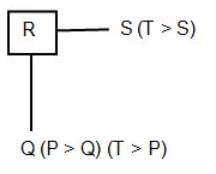
P > Q; Q > R; R > S; S > T

Conclusions:

I. T < Q

II. R < P

Detailed Solution: Question 6

Given statements: P > Q; Q > R; R > S; S > T.

On combining: P > Q > R > S > T

Conclusions

I. T < Q → True (as Q > R > S > T → Q > T)

II. R < P → True (as P > Q > R → P > R)

Hence, both of the conclusions are true.

EMRS TGT Hindi Mock Test - 1 - Question 7

Direction: Study the following information carefully to answer the given questions:

If 'A () B' means 'B is the mother of A'

If 'A of B' means 'B is the father of A'

If 'A ÷ B' means 'B is the sister of A'

If 'A × B' means 'B is the brother of A'

If 'A + B' means 'B is the daughter of A'

If 'A - B' means 'B is the son of A'

Q. What does 'L () M ÷ N' means?

Detailed Solution: Question 7
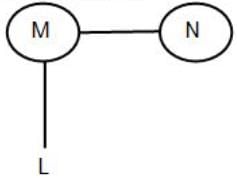
'L() M ÷ N' means M is mother of L, N is sister of M.

Hence, M and N are both sisters.

EMRS TGT Hindi Mock Test - 1 - Question 8

Directions: Study the following information carefully to answer the given Questions:

P^Q-P is the child of Q
P!Q-P is the parent of Q
P*Q - P is elder to Q
P#Q-P is younger to Q
P@Q-P is brother of Q
P&Q - P is wife of Q
P+Q-P is sister-in-law of Q

Q. If P*Q^R@S#T*P, the age of Q is 22 years and age of T is 33 years, so what can be the age of P?

Detailed Solution: Question 8

P*Q^R@S#T*P: P is elder than Q, Q is child of R, R is brother of S, S is younger than T, T is elder than P.
The age of Q is 22 years and age of T is 33 years.

T(33) > P > Q
Hence, the age of P is 29 years.

EMRS TGT Hindi Mock Test - 1 - Question 9

Select the Venn diagram that best illustrates the relationship between the following classes.

Humans, Painters, Men

Detailed Solution: Question 9
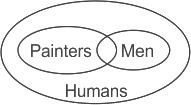
The venn diagram representing the relation between Humans, Painters, Men is shown below,
→ Some men can be painters. Both men and painters are humans.

Hence, the correct answer is "Option 4".

EMRS TGT Hindi Mock Test - 1 - Question 10

Which two numbers should be interchanged to make the given equation correct?
14 ÷ 3 × 2 + 7 - 5 = 18

Detailed Solution: Question 10
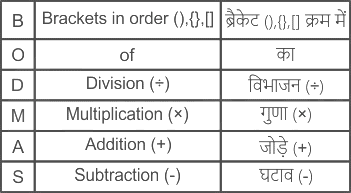

Given: 14 ÷ 3 × 2 + 7 - 5 = 18
According to the question, after interchanging the numbers:
Option 1) 7 and 5
14 ÷ 3 × 2 + 7 - 5 = 18 ⇒ 14 ÷ 3 × 2 + 5 - 7 = 18
14 ÷ 3 × 2 + 5 - 7 = 18
4.67
× 2 + 5 - 7 = 18
9.34 + 5 - 7 = 18
14.34 - 7 = 18
⇒ 7.34 18 (LHS RHS)
Option 2) 3 and 2
14 ÷ 3 × 2 + 7 - 5 = 18 ⇒ 14 ÷ 2 × 3 + 7 - 5 = 18
14 ÷ 2 × 3 + 7 - 5 = 18
7
× 3 + 7 - 5 = 18
21 + 7 - 5 = 18
28 - 5 = 18

⇒ 23 18 (LHS RHS)
Option 3) 14 and 7
14 ÷ 3 × 2 + 7 - 5 = 18 ⇒ 7 ÷ 3 × 2 + 14 - 5 = 18
7 ÷ 3 × 2 + 14 - 5 = 18
2.33
× 2 + 14 - 5 = 18
4.66 + 14 - 5 = 18
18.66 - 5 = 18
⇒ 13.66 ≠
18 (LHS RHS)
Option 4) 18 and 14
14 ÷ 3 × 2 + 7 - 5 = 18 ⇒ 18 ÷ 3 × 2 + 7 - 5 = 14
18 ÷ 3 × 2 + 7 - 5 = 14
6
× 2 + 7 - 5 = 14
12 + 7 - 5 = 14
19 - 5 = 14
⇒ 14 =
14 (LHS = RHS)
Hence, "Option 4" is the correct answer.

EMRS TGT Hindi Mock Test - 1 - Question 11

MS Word is an example of

Detailed Solution: Question 11

  • Application software is a term that is used for software created for a specific purpose.
  • It is generally a program or collection of programs used by end-users.
  • It can be called an application or simply an app.
  • MS Word is an example of word processing software.

EMRS TGT Hindi Mock Test - 1 - Question 12

What is the shortcut key to add content on the clipboard to your document in MS PowerPoint?

Detailed Solution: Question 12

Ctrl + V  is the shortcut key to add content on the clipboard to your document in MS-PowerPoint.

  • Microsoft PowerPoint is a part of MS- Office.
  • It was introduced to generate business presentations, slide shows, and graphics on a computer system.
  • Uses of MS- PowerPoint:
  • Creating business application presentation slides.
  • Creating graphical objects with animations.
  • Create artistic slides for general use, using the art gallery.
  • To provide training in the business world.

EMRS TGT Hindi Mock Test - 1 - Question 13

In MS Word, "Ctrl + Home" is used to

Detailed Solution: Question 13

Ctrl + Home is a shortcut key used in MS Word to move the cursor to the beginning of the document.

EMRS TGT Hindi Mock Test - 1 - Question 14

To use the exact same font type, size, and color in the title of all the slides in a PowerPoint presentation, you will:

Detailed Solution: Question 14
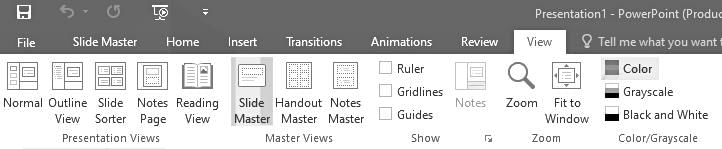
Changing the text color on the slide master applies the changes to text on multiple slides at one time.

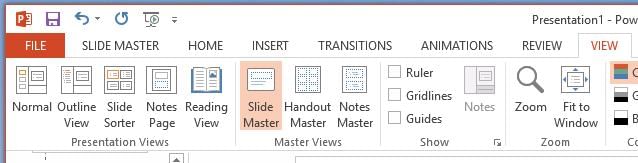
On the View tab, choose Slide Master.

  • In the left thumbnail pane, select a layout that contains the text you want to change to a different color.
  • Select the text on the layout that you want to change.
  • On the mini toolbar that appears, choose Font Color, and then select the color you want to change the color of the text to.
  • When you’re finished, choose Close Master View to return to your presentation.

Changing the text color on the slide master applies the changes to text on multiple slides at one time.

Click View > Slide Master.

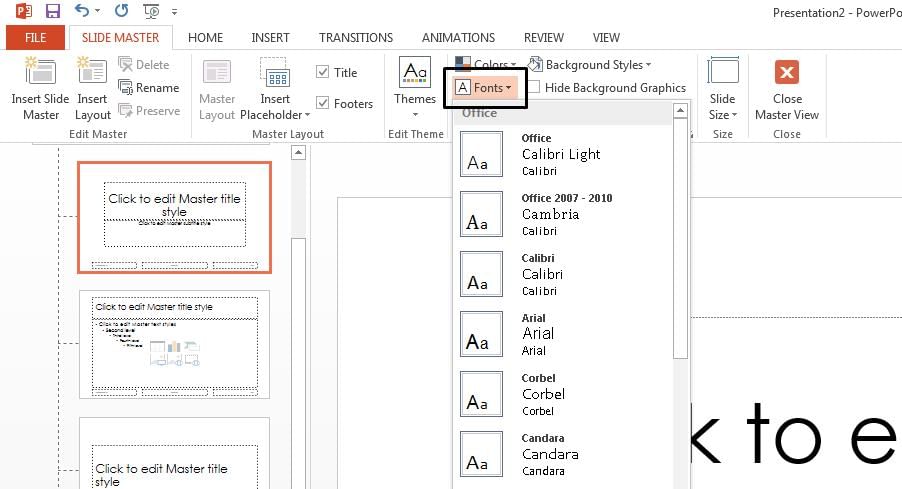
  • On the Slide Master tab, click the Fonts drop-down menu. Select the font you want to use for all the slides in the presentation. You don't have to choose from the pre-defined font pairs on the menu; choose Customize Fonts at the bottom of the menu to select your own fonts.

  • Click Close Master View. The text throughout your presentation is automatically updated to the new font. 

EMRS TGT Hindi Mock Test - 1 - Question 15

_____ is space between your content and the edge of the page in MS Excel.

Detailed Solution: Question 15

  • Margin is the space between your content and the edge of the page.
  • Margins are set to Normal, which is a one-inch space between the content and each edge of the page.
  • You may need to adjust the margins to make your data fit more comfortably on the page.
  • To better align an Excel worksheet on a printed page, you can change margins, specify custom margins, or centre the worksheet—either horizontally or vertically on the page.
  • Page margins are the blank spaces between your data and the edges of the printed page. Top and bottom page margins can be used for things such as headers, footers, and page numbers.

EMRS TGT Hindi Mock Test - 1 - Question 16

Which tool can be opted for a synonym word in a document?

Detailed Solution: Question 16
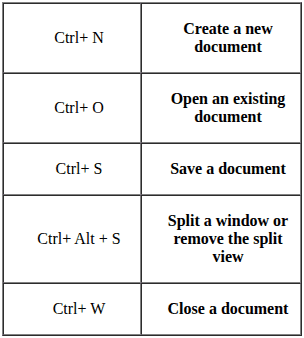
Correct Answer Thesaurus

Explanation

  • In addition to the spell-checking and grammar-checking tools that Microsoft Word offers, there is also the Word thesaurus we can take advantage of to improve our documents
  • Using the thesaurus, you can find synonyms (different words with the same meaning) and antonyms (words with the opposite meaning)
  • In Microsoft Office Word you can look up a word quickly if you right-click anywhere in your document, and then click Synonym on the shortcut menu

Command to use Thesaurus tool ( shortcut key: shift + F7).

Important Points:

Other helpful commands used in Ms word.

EMRS TGT Hindi Mock Test - 1 - Question 17

Peer group is formed by

Detailed Solution: Question 17

Peer Group Formation: Society + Controlled Environment
A peer group refers to a group of individuals who are of similar age, social status, and share common interests or activities. Peer groups play a crucial role in an individual's social development and influence their behavior, attitudes, and values. The formation of a peer group is influenced by society and occurs within a controlled environment. Let's break down the reasons why the correct answer is option C: Society + Controlled environment.
Society:

  • Society plays a significant role in the formation of peer groups. It consists of various social institutions such as schools, neighborhoods, clubs, and communities, which bring individuals together.
  • Individuals within a society tend to form peer groups based on shared characteristics such as age, interests, hobbies, or cultural backgrounds.
  • These shared characteristics create a sense of belonging and commonality among individuals, leading to the formation of peer groups.

Controlled Environment:

  • The formation of a peer group occurs within a controlled environment, primarily influenced by social institutions like schools.
  • Schools provide a structured and controlled setting where individuals interact with their peers on a regular basis.
  • The controlled environment of schools allows individuals to establish connections, form friendships, and engage in social activities with their peers.
  • Additionally, schools often have rules and regulations that govern social interactions, ensuring a certain level of control and structure within peer groups.

Importance of Peer Groups:

  • Peer groups contribute significantly to an individual's socialization process and overall development.
  • They provide opportunities for socialization, where individuals learn and practice social skills, norms, and behaviors.
  • Peer groups also serve as a support system, offering emotional support, advice, and guidance during various life stages and challenges.
  • They influence an individual's attitudes, beliefs, and values, shaping their identity and helping them define themselves within society.
  • Peer groups also play a role in the formation of interests, hobbies, and shared activities, fostering a sense of belonging and camaraderie.

EMRS TGT Hindi Mock Test - 1 - Question 18

You are a teacher and after preparing question paper you check, whether the questions test specific testing objectives. He is concerned primarily about the question paper’s

Detailed Solution: Question 18

Content Coverage

  • Content coverage refers to the extent to which the question paper encompasses the relevant subject matter or topics that were taught during the course. It ensures that the questions adequately assess the students' understanding and knowledge of the specific testing objectives.
  • Importance of Content Coverage
  • Content coverage is crucial because it ensures that the question paper tests the specific testing objectives effectively. By including a wide range of questions that cover different aspects of the subject matter, teachers can gauge the students' overall comprehension and application of the concepts taught in class. It helps in evaluating the students' strengths and weaknesses in relation to the learning objectives.
  • Ensuring Content Coverage

To ensure content coverage in a question paper, teachers should consider the following:

  • Reviewing the Learning Objectives: Carefully review the specific testing objectives or learning outcomes that were outlined for the course. This will help in identifying the key concepts and topics that need to be covered in the question paper.
  • Mapping Questions to Objectives: Create a mapping between the questions and the specific testing objectives. Each question should align with one or more objectives to ensure comprehensive coverage. This ensures that the question paper adequately represents the content that was taught.
  • Balancing Difficulty Levels: Ensure that the question paper includes questions of varying difficulty levels, ranging from easy to challenging. This allows for a comprehensive assessment of the students' understanding and mastery of the subject matter.
  • Including Different Question Types: Incorporate different question types such as multiple-choice, short answer, and problem-solving questions. This helps in assessing different cognitive skills and ensures that the content coverage is not limited to a particular type of question.
  • Avoiding Bias: Ensure that the question paper is free from bias or favoritism towards certain topics or concepts. The questions should be evenly distributed across the different content areas to provide a fair and unbiased assessment.

EMRS TGT Hindi Mock Test - 1 - Question 19

With regard to teaching, which of the following terms is philosophical in nature?

Detailed Solution: Question 19

Philosophy of education is a general philosophical study and explanation of every aspect of education. The phrase 'Philosophy of Education’ is not only a part of philosophy but also a part of education. It is a branch of axiology as it studies about educational value. Again, it is accepted as a branch of education as it is the study of the purpose, process, nature, and ideals of education.

  • Philosophy of education questions the aims, methods of teaching, and all the elements of education related to the moral and social conditions. It is a part of education also when it consists of normative and analytical aspects of education.
  • Philosophy of education is considered as a part of education, it discusses only an aspect of education, such as educational psychology, environmental education, educational statistics, etc., which are related to different areas and share a very limited ground of education. As a branch of education, philosophy of education is more experimental and practical.
  • Philosophers like Mahatma Gandhi, John Dewey, Frobel, Rabindranath Tagore, and many more suggest the philosophical methods of teaching in education. Most of the educational philosophers believe that the method of teaching should be learner-centred.

Hence, we conclude that the method is philosophical in nature.

EMRS TGT Hindi Mock Test - 1 - Question 20

Which of this is not a characteristic of evaluation?

Detailed Solution: Question 20

Evaluation is a systematic way to assess learner’s abilities, analyze performance, provide appropriate feedback to each learner and help them to progress. It is one of the crucial components of the teaching-learning process.

  • Evaluation needs to be integrated with the process of teaching and learning. Language evaluation should measure the learner's language proficiency during the teaching-learning process

Explanation

Characteristic of evaluation:

  • Evaluation is a continuous process, it helps to know which kind of help the students want in learning a language as it helps in improving academic achievements and students' motivation level.
  • It is a systematic process, it is done to assess or evaluate someone's performance in a specified field. The teacher does the evaluation of the student's performance to get an idea of the achievement of a student.
  • It is not confined to classrooms and it doesn't include academic subjects only rather it emphasizes ensuring the all-round development of students including cognitive, psychomotor, and affective domains.

Hence, it could be concluded that 'It includes only academic subjects' is not a characteristic of evaluation.

EMRS TGT Hindi Mock Test - 1 - Question 21

Which one of the following is not a characteristic of good teaching?

Detailed Solution: Question 21

Teaching is intimate contact between a more mature personality and a less mature one which is designed to further the education of the latter.

ExplanationCharacteristics of Good Teaching are as follows:

  • It provides desirable information.
  • It creates self-motivation for learning.
  • The students remain active in good teaching.
  • It focuses on selected information.
  • It is based on democratic ideals.
  • It should create value in students.
  • It is based on activity.
  • It is directional in nature.
  • It is based on the cooperation of the teacher and students.
  • It is based on the previous knowledge of the teacher.
  • It is progressive.
  • It is planned with a definite aim.
  • It includes all sorts of teachers' performances and teaching methods.
  • It enhances the potential of the students.
  • The teacher works as a philosopher, friend, and director.
  • The teacher's classroom behavior includes both direct and indirect behavior.
  • It reflects the harmony between the teacher and the students.

Hence, we conclude that good teaching is not value-based, is not a characteristic of good teaching.

EMRS TGT Hindi Mock Test - 1 - Question 22

Teachers use teaching aids, because:

Detailed Solution: Question 22

Teaching aids are the additional teaching equipment that helps learners to improve comprehension skills, illustrate or reinforcement of concepts, and relieve boredom by the presentation of information in an interactive and exciting way.

Explanation The benefits of using teaching aids:

  • It supplements lesson discussion by engaging the student with the live demonstrations and engaging contents
  • Teaching aids such as graphs, charts, flashcards, and videos enable visual stimulation to the learners which allows them to access the content as per their individual level of understanding.
  • It generates constant excitement and curiosity in the students who have little patience for lecture-style teaching
  • It improves the quality of education by providing students with the sense of excitement they desire.
  • It is helpful in meeting the individual differences of the learners.
  • It enables the abstract ideas concrete thus help the learning process more effectively and retention of knowledge for a longer time

Therefore, option 3 is the correct answer.

EMRS TGT Hindi Mock Test - 1 - Question 23

Diagnostic evaluation ascertains

Detailed Solution: Question 23

Evaluation is integral to the teaching-learning process as it helps in facilitating student learning and improving instruction. It is a systematic way of collecting information to make a judgment about student learning. It is conducted during different stages of a teaching-learning process, i.e. at the beginning, during, and at the end.

  • Diagnostic Evaluation:
    • Diagnostic evaluation helps the teachers to know the learning difficulties or gaps in learner's understanding and identifying learner's individual strengths, weaknesses, skills, etc.
    • It is the base of remedial teaching that helps the teacher to provide learners with the necessary help and guidance to overcome the problems during the teaching-learning process.
    • For example, if it is found that a learner has not understood certain concepts in a particular subject, then to help him/her understand these concepts, a diagnostic assessment is conducted and remediation is provided.
  • Steps of diagnostic evaluation:
  • Identifying students who need help.
  • Locating learning difficulties/gaps.
  • Discovering the causal factors.
  • Removing learning difficulties through remedial teaching.

Confusion Points

  • Diagnostic evaluation is conducted at the beginning of the instruction to know the previous knowledge and it is conducted during instructions to diagnose the learning gaps that are found while assessing the previous knowledge.
  • Thus, out of the two options (1) Students' performance at the beginning of instructions, and (2) Causes and remedies of persistent learning problems during instructions, option 2 is more appropriate because the main purpose of the diagnostic evaluation is to diagnose the learning gaps.

Hence, from the given points, it is clear that the diagnostic evaluation ascertains the causes and remedies of persistent learning problems during instructions.
Other Related Points

  • Formative Evaluation:
    • It is conducted during the instructional process.
    • It is conducted to know the mastery in content.
    • The purpose is to monitor the learning progress of the learner.
    • It is a diagnostic and remedial, formal, and informal approach of assessment.
  • Summative Evaluation
    • It is conducted at the end of the instructional process in a term, a course, or a school session.
    • It is conducted to certify the learner and judging their learning standards

EMRS TGT Hindi Mock Test - 1 - Question 24

Which of the following teaching aids resembles the earth in shape, shows water and landmasses in proper relative sizes and positions?

Detailed Solution: Question 24

While teaching social sciences, a teacher uses various objects, materials, people, situations and experiences, etc. to make teaching-learning activities meaningful. All these constitute learning resources to help students learn in a meaningful way and attain the objectives of teaching-learning. Let us discuss some of these learning resources which are relevant to the teaching of social sciences.

  • Globes are a scale model of the earth in three dimensions. These are the only kind of map that can give pupils a true conception of geographical relationships. It resembles the earth in shape and shows water and landmasses in proper relative sizes and positions. Globes give the true idea of a total environment at a glance in a classroom situation. A child can understand the concepts like time, space, wind's planetary ratios, and proportions in social sciences.
  • Maps: All of us use maps in one form or the other in our daily life. When we tour a new place, we take the help of maps. Thus, maps represent the earth or parts of the earth upon a flat surface. The earth is represented on the map through lines, dots, colors, words, and signs. In social sciences, maps are very important for learning many geographical, historical and economic concepts.
  • Realia and Diorama: The term “realia” refers to real objects such as tools, utensils, art objects, clothing, etc., that are made and used by people in a given culture or society. For example, while teaching tools used in agriculture, the teacher can collect some tools used by the people in agriculture and show these to the students.
  • Models: Models are three-dimensional visual aids. They represent real things in all respects except size and shape. Large objects are reduced to a small size so that they could be observed by students with greater precision, Models may be simple (static), sectional or working.
  • Charts: Charts are a valuable tool for use in social studies. A chart is a simple flat pictorial display material and, if used appropriately, conveys the displayed information in a highly effective manner. Charts serve as an excellent means of classifying important information that is to be referred to a number of times. They help summarize and simplify complex ideas which students face during reading.
  • Graphs: Graphs are excellent means of presenting quantitative data in a form that enables pupils to understand fundamental or specific relationships. There are several kinds of graphs used in teaching social sciences.

Other Related Points

Maps are broadly classified into the following categories:

  • Physical maps: These maps show climate, resources, rainfall, soil, etc.
  • Political maps: These maps show the political division of countries, provinces, etc.
  • Economic maps: These maps show crops, trade, land used, railroad, etc.
  • Social maps: These maps show population distribution, languages, literacy rates of different provinces, etc.
  • Historical maps: These maps show the boundary of a particular empire, treaties, etc.

Hence, we can conclude that Globe teaching aids resemble the earth in shape, shows water and landmasses in proper relative sizes and positions.

EMRS TGT Hindi Mock Test - 1 - Question 25

हमारा मन कैसी वाणी सुनकर प्रसन्न हो जाता है?

Detailed Solution: Question 25

हमारा मन मधुर वाणी सुनकर प्रसन्न हो जाता है।

मधुर-

  • अर्थ- मीठा, कटुता रहित।

Explanationगद्यांश के अनुसार-

  • "जब हम मधुर वाणी का श्रवण करते हैं, तब हमारा चित्त प्रसन्न हो जाता है।"

Other Related Pointsवाणी-

  • वचन, बात

कटु-

  • कड़ुआ, अप्रिय।

कर्कश-

  • कठोर, निर्दय।

EMRS TGT Hindi Mock Test - 1 - Question 26

'कौए और कोयल की पहचान उनकी वाणी से होती है।'
वाक्य से तात्पर्य है कि _______

Detailed Solution: Question 26

'कौए और कोयल की पहचान उनकी वाणी से होती है।'

वाक्य से तात्पर्य है कि कोयल और कौआ दोनों लगभग समान रूप होते हैं किंतु उनकी वाणी में अंतर होता है।

Explanationगद्यांश के अनुसार-

  • "जिस प्रकार कौए और कोयल की पहचान उनकी वाणी से होती है, उसी प्रकार किसी व्यक्ति के आचार-व्यवहार तथा स्वभाव की परख भी वाणी द्वारा होती है।"

EMRS TGT Hindi Mock Test - 1 - Question 27

राष्ट्रीय शिक्षा नीति 2020 कहती है ________

Detailed Solution: Question 27

राष्ट्रीय शिक्षा नीति 2020, 21वीं सदी की पहली शिक्षा नीति है और इसका उद्देश्य हमारे देश की कई बढ़ती विकासात्मक अनिवार्यताओं को संबोधित करना है। इस नीति ने 34 वर्षीय राष्ट्रीय शिक्षा नीति (एनपीई), 1986 का स्थान लिया है।

Important Points

राष्ट्रीय शिक्षा नीति 2020 की महत्वपूर्ण विशेषताएं:

  • नई नीति विद्यालयों और उच्च शिक्षा दोनों में बहुभाषावाद को बढ़ावा देती है क्योंकि बहुभाषी शिक्षा छात्रों को कक्षा VIII तक पढ़ाने के लिए छात्र की मातृभाषा या मूल भाषा का उपयोग करने पर जोर देती है क्योंकि यह अधिगम को प्रभावी बनाती है।
  • बहुसांस्कृतिक शिक्षा का उपयोग करने वाली कक्षाएँ छात्रों को उनकी मूल भाषाओं में सीखने में मदद करने के लिए विभिन्न रणनीतियों का उपयोग करती हैं।
  • विद्यालय में अधिगम के लिए 'बहुभाषिकता और भाषाओं की शक्ति' आवश्यक है। अतः यह
  • त्रिभाषा सूत्र को लचीले रूप में लागू करना जिसके अंतर्गत हिंदी और अन्य भारतीय भाषा को प्राथमिकता दी जाती है और अंग्रेजी दूसरी या तीसरी भाषा के रूप में पढ़ने की अनुसंशा करती है।
  • यह शास्त्रीय भाषा का वैकल्पिक भाषा के' रूप में अध्ययन करने की अनुसंशा करती है।
  • विदेशी भाषा का वैकल्पिक भाषा के रूप में अध्ययनकरने की अनुसंशा करती है।
  • NEP, 2020 नियमित, रचनात्मक और योग्यता-आधारित की सिफारिश करता है और 'अधिगम के लिए आकलन' पर केंद्रित है।

अतः निष्कर्ष निकलता है कि राष्ट्रीय शिक्षा नीति 2020 कहती है कि विद्यालय में अधिगम के लिए 'बहुभाषिकता और भाषाओं की शक्ति' आवश्यक है।

EMRS TGT Hindi Mock Test - 1 - Question 28

राष्ट्रीय शिक्षा नीति (2020) किसके अध्ययन का समर्थन करती है?

Detailed Solution: Question 28

राष्ट्रीय शिक्षा नीति (2020)- राष्ट्रीय शिक्षा नीति 2020, 21वीं सदी की पहली शिक्षा नीति है और इसका उद्देश्य हमारे देश की कई बढ़ती विकासात्मक अनिवार्यताओं को संबोधित करना है। इस नीति ने 34 वर्षीय राष्ट्रीय शिक्षा नीति (एनपीई), 1986 का स्थान लिया है।

Key Points राष्ट्रीय शिक्षा नीति 2020 की महत्वपूर्ण विशेषताएं:

  • नई नीति का उद्देश्य 2030 तक विद्यालयी शिक्षा में 100% सकल नामांकन अनुपात के साथ पूर्व-विद्यालय से माध्यमिक स्तर तक शिक्षा का सार्वभौमिकरण करना है।
  • वर्तमान 10+2 प्रणाली को क्रमशः 3-8, 8-11, 11-14 और 14-18 वर्ष की आयु के अनुरूप एक नई 5+3+3+4 पाठ्यचर्या संरचना द्वारा प्रतिस्थापित किया जाना है। नई प्रणाली में तीन वर्ष की आंगनवाड़ी / पूर्व विद्यालयी के साथ 12 वर्ष की विद्यालयी शिक्षा होगी।
  • राष्ट्रीय शिक्षा नीति (2020) पूरी विद्यालयी शिक्षा के दौरान निर्देश के माध्यम के तौर पर मातृभाषा के अध्ययन का समर्थन करती है और बहुभाषावाद को बढ़ावा देती है क्योंकि बहुभाषी शिक्षा छात्रों को पढ़ाने के लिए छात्र की मातृभाषा या मूल भाषा का उपयोग करने पर जोर देती है।
  • बहुसांस्कृतिक शिक्षा का उपयोग करने वाली कक्षाएँ छात्रों को उनकी मूल भाषाओं में सीखने में मदद करने के लिए विभिन्न रणनीतियों का उपयोग करती हैं। NEP, 2020 नियमित, रचनात्मक और योग्यता-आधारित की सिफारिश करता है और 'अधिगम के लिए आकलन' पर केंद्रित है।

अतः यह निष्कर्ष निकलता है राष्ट्रीय शिक्षा नीति (2020) पूरी विद्यालयी शिक्षा के दौरान निर्देश के माध्यम के तौर पर मातृभाषा के अध्ययन का समर्थन करती है

Additional Information

राष्ट्रीय शिक्षा नीति (2020) निम्नलिखित बिंदुओं के अध्ययन का समर्थन नहीं करती है-

  • पूरी विद्यालयी शिक्षा के दौरान संस्कृत/शास्त्रीय भाषा निर्देश के माध्यम के रूप में।
  • पूरी विद्यालयी शिक्षा के दौरान निर्देश के माध्यम के तौर पर हिन्दी भाषा।
  • पूरी विद्यालयी शिक्षा के दौरान निर्देश के माध्यम के तौर पर अंग्रेजी भाषा।

EMRS TGT Hindi Mock Test - 1 - Question 29

Select the most appropriate synonym for the given word.
Recumbent

Detailed Solution: Question 29

The correct answer is: Option 2 i.e. Prostrate.

Explanation

  • The word "Recumbent" means lying down in a position of comfort or rest; reclining. (विश्राम की स्थिति में लेटा हुआ)
    • Example: She was recumbent on the sofa, reading a book.
  • "Prostrate" refers to lying flat on the ground, often face down, especially in submission or adoration. (साष्टांग लेटा हुआ)
    • Example: He lay prostrate before the altar, praying fervently.
  • Hence, we can infer that the synonym of 'recumbent' is 'prostrate'.

Therefore, the correct answer is: Option 2 i.e. Prostrate.

Other Related Points

Here are the other options explained along with their Hindi meanings and example sentences:

  • Upstanding (ईमानदार): Honest and respectable.
    • Example: He is known as an upstanding member of the community.
  • Upright (सीधा): Vertical; erect or honest and morally correct.
    • Example: She sat upright in her chair during the meeting.
  • Review (समीक्षा): To examine or assess something formally with the possibility or intention of instituting change if necessary.
    • Example: The committee will review the proposal next week.

EMRS TGT Hindi Mock Test - 1 - Question 30

Select the most appropriate option to fill in the blank.
The success and achievements of a school mostly ________ on its experience and resourcefulness.

Detailed Solution: Question 30

The correct answer is 'depend'.
Explanation
  • The word "depend" means to be contingent on or determined by. (निर्भर होना)
  • The success and achievements of a school are generally contingent on its experience and resourcefulness.
  • The other options: "credit," "achieve," and "begin" do not fit the context as appropriately.

​Therefore, the correct answer is 'Option 4'.

Complete Sentence: The success and achievements of a school mostly depend on its experience and resourcefulness.

Other Related Points
  • Credit (श्रेय): means acknowledgment or praise given for some achievement.
  • Achieve (प्राप्त करना): means to successfully reach a desired objective.
  • Begin (शुरू करना): means to start or initiate something.

View more questions
5 docs|25 tests
Information about EMRS TGT Hindi Mock Test - 1 Page
In this test you can find the Exam questions for EMRS TGT Hindi Mock Test - 1 solved & explained in the simplest way possible. Besides giving Questions and answers for EMRS TGT Hindi Mock Test - 1, EduRev gives you an ample number of Online tests for practice
Download as PDF