
JEE Main Practice Mock Test - 2 Free Online Test 2026
Full Mock Test & Solutions: JEE Main Practice Mock Test - 2 (75 Questions)
You can boost your JEE 2026 exam preparation with this JEE Main Practice Mock Test - 2 (available with detailed solutions).. This mock test has been designed with the analysis of important topics, recent trends of the exam, and previous year questions of the last 3-years. All the questions have been designed to mirror the official pattern of JEE 2026 exam, helping you build speed, accuracy as per the actual exam.
Mock Test Highlights:
- - Format: Multiple Choice Questions (MCQ)
- - Duration: 180 minutes
- - Total Questions: 75
- - Analysis: Detailed Solutions & Performance Insights
- - Sections covered: Physics - Section A, Physics - Section B, Chemistry - Section A, Chemistry - Section B, Mathematics - Section A, Mathematics - Section B
Sign up on EduRev for free and get access to these mock tests, get your All India Rank, and identify your weak areas to improve your marks & rank in the actual exam.

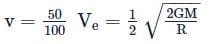
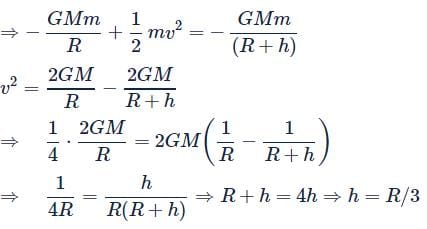
Maximum height reached by a rocket fired with a speed equal to 50% of the escape velocity from earth's surface is :
Detailed Solution: Question 1
A galvanometer of resistance 40Ω gives a deflection of 10 divisions per mA. There are 50 divisions on the scale. Maximum current that can pass through it when a shunt resistance of 2Ω is connected is
Detailed Solution: Question 2

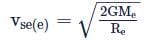
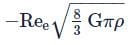
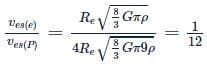
The escape velocity for the earth is Ves. Find out escape velocity for a planet whose radius is four times and density is nine times that of the earth. If is n×6 Ves. Find n.
Detailed Solution: Question 3

A soap bubble (surface tension = T) is charged to a maximum surface density of charge = σ. When it is just going to burst. Its radius R is given by:
Detailed Solution: Question 4
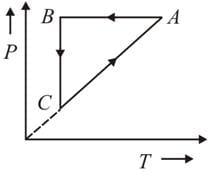
A cyclic process ABCA is shown in P−T diagram. What would be its P−V graph:
Detailed Solution: Question 5
Solar radiation emitted by sun resembles that emitted by a black body at a temperature of 6000 K. Maximum intensity is emitted at a wavelength of about 4800 Å. If the sun were cooled down from 6000 K to 3000 K, then the peak intensity would occur at a wavelength of
Detailed Solution: Question 6
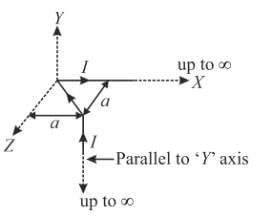
The magnetic field at the origin due to the current flowing in the wire is
Detailed Solution: Question 7
The dominant mechanisms for motion of charge carriers in forward and reverse biased silicon p−n junctions are
Detailed Solution: Question 8
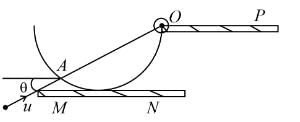
A hemispherical shell of mass m and radius R is hinged at point O and placed on a horizontal surface MN as shown in the figure. A ball of mass m moving with velocity u inclined at an angle θ = tan−1(1/2) strikes the shell at point A (as shown in the figure) and stops. What is the minimum speed u if the given shell is to reach the horizontal surface OP ?
Detailed Solution: Question 9
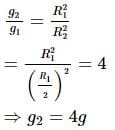
The acceleration due to gravity on the surface of earth is g. If the diameter of earth reduces to half of its original value and mass remains constant, then acceleration due to gravity on the surface of earth would be :
Detailed Solution: Question 10

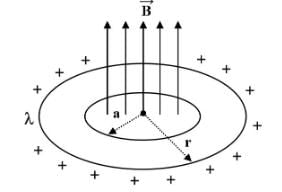
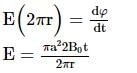
A ring of mass 4 kg is uniformly charged with a linear charge density λ=4 C m−1 and kept on a rough horizontal surface with a friction coefficient of μ = π/4. A time-varying magnetic field B = B0t2 is applied in a circular region of radius a (a < r) perpendicular to the plane of the ring as shown in the figure. Find out the time (in seconds) when the ring just starts to rotate on the surface. ( Take a = 5 cm, g = 10 m s−2 and B0 = 125 T s−2)
Detailed Solution: Question 11


A load of 31.4 kg is suspended from a wire of radius 10-3 m and density 9 x 10³ kg/m3. The Young's modulus and heat capacity of the material of the wire are 9.8 x 10¹⁰ N/m2 and 490 J/kg K respectively. The change in temperature of the wire if 75% of the work done is converted into heat, is 1/n K. Then the value of n is:
(Take π = 3.14)
(Take π = 3.14)
Detailed Solution: Question 12






Detailed Solution: Question 13

Assertion (A): Boron has a smaller first ionisation enthalpy than beryllium.
Reason (R): The penetration of a 2s-electron to the nucleus is more than the 2p-electron hence, 2p-electron is more shielded by the inner core of electrons than 2 s-electrons.
Reason (R): The penetration of a 2s-electron to the nucleus is more than the 2p-electron hence, 2p-electron is more shielded by the inner core of electrons than 2 s-electrons.
Detailed Solution: Question 14
In the following sub-questions, choose the correct answer from among the following possibilities and select the correct code of your answer (Answer of 1, 2, 3, and 4 respectively):
The most stable low valent halide
(1) GeCl₂
(2) SnCl₂
(3) PbCl₂
A non-existing halide
(1) SnCl₄
(2) PbCl₄
(3) PbI₄
A purely acidic oxide
(1) PbO₂
(2) SnO₂
(3) SiO₂
Thermally most stable hydride
(1) NH₃
(2) PH₃
(3) AsH₃
The most stable low valent halide
(1) GeCl₂
(2) SnCl₂
(3) PbCl₂
A non-existing halide
(1) SnCl₄
(2) PbCl₄
(3) PbI₄
A purely acidic oxide
(1) PbO₂
(2) SnO₂
(3) SiO₂
Thermally most stable hydride
(1) NH₃
(2) PH₃
(3) AsH₃
Detailed Solution: Question 15
The major product B formed in the following reaction sequence is:
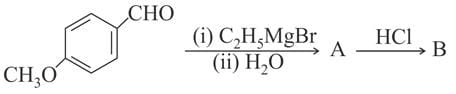
Detailed Solution: Question 16


Structure of ‘A’ and type of isomerism in the above reaction are respectively
Structure of ‘A’ and type of isomerism in the above reaction are respectively
Detailed Solution: Question 17
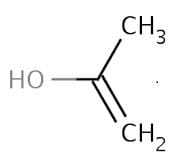
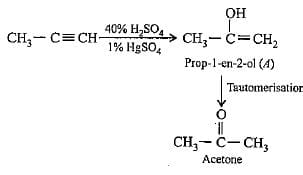
Detailed Solution: Question 18
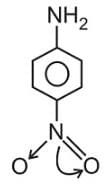
 (Aliphatic amines) Most basic due to +I effect of methyl group. Methoxy group is electron donating group and increase electron density by (+M) effect on NH2 group.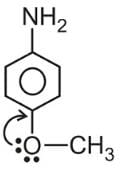
 Most basic because NH2 connected with sp3 C while in i,ii&iii Connected with sp2 C & basic strength ∝∝ +M/+I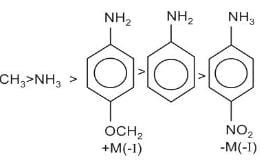
During the Kjeldahl method, 2.8 g of an organic compound was digested and the evolved ammonia was absorbed by 60 mL of M/20 H2SO4. What volume of M/20 NaOH solution was required for complete neutralisation of the unreacted acid if the percentage of nitrogen in the compound was 1% ? (mark answer in mL)
Detailed Solution: Question 19
1.5gm mixture of SiO2 and Fe2O3 on very strong heating leave a residue weighting 1.46gm. The reaction responsible for loss of weight is :
Fe2O3( s) → Fe3O4( s) + O2( g)
What is the percentage by mass of Fe in original sample :-
Fe2O3( s) → Fe3O4( s) + O2( g)
What is the percentage by mass of Fe in original sample :-
Detailed Solution: Question 20
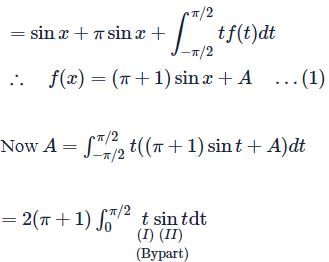
Consider a real valued continuous function f such that

If M and m are maximum and minimum value of the function f, then
Detailed Solution: Question 21

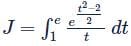
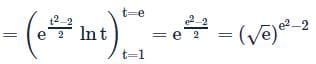
Let  . The value of (J + K) is equal to (Here exp.(x) means e power x.
. The value of (J + K) is equal to (Here exp.(x) means e power x.Detailed Solution: Question 22
 and
and 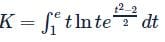

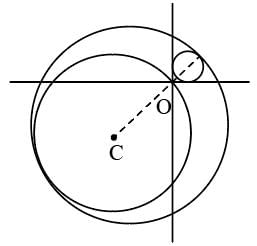
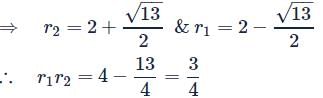
If radii of the smallest and largest circle passing through origin and touching the circle x2 + y2 + 4x + 6y−3 = 0 are r1 and r2 respectively, then r1r2 is equal to -
Detailed Solution: Question 23
If z is a complex number such that z + i|z| = izˉ + 1, then |z| is -
Detailed Solution: Question 24
If  , then the standard deviation of observations 3x1 + 2, 3x2 + 2, 3x3 + 2, 3x4 + 2 and 3x5 + 2 is equal to
, then the standard deviation of observations 3x1 + 2, 3x2 + 2, 3x3 + 2, 3x4 + 2 and 3x5 + 2 is equal toDetailed Solution: Question 25
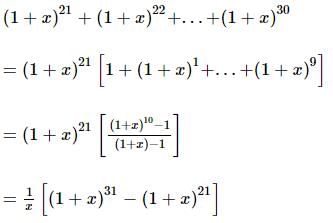
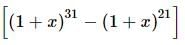
The coefficient of x⁵ in the expansion of (1 + x)²¹ + (1 + x)²² + ... + (1 + x)³⁰ is:
Detailed Solution: Question 26

If the line x - 1 = 0 is a directrix of the hyperbola kx² - y² = 6, then the hyperbola passes through the point:
Detailed Solution: Question 27
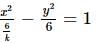

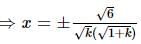 is the equation of directrix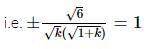

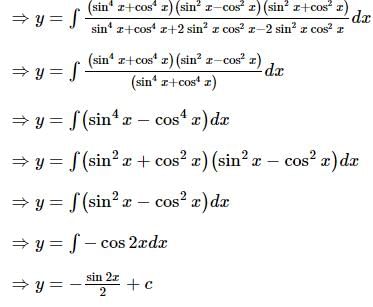
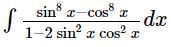 is equal to (where C is an arbitrary constant)
Detailed Solution: Question 28

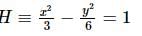
If hyperbola 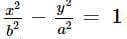 passes through the focus of ellipse
 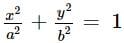 and eccentricity of hyperbola is √3λ, then value of λ is
passes through the focus of ellipse and eccentricity of hyperbola is √3λ, then value of λ isDetailed Solution: Question 29
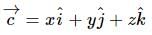
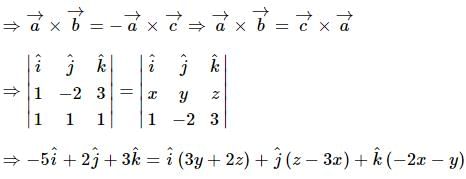
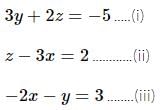
Let  be a vector such that
 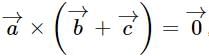 , then the value of
  is equal to _______.
be a vector such that , then the value of is equal to _______.Detailed Solution: Question 30

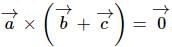

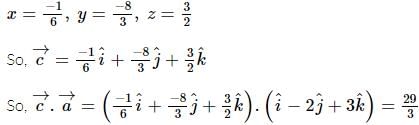
 = 29
= 29360 docs|100 tests |
