CBSE Class 5  >  Class 5 Test  >  Science   >  Test: Animal Life - 2 - Class 5 MCQ

Animal Life - 2 - Class 5 Science Free MCQ Test with solutions


MCQ Practice Test & Solutions: Test: Animal Life - 2 (10 Questions)

You can prepare effectively for Class 5 Science Class 5 with this dedicated MCQ Practice Test (available with solutions) on the important topic of "Test: Animal Life - 2". These 10 questions have been designed by the experts with the latest curriculum of Class 5 2026, to help you master the concept.

Test Highlights:

  • - Format: Multiple Choice Questions (MCQ)
  • - Duration: 20 minutes
  • - Number of Questions: 10

Sign up on EduRev for free to attempt this test and track your preparation progress.

Test: Animal Life - 2 - Question 1

Which of the following animals breathe through body holes?

Detailed Solution: Question 1

The correct answer is Option A.

  • Grasshopper (Option A): Grasshoppers breathe through tiny openings known as spiracles located on the sides of their bodies.
  • These spiracles allow air to enter their tracheal system, facilitating respiration directly to their tissues.

Animals That Do Not Breathe Through Body Holes:

    • Lizard (Option B): Lizards breathe through their nostrils and lungs. They do not have body holes for respiration.
    • Rat (Option C): Rats breathe through their nostrils and lungs. They do not have body holes for respiration.

    Test: Animal Life - 2 - Question 2

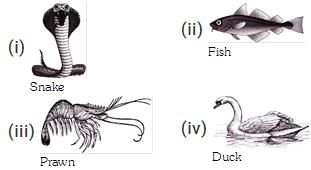
    Which of the following animals breathe through gills?

    Detailed Solution: Question 2

    Gills are specialized organs found primarily in aquatic animals, enabling them to extract oxygen from water.

    • Fish (ii): Fish take in water through their mouths, which then flows over their gills. Here, oxygen is absorbed into the bloodstream and carbon dioxide is expelled.
    • Prawn (iii): Prawns also rely on gills for respiration. Water passing over their gills facilitates the necessary gas exchange for their survival.
    • Snake (i): Snakes are terrestrial reptiles and breathe using lungs, not gills.
    • Duck (iv): Ducks, being birds, use lungs for breathing and hence do not have gills.

    The correct answer is that among the animals shown, only the fish and prawn utilize gills for breathing, making the appropriate choice "Only (ii) and (iii)".

    Test: Animal Life - 2 - Question 3

    The surroundings in which an animal lives and grows is called its

    Detailed Solution: Question 3

    The surroundings in which an animal lives and grows is called its Habitat.
    Explanation:
    - Habitat refers to the natural environment or surroundings in which an animal, plant, or organism lives and grows.
    - It includes various factors such as climate, geographical features, vegetation, and other living organisms that contribute to the overall conditions of the environment.
    - A habitat provides the necessary resources, such as food, water, shelter, and suitable living conditions, for an animal to survive and reproduce.
    - Different animals have different habitat requirements, depending on their adaptations and ecological niche.
    - Examples of habitats include forests, deserts, grasslands, oceans, rivers, and even human-built environments like cities.
    - The availability and quality of a suitable habitat greatly influence the population size and distribution of a particular species.
    - Any changes or disturbances in the habitat can have significant impacts on the survival and well-being of the animals residing in it.
    - Conservation efforts often focus on protecting and preserving habitats to maintain biodiversity and ensure the survival of various species.

    Test: Animal Life - 2 - Question 4

    Which of the following is correct statement regarding the given animals? 
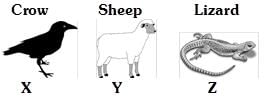
    Detailed Solution: Question 4

    • Crow (X): Crows are omnivores, meaning they consume a variety of foods including plants, insects, and small animals.
    • Sheep (Y): Sheep are herbivores, primarily eating grasses, plants, and other vegetation.
    • Lizard (Z): Lizards are typically carnivores, feeding on insects and small animals.

    Therefore, the given classifications accurately describe the dietary habits of these animals.

    Test: Animal Life - 2 - Question 5

    Which of the following animals is an example of an arboreal animal?

    Detailed Solution: Question 5

    Squirrels are arboreal animals, meaning they mostly live on trees. They have adaptations that help them climb and move through trees.

    Test: Animal Life - 2 - Question 6

    Which of the following is the purpose of migration in animals?

    Detailed Solution: Question 6

    Purpose of Migration in Animals:
    Migration is a behavioral adaptation observed in many animal species. It refers to the regular seasonal movement of animals from one place to another. The purpose of migration in animals can vary depending on the species and their specific ecological needs. However, some common purposes of migration include:
    1. To Escape from Harsh Weather: Many animals migrate to avoid extreme weather conditions, such as cold winters or hot summers. By moving to more favorable habitats, they can ensure their survival and increase their chances of finding resources.
    2. To Search for Food: Food availability plays a crucial role in the migration of many animals. Some species migrate to areas with abundant food resources during certain seasons. This allows them to take advantage of the available food and ensure their survival.
    3. To Reach Breeding Grounds: Migration is often driven by the need to reproduce. Many animals migrate to specific breeding grounds where they can find suitable mates and optimal conditions for raising their young. This ensures the continuation of their species.
    4. For Better Living Conditions: Migration can also be motivated by the search for better living conditions. Animals may move to areas with more suitable habitats, such as water bodies or forests, where they can find shelter, protection, and resources necessary for their survival.
    5. To Avoid Predators: Some animals migrate to escape from predators. By moving to new locations, they can reduce their risk of predation and increase their chances of survival.
    In conclusion, the purpose of migration in animals can be multifaceted, including escaping harsh weather, searching for food, reaching breeding grounds, seeking better living conditions, and avoiding predators. Different species exhibit different migration patterns based on their specific needs and environmental factors.

    Test: Animal Life - 2 - Question 7

    Grass-hopper protects itself from being eaten by its predator -

    Detailed Solution: Question 7

    Grass-hopper protects itself from being eaten by its predator:
    - Camouflage: The grasshopper has the ability to blend in with its surroundings, particularly the grass, which helps it hide from predators. This camouflage makes it difficult for predators to spot the grasshopper, increasing its chances of survival.
    - Hopping: Grasshoppers are known for their incredible jumping ability. When they sense danger, they can quickly hop away from their predators. This swift movement allows them to escape from potential threats and increases their chances of survival.
    - Warning Colors: Some grasshopper species have bright colors or patterns that act as warning signals to predators. These colors indicate that the grasshopper is toxic or unpalatable, deterring predators from attacking it.
    - Spines and Antennae: Grasshoppers have spines and antennae that serve as physical defenses. These structures can be used to deter predators by causing discomfort or injury when touched or attacked.
    - Startling Behavior: Grasshoppers are capable of making sudden movements or emitting loud sounds when they feel threatened. This behavior startles predators, giving the grasshopper an opportunity to escape.
    - Chemical Defenses: Some grasshopper species possess chemical defenses, such as producing toxic compounds or releasing foul-smelling odors, which can repel or deter predators. These defenses make the grasshopper unappetizing or even harmful to predators.
    By employing these various defense mechanisms, grasshoppers are able to protect themselves from being eaten by their predators.

    Test: Animal Life - 2 - Question 8

    Camouflage phenomena is seen in which one of the following animals?

    Detailed Solution: Question 8

    Camouflage Phenomena in Animals: Camouflage is a natural adaptation that allows animals to blend in with their surroundings, making them difficult to spot by predators or prey. Among the animals listed, the camouflage phenomena is seen in the Chameleon.

    Test: Animal Life - 2 - Question 9

    Following are adaptation of animals for terrestrial habitat.

    (i) They have strong claws that can be withdrawn inside their toes
    (ii) They have eyes on both the sides of their heads.
    (iii) They are light brown in color.
    (iv)They have strong, flat hind teeth for chewing.
    (v) They move in herds
    (vi) They have eyes in front of their faces.

    Q. Select the option that correctly categories the given adaptation for predator and prey animals.

    Detailed Solution: Question 9

    Predator and Prey Adaptations
    Adaptations for Predators:
    - They have strong claws that can be withdrawn inside their toes.
    - They have eyes in front of their faces.
    Adaptations for Prey:
    - They have eyes on both sides of their heads.
    - They are light brown in color.
    - They have strong, flat hind teeth for chewing.
    - They move in herds.

    Test: Animal Life - 2 - Question 10

    Which body covering helps birds to fly and stay warm?

    Detailed Solution: Question 10

    Feathers help birds to fly and keep them warm. They provide insulation and are lightweight, allowing for efficient flight.

    33 videos|237 docs|46 tests
    Information about Test: Animal Life - 2 Page
    In this test you can find the Exam questions for Test: Animal Life - 2 solved & explained in the simplest way possible. Besides giving Questions and answers for Test: Animal Life - 2, EduRev gives you an ample number of Online tests for practice
    33 videos|237 docs|46 tests
    Download as PDF