
Application of Integrals - 3 - Free MCQ Practice Test with solutions, JEE
MCQ Practice Test & Solutions: Test: Application of Integrals - 3 (30 Questions)
You can prepare effectively for JEE Mathematics (Maths) for JEE Main & Advanced with this dedicated MCQ Practice Test (available with solutions) on the important topic of "Test: Application of Integrals - 3". These 30 questions have been designed by the experts with the latest curriculum of JEE 2026, to help you master the concept.
Test Highlights:
- - Format: Multiple Choice Questions (MCQ)
- - Duration: 60 minutes
- - Number of Questions: 30
Sign up on EduRev for free to attempt this test and track your preparation progress.

For which one of the following function Rolle's theorem is applicable?
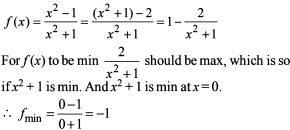
Detailed Solution: Question 1
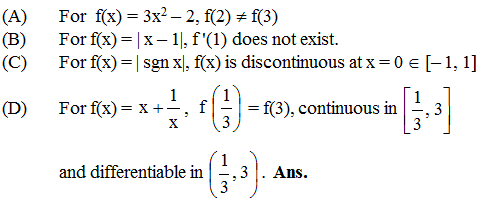

Detailed Solution: Question 2
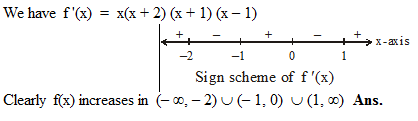

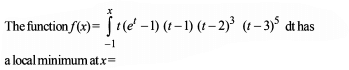
Detailed Solution: Question 3
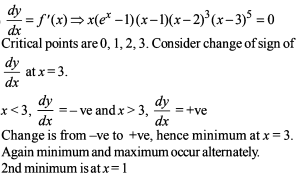

Detailed Solution: Question 4
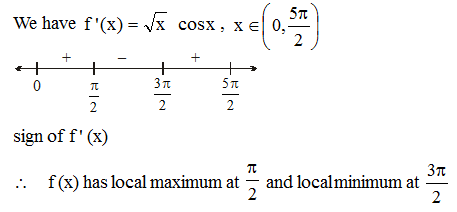
The length of a longest interval in which the function f (x) = 3 sinx – 4 sin3x is increasing, is
Detailed Solution: Question 5
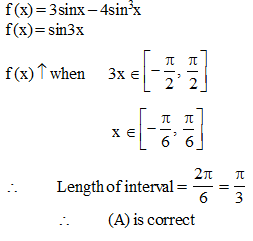

Detailed Solution: Question 6
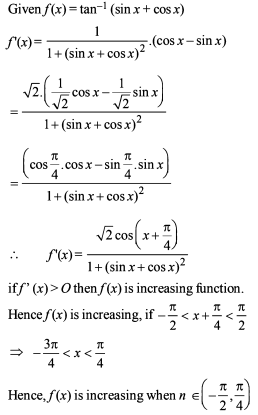
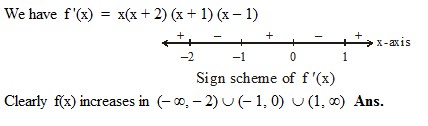
Detailed Solution: Question 7


Detailed Solution: Question 8
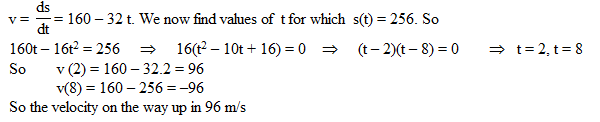
A dynamite blast blows a heavy rock straight up with a launch velocity of 160 m/sec. It reaches a height of s = 160 t = 16t2 after t sec. The velocity of the rock when it is 256 m above the ground on the way up is
Detailed Solution: Question 9
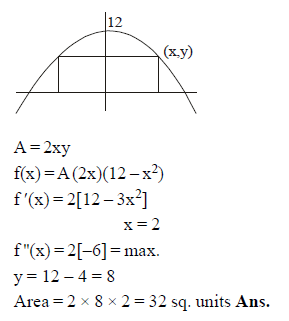
Find the area (in sq. units) of the largest rectangle with lower base on the x-axis & upper vertices on thecurve y = 12 – x2.
Detailed Solution: Question 10
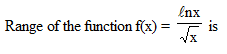
Detailed Solution: Question 11
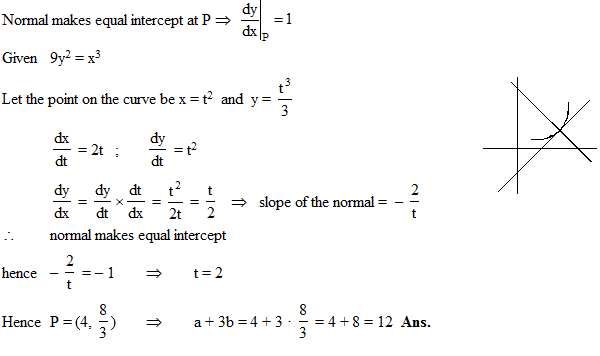
If the point P(a, b) lies on the curve 9y2 = x3 such that the normal to the curve at P makes equal intercepts with the axes. The value of
(a + 3b) is
Detailed Solution: Question 12
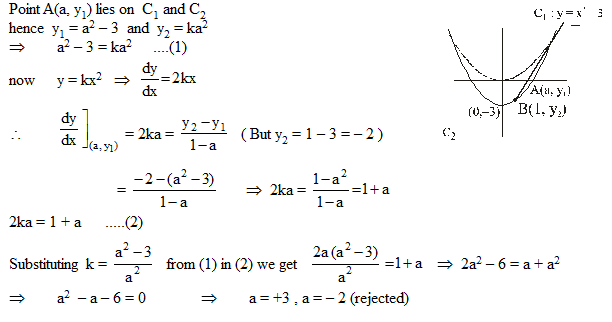
Two curves C1 : y = x2 – 3 and C2 : y = kx2 , intersect each other at two different points. The tangent drawn to C2 at one of the points of intersection A (a,y1) , (a > 0) meets C1 again at B(1,y2) . The value of ‘a’ is
Detailed Solution: Question 13
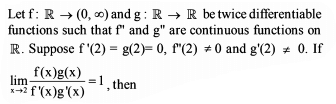
Detailed Solution: Question 14
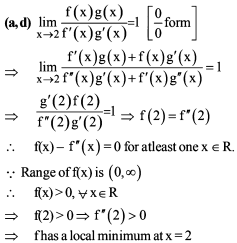
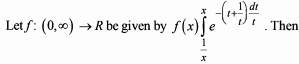
Detailed Solution: Question 15
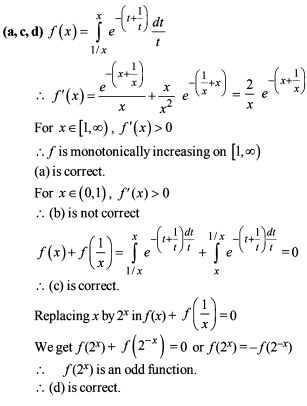
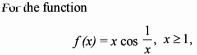
Detailed Solution: Question 16
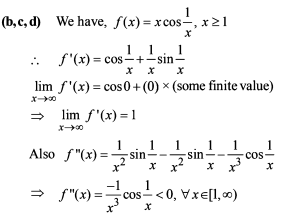
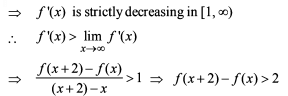

Detailed Solution: Question 17
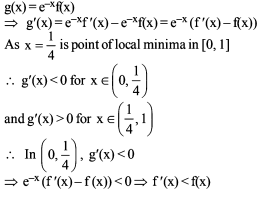
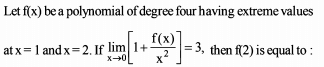
Detailed Solution: Question 18
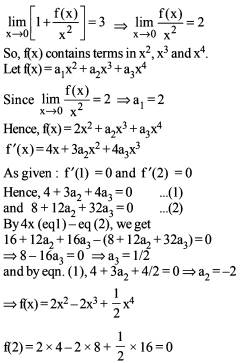
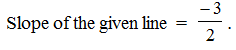
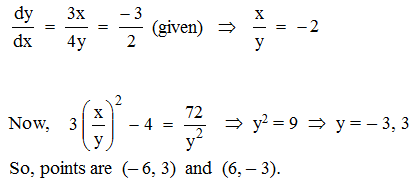
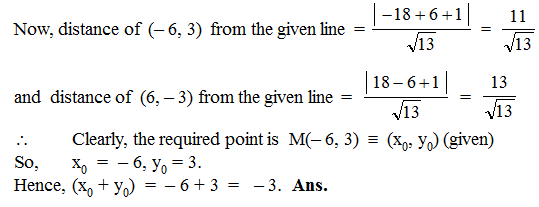
If M (x0, y0) is the point on the curve 3x2 – 4y2 = 72, which is nearest to the line 3x + 2y + 1 = 0, then the value of (x0 + y0) is equal to
Detailed Solution: Question 19
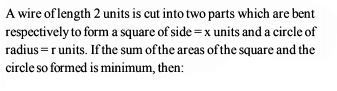
Detailed Solution: Question 20
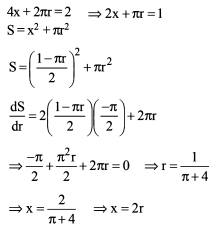

Detailed Solution: Question 21
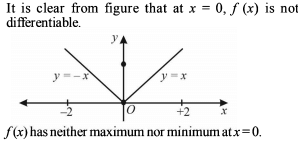

Detailed Solution: Question 22
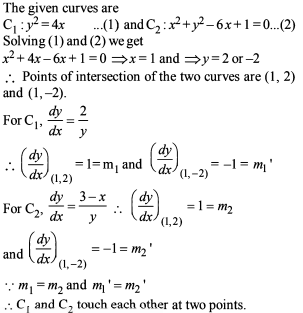

Detailed Solution: Question 23
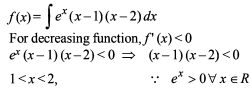

Detailed Solution: Question 24
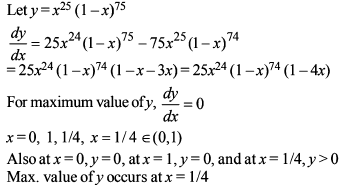
If the exhaustive set of all possible values of c such that f(x) = e2x – (c + 1) ex + 2x + cos 2 + sin 1, is monotonically increasing for all x ∈ R, is (–∞, λ], then find the value of λ.
Detailed Solution: Question 25
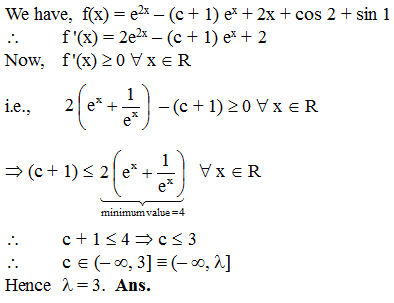

Detailed Solution: Question 26
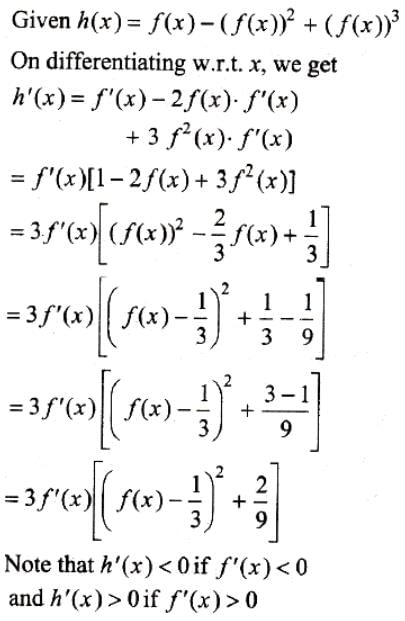
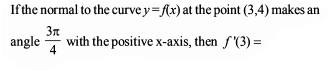
Detailed Solution: Question 27
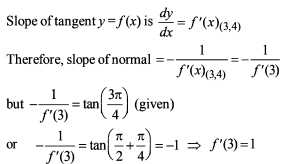

Detailed Solution: Question 28
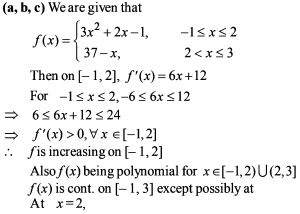
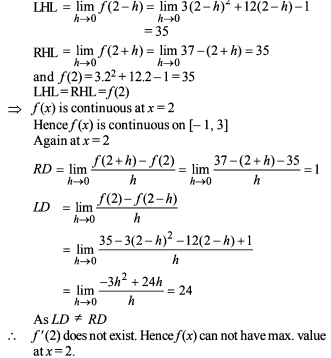
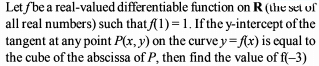
Detailed Solution: Question 29
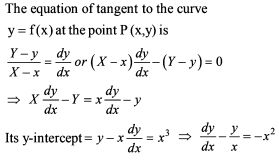
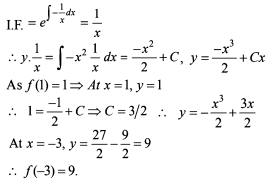

Detailed Solution: Question 30

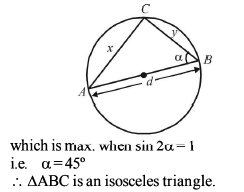
173 videos|510 docs|154 tests |
