CBSE Class 6  >  Class 6 Test  >  1000+ MCQ Questions  >  Test: Basic Geometrical Ideas - Class 6 MCQ

Basic Geometrical Ideas - Free MCQ Practice Test with solutions,


MCQ Practice Test & Solutions: Test: Basic Geometrical Ideas (10 Questions)

You can prepare effectively for Class 6 1000+ MCQ Questions for Class 6 with this dedicated MCQ Practice Test (available with solutions) on the important topic of "Test: Basic Geometrical Ideas". These 10 questions have been designed by the experts with the latest curriculum of Class 6 2026, to help you master the concept.

Test Highlights:

  • - Format: Multiple Choice Questions (MCQ)
  • - Duration: 10 minutes
  • - Number of Questions: 10

Sign up on EduRev for free to attempt this test and track your preparation progress.

Test: Basic Geometrical Ideas - Question 1

How many points are enough to fix a line?

Detailed Solution: Question 1

To fix a line in a plane, you need 2 points. Here's why:

- Two distinct points uniquely determine a line in a plane.
- If you have 1 point, you can draw infinite lines passing through it.
- With 3 or more points, you risk creating inconsistencies or unnecessary complexity.

Therefore, the correct answer is A: 2 points.

Test: Basic Geometrical Ideas - Question 2

How many lines can pass through one given point?

Detailed Solution: Question 2

To determine the number of lines that can pass through a single given point, consider the following:

  • A line is defined by two points.
  • Given one point, there is no restriction on the direction or slope a line can take through this point.
  • Therefore, an infinite number of lines can pass through a single point.

Thus, the correct answer is A: Countless.

Test: Basic Geometrical Ideas - Question 3

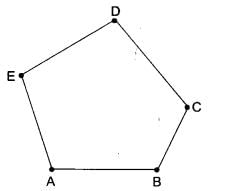
How many vertices are there in the following figure?
MCQ Questions for Class 6 Maths Chapter 4 Basic Geometrical Ideas with Answers 1

Detailed Solution: Question 3

To determine the number of vertices in the figure, look at the points where two or more lines meet. Each of these points is considered a vertex.

  • Identify all intersections of the edges in the figure.
  • Count each intersection point (vertex).


Test: Basic Geometrical Ideas - Question 4

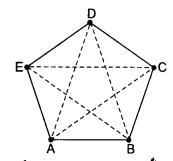
How many diagonals are there in the following figure?
MCQ Questions for Class 6 Maths Chapter 4 Basic Geometrical Ideas with Answers 3

Detailed Solution: Question 4

The figure is a pentagon with five diagonals:

  • AD
  • AC
  • BD
  • BE
  • CE

Therefore, there are 5 diagonals in total.

Test: Basic Geometrical Ideas - Question 5

How many vertices are there in a triangle?

Detailed Solution: Question 5

The correct answer is A: 3.

  • A triangle is a polygon with three edges and three vertices.
  • Each corner point of a triangle is called a vertex.

Test: Basic Geometrical Ideas - Question 6

How many angles are there in a triangle?

Detailed Solution: Question 6

Explanation:

A triangle is a basic geometric shape defined by three straight lines that connect three points.These points where the lines meet are called vertices. 

  • Each vertex forms an angle.  
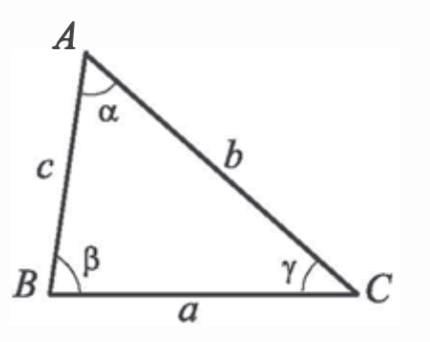
  • Since there are three vertices, there are three angles in a triangle. As shown in the figure (α, β, and γ)

Test: Basic Geometrical Ideas - Question 7

How many sides are there in a quadrilateral?

Detailed Solution: Question 7

The correct answer is D: 4.

- A quadrilateral is a polygon.
- The prefix "quadri-" means four, indicating the number of sides.
- Examples include squares, rectangles, and trapezoids.
- Each quadrilateral has:
- Four sides
- Four vertices (corners)
- Four angles

Understanding the term "quadrilateral" helps identify it as a four-sided shape.

Test: Basic Geometrical Ideas - Question 8

How many angles are there in a quadrilateral?

Detailed Solution: Question 8

To determine how many angles are in a quadrilateral, consider the following points:

  • - A quadrilateral is a polygon with four sides.
  • - By definition, a polygon with four sides will have four vertices.
  • - Each vertex in a polygon represents an angle.

Therefore, a quadrilateral has:
- 4 angles
 

Test: Basic Geometrical Ideas - Question 9

Which of the following statements is false?

Detailed Solution: Question 9

To determine the false statement:

- A: Every chord of a circle is not always a diameter.
- B: The center of a circle is indeed always in its interior.
- C: Every diameter of a circle is indeed also a chord.
- D: Two diameters of a circle will never intersect; they are parallel.

The false statement is A: "Every chord of a circle is also a diameter." This is untrue because a chord may or may not pass through the center of a circle, unlike a diameter.

Test: Basic Geometrical Ideas - Question 10

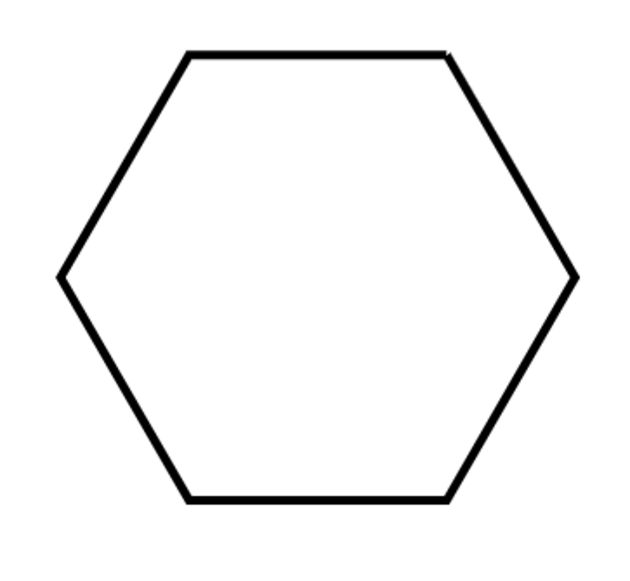
How many sides are there in the following figure?
What is a Hexagon? | 6 Sided Shape | How many sides?

Detailed Solution: Question 10

To determine how many sides the figure has, examine the image provided. The shape depicted is a hexagon.

- A hexagon is defined as a polygon with six sides.
- The prefix "hexa-" in Greek means six, indicating the number of sides in the shape.

238 tests
Information about Test: Basic Geometrical Ideas Page
In this test you can find the Exam questions for Test: Basic Geometrical Ideas solved & explained in the simplest way possible. Besides giving Questions and answers for Test: Basic Geometrical Ideas, EduRev gives you an ample number of Online tests for practice
Download as PDF