
Basic Laws - 1 - Free MCQ Practice Test with solutions, GATE EE
MCQ Practice Test & Solutions: Test: Basic Laws - 1 (10 Questions)
You can prepare effectively for Electrical Engineering (EE) Topicwise Question Bank for Electrical Engineering with this dedicated MCQ Practice Test (available with solutions) on the important topic of "Test: Basic Laws - 1". These 10 questions have been designed by the experts with the latest curriculum of Electrical Engineering (EE) 2026, to help you master the concept.
Test Highlights:
- - Format: Multiple Choice Questions (MCQ)
- - Duration: 30 minutes
- - Number of Questions: 10
Sign up on EduRev for free to attempt this test and track your preparation progress.

The equivalent resistance of the circuit shown in figure below across the terminals a-b will be
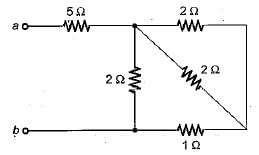
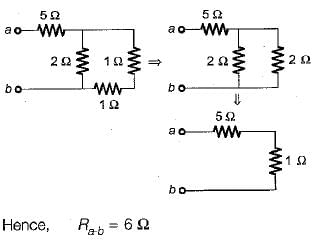
Detailed Solution: Question 1
For the circuit shown below, the equivalent resistance across terminals a-b will be
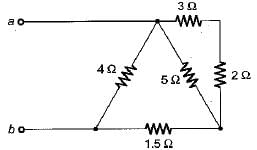
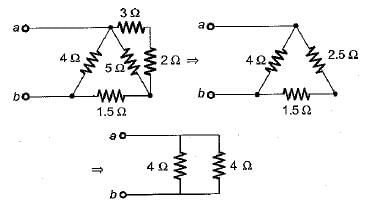
Detailed Solution: Question 2


What is the value of m so that the current I in the circuit shown below is maximum?
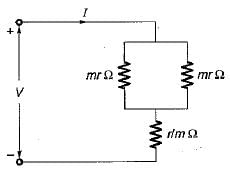
Detailed Solution: Question 3
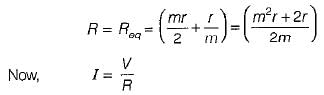
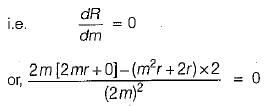
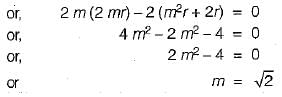
The given circuit shown below is converted to an equivalent voltage source V' connected in series with an equivalent resistance R'.
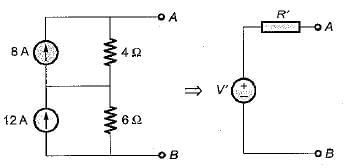
The values of V' and R' are respectively
Detailed Solution: Question 4
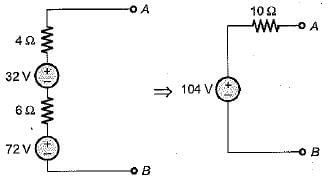
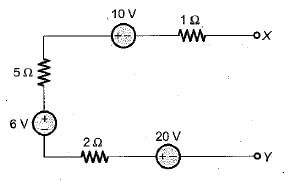
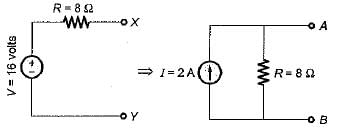
The equivalent current source for the circuit shown below will be represented as
Detailed Solution: Question 5
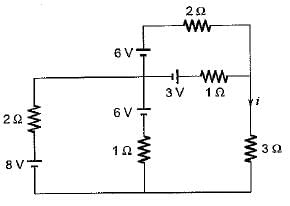
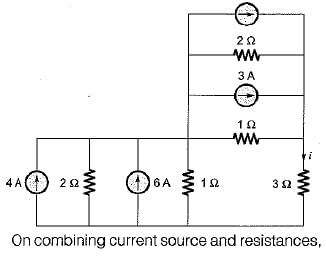
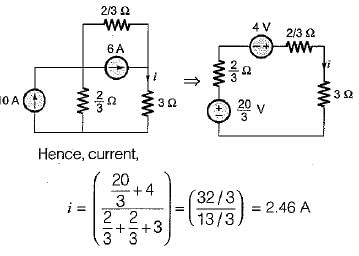
Assuming the batteries to be ideal voltage sources in the figure shown below, the value of current i is
Detailed Solution: Question 6
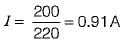
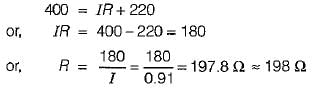
Two 100 W, 220 V bulbs are required to be connected across a 400 volts supply. The value of resistance to be inserted in the line so that the voltage across the bulbs does not exceed 220 V is
Detailed Solution: Question 7

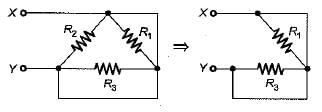
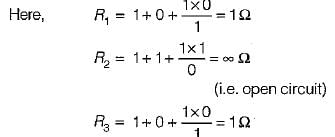
The equivalent resistance across the terminal X-Y for the circuit shown below is
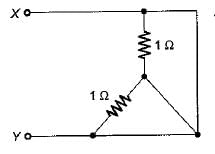
Detailed Solution: Question 8

Assertion ( A ) : KCL states that at any node of a circuit, at any instant of time, the sum of incoming currents is equal to the sum of outgoing currents.
Reason (R): KCL indicates the law of conservation of energy.
Reason (R): KCL indicates the law of conservation of energy.
Detailed Solution: Question 9
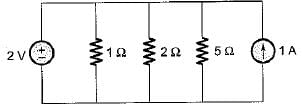
Detailed Solution: Question 10
