NEET Exam  >  NEET Test  >  Biology Class 11  >  Test: Body Fluids & Circulation - 2 - NEET MCQ

Body Fluids & Circulation - 2 - Free MCQ Practice Test with solutions,


MCQ Practice Test & Solutions: Test: Body Fluids & Circulation - 2 (18 Questions)

You can prepare effectively for NEET Biology Class 11 with this dedicated MCQ Practice Test (available with solutions) on the important topic of "Test: Body Fluids & Circulation - 2". These 18 questions have been designed by the experts with the latest curriculum of NEET 2026, to help you master the concept.

Test Highlights:

  • - Format: Multiple Choice Questions (MCQ)
  • - Duration: 18 minutes
  • - Number of Questions: 18

Sign up on EduRev for free to attempt this test and track your preparation progress.

Test: Body Fluids & Circulation - 2 - Question 1

Blood plasma proteins :
i. decrease in their level causes excessive absorption of water from tissues into blood.
ii. they maintain osmotic pressure.

Detailed Solution: Question 1

Let's analyze the statements about blood plasma proteins:

Statement i: "Decrease in their level causes excessive absorption of water from tissues into blood."

  • This statement is incorrect. A decrease in the level of blood plasma proteins would actually result in a decrease in osmotic pressure, leading to less water being drawn from tissues into the blood. Instead, it would cause water to accumulate in the tissues, leading to edema.

Statement ii: "They maintain osmotic pressure."

  • This statement is correct. Blood plasma proteins, especially albumin, play a crucial role in maintaining the osmotic pressure of the blood.

Therefore, the correct option is:

      3. Statement i) is wrong and ii) is correct.

Test: Body Fluids & Circulation - 2 - Question 2

The mass of tissue seen in the left corner of the right atrium close to the atri-ventricular septum is

Detailed Solution: Question 2

The mass of tissue seen in the lower left corner of the right atrium close to the atrio-ventricular septum called the atrio-ventricular node (AVN).

Test: Body Fluids & Circulation - 2 - Question 3

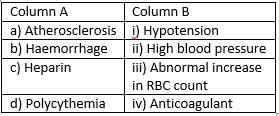
Match the following:

Detailed Solution: Question 3

Antherosclerosis leads to high blood pressure, haemorrhage causes hypotension, heparin is used as anticoagulant and polycythemia causes abnormal increase in RBC count.

Test: Body Fluids & Circulation - 2 - Question 4

Manoj has AB blood group, so he will have the following antibodies in his blood plasma :

Detailed Solution: Question 4

AB blood group does not have any antibodies in plasma. That's why AB blood group is a universal recipient.

Test: Body Fluids & Circulation - 2 - Question 5

Lymph will transport :

Detailed Solution: Question 5

Fats are absorbed through lymph in the lacteals present in the intestinal villi.

Test: Body Fluids & Circulation - 2 - Question 6

Blood pressure is expressed as the ratio of systolic over diastolic pressure. The difference between systolic and diastolic pressure is called pulse pressure. What will be its value for a normal healthy adult?

Detailed Solution: Question 6

Blood pressure is represented as the ratio of systolic over diastolic pressure. The difference between systolic and diastolic pressure is called pulse pressure. The value of normal healthy pulse pressure is 40 mm Hg.

Test: Body Fluids & Circulation - 2 - Question 7

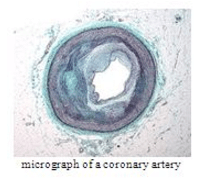
As Soham, ages with chronic CAD the lumen of his coronary artery may get nearly completely obstructed Result is flow of blood to heart tissue is restricted such that the tissue receives inadequate supply of oxygen rich blood and this condition is diagnosed as :
Detailed Solution: Question 7

Option C is correct: Myocardial ischemia.

Myocardial ischemia is a condition in which the heart muscle receives insufficient oxygen because coronary blood flow is reduced; this leads to reversible impairment of myocardial function if blood flow is restored.

The most common underlying mechanism is narrowing of a coronary artery by atherosclerosis, producing an oxygen supply-demand mismatch for the myocardium.

Myocardial infarction differs from ischemia in that infarction denotes irreversible necrosis of cardiac tissue caused by prolonged or complete loss of blood supply.

Heart failure is a clinical syndrome of the heart's inability to pump adequately and may be a consequence of repeated or severe ischemia or infarction, but it is not the immediate diagnosis for reduced coronary blood flow. Hypertension is elevated arterial pressure and is a risk factor for coronary disease rather than the acute condition described.

Therefore, the best diagnosis for limited oxygen delivery to heart tissue due to reduced coronary blood flow is Myocardial ischemia.

Test: Body Fluids & Circulation - 2 - Question 8

In our blood :
i. Granulocytes which constitutes maximum percentage of total leucocytes are neutrophils.
ii. Elevated number of neutrophils in blood indicates an acute infection such as appendicitis.

Detailed Solution: Question 8

In human blood, there are two main types of leucocytes: granulocytes and agranulocytes. Among granulocytes, neutrophils are the most abundant, making up about 60-65% of total white blood cells (leucocytes). Neutrophils are the body's first line of defense against infection because they perform phagocytosis—engulfing and destroying bacteria and dead cells. When there is an acute bacterial infection such as appendicitis, the body increases the production of neutrophils to fight off the pathogens, resulting in an elevated number of neutrophils in the blood. Therefore, both statements are correct.

Test: Body Fluids & Circulation - 2 - Question 9

In the human heart : 
i. The valve between right atrium and right ventricle is tricuspid while valve between left atrium and left ventricle is mitral valve.
ii. Openings of the right and the left ventricles into the pulmonary artery and the aorta are guarded by semilunar valves.
iii. ‘Lub’ the first sound which is low pitched is caused by the closure of semilunar valves while ‘Dub’ the second sound which is high pitched is caused by the closure of bicuspid and tricuspid valves.

Detailed Solution: Question 9

The first heart sound (lub) is associated with the closure of the tricuspid and bicuspid valves whereas the second heart sound (dub) is associated with the closure of the semilunar valves.

Test: Body Fluids & Circulation - 2 - Question 10

Meghna suffers from allergic asthma. After a blood test her leucocyte count displayed an abnormal increase in the number of :

Detailed Solution: Question 10

In case of allergic asthma, leucocyte count of blood test shows abnormal increase in the number of Eosinophils

Test: Body Fluids & Circulation - 2 - Question 11

Each cardiac cycle takes 0.8 seconds to occur. Calculate how many cardiac cycles occur in 4 minutes ?

Detailed Solution: Question 11

Solution:

To find the number of cardiac cycles in 4 minutes, follow these steps:

  • Convert minutes to seconds: 4 minutes = 240 seconds.
  • Determine the duration of one cardiac cycle: 0.8 seconds.
  • Calculate the number of cycles: 240 seconds ÷ 0.8 seconds = 300 cycles.

Thus, there are 300 cardiac cycles in 4 minutes.

Test: Body Fluids & Circulation - 2 - Question 12

When blood clot starts contracting, a pale yellow fluid starts oozing out. Its name and composition is :

Detailed Solution: Question 12

Plasma without the clotting factors is called serum. The clotting factors include fibrinogen and blood corpuscles

Test: Body Fluids & Circulation - 2 - Question 13

What is the location of the SAN?

Detailed Solution: Question 13

  • The SAN or the sinoatrial node is located in the upper right corner of the right atrium.
  • It has the ability to generate 70-75 action potentials per minute.
  • It is hence known as the pacemaker of the heart.

Test: Body Fluids & Circulation - 2 - Question 14

Which of these structures is close to the AVN?

Detailed Solution: Question 14

  • The AVN or the atrio-ventricular node is located in the lower left corner of the right atrium.
  • It is situated close to the atrio-ventricular septum which separates the atria and the ventricles.

Test: Body Fluids & Circulation - 2 - Question 15

Ramesh has Rh antigen and Anti-A as well as Anti-B antibodies in his blood. During blood transfusion he can receive blood from :

Detailed Solution: Question 15

Since Ramesh has both Anti-A and Anti-B antibodies and the Rh antigen, he has the O positive blood group. Therefore, he can receive blood from individuals with O positive or O negative blood groups. This is because O negative blood lacks A and B antigens and is compatible due to the absence of Rh factor, making option b  correct.

Test: Body Fluids & Circulation - 2 - Question 16

Given below are two statements:
Statement I: The coagulum is formed of network of threads called thrombins.
Statement II: Spleen is the graveyard of erythrocytes.
In the light of the above statements, choose the most appropriate answer from the options given below:

Detailed Solution: Question 16

RBCs have an average life span of 120 days after which they are destroyed in the spleen (graveyard of RBCs).
It is a clot or coagulam formed mainly of a network of threads called fibrins in which dead and damaged formed elements of blood are trapped.
Fibrins are formed by the conversion of inactive fibrinogens in the plasma by the enzyme thrombin.

Test: Body Fluids & Circulation - 2 - Question 17

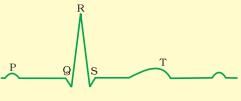
What does the T-wave in an ECG represent?

Detailed Solution: Question 17

The T-wave in an ECG represents the repolarisation of the ventricles, marking the return of the ventricles from an excited state to a normal state. This phase marks the end of systole. Therefore, Option C is correct.

Test: Body Fluids & Circulation - 2 - Question 18

When a person suffers from chest pain (angina):
i. the reason is reduced blood flow and inadequate oxygen supply to the heart muscle.
ii. the pain occurs because the heart muscle shifts to anaerobic respiration, leading to the accumulation of lactic acid.

Detailed Solution: Question 18

Chest pain during angina occurs due to decreased blood flow and reduced oxygen supply to the myocardium. In low-oxygen conditions, heart muscle cells temporarily use anaerobic respiration, producing lactic acid, which causes pain. Hence, both statements are correct.

142 videos|410 docs|135 tests
Information about Test: Body Fluids & Circulation - 2 Page
In this test you can find the Exam questions for Test: Body Fluids & Circulation - 2 solved & explained in the simplest way possible. Besides giving Questions and answers for Test: Body Fluids & Circulation - 2, EduRev gives you an ample number of Online tests for practice
142 videos|410 docs|135 tests
Download as PDF