NEET PG Exam  >  NEET PG Test  >  Topic Wise MCQs  >  Test: Chronic Kidney Disease - NEET PG MCQ

Chronic Kidney Disease - Free MCQ Practice Test with solutions, NEET PG


MCQ Practice Test & Solutions: Test: Chronic Kidney Disease (30 Questions)

You can prepare effectively for NEET PG Topic Wise MCQs for NEET PG with this dedicated MCQ Practice Test (available with solutions) on the important topic of "Test: Chronic Kidney Disease". These 30 questions have been designed by the experts with the latest curriculum of NEET PG 2026, to help you master the concept.

Test Highlights:

  • - Format: Multiple Choice Questions (MCQ)
  • - Duration: 30 minutes
  • - Number of Questions: 30

Sign up on EduRev for free to attempt this test and track your preparation progress.

Test: Chronic Kidney Disease - Question 1

Which of the following drug does not cause nephrotoxicity? (Recent Question 2016-17)

Detailed Solution: Question 1

Sirolimus is a non-nephrotoxic mTOR inhibitor that possesses a prolonged half-life of 62 hours. It was the initial mTOR inhibitor created for use in solid organ transplantation.

Test: Chronic Kidney Disease - Question 2

A 50 year-old diabetic patient is feeling unwell. On work up his serum creatinine = 5.0 mg% and blood urea = 125 mg%. Urine MICRAL test is positive. Which of the following will be useful for this patient? (Recent Question 2016-17)
Detailed Solution: Question 2

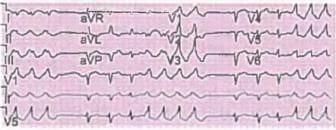
The ECG indicates a heart rate of 125 bpm accompanied by significant axis deviation. P waves are not observed, and there are abnormal wide complex qRS waves noted in leads V4, V5, and V6. Elevated, tented T waves, typically associated with hyperkalemia, are evident across all leads. The patient has diabetes and impaired kidney function. This individual is likely experiencing chronic kidney disease (CKD) and is approaching stage 4 - 5, which is contributing to hyperkalemia and the distinctive ECG alterations. There is a risk of diastolic heart arrest, making potassium management critically important for this patient.

  • Hyperkalemia in CKD patients can be addressed through:
    • Dietary restrictions on potassium along with the use of kaliuretic diuretics.
    • Potassium binding resins such as calcium resonium and sodium polystyrene, which facilitate potassium elimination via the gastrointestinal tract.
    • Dialysis is necessary for cases of persistent hyperkalemia.

If bicarbonate levels drop below 20 mmol/L, the renal tubular acidosis (RTA) component should be treated with alkali supplementation.

Test: Chronic Kidney Disease - Question 3

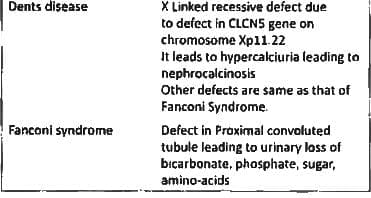
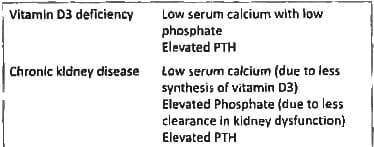
Which of the following conditions typically has rickets with normal or low calcium, elevated phosphorus, elevated parathormone, and elevated alkaline phosphatase? (APPG 2016)

Detailed Solution: Question 3

Test: Chronic Kidney Disease - Question 4

The triad of 'saturnine gout' + hypertension + renal failure is seen in? (APPG 2016)

Detailed Solution: Question 4

The origin of saturnine gout is attributed to lead toxicity. The signs of lead toxicity occur prior to the onset of gout. Therefore, the patient may exhibit:

  • anemia
  • basophilic stippling of red blood cells
  • abdominal pain
  • nerve palsy

Damage to the kidneys can result in hypertension and ongoing renal dysfunction. In saturnine gout, involvement of the knee joint is more prevalent than that of the metatarsophalangeal (MTP) joints.

Test: Chronic Kidney Disease - Question 5

Which of the following statement on microalbuminuria is not true? (AIIMS Nov 2015)

Detailed Solution: Question 5
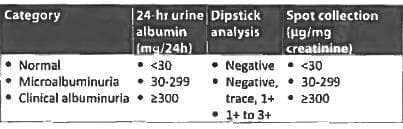
Urine protein levels ranging from 30 to 299 µg/day are referred to as microalbuminuria.
Importance of microalbuminuria:

  • Microalbuminuria indicates the presence of albumin in urine, which cannot be detected by standard urine dipsticks that are only sensitive to protein concentrations above 1 gm%.
  • It occurs before a decrease in GFR and suggests the existence of renal and cardiovascular issues.
  • Microalbuminuria serves as a significant marker for heightened cardiovascular morbidity and mortality in individuals with either type 1 or type 2 diabetes.
  • Conducting annual screenings for microalbuminuria enables the early identification of patients with nephropathy during its initial stages.
  • Enhancing glycaemic control, implementing vigorous antihypertensive therapies, and using ACE inhibitors or ARBs can help to slow the progression of nephropathy.

Definition of abnormalities in albumin excretion

Test: Chronic Kidney Disease - Question 6

All of the following may result in polyuria except: (UPSC 2015)

Detailed Solution: Question 6

Test: Chronic Kidney Disease - Question 7

Regarding adult polycystic kidney disease, which one of the following statements is not correct? (UPSC 2015)

Detailed Solution: Question 7

Adult polycystic kidney disease is autosomal dominant with 100% penetrance.

  • In 83% of patients aged 15-46 years, MRI shows an incidence of hepatic cysts. Most patients are asymptomatic with normal liver function tests, but hepatic cysts may bleed, become infected, rupture, and cause pain.
  • ADPKD patients have an increased risk of subarachnoid or cerebral hem orrhage from a ruptured intracranial aneurysm compared with the general population. Saccular aneurysms of the anterior cerebral circulation may be detected in up to 10% of asymptomatic patients on magnetic resonance angiography (MRA) screening.

Test: Chronic Kidney Disease - Question 8

Which of the following is not a feature of chronic renal failure? (UPSC 2015)

Detailed Solution: Question 8

Test: Chronic Kidney Disease - Question 9

Patient on insulin in CKD stage 4. What is the dose adjustment of insulin required? (Recent Question 2015-16)

Detailed Solution: Question 9

Exogenous insulin is typically processed by the kidney. However, when kidney function is compromised, the half-life of insulin is extended due to decreased degradation levels. This requires a reduction in insulin dosage. Additionally, it is important to note that the clearance of both sulfonylureas and their metabolites is significantly influenced by kidney function.

  • In patients with Stage 3-5 CKD, first-generation sulfonylureas should be avoided.
  • Among the second-generation sulfonylureas, glipizide is preferred because its metabolites lack activity, resulting in a reduced risk of hypoglycaemia.

Test: Chronic Kidney Disease - Question 10

All are true about GFR except? (Recent Question 2015-16)

Detailed Solution: Question 10
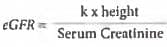
  • CKD is defined as GFR < 60 ml/min/1.73 m2 for 12 weeks/3 months. Hence choice C is wrong.
  • The average rate of decline varies, but it averages about 0.8 mL/min/1.73 m2/ year after age of 30 years. The decline accelerates after about 65 to 70 years of age.
  • In terms of GFR ranges for specific ages, an average 85 year-old male would be expected to have a glomerular filtration rate around 55-60 mL/min/1.73 m2, depending on his GFR at age 30. Hence choice A is correct.
  • Choice B is correct since GFR is best measured by creatinine clearance.
  • Choice is d is correct in children.

Test: Chronic Kidney Disease - Question 11

Patient with CRF is having a sodium level = 110 mEq/dl. Till what level should serum sodium be corrected in next 24 hours? (Recent Pattern 2014-15)

Detailed Solution: Question 11

Three primary factors influence the treatment of hyponatraemia.

  • The presence and severity of symptoms dictate the urgency and objectives of therapy. Patients experiencing acute hyponatraemia may exhibit symptoms ranging from headache, nausea, and vomiting to seizures, confusion, and central herniation. In contrast, those with chronic hyponatraemia that has lasted for over 48 hours are less likely to display severe symptoms.
  • Individuals with chronic hyponatraemia are at risk of developing osmotic demyelination syndrome (ODS) if the plasma Na+ levels are corrected by more than 8-10 mM in the first 24 hours, or by more than 18 mM within the first 48 hours.
  • The effectiveness of treatments such as hypertonic saline, isotonic saline, and vasopressin antagonists can be quite variable. Therefore, it is crucial to frequently monitor plasma Na+ concentration during corrective treatment.

Test: Chronic Kidney Disease - Question 12

Not seen with uremic lung? (Recent Pattern 2014-15)

Detailed Solution: Question 12

Its pathophysiology involves the increased permeability of the pulmonary alveolo-capillary interfaces caused by uremia, which results in:

  • Interstitial and intra-alveolar edema
  • Atelectasis
  • Alveolar haemorrhage
  • Formation of pulmonary hyaline membranes

These alterations are further aggravated by a bleeding diathesis due to platelet dysfunction in severe renal disease. The pulmonary symptoms and radiographic findings can be reversed through haemodialysis.

Test: Chronic Kidney Disease - Question 13

Diagnostic feature of CRF is: (Recent Pattern 2014-15)

Detailed Solution: Question 13

Broad casts in urine suggest that the kidney tubules are persistently damaged, leading the intact tubules to compensate for the impaired ones. Consequently, these surviving tubules expand, resulting in casts that are larger than usual, which are known as broad casts.

Test: Chronic Kidney Disease - Question 14

Which one of the following studies is most sensitive for detecting diabetic nephropathy in early stage? (Recent Pattern 2014-15)

Detailed Solution: Question 14

Microalbuminuria is characterised by the excretion of 30-300 mg of albumin within a 24-hour period (or 20-200 mcg/min or 30-300 mcg/mg creatinine) in 2 out of 3 urine samples. The identification of low levels of albumin excretion (microalbuminuria) has been associated with the early detection of incipient diabetic kidney disease. This stage necessitates proactive management to avert or slow the progression to overt diabetic nephropathy.

Test: Chronic Kidney Disease - Question 15

CRF shows all except: (Recent Pattern 2014-15)

Detailed Solution: Question 15

The two primary sites for insulin clearance are the liver and the kidney. The liver clears most insulin during first-pass transit, whereas the kidney clears most of the insulin in systemic circulation. Degradation normally involves endocytosis of the insulin-receptor complex, followed by the action of insulin-degrading enzyme. In kidney damage clearance of insulin is reduced leading to elevated insulin levels.

Test: Chronic Kidney Disease - Question 16

Clinical features of CRF/uraemia appear when renal function is reduced to: (Recent Pattern 2014-15)

Detailed Solution: Question 16

Clinical symptoms of uremia arise when over 50% of kidney parenchyma has been compromised. A healthy kidney comprises roughly 1 million nephrons, each playing a role in the overall glomerular filtration rate (GFR). In the event of renal damage (irrespective of the cause), the kidney possesses a natural capacity to sustain GFR, even as nephrons progressively deteriorate. The surviving healthy nephrons exhibit hyperfiltration and compensatory hypertrophy. This adaptability of nephrons enables the continued effective clearance of plasma solutes.

  • Stages 1 and 2 of chronic kidney disease (CKD) are typically asymptomatic.
  • Symptoms begin to manifest in stage 3.

Test: Chronic Kidney Disease - Question 17

CRF changes are A/E: (Recent Pattern 2014-15)

Detailed Solution: Question 17

CRF is consistently linked with hyperphosphataemia. The pathophysiology of secondary hyperparathyroidism and the resulting high-turnover bone disease is connected to abnormal mineral metabolism through the following processes:

  • Decreasing GFR results in lower phosphate excretion and, consequently, phosphate retention;
  • The retained phosphate triggers increased synthesis of PTH and growth of parathyroid gland mass;
  • Reduced levels of ionised calcium, due to decreased calcitriol production by the failing kidney as well as phosphate retention, also stimulate PTH production;
  • Fibroblast growth factor 23 (FGF-23) belongs to a group of phosphatonins that facilitate renal phosphate excretion. Recent studies indicate that the levels of this hormone, released by osteocytes, rise early in the development of CKD.
  • High levels of FGF-23 are also an independent risk factor for left ventricular hypertrophy and mortality in patients undergoing dialysis.
  • Furthermore, elevated FGF-23 levels may signal the necessity for therapeutic intervention (e.g., phosphate restriction), even when serum phosphate levels remain within the normal range.

Test: Chronic Kidney Disease - Question 18

Raised PTH is found in: (Recent Pattern 2014-15)

Detailed Solution: Question 18

Secondary hyperparathyroidism occurs in chronic renal failure as a result of a reduction in the synthesis of vitamin D3.

Test: Chronic Kidney Disease - Question 19

A 28 yr old man has lenticonus and ESRD. His maternal uncle also died of similar illness. Diagnosis is: (AIIMS May 2012)

Detailed Solution: Question 19

Four variants of Alport syndrome include:

  • Classic AS, inherited as an X-linked condition characterised by hematuria, sensorineural hearing loss, and conical deformation of the anterior lens surface (lenticonus);
  • A subtype of the X-linked form linked to diffuse leiomyomatosis;
  • An autosomal recessive variant; and
  • An autosomal dominant variant.

Both the autosomal recessive and dominant forms may lead to kidney disease without associated deafness or lenticonus.
Molecular Defects
Most individuals possess mutations in four out of the six genes that encode the chains of type IV collagen (COL4A3, COL4A4, COL4A5, and COL4A6).
Diagnosis
The diagnosis of classic AS relies on the X-linked inheritance pattern of hematuria, sensorineural deafness, and lenticonus. The combination of lenticonus and hematuria is distinctive for classic AS. The sensorineural hearing loss predominantly affects higher frequencies and is often only identifiable via an audiogram, typically remaining non-progressive. Hematuria generally advances to nephritis and may lead to renal failure in late adolescence for affected males, and at older ages for some females. Renal transplantation tends to be effective.

Test: Chronic Kidney Disease - Question 20

Central nervous system manifestations in chronic renal failure are a result of all of the following except: (Recent Pattern 2014-15)

Detailed Solution: Question 20

Hypocalcemia in chronic kidney disease (CKD) is associated with the onset of secondary hyperparathyroidism, which can result in:

  • Osteitis cystica fibrosa
  • Development of a Rugger jersey spine

The accompanying hyperphosphatemia contributes to the calcification of blood vessels, which in turn exacerbates atherosclerosis. Thus, hypocalcemia in CKD patients leads to both endocrinological and cardiovascular issues. Additionally, hyperosmolarity arises as urea is a key factor in determining serum osmolality. Factors such as sodium, potassium, glucose, and urea influence plasma osmolality. Acidosis can harm the blood-brain barrier, further aggravating the uremic encephalopathy experienced by these individuals. Furthermore, hyponatraemia due to volume overload accounts for the seizures observed in these patients.

Test: Chronic Kidney Disease - Question 21

Dialysis disequilibrium occurs due to: (Recent Pattern 2014-15)

Detailed Solution: Question 21

Dialysis disequilibrium syndrome manifests in individuals undergoing haemodialysis. The symptoms encompass:

  • headache
  • nausea
  • vomiting
  • blurred vision
  • muscle twitching
  • disorientation
  • delirium
  • hypertension
  • tremors
  • seizures

This condition is typically self-limiting and resolves within a few hours. Dialysis disequilibrium syndrome is linked to a reverse urea effect. Urea is eliminated from the brain at a slower rate than from the blood, creating an osmotic gradient that results in a net influx of water into the brain, leading to temporary cerebral oedema.

Test: Chronic Kidney Disease - Question 22

Normal sized to enlarged kidneys in a patient with chronic renal failure is indicative of: (Recent Pattern 2014-15)

Detailed Solution: Question 22

  • Bilaterally enlarged kidneys can be observed in:
  • Diabetes mellitus
  • Amyloidosis
  • Polycystic kidneys
  • HIV nephropathy
  • Bilateral hydronephrosis

Test: Chronic Kidney Disease - Question 23

Metabolic complication in CRF include all of the following except : (AI 1998)

Detailed Solution: Question 23

In chronic renal failure (CRF), various metabolic complications can arise. These include:

  • Hyperkalemia: This refers to elevated potassium levels in the blood, which can be dangerous.
  • Hypophosphatemia: This indicates low phosphate levels, which can lead to bone problems.
  • Hypocalcemia: This is characterised by low calcium levels, affecting muscle and nerve function.
  • Hypokalemia: This condition involves low potassium levels, which is not typically associated with CRF.

Among these options, hypokalemia is the exception, as it is not a common complication of chronic renal failure.

Test: Chronic Kidney Disease - Question 24

Chronic renal failure is often complicated by all of the following except: (Recent Pattern 2014-15)

Detailed Solution: Question 24

HUS contributes to the onset of acute kidney injury. The toxins present in chronic renal failure (CRF) lead to myopathy and neuropathy, whereas the hyperphosphataemia accounts for the ectopic calcification observed in tubules.

Test: Chronic Kidney Disease - Question 25

Dementia in patient of chronic renal failure with chronic hemodialysis is due to: (Recent Pattern 2014-15)

Detailed Solution: Question 25

Patients receiving long-term dialysis can develop dialysis encephalopathy (also known as dialysis dementia), a subacute, progressive, and frequently fatal condition. The pathogenesis of dialysis dementia has been associated with aluminium toxicity, which may arise from aluminium phosphate salts or from aluminium present in the dialysate.
From the early 1980s onwards, aluminium was systematically eliminated from the dialysate, resulting in a significant decrease in the occurrence of dialysis dementia.

Test: Chronic Kidney Disease - Question 26

Convulsions are commonly precipitated in terminal renal failure by: (Recent Pattern 2014-15)

Detailed Solution: Question 26

In the context of terminal renal failure, the combination of volume overload and damage to the blood-brain barrier results in cerebral edema, which can cause seizures. This issue is exacerbated by a hypertensive condition that increases cerebral blood flow, further aggravating the cerebral edema.

Test: Chronic Kidney Disease - Question 27

Anaemia of advanced renal insufficiency is best treated by: (Recent Pattern 2014-15)

Detailed Solution: Question 27

Anaemia due to advanced kidney disease is primarily treated with:
Recombinant human erythropoietin:

  • This medication stimulates the production of red blood cells.
  • Blood transfusions are less common for chronic anaemia management.
  • Parenteral iron therapy may help, but it is not the main treatment.
  • Folic acid is important for cell production, but not as a primary treatment.

Thus, the most effective treatment focuses on using erythropoietin to address the underlying cause of anaemia in kidney failure.

Test: Chronic Kidney Disease - Question 28

In chronic renal failure there is: (Recent Pattern 2014-15)

Detailed Solution: Question 28

Causes of increased anion gap (> 12 mEq/I; “MUDPILERS")

  • Milk-alkali syndrome
  • Uremia
  • Diabetic ketoacidosis
  • Propylene glycol
  • Lactic acidosis
  • Isoniazid intoxication
  • Ethanol ethylene glycol
  • Rhabdomyolysis/renal failure
  • Salicylates

A normal anion gap (6 - 12 mEq/L) may indicate the following:

  • Loss of bicarbonate (i.e., diarrhea)
  • Recovery from diabetic ketoacidosis
  • Ileostomy fluid loss
  • Carbonic anhydrase inhibitors (acetazolamide, dorzolamide, topiramate)
  • Renal tubular acidosis
  • Arginine and lysine in parenteral nutrition

A decreased anion gap (< 6 mEq/L) may suggest the following:

  • Hypoalbuminemia
  • Plasma cell dyscaria
  • Monoclonal protein
  • Bromide intoxication

Test: Chronic Kidney Disease - Question 29

In uraemia all are reversed by dialysis except: (Recent Pattern 2014-15)

Detailed Solution: Question 29
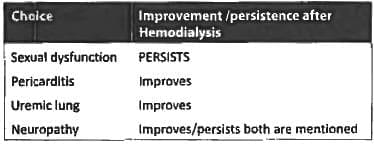

Hence from the two close answers, sexual dysfunction is a better answer to this question.

Test: Chronic Kidney Disease - Question 30

Restless leg syndrome (RLS) is seen in: (AI 2009)

Detailed Solution: Question 30

Restless leg syndrome (RLS) is commonly associated with:
Chronic renal failure:

  • This condition affects kidney function, which can lead to imbalances in the body and contribute to RLS symptoms.

Other conditions, like hypercalcemia, hyperphosphatemia, and hyperkalemia, are not typically linked to RLS. Therefore, chronic renal failure is a key factor to consider when discussing RLS.

327 tests
Information about Test: Chronic Kidney Disease Page
In this test you can find the Exam questions for Test: Chronic Kidney Disease solved & explained in the simplest way possible. Besides giving Questions and answers for Test: Chronic Kidney Disease, EduRev gives you an ample number of Online tests for practice
Download as PDF