E1 Reactions & Related - Free MCQ Practice Test with solutions, NEET NCERT
MCQ Practice Test & Solutions: Test: E1 Reactions & Related Reactions (15 Questions)
You can prepare effectively for NEET NCERT Based Tests for NEET with this dedicated MCQ Practice Test (available with solutions) on the important topic of "Test: E1 Reactions & Related Reactions". These 15 questions have been designed by the experts with the latest curriculum of NEET 2026, to help you master the concept.
Test Highlights:
- - Format: Multiple Choice Questions (MCQ)
- - Duration: 20 minutes
- - Number of Questions: 15
Sign up on EduRev for free to attempt this test and track your preparation progress.

Only One Option Correct Type
Direction (Q. Nos. 1-8) This section contains 8 multiple choice questions. Each question has four choices (a), (b), (c) and (d), out of which ONLY ONE option is correct.
Q.
The incorrect statement concerning E1 reaction is
Detailed Solution: Question 1
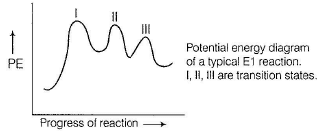
The correct statement regarding a unimolecular elimination reaction is
Detailed Solution: Question 2

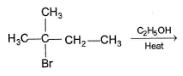
Consider the following reaction,
Q.
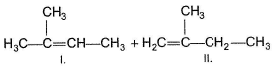
The correct statement concerning I and II is
Detailed Solution: Question 3
Consider the following elimination reaction,
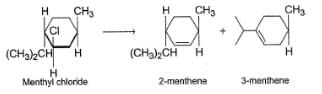
When reaction is carried out with C2H5ONain ethanol, 2-menthene is the major product while 3-menthene is the major product if reaction is substrate is heated in ethanol only. It is due to
Detailed Solution: Question 4
The reaction of tertiary butyl chloride in water to yield tertiary butyl alcohol is not appreciably affected by dissolved NaF; in DMSO, however, NaF bring about rapid formation of isobutene. It is because of
Detailed Solution: Question 5
When (CH3)3C — Cl is heated in ethanol, both alkene and ether are formed simultaneously by E1 and SN1 reaction. Which of the following will have adverse effect on both of the above reaction?
Detailed Solution: Question 6
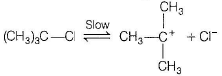
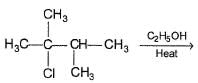
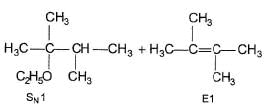
Consider the following reaction,
Q.
Increasing temperature increases the proportion of elimination (E1) product because
Detailed Solution: Question 7
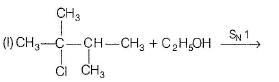
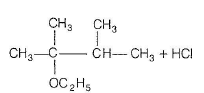
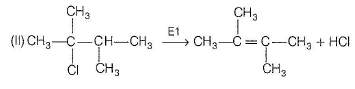
Which is the least reactive halide in both E1 and SN1 reaction?
Detailed Solution: Question 8
Direction (Q. Nos. 9-11) This section contains 3 multiple choice questions. Each question has four choices (a), (b), (c) and (d), out of which ONE or MORE THAN ONE are correct.
Consider the following reaction,
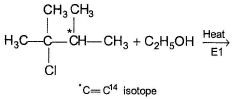
Detailed Solution: Question 9
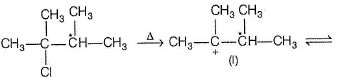
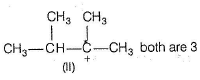
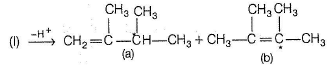
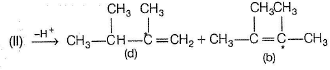
Consider the following elimination reaction,
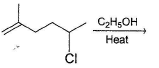
Detailed Solution: Question 10
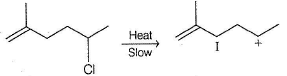
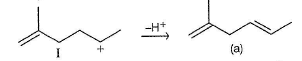
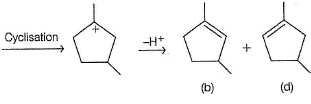
The correct statement regarding an E1 reaction is/are ?
Detailed Solution: Question 11
Comprehension Type
Direction (Q. Nos. 12-14) This section contains a paragraph, describing theory, experiments, data, etc. Three questions related to the paragraph have been given. Each question has only one correct answer among the four given options (a), (b), (c) and (d).
Passage
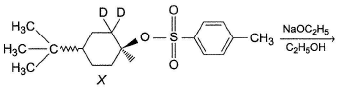
Consider the following reaction. The tertiary butyl group can be cis or trans to tosylate group. Answer the following questions based on the knowledge of E2 and E1 reaction mechanism.
Q.
The correct statement concerning above elimination reaction is
Detailed Solution: Question 12
Consider the following reaction. The tertiary butyl group can be cis or trans to tosylate group. Answer the following questions based on the knowledge of E2 and E1 reaction mechanism.
Q.
When tertiary butyl group and tosylate group are trans, the correct statement is
Detailed Solution: Question 13
Consider the following reaction. The tertiary butyl group can be cis or trans to tosylate group. Answer the following questions based on the knowledge of E2 and E1 reaction mechanism.
Q.
If the rate of reaction is independent of NaOEt concentration, it is concluded that
Detailed Solution: Question 14
One Integer Value Correct Type
Direction (Q. Nos. 15 and 16) This section contains 2 questions. When worked out will result in an integer from 0 to 9 (both inclusive).
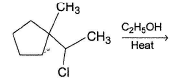
Consider the following reaction,
Q.
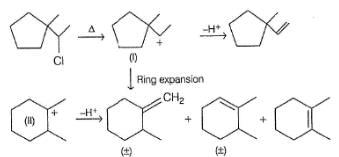
In principle, how many different alkenes are possible by the above elim ination reaction?
Detailed Solution: Question 15