
Linear Inequalities- Case Based Type Questions - Free with solutions Commerce
MCQ Practice Test & Solutions: Test: Linear Inequalities- Case Based Type Questions (10 Questions)
You can prepare effectively for Commerce Mathematics (Maths) Class 11 with this dedicated MCQ Practice Test (available with solutions) on the important topic of "Test: Linear Inequalities- Case Based Type Questions". These 10 questions have been designed by the experts with the latest curriculum of Commerce 2026, to help you master the concept.
Test Highlights:
- - Format: Multiple Choice Questions (MCQ)
- - Duration: 20 minutes
- - Number of Questions: 10
Sign up on EduRev for free to attempt this test and track your preparation progress.

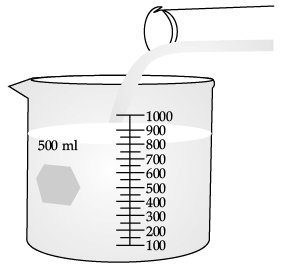
A beaker contains 640 litres of 8% solution of Boric acid. This is to be diluted by adding a 2% Boric acid solution to it.
Based on the above data, answer the following question.
Q. If x litres of 2% Boric acid solution is added to the beaker, the amount of acid becomes ........... litres.
Detailed Solution: Question 1

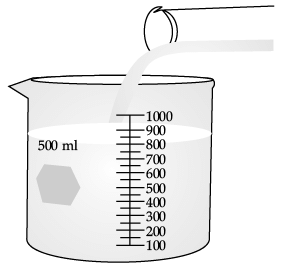
A beaker contains 640 litres of 8% solution of Boric acid. This is to be diluted by adding a 2% Boric acid solution to it.
Based on the above data, answer the following question.
Q. If the resulting mixture is to be more than 4% but less than 6% boric acid, then the range of x is ..........
Detailed Solution: Question 2


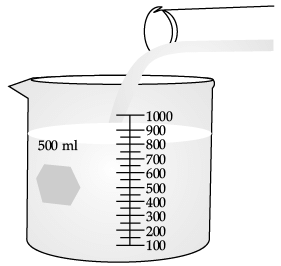
A beaker contains 640 litres of 8% solution of Boric acid. This is to be diluted by adding a 2% Boric acid solution to it.
Based on the above data, answer the following question.
Q. The initial quantity of water in the beaker is ........... litres.
Detailed Solution: Question 3
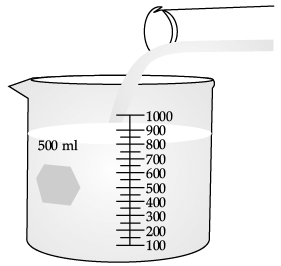
A beaker contains 640 litres of 8% solution of Boric acid. This is to be diluted by adding a 2% Boric acid solution to it.
Based on the above data, answer the following question.
Q. The amount of water after the mixing is .......... litres.
Detailed Solution: Question 4
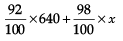

A beaker contains 640 litres of 8% solution of Boric acid. This is to be diluted by adding a 2% Boric acid solution to it.
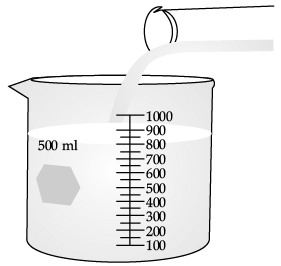
Based on the above data, answer the following question.
Q. The initial amount of acid in the beaker is ........... litres.
Detailed Solution: Question 5

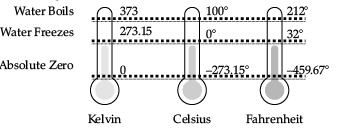
Kelvin(K), degree Celsius(°C) and degree Fahrenheit(°F) are three units of temperature. The conversion formula for them is as follows:
F = 9 / 5C + 32 and K = C + 273.15
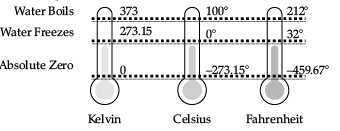
Based on the above data, answer the following question.
Q. When F = 68°F, C = ..............
Detailed Solution: Question 6
Kelvin(K), degree Celsius(°C) and degree Fahrenheit(°F) are three units of temperature. The conversion formula for them is as follows:
F = 9 / 5C + 32 and K = C + 273.15
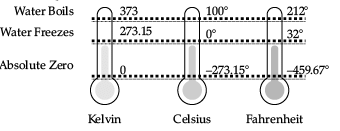
Based on the above data, answer the following question.
Q. For part (iv), the range of temperature in Kelvin(K) is ................
Detailed Solution: Question 7
Kelvin(K), degree Celsius(°C) and degree Fahrenheit(°F) are three units of temperature. The conversion formula for them is as follows:
F = 9 / 5C + 32 and K = C + 273.15
Based on the above data, answer the following question.
Q. When C = 120° F = .................
Detailed Solution: Question 8
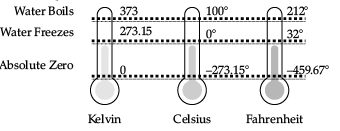
Kelvin(K), degree Celsius(°C) and degree Fahrenheit(°F) are three units of temperature. The conversion formula for them is as follows:
F = 9 / 5C + 32 and K = C + 273.15
Based on the above data, answer the following question.
Q. A solution is kept between 68°F and 77°F. What is the range in degree Celsius(C)?
Detailed Solution: Question 9
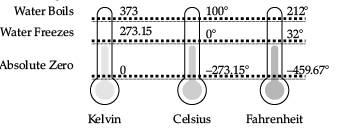
Kelvin(K), degree Celsius(°C) and degree Fahrenheit(°F) are three units of temperature. The conversion formula for them is as follows:
F = 9 / 5C + 32 and K = C + 273.15
Based on the above data, answer the following question.
Q. The formula for C in terms of F is C = ...............
Detailed Solution: Question 10
|
61 videos|221 docs|54 tests
|
