
Preparation and Properties of derivatives Cyanides & Isocyanides - Free
MCQ Practice Test & Solutions: Test: Preparation and Properties of derivatives of Cyanides & Isocyanides (15 Questions)
You can prepare effectively for JEE Chemistry for JEE Main & Advanced with this dedicated MCQ Practice Test (available with solutions) on the important topic of "Test: Preparation and Properties of derivatives of Cyanides & Isocyanides". These 15 questions have been designed by the experts with the latest curriculum of JEE 2026, to help you master the concept.
Test Highlights:
- - Format: Multiple Choice Questions (MCQ)
- - Duration: 20 minutes
- - Number of Questions: 15
Sign up on EduRev for free to attempt this test and track your preparation progress.

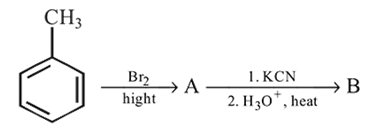
What is the final product (B) of this sequence?
Detailed Solution: Question 1

Aniline reacts with phosgene and  to form
to formDetailed Solution: Question 2


In the reaction  the product obtained is
Detailed Solution: Question 3


Acetaldoxime reacts with  to give
Detailed Solution: Question 4

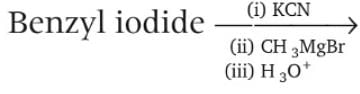
The molecular formula of the final product of the following synthetic scheme is
Detailed Solution: Question 5
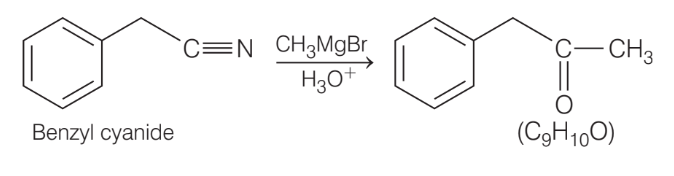
 displaces I and form benzyl cyanide.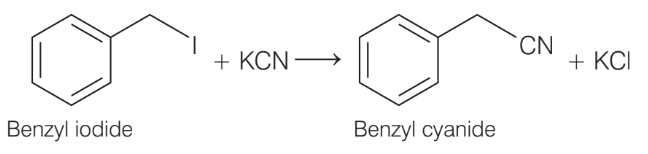
Which of the following reactions does not yield an amine
Detailed Solution: Question 6


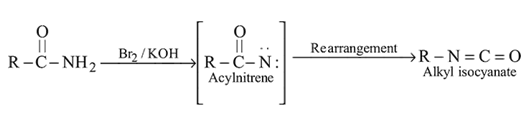
In the mechanism of Hoffmann reaction, which intermediate rearranges to alkyl isocyanate?
Detailed Solution: Question 7
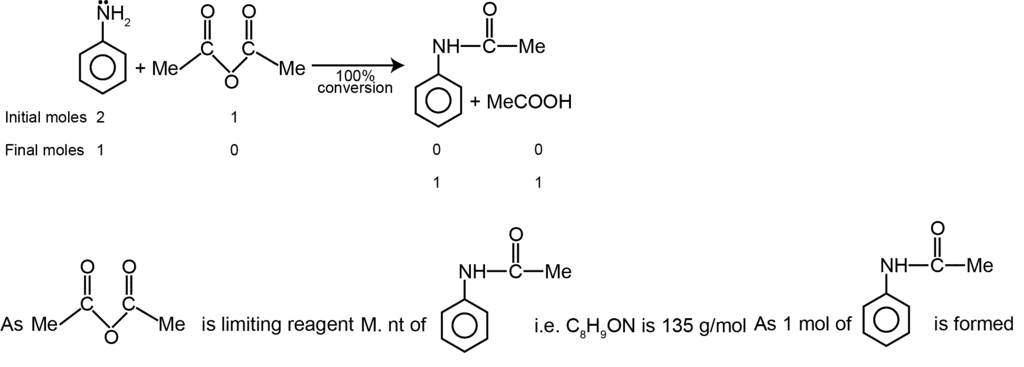
The yield of a acetanilide in the reaction (100% conversion) of 2 moles of aniline with 1 mole of acetic anhydride is
Detailed Solution: Question 8
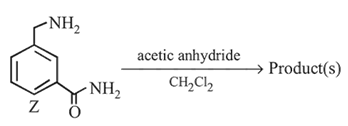
In the reaction shown below, the major product(s) formed is/are
Detailed Solution: Question 9
 group is acetylated by acetic anhydride in methylene chloride (solvent).
 group does not undergo acetylation because here lone pair of electrons is delocalised.
Which of the following statements regarding amides is not correct?
Detailed Solution: Question 10
Which named reaction is used to convert amides into amines
Detailed Solution: Question 11


Acetamide is treated with the following reagents separately. Which one of these would yield methyl amine?
Detailed Solution: Question 12
 gives methylamine it is known as Hoffmann Bromamide reaction.
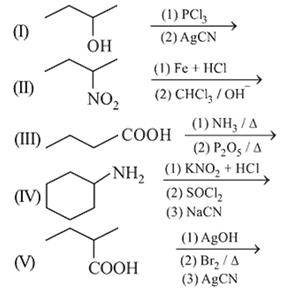
Total number of reactions in which isocyanides are formed
Detailed Solution: Question 13
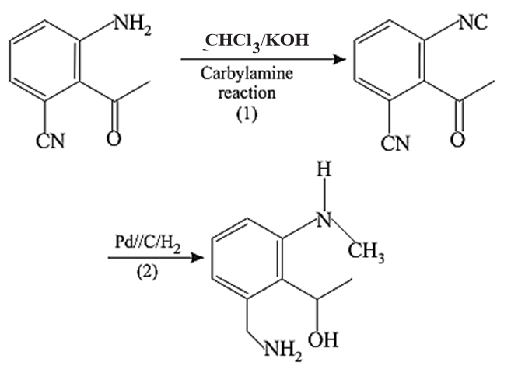
The major product obtained in the following reaction is :
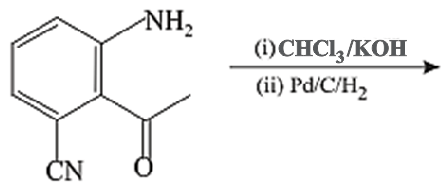
Detailed Solution: Question 14
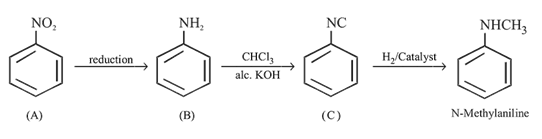
An organic compound (A) on reduction gives compound (B). (B) on treatment with  and alcoholic
  gives (C). (C) on catalytic reduction gives N-methylaniline. The compound A is
Detailed Solution: Question 15
332 videos|699 docs|300 tests |
