
GATE ECE (Electronics) Test: Sound Broadcast Transmitting & Superheterodyne
MCQ Practice Test & Solutions: Test: Sound Broadcast Transmitting & Superheterodyne Receivers (10 Questions)
You can prepare effectively for Electronics and Communication Engineering (ECE) GATE ECE (Electronics) Mock Test Series 2027 with this dedicated MCQ Practice Test (available with solutions) on the important topic of "Test: Sound Broadcast Transmitting & Superheterodyne Receivers". These 10 questions have been designed by the experts with the latest curriculum of Electronics and Communication Engineering (ECE) 2026, to help you master the concept.
Test Highlights:
- - Format: Multiple Choice Questions (MCQ)
- - Duration: 30 minutes
- - Number of Questions: 10
Sign up on EduRev for free to attempt this test and track your preparation progress.

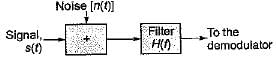
In order to minimize the noise power a filter is introduced
Detailed Solution: Question 1
The last and the first stages in a superheterodyne receiver are respectively

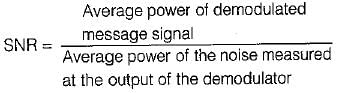
The output signal to noise ratio depends upon .
Detailed Solution: Question 3
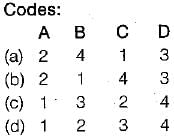
Match List-I (Superheterodyne receiver characteristics) with List-II (Features/Cause) and select the correct answer using the codes given below the lists:
List-I
A. Double spotting
B. Sensitivity
C. Fidelity
D. Selectivity
List-II
1. Ability to reproduce all the modulating frequencies equally.
2. Occurs due to inadequate image-frequency rejection.
3. Ability to rejected unwanted signal.
4. Ability to amplify weak signals.
List-I
A. Double spotting
B. Sensitivity
C. Fidelity
D. Selectivity
List-II
1. Ability to reproduce all the modulating frequencies equally.
2. Occurs due to inadequate image-frequency rejection.
3. Ability to rejected unwanted signal.
4. Ability to amplify weak signals.
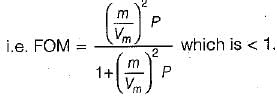
Assertion (A): The figure of merit of a receiver is always more than unity.
Reason (R): The figure of merit must be as high as possible because higher value of figure of merit indicates better noise performance of the receiver.
Reason (R): The figure of merit must be as high as possible because higher value of figure of merit indicates better noise performance of the receiver.
Detailed Solution: Question 5
The sensitivity of a superheterodyne receiver does not depend on
Detailed Solution: Question 6
Consider the following statements:
1. The figure of merit of DSB-SC and SSB receivers with coherent detection is 1.
2. The figure of merit of an AM receiver with envelope detection is more than 1.
3. If the average modulated signal power and the average noise power in the message bandwidth is same as that of DSB-SCreceiver then the output SNR and figure of merit of SSB coherent receiver is same as that of the DSB SC receiver.
4. A square-law demodulator operates above threshold on a weaker signal than with an envelope demodulator.
Which of the above statements are correct?
1. The figure of merit of DSB-SC and SSB receivers with coherent detection is 1.
2. The figure of merit of an AM receiver with envelope detection is more than 1.
3. If the average modulated signal power and the average noise power in the message bandwidth is same as that of DSB-SCreceiver then the output SNR and figure of merit of SSB coherent receiver is same as that of the DSB SC receiver.
4. A square-law demodulator operates above threshold on a weaker signal than with an envelope demodulator.
Which of the above statements are correct?
Detailed Solution: Question 7
Match List-I (Classification of radio receivers) with List-II (Applications) and select the correct answer using the codes given below the lists:
List-I
A. A.M. Broadcast receivers
B. F.M. Broadcast receivers
C. Communication receivers
D. Radar receivers
List-II
1. Operate in VHF or UHF bands.
2. Used to receive radio detection and ranging
3. Operate on long, medium and short wave bands.
4. Used for reception of telegraph and short wave telephone signals.
Codes:
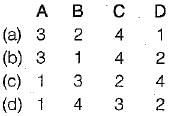
List-I
A. A.M. Broadcast receivers
B. F.M. Broadcast receivers
C. Communication receivers
D. Radar receivers
List-II
1. Operate in VHF or UHF bands.
2. Used to receive radio detection and ranging
3. Operate on long, medium and short wave bands.
4. Used for reception of telegraph and short wave telephone signals.
Codes:
Which of the following is not an uncoded system?
Detailed Solution: Question 9
The main function of a radio receiver is to
1. amplify the modulating frequency signal.
2. amplify the selected R.F. (radio frequency) signal.
3. select the desired signal and reject the unwanted signals.
4. intercept the incoming modulated signal by the receiving antenna.
5. detect the modulated signal to get back the original modulating or baseband signal.
Of these, the correct statements are:
1. amplify the modulating frequency signal.
2. amplify the selected R.F. (radio frequency) signal.
3. select the desired signal and reject the unwanted signals.
4. intercept the incoming modulated signal by the receiving antenna.
5. detect the modulated signal to get back the original modulating or baseband signal.
Of these, the correct statements are:
26 docs|263 tests |
