
Temperature Dependence of Resistivity (NCERT) - Free MCQ Practice Test
MCQ Practice Test & Solutions: Test: Temperature Dependence of Resistivity (NCERT) (5 Questions)
You can prepare effectively for NEET NCERT Based Tests for NEET with this dedicated MCQ Practice Test (available with solutions) on the important topic of "Test: Temperature Dependence of Resistivity (NCERT)". These 5 questions have been designed by the experts with the latest curriculum of NEET 2026, to help you master the concept.
Test Highlights:
- - Format: Multiple Choice Questions (MCQ)
- - Duration: 5 minutes
- - Number of Questions: 5
Sign up on EduRev for free to attempt this test and track your preparation progress.

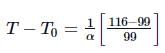
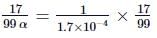
The resistance of a heating element is 99Ω at room temperature. What is the temperature of the element if the resistance is found to be 116Ω? (Temperature coefficient of the material of the resistor is 1.7 × 10⁻⁴∘C−1)
Detailed Solution: Question 1

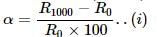
The resistance of the wire in the platinum resistance thermometer at ice point is 5Ω and at steam point is 5.25Ω. When the thermometer is inserted in an unknown hot bath its resistance is found to be 5.5Ω. The temperature of the hot bath is
Detailed Solution: Question 2


The resistance of wire in a heater at room temperature is 65Ω. When the heater is connected to a 220V supply the current settles after a few seconds to 2.8A. What is the steady temperature of the wire. (Temperature coefficient of resistance α = 1.70 × 10⁻⁴∘C−1)
Detailed Solution: Question 3
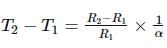
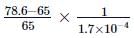
A wire has a resistance of 2.5Ω at 28∘C and a resistance of 2.9Ω at 100∘C. The temperature coefficient of resistivity of material of the wire is
Detailed Solution: Question 4


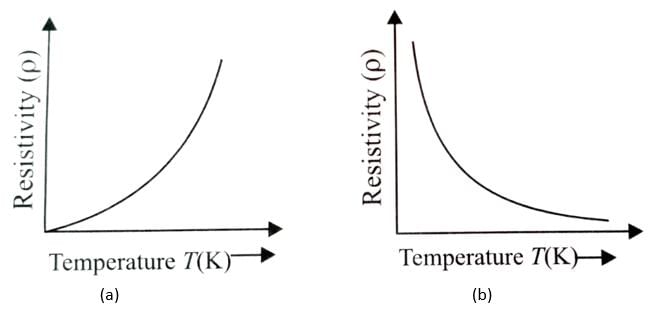
Figure (a) and figure (b) both are showing the variation of resistivity (p) with temperature (T) for some materials. Identify the types of these materials.
Detailed Solution: Question 5
