JEE Exam  >  JEE Test  >  VITEEE: Subject Wise and Full Length MOCK Tests  >  VITEEE PCBE Mock Test - 5 - JEE MCQ

VITEEE: Subject Wise and Full Length VITEEE PCBE Mock Test - 5 Free Online


Full Mock Test & Solutions: VITEEE PCBE Mock Test - 5 (125 Questions)

You can boost your JEE 2026 exam preparation with this VITEEE PCBE Mock Test - 5 (available with detailed solutions).. This mock test has been designed with the analysis of important topics, recent trends of the exam, and previous year questions of the last 3-years. All the questions have been designed to mirror the official pattern of JEE 2026 exam, helping you build speed, accuracy as per the actual exam.

Mock Test Highlights:

  • - Format: Multiple Choice Questions (MCQ)
  • - Duration: 150 minutes
  • - Total Questions: 125
  • - Analysis: Detailed Solutions & Performance Insights
  • - Sections covered: Biology, Physics, Chemistry, Aptitude

Sign up on EduRev for free and get access to these mock tests, get your All India Rank, and identify your weak areas to improve your marks & rank in the actual exam.

VITEEE PCBE Mock Test - 5 - Question 1

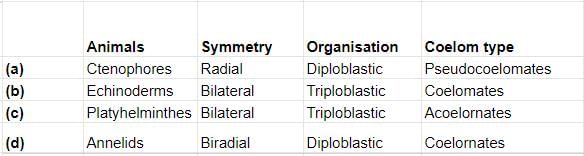
Select the correct matching of animals, their symmetry, organisation and coelom type.
Detailed Solution: Question 1

Platyhelminthes are triploblastic, acoelomate organism showing bilateral symmetry. Ctenophores have radial symmetry, are acoelomates having diploblastic organisation. In echinoderms, larvae have bilateral symmetry whiled add have radial symmetry. They are coelomates with triplobla organisation. Annelids are triploblastic, coelomaterorganism showing bilateral symmetry.

VITEEE PCBE Mock Test - 5 - Question 2

What is the primary reason viruses were not included in Whittaker's five kingdom classification?

Detailed Solution: Question 2

The key reason viruses were not considered living organisms in Whittaker's classification is their lack of cellular structure, rendering them acellular. Unlike living cells, viruses must infect host cells to replicate, as they cannot carry out metabolic processes on their own. This is why Option B is correct. The other options are incorrect: Viruses can reproduce but only inside a host cell (Option C), they are not necessarily larger than bacteria (Option A), and they contain either DNA or RNA, but not both (Option D).

Viruses lack cellular structure, making them non-living outside hosts, so they’re excluded from Whittaker’s classification.

VITEEE PCBE Mock Test - 5 - Question 3

Which of the following characteristics is common to members of the Ascomycetes?

Detailed Solution: Question 3

Ascomycetes, commonly known as sac-fungi, are distinguished by their mode of sexual reproduction, where they produce ascospores endogenously within sac-like structures called asci. These asci are often organized into larger fruiting bodies known as ascocarps. This makes Option C the correct answer. Option A is incorrect as zoospores are characteristic of some other fungi groups like Phycomycetes. Option B is also incorrect for Ascomycetes, whose mycelium is typically septate and not coenocytic. Option D is incorrect as it describes Deuteromycetes, not Ascomycetes.

Ascomycetes produce ascospores in asci, a hallmark of their sexual reproduction.

VITEEE PCBE Mock Test - 5 - Question 4

Which of the following features is unique to the phylum Arthropoda?

Detailed Solution: Question 4
Answer: A. Chitinous exoskeleton

Solution:
Arthropods, which include insects, arachnids, crustaceans, and myriapods, are characterized by their chitinous exoskeleton, jointed limbs, and segmented bodies. The presence of a notochord is unique to Chordata, radial symmetry is a feature of Cnidaria and Echinodermata (in their larval stage), and the water vascular system is specific to Echinodermata

VITEEE PCBE Mock Test - 5 - Question 5

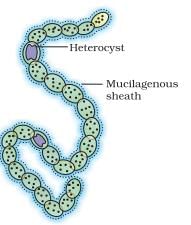
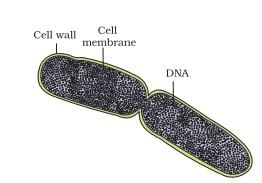
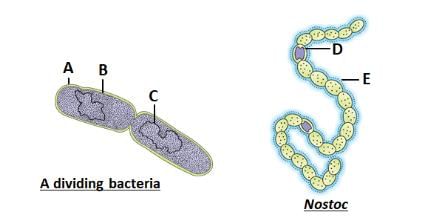
Identify the blanks in the following figures –


Detailed Solution: Question 5

For a dividing bacterium:
A: Cell wall (outer layer).
B: Cell membrane (beneath wall).
C: DNA (genetic material).
D: Heterocyst (not typical in most bacteria, possibly a typo for nucleoid).
E: Mucilaginous sheath (external layer in some bacteria).
Correct: A - Cell wall, B - Cell membrane, C - DNA, D - Heterocyst (if specific), E - Mucilaginous sheath.

VITEEE PCBE Mock Test - 5 - Question 6

Picture shown below is example of:-

Detailed Solution: Question 6

Wolf and Tasmania Wolf are examples of convergent evolution of placental mammals and Australian marsupials. They are evolved differently due to different in climatic and geographic regions.

"The wolf (placental mammal) and Tasmanian wolf (marsupial) show convergent evolution, developing similar traits due to similar environments, not shared ancestry."

VITEEE PCBE Mock Test - 5 - Question 7

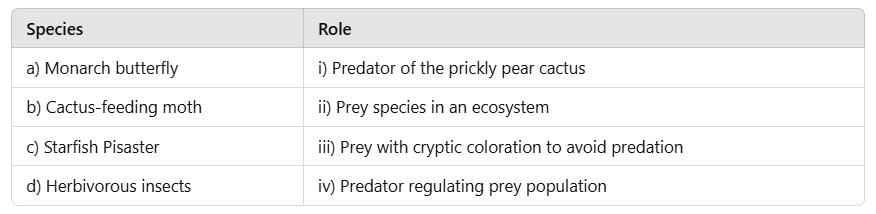
Match the following species with their role in ecological interactions:
Detailed Solution: Question 7

Monarch butterflies (a) have cryptic coloration to avoid being preyed upon, making them (iii) prey with cryptic coloration.
Cactus-feeding moths (b) are predators of the prickly pear cactus, making them (i) predator.
Starfish Pisaster (c) is a predator that regulates prey populations, so it's (iv) a predator.
Herbivorous insects (d) are prey species in an ecosystem, making them (ii) prey.

VITEEE PCBE Mock Test - 5 - Question 8

Meiosis II is divided into four phases. The centromere of each chromosome divides into two so that there is one centromere for each chromatid in

Detailed Solution: Question 8

The centromere of each chromosome divides into two so that there is one centromere for each chromatid in Anaphase II. It is the stage when sister chromatids of every chromosome separate and begin to move towards the opposite ends of the cell. The separation and the movement is due to the shortening of the kinetochore microtubules. Anaphase II precedes telophase II.

VITEEE PCBE Mock Test - 5 - Question 9

The sequence of the 5’ and 3’ primers for the following DNA sequence will be:
5’ AATGCGGCAATCGAGTC3’
3’ TTACGCCGTTAGCTCCAG5’

Detailed Solution: Question 9

The sequence of the 5’ and 3’ primers for the given DNA sequence will be 5’ AATGC 3’, 5’ GACTC 3’. In primer design, the forward primer is derived directly from the start of the DNA sequence, which is 5’ AATGC 3’. The reverse primer is complementary to the end of the sequence, considering the antiparallel nature of DNA, resulting in 5’ GACTC 3’. This follows the standard method for designing primers, as discussed in PCR techniques and DNA replication processes.

VITEEE PCBE Mock Test - 5 - Question 10

Assertion: Biofertilizers are organisms that enrich the nutrient quality of the soil.
Reason: Organic farming is the farming technique in which no chemical is used as fertilizers or insecticides.

Detailed Solution: Question 10

Explanation of Assertion: Biofertilizers are living microorganisms that, when applied to seeds, plant surfaces, or soil, colonize the rhizosphere or the interior of the plant and promote growth by increasing the supply or availability of primary nutrients to the host plant. They are a natural and environmentally friendly way to provide essential nutrients to plants, which in turn boosts soil fertility and productivity.

Explanation of Reason: Organic farming is an agricultural system that seeks to provide the consumer with fresh, tasty, and authentic food while respecting natural life-cycle systems. It involves the use of natural fertilizers, such as compost, manure, and green manure, instead of synthetic fertilizers. It also relies on natural pest control methods, such as biological control, crop rotation, and the use of resistant plant varieties, instead of chemical pesticides.

While both the assertion and reason are correct statements, the reason does not directly explain the assertion. The assertion is about the role of biofertilizers in enriching soil nutrients, while the reason is about the principles of organic farming, which is a broader concept that encompasses not only the use of biofertilizers but also other natural and sustainable practices.

Topic in NCERT: MICROBES AS BIOFERTILISERS

Topic in NCERT: Microbes as biofertilisers

Line in NCERT: "biofertilisers are organisms that enrich the nutrient quality of the soil."

VITEEE PCBE Mock Test - 5 - Question 11

Two microbes found to be very useful in genetic engineering are

Detailed Solution: Question 11

Escherichia coli and Agrobacterium tumefaciens are the microbes found to be very useful in genetic engineering. 
E. coli is a motile, gram negative, rod shaped bacterium which is a normal inhabitant of human colon. It is most extensively used in bacterial genetics and molecular biology.
Agrobacterium tumefaciens is a soil bacterium. It has Ti plasmid (Tumour inducing plasmid) and it can be used for the transfer of a desired gene in dicot plants.

Topic in NCERT: Vectors for cloning genes in plants and animals

Line in NCERT: "Agrobacterium tumifaciens, a pathogen of several dicot plants is able to deliver a piece of DNA known as 'T-DNA' to transform normal plant cells into a tumor and direct these tumor cells to produce the chemicals required by the pathogen. Similarly, retroviruses in animals have the ability to transform normal cells into cancerous cells." "When this DNA is transferred into Escherichia coli, a bacterium closely related to Salmonella, it could replicate using the new host's DNA polymerase enzyme and make multiple copies."

VITEEE PCBE Mock Test - 5 - Question 12

Transmembrane proteins of cell membrane are

Detailed Solution: Question 12

Integral membrane proteins are integrated into the membrane. Some stick only partway into the membrane, while others stretch from one side of the membrane to the other and are exposed on either side. These are transmembrane proteins​.

VITEEE PCBE Mock Test - 5 - Question 13

Which one of the following acts as a physiological barrier to the entry of microorganisms in human body?

Detailed Solution: Question 13

  • Physiological barriers to the entry of microorganisms into the human body are tears in the eyes, saliva in the mouth and HCl in the stomach.
  • The enzymes lysozymes are found in tears and saliva and inhibit the synthesis of peptidoglycan present in the cell wall of microorganisms especially eubacteria.
  • Disease-causing microorganism enters through different routes into the body. The physiological barrier prevents their entry. Tears act as a physiological barrier for entry of pathogen.

Topic in NCERT: Innate immunity

Line in NCERT: "skin on our body is the main barrier which prevents entry of the micro-organisms."

VITEEE PCBE Mock Test - 5 - Question 14

Which of the following statements regarding the disease typhoid is/are correct?

(i) Salmonella typhi are the pathogenic bacteria which enter human intestine through contaminated food and water and migrate to other organs through blood.
(ii) Sustained high fever (39C to 40C), weakness, stomach pain, constipation, headache and loss of appetite are some common symptoms of typhoid.
(iii) Typhoid vaccine is available as DPT vaccine.
(iv) Widal test is used for diagnosis of typhoid fever.
(v) The patient of this disease is not required to be treated with antibiotics.

Detailed Solution: Question 14

DPT vaccine is for diphtheria, pertussis and tetanus. The patient suffering from typhoid is required to be treated with antibiotics as it is a bacterial disease.

i: Salmonella typhi infects via contaminated food/water (correct).
ii: Symptoms include high fever, weakness, etc. (correct).
iii: DPT vaccine is for other diseases (incorrect).
iv: Widal test diagnoses typhoid (correct).
v: Antibiotics are required (incorrect).

Answer: Correct (C).

VITEEE PCBE Mock Test - 5 - Question 15

Regeneration of endometrium through proliferation of uterine and fallopian tube cells occurs at

Detailed Solution: Question 15

During follicular phase, regeneration of endometrium through proliferation of uterine and fallopian tube cells occurs and as a result, endometrium of uterus becomes considerably thickened in anticipation of pregnancy.

VITEEE PCBE Mock Test - 5 - Question 16

A steel wire of length 'l' has a magnetic moment M. It is bent into a semicircular arc. The new magnetic moment is

Detailed Solution: Question 16
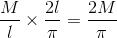
If m is pole strength, then m = M/l
When the wire is bent into a semicircular arc, the separation between the two poles changes from l to 2r, where r is radius of the semicircular arc.
Since l = π r or r = l/π, the new magnetic moment of the steel wire,
M' = m × 2r =

VITEEE PCBE Mock Test - 5 - Question 17

Compared to CB amplifier, CE amplifier has

Detailed Solution: Question 17

Among the different configurations of transistors CC (common collector), CE (common emitter) and CB (common base), the common emitter (CE) configuration transistor has the following advantages.
  • High input resistance
  • Low output resistance
  • More efficiency
  • More current amplification
  • More voltage amplification

VITEEE PCBE Mock Test - 5 - Question 18

An infinite number of charges, each equal to q, are placed along the x-axis at x = 1, x = 2, x = 4, x = 8, and so on. The electric field at point x = 0 is

Detailed Solution: Question 18


Since the charges are placed along the same straight line, the electric field at x = 0 will be directed along the x-axis and its magnitude is given by:


which is choice (1).

VITEEE PCBE Mock Test - 5 - Question 19

A circular loop of radius R, carrying current I, lies in the x-y plane with its centre at the origin. The total magnetic flux through the x-y plane is

Detailed Solution: Question 19
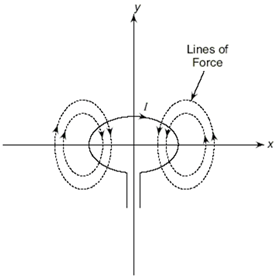
Figure shows the field lines (shown as broken curves) of the magnetic field due to the current flowing in the loop. It is clear from the figure that the magnetic flux in the x-y plane will be zero. Hence, the correct choice is (4).

VITEEE PCBE Mock Test - 5 - Question 20

Force on a current-carrying linear conductor placed in a magnetic field is the maximum when it is placed _________ to the direction of the magnetic field.

Detailed Solution: Question 20

Force on a current–carrying conductor placed in a magnetic field depends upon the direction of magnetic field as well as the direction of flow of current through the conductor. Force is found to be maximum when the direction of magnetic field is perpendicular to the direction of flow of current. Hence, option (2) is correct.

VITEEE PCBE Mock Test - 5 - Question 21

A particle of mass m carrying charge q is kept at rest in a uniform electric field E and then released. The kinetic energy gained by the particle, when it moves through a distance y, is

Detailed Solution: Question 21

Using conservation of energy
Increase in kinetic energy = Decrease in potential energy K - 0 = q(-dV) ⇒ K = qEy, where q(-dV) is decrease in potential energy. As displacement and electric field are along the same direction, dV = -Ey.

VITEEE PCBE Mock Test - 5 - Question 22

The energy gap between a valence band and a conduction band of a semiconductor is

Detailed Solution: Question 22

The energy gap between a valence band and a conduction band of a semiconductor is between 0.7 eV to 1.3 eV.

VITEEE PCBE Mock Test - 5 - Question 23

The temperature of equal masses of three different liquids A, B, and C are 12℃, 19℃, and 28℃, respectively. The temperature when A and B are mixed is 16℃, and when B and C are mixed is 23℃. The temperature when A and C are mixed is:

Detailed Solution: Question 23

Let the mass of all the liquids be m.
Let s1, s2, s3 be the respective specific heats of the liquids A, B, and C.
The initial temperatures of A, B, and C are 12°C, 19°C, and 28°C, respectively.

Case 1: Mixing A and B
When A and B are mixed, the temperature of the mixture is 16°C.

We know that heat gained by A = heat lost by B,

m s1 (16 - 12) = ms2 (19 - 16)

4 s1 = 3s2 ...(i)

Case 2: Mixing B and C
When B and C are mixed, the temperature of the mixture is 23°C.

m s2 (23 - 19) = m s3 (28 - 23)

4 s2 = 5 s₃ ...(ii)

From (i) and (ii):
s1 = (3/4) s= (15/16) s₃

Case 3: Mixing A and C
When A and C are mixed, suppose the temperature of the mixture is t.

m s1 (t - 12) = m s3 (28 - t)

Substituting s1 = (15/16) s3:

(15/16) s3 (t - 12) = s3 (28 - t)

Canceling s3 from both sides:

(15/16) (t - 12) = (28 - t)

Multiplying by 16:

15t - 180 = 448 - 16t

31t = 628

t = 628 / 31 = 20.3°C

Thus, the final temperature when A and C are mixed is 20.3°C.

VITEEE PCBE Mock Test - 5 - Question 24

K is the force constant of a spring. The work done in increasing its extension from I1 to I2 will be

Detailed Solution: Question 24

Work done by the string in increasing its extension from I1 to I2 is the difference in potential energy stored in it.

We know that the potential energy stored is U = 1/2 Kx².

So, at extension I1,
UI1 = 1/2 K I1².

At extension I2,
UI2 = 1/2 K I2².

Work done, W = ΔU = UI2 - UI1 = 1/2 K (I2² - I1²).

VITEEE PCBE Mock Test - 5 - Question 25

Sweet makers do not clean the bottom of cauldron because

Detailed Solution: Question 25

Sweet makers do not clean the bottom of the cauldron because they need the cauldron to absorb more and more heat and be heated quickly so, they can make sweets in less time.

Black, rough surfaces absorb more heat than bright ones, so sweet makers keep cauldron bottoms unclean to heat quickly.

VITEEE PCBE Mock Test - 5 - Question 26

The specific conductance (K) of 0.02 M aqueous acetic acid solution at 298 K is 1.65 × 10⁻⁴ S cm. The degree of dissociation of acetic acid is
[Given, equivalent conductance at infinite dilution of H+ = 349.1 S cm2 mol-1 and CH3COO- = 40.9 S cm2 mol-1]

Detailed Solution: Question 26
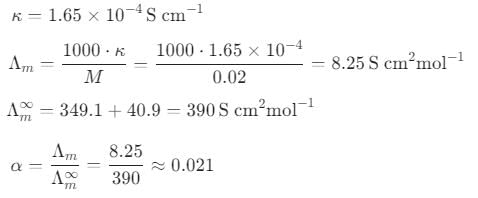
Correct answer: A

VITEEE PCBE Mock Test - 5 - Question 27

Which one of the following is not a property of physical adsorption?

Detailed Solution: Question 27

Physical adsorption: Increases with higher pressure, greater surface area, lower temperature (exothermic). Forms multilayers, not unilayer (characteristic of chemisorption).

VITEEE PCBE Mock Test - 5 - Question 28

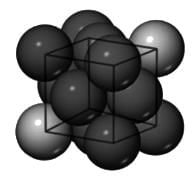
In the face centred cubic unit cell, the closest packed layers are perpendicular to:

Detailed Solution: Question 28
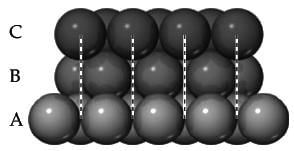
FCC unit cell is an example of the closest packed structures.

Side view of the arrangement of atoms,


Unit cell view of the arrangement of the same atoms,


Here, the first and fourth layers are identical.

It is clear from the above figure that the closest packed layers, which are hexagonally packed 2-D arrangement of spheres are arranged perpendicular to the body diagonal of the FCC unit cell.

VITEEE PCBE Mock Test - 5 - Question 29

The second electron affinity is zero for

Detailed Solution: Question 29

The second electron affinity refers to the energy change when an electron is added to a negatively charged ion, i.e., when an additional electron is added to an anion.

  • Alkali metals (Group 1) typically have a positive electron affinity for the first electron (they form a +1 cation), but the second electron affinity is positive because adding an electron to a negatively charged ion (such as M⁻ → M²⁻) would require energy. Hence, the second electron affinity is not zero for alkali metals.
  • Halogens (Group 17) have a negative electron affinity for the first electron (they form a -1 anion), but adding a second electron (to form a -2 anion) would involve repulsion between the two negatively charged ions, making the second electron affinity positive or at least very small, but not zero.
  • Noble gases (Group 18) already have a full valence shell, and their second electron affinity is zero because they already have a stable electron configuration, and adding an electron would disrupt this stable configuration. Therefore, the second electron affinity is zero for noble gases.
  • Transition metals have varying electron affinities, but generally, their second electron affinity is not zero. These metals do not exhibit a simple trend like noble gases.

Conclusion: The second electron affinity is zero for Noble gases.
Thus, the correct answer is: C: Noble gases.

VITEEE PCBE Mock Test - 5 - Question 30

Ravi sells an article at a gain of . If he had sold it at ₹22.50 more, he would have gained 25%. What is the cost price of the article?

Detailed Solution: Question 30

Let the cost price of an article be ₹x.

Selling price of the article at a gain of 12.5% is:
SP = Cost Price + Gain % of Cost Price
x + 12.5% of x
x + (1/8) × x
₹(9/8) x

Selling price of the article at a gain of 25% is:
SP = Cost Price + Gain % of Cost Price
x + 25% of x
x + (1/4) × x
₹(5/4) x

According to the question, the difference between the selling prices at 25% and 12.5% gain is ₹22.50:
(5/4)x - (9/8)x = ₹22.50

Converting to a common denominator:
(10x/8) - (9x/8) = ₹22.50
(x/8) = ₹22.50
x = ₹22.50 × 8
x = ₹180

Thus, the cost price of the article is ₹180.

View more questions
1 videos|7 docs|63 tests
Information about VITEEE PCBE Mock Test - 5 Page
In this test you can find the Exam questions for VITEEE PCBE Mock Test - 5 solved & explained in the simplest way possible. Besides giving Questions and answers for VITEEE PCBE Mock Test - 5, EduRev gives you an ample number of Online tests for practice
Download as PDF