CA Foundation Exam  >  CA Foundation Test  >  Quantitative Aptitude  >  Test: Basic Concepts Of Differential And Integral Calculus- 1 - CA Foundation MCQ

Basic Concepts Of Differential And Integral Calculus- 1 - Free MCQ Practice


MCQ Practice Test & Solutions: Test: Basic Concepts Of Differential And Integral Calculus- 1 (40 Questions)

You can prepare effectively for CA Foundation Quantitative Aptitude for CA Foundation with this dedicated MCQ Practice Test (available with solutions) on the important topic of "Test: Basic Concepts Of Differential And Integral Calculus- 1". These 40 questions have been designed by the experts with the latest curriculum of CA Foundation 2026, to help you master the concept.

Test Highlights:

  • - Format: Multiple Choice Questions (MCQ)
  • - Duration: 40 minutes
  • - Number of Questions: 40

Sign up on EduRev for free to attempt this test and track your preparation progress.

Test: Basic Concepts Of Differential And Integral Calculus- 1 - Question 1

Choose the most appropriate option (a) (b) (c) or (d)

The gradient of the curve y = 2x3 –3x2 – 12x +8 at x = 0 is

Detailed Solution: Question 1

ANSWER :- a

Solution :- 2x^3 - 3x^2 -12x + 8 = 0 

dy/dx = 6x^2 - 6x -12 = 0

(At x=0) = 6(0)^2 - 6(0) - 12 

        = -12

Test: Basic Concepts Of Differential And Integral Calculus- 1 - Question 2

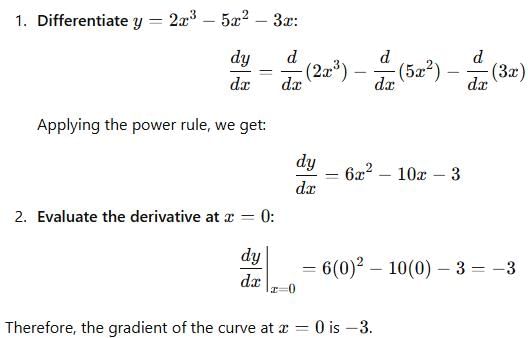
The gradient of the curve y = 2x3 –5x2 – 3x at x = 0 is

Detailed Solution: Question 2
Test: Basic Concepts Of Differential And Integral Calculus- 1 - Question 3

The derivative of y = 

Detailed Solution: Question 3

we know that y = √(x+1) = (x+1)1/2

dy/dx = 1/2 . (x+1)-1/2 = 1 / 2√(x+1)
hence option c is correct

Test: Basic Concepts Of Differential And Integral Calculus- 1 - Question 4

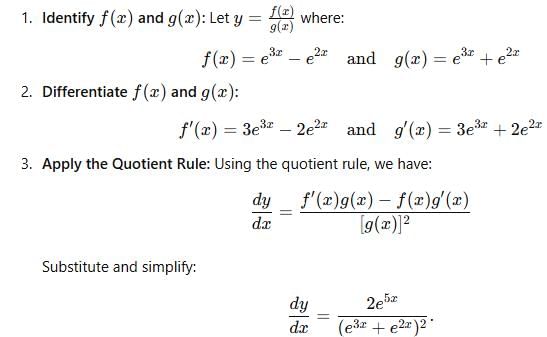
Detailed Solution: Question 4

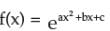
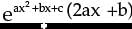
df/dx = * d/dx(ax2 + bx + c)

Test: Basic Concepts Of Differential And Integral Calculus- 1 - Question 5

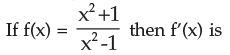
Detailed Solution: Question 5

  • Hence, option A is correct.

Test: Basic Concepts Of Differential And Integral Calculus- 1 - Question 6

If y = x (x –1) (x – 2) then  is

Detailed Solution: Question 6

  • firstly multiply all three equations 
  • we get , y = x (x2 - 3x + 2)
  • y = x3 - 3x2 + 2x 
  • dy/dx = 3x2 - 6x + 2

Test: Basic Concepts Of Differential And Integral Calculus- 1 - Question 7

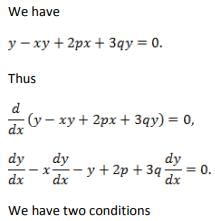
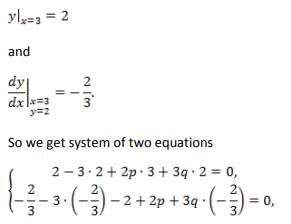
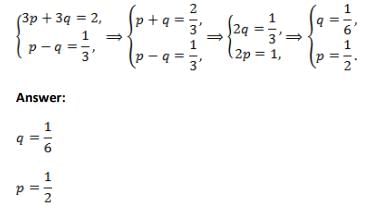
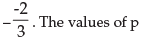
The gradient of the curve y – xy + 2px + 3qy = 0 at the point (3, 2 ) is and q are
Detailed Solution: Question 7


Test: Basic Concepts Of Differential And Integral Calculus- 1 - Question 8

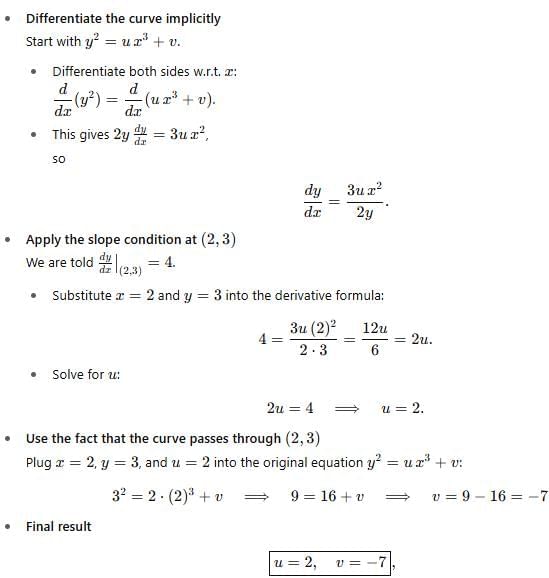
The curve y2 = ux3 + v passes through the point P(2, 3) and  = 4 at P. The values of u and v are 

Detailed Solution: Question 8
Test: Basic Concepts Of Differential And Integral Calculus- 1 - Question 9

The gradient of the curve y + px +qy = 0 at (1, 1) is 1/2. The values of p and q are

Detailed Solution: Question 9

y+px+qy=0
y+qy=-px
(1+q)y=-px
y=-[p/(1+q)]x
This is a linear function, so has constant gradient at all points on the curve. Hence
-p/(1+q)=1/2
2p=-(1+q)
But there is an issue: you have stated that the curve's gradient is 1/2 at the point (1,1) but the curve does not cross through this point! Regardless of our choices for p and q satisfying the expressions above this paragraph, the equation of the curve will always simplify to y=0.5x, which crosses through the origin (0,0), as well as (1,0.5) and (2,1) - but not (-1,1).
For your curve to pass through (-1,1), we would need to add a constant term, like so:
y+px+qy=1/2
 

Test: Basic Concepts Of Differential And Integral Calculus- 1 - Question 10

If xy = 1 then y2 + dy/dx is equal to

Detailed Solution: Question 10

  • xy = 1
  • y = 1/x
  • y2 = 1/x2
  • dy/dx = -1/ x2 
  • now , y2 + dy/dx
  • 1/x- -1/ x2 = 0

Test: Basic Concepts Of Differential And Integral Calculus- 1 - Question 11

The derivative of the function 

Detailed Solution: Question 11

y = 1 / 2√(x+√x). (1+1/2√x)
Hence, option c is correct
 

Test: Basic Concepts Of Differential And Integral Calculus- 1 - Question 12

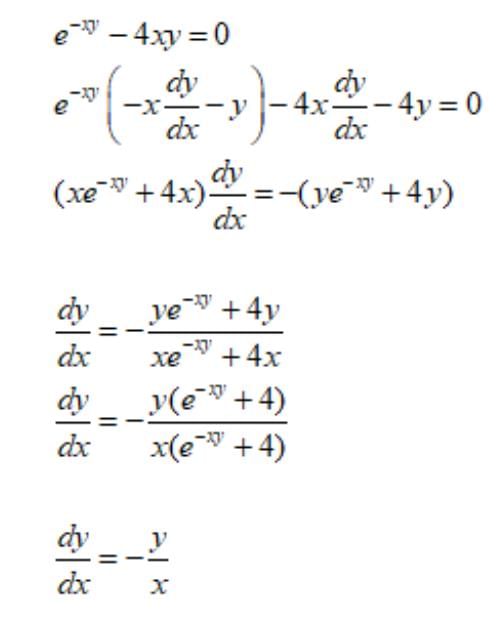
Given e-xy –4xy = 0,  can be proved to be

Detailed Solution: Question 12

Test: Basic Concepts Of Differential And Integral Calculus- 1 - Question 13

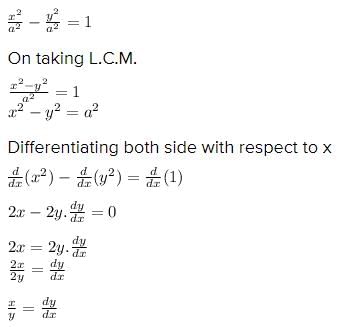
Detailed Solution: Question 13

Test: Basic Concepts Of Differential And Integral Calculus- 1 - Question 14

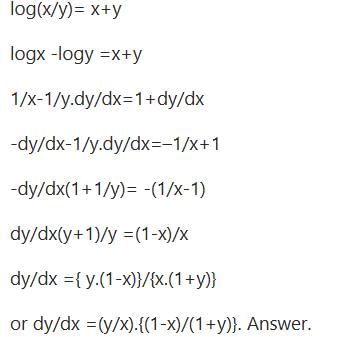
If log (x / y) = x + y,   may be found to be

Detailed Solution: Question 14


Therefore, Option A 

Test: Basic Concepts Of Differential And Integral Calculus- 1 - Question 15

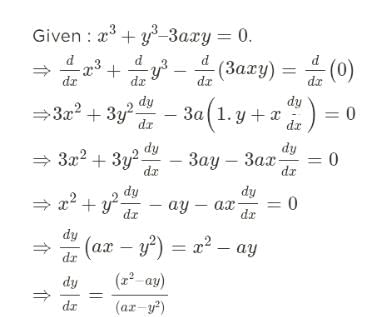
If f(x, y) = x3 + y3 – 3axy = 0,  can be found out as

Detailed Solution: Question 15

 if we take minus common , dy/dx = (ay - x2 )/ (y2 - ax)

Test: Basic Concepts Of Differential And Integral Calculus- 1 - Question 16

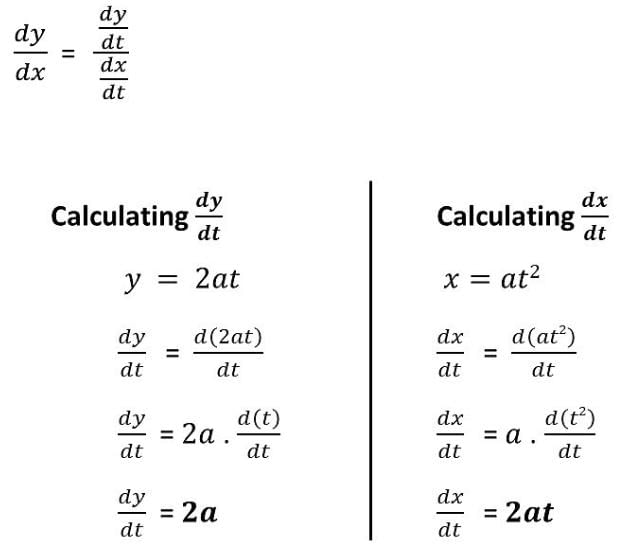
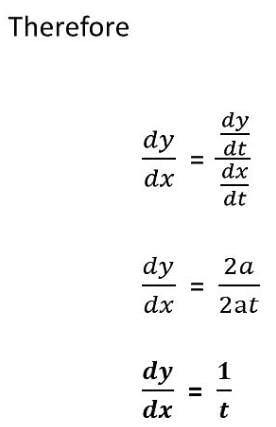
Given x = at2, y = 2at; is calculated as

Detailed Solution: Question 16

Test: Basic Concepts Of Differential And Integral Calculus- 1 - Question 17

Given x = 2t + 5, y = t2 – 2;  is calculated as 

Detailed Solution: Question 17
x = 2t + 5
dx/dt = 2
dy/dx = dy/dt / dx/dt
= 2t / 2 = t

Test: Basic Concepts Of Differential And Integral Calculus- 1 - Question 18

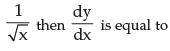
If y = 

Detailed Solution: Question 18

  • as we know, 
  • y = x-1/2 
  • dy/dx = -1/2. x-1/2-1
  • therefore, the correct and is -1/2(x-3/2) which is equal to option c as 
  • -1/2. 1/(x√x)

Test: Basic Concepts Of Differential And Integral Calculus- 1 - Question 19

If x = 3t2 –1, y = t3 –t, then   is equal to

Detailed Solution: Question 19

  • dx / dt = 6t
  • dy/dx = dy/dt / dx/dt = (3t2 - 1)/6t
  • option A is correct.

Test: Basic Concepts Of Differential And Integral Calculus- 1 - Question 20

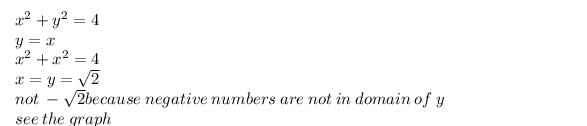
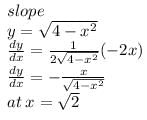
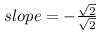
The slope of the tangent to the curve y = at the point, where the ordinate and the abscissa are equal, is

Detailed Solution: Question 20

so the point is (√2,√2)

= -1

Test: Basic Concepts Of Differential And Integral Calculus- 1 - Question 21

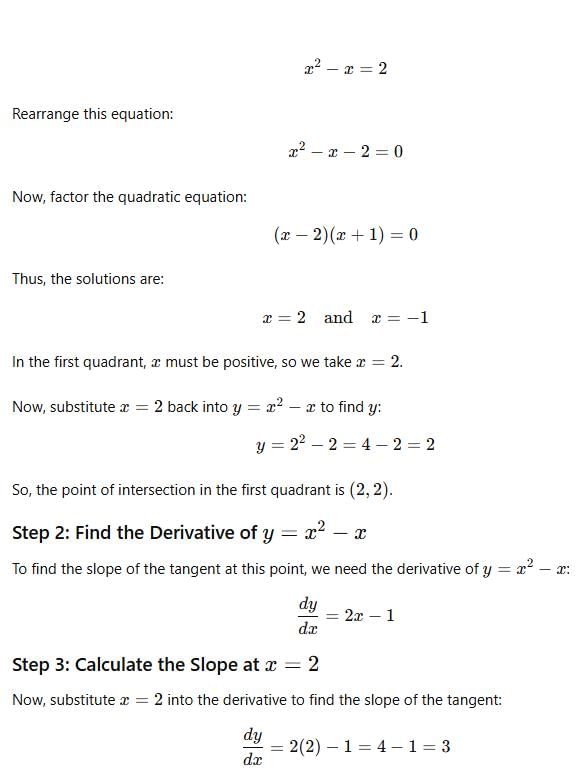
The slope of the tangent to the curve y = x2 –x at the point, where the line y = 2 cuts the curve in the Ist quadrant, is

Detailed Solution: Question 21
Test: Basic Concepts Of Differential And Integral Calculus- 1 - Question 22

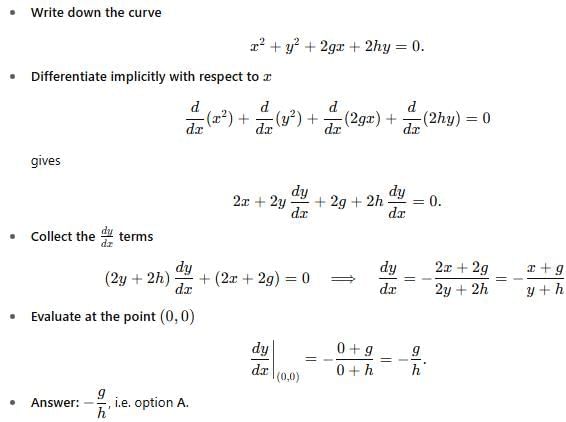
For the curve x2 + y2 + 2gx + 2hy = 0, the value of  at (0, 0) is

Detailed Solution: Question 22

Test: Basic Concepts Of Differential And Integral Calculus- 1 - Question 23


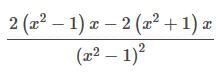
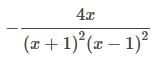
Detailed Solution: Question 23

hence , the ans will be none of these

Test: Basic Concepts Of Differential And Integral Calculus- 1 - Question 24

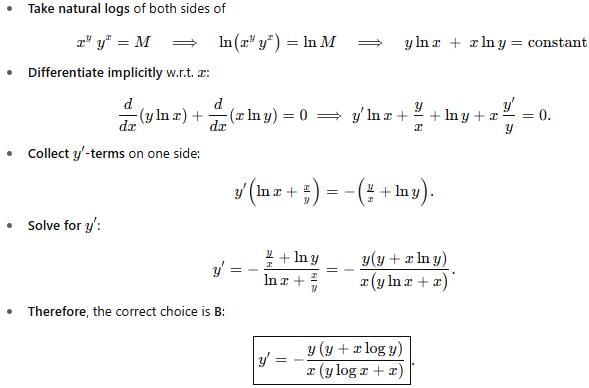
If xy.yx = M, M is constant then is equal to

Detailed Solution: Question 24

Test: Basic Concepts Of Differential And Integral Calculus- 1 - Question 25

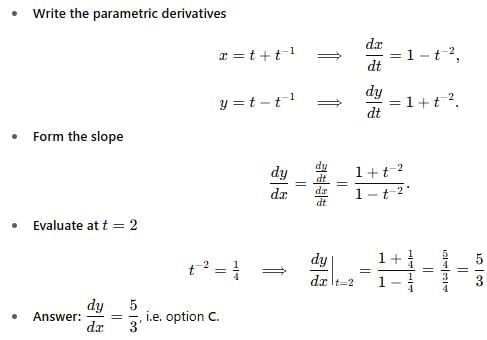
Given x = t + t–1 and y = t – t–1 the value of  at t = 2 is

Detailed Solution: Question 25

Test: Basic Concepts Of Differential And Integral Calculus- 1 - Question 26

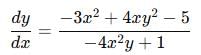
If x3 –2x2 y2 + 5x +y –5 =0 then  at x = 1, y = 1 is equal to

Detailed Solution: Question 26

On differentiating the above statement , we get

Now we will group the statements with dy/dx and keep the rest aside

Now putting x = 1 and  y= 1, the value of dy/dx becomes

Test: Basic Concepts Of Differential And Integral Calculus- 1 - Question 27

The derivative of x2 log x is

Detailed Solution: Question 27

To find the derivative of f(x) = x2 log x, we apply the product rule, which states that if f(x) = u(x)v(x), then f'(x) = u'(x)v(x) + u(x)v'(x).1. Let u(x) = x2. Then, u'(x) = 2x.2. Let v(x) = log x. Then, v'(x) = 1/x.Applying the product rule:f'(x) = u'(x)v(x) + u(x)v'(x) = (2x)(log x) + (x2)(1/x).Simplifying each term:f'(x) = 2x log x + x.Factoring out x:f'(x) = x(1 + 2 log x).Thus, the correct answer is option B.

Test: Basic Concepts Of Differential And Integral Calculus- 1 - Question 28

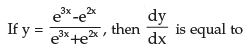
The derivative of 

Detailed Solution: Question 28

Test: Basic Concepts Of Differential And Integral Calculus- 1 - Question 29

Test: Basic Concepts Of Differential And Integral Calculus- 1 - Question 30

Detailed Solution: Question 30


View more questions
92 videos|224 docs|83 tests
Information about Test: Basic Concepts Of Differential And Integral Calculus- 1 Page
In this test you can find the Exam questions for Test: Basic Concepts Of Differential And Integral Calculus- 1 solved & explained in the simplest way possible. Besides giving Questions and answers for Test: Basic Concepts Of Differential And Integral Calculus- 1, EduRev gives you an ample number of Online tests for practice
Download as PDF