Ethers - Free MCQ Practice Test with solutions, NEET NCERT Based Tests
MCQ Practice Test & Solutions: Test: Ethers (20 Questions)
You can prepare effectively for NEET NCERT Based Tests for NEET with this dedicated MCQ Practice Test (available with solutions) on the important topic of "Test: Ethers". These 20 questions have been designed by the experts with the latest curriculum of NEET 2026, to help you master the concept.
Test Highlights:
- - Format: Multiple Choice Questions (MCQ)
- - Duration: 30 minutes
- - Number of Questions: 20
Sign up on EduRev for free to attempt this test and track your preparation progress.

Only One Option Correct Type
Direction (Q. Nos. 1-7) This section contains 8 multiple choice questions. Each question has four choices (a), (b), (c) and (d), out of which ONLY ONE is correct.
Q.
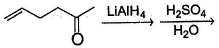
Identify the final major product of the reaction sequence.

Detailed Solution: Question 1
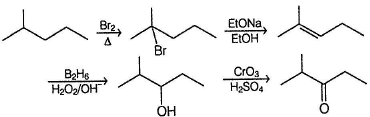
Detailed Solution: Question 2
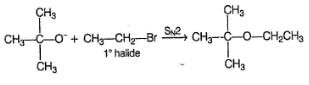

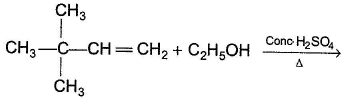
Detailed Solution: Question 3
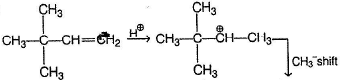
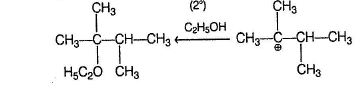
Consider the following chain of reactions :
The major product formed in the final step is
Detailed Solution: Question 4
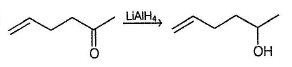
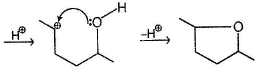
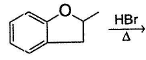
Detailed Solution: Question 5
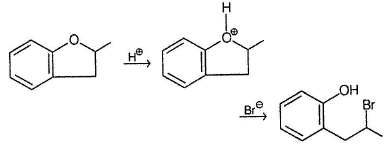
Inorganic salts are usually insoluble in organic solvents e.g, KMnO4 is insoluble in benzene. However presence of one of the following compound in benzene makes KMnO4 soluble and gives a purple coloured solution. Which is that compound?
Detailed Solution: Question 6
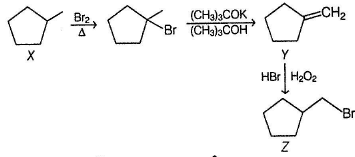
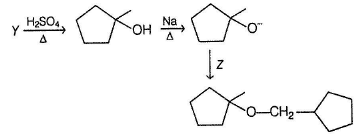
Consider the following roadmap reaction :

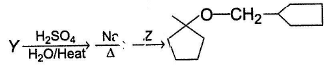
The most probable structure of X is
Detailed Solution: Question 7
One or More than One Options Correct Type
Direction (Q. Nos. 8 -13) This section contains 6 multiple choice questions. Each question has four choices (a), (b), (c) and (d), out of which ONE or MORE THAN ONE are correct
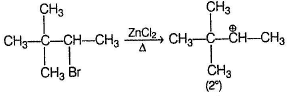
Consider the following reaction,
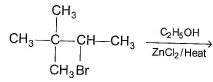
Q. The expected substitution product(s) is/are
Detailed Solution: Question 8
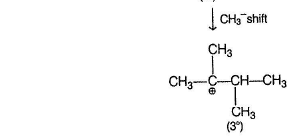
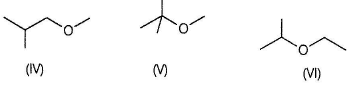
Which of the following ethers can be obtained in good yield by intermolecular dehydration of alcohols ?
Detailed Solution: Question 9
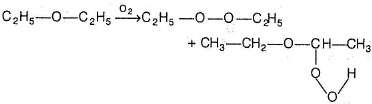
If diethyl ether is left in contact of air for long time, the product formed is/are
Detailed Solution: Question 10
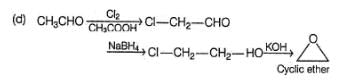
In which of the following reaction, the major product is an acyclic ether ?
Detailed Solution: Question 11

Consider the following reaction,
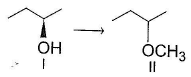
The correct statement(s) concerning the above transformation is/are
Detailed Solution: Question 12
Consider the following reaction,
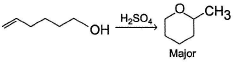
The correct statement regarding the above reaction is/are
Detailed Solution: Question 13
 forming carbocation rather than oxonium ion.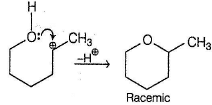
Comprehension Type
Direction (Q. Nos. 14-16) This section contains a paragraph, describing theory, experiments, data, etc. Three questions related to the paragraph have been given. Each question has only one correct answer among the four given options (a), (b), (c) and (d).
Passage
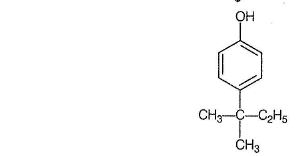
An organic compound X has molecular formula C11H16O and it can be resolved into enantiom ers. X does not evolve any gas with Na metal. X when treated with concentrated HBr gives C6H5OH and Y(C5H11Br). Y is chiral and has the same configuration as that of compound X.
Q.
Which reaction gives X as the major product?
Detailed Solution: Question 14
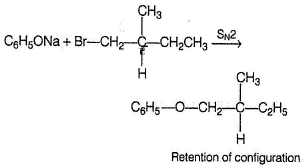
An organic compound X has molecular formula C11H16O and it can be resolved into enantiom ers. X does not evolve any gas with Na metal. X when treated with concentrated HBr gives C6H5OH and Y(C5H11Br). Y is chiral and has the same configuration as that of compound X.
Q.
If Y is treated with C2H5ONa/C2H5OH then how many different E2 products would be formed?
Detailed Solution: Question 15

An organic compound X has molecular formula C11H16O and it can be resolved into enantiom ers. X does not evolve any gas with Na metal. X when treated with concentrated HBr gives C6H5OH and Y(C5H11Br). Y is chiral and has the same configuration as that of compound X.
Q.
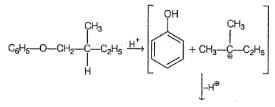
If X is treated with H2SO4 it undergoes a rearrangem ent to give Z as the major organic product. What is Z?
Detailed Solution: Question 16
One Integer Value Correct Type
Direction (Q. Nos. 17-20) This section contains 5 questions. When worked out will result in an integer from 0 to 9 (both inclusive).
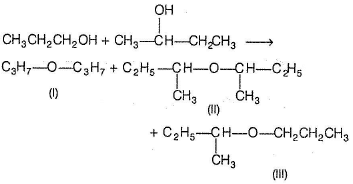
Q. If a mixture of a 1-propanol and 2-butanol is heated with concentrated H2SO4 at 140°C, how many different ethers would be formed?
Detailed Solution: Question 17
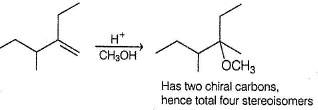
When 2-ethyl-3-methyl-1 -pentene is treated with CH3OH in H2SO4, how many different methoxy ethers would be formed in significant amount?
Detailed Solution: Question 18
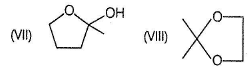
How many of the following reactions give the cyclic ether as the major organic product?





Detailed Solution: Question 19


Detailed Solution: Question 20