JEE Exam  >  JEE Test  >  Mock Tests Main and Advanced 2026  >  JEE Main Chemistry Test- 3 - JEE MCQ

JEE Main Chemistry Test- 3 Free Online Test 2026


MCQ Practice Test & Solutions: JEE Main Chemistry Test- 3 (25 Questions)

You can prepare effectively for JEE Mock Tests for JEE Main and Advanced 2026 with this dedicated MCQ Practice Test (available with solutions) on the important topic of "JEE Main Chemistry Test- 3". These 25 questions have been designed by the experts with the latest curriculum of JEE 2026, to help you master the concept.

Test Highlights:

  • - Format: Multiple Choice Questions (MCQ)
  • - Duration: 60 minutes
  • - Number of Questions: 25

Sign up on EduRev for free to attempt this test and track your preparation progress.

JEE Main Chemistry Test- 3 - Question 1

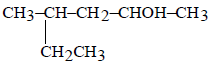
IUPAC name of compound  is

Detailed Solution: Question 1

The functional group is OH and it should get low locant and longest chain should be selected for naming so methane becomes substituient and get locant number 4

JEE Main Chemistry Test- 3 - Question 2

Isomers of propionic acid are

JEE Main Chemistry Test- 3 - Question 3

The nature of inter-molecular forces among benzene molecules is

Detailed Solution: Question 3

Intermolecular Forces - Benzene. There are three different types of intermolecular forces, dipole interaction, hydrogen bonding, and dispersion forces. The only one that occurs with Benzene is dispersion forces because it is a non-polar molecule.

JEE Main Chemistry Test- 3 - Question 4

The geometrical isomerism is shown

JEE Main Chemistry Test- 3 - Question 5

The addition of HCN to a carbonyl compound is an example of

Detailed Solution: Question 5

As carbonyl contains pi bond which broke and later get added therefore it is a ncleophilic addtion reaction.

JEE Main Chemistry Test- 3 - Question 6

Acetaldehyde is the rearrangement product of

JEE Main Chemistry Test- 3 - Question 7

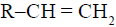
In the presence of platinum catalyst, hydrocarbon A adds hydrogen to form n-hexane. When hydrogen bromide is added to A instead of hydrogen, only a single bromo compound is formed. Which of the following is A ?

JEE Main Chemistry Test- 3 - Question 8

Which of the following will convert

 to   ?

JEE Main Chemistry Test- 3 - Question 9

1,3-Butadiene when treated with  gives

JEE Main Chemistry Test- 3 - Question 10

The alkene  reacts readily with  and formed the product B which on oxidation with alkaline hydrogen peroxides produces

JEE Main Chemistry Test- 3 - Question 11

The ortho-para directing group among the following is

JEE Main Chemistry Test- 3 - Question 12

Amongst the following, the compound that can be most readily sulphonated is

Detailed Solution: Question 12

−CH3 group that has +1 effect and due to its presence, toluene has highest electron density in the benzene ring.
For this reason Toluene can be easily sulphonated.

JEE Main Chemistry Test- 3 - Question 13

Chloroform on warming with Ag powder gives

JEE Main Chemistry Test- 3 - Question 14

Ethyl alcohol gives ethyl chloride with the help of

Detailed Solution: Question 14

With SOCl2, alcohols give Haloalkanes the best way and also from NaCl we obtain only Cl- which is weak nucleophile and cannot replace OH- which is a stronger nucleophile.

JEE Main Chemistry Test- 3 - Question 15

Which of the following compound will make precipitate most readily with ?

JEE Main Chemistry Test- 3 - Question 16

Which of the following is responsible for depletion of the ozone layer in the upper strata of the atmosphere?

JEE Main Chemistry Test- 3 - Question 17

7.5 grams of a gas occupy 5.6 litres of volume at STP. The gas is

Detailed Solution: Question 17

Step 1: Calculate moles of gas

At STP (Standard Temperature and Pressure), 1 mole of gas = 22.4 litres

So,
Moles of gas = 5.6 ÷ 22.4 = 0.25 moles

Step 2: Find the molar mass

Molar mass = mass ÷ moles = 7.5 ÷ 0.25 = 30 grams per mole

Step 3: Match this with given gases

Let’s calculate the molar mass of each option:

  • a) NO (Nitric oxide)
    Nitrogen (N) = 14, Oxygen (O) = 16 → Total = 14 + 16 = 30 g/mol 

  • b) N₂O (Nitrous oxide)
    2 Nitrogen = 2 × 14 = 28, Oxygen = 16 → Total = 28 + 16 = 44 g/mol 

  • c) CO (Carbon monoxide)
    Carbon = 12, Oxygen = 16 → Total = 12 + 16 = 28 g/mol 

  • d) CO₂ (Carbon dioxide)
    Carbon = 12, 2 Oxygens = 2 × 16 = 32 → Total = 12 + 32 = 44 g/mol 

Final Answer: a) NO

This is the only gas with a molar mass that matches 30 g/mol.

JEE Main Chemistry Test- 3 - Question 18

The number of water molecules present in a drop of water (volume 0.0018 ml) at room temperature is

Detailed Solution: Question 18

The density of water is 1g/cm3 Volume of a drop of water =0.0018ml Mass of water drop=0.0018g Moles of water=0.0001 No of water molecules in 1 drop =0.0001X6.022X10^23 =6.022X10^19 water molecules.

JEE Main Chemistry Test- 3 - Question 19

The correct representation of Charle’s law is given by

JEE Main Chemistry Test- 3 - Question 20

The structure of TlCl is similar to CsCl. What would be the radius ratio in TlCl ?

*Answer can only contain numeric values
JEE Main Chemistry Test- 3 - Question 21

Sulphur trioxide is prepared by the following two reactions:-
S8(s) + 8 O2(g) —→ 8 SO2(g)
2SO2(g) + O2(g) —→ 2 SO3(g)
How many grams of SO3 are produced from 1 mole S8?


Detailed Solution: Question 21

from the given reaction, it is clear that 1 mol Swill give 8 moles of SO3.

*Answer can only contain numeric values
JEE Main Chemistry Test- 3 - Question 22

How many elements are more electropositive than Cl?
Be, F, O, S, P, Au, H, Na


Detailed Solution: Question 22

6.0
F and O are more electronegative than Cl.

*Answer can only contain numeric values
JEE Main Chemistry Test- 3 - Question 23

How many elements have more ionisation energy as compared to their next higher atomic number element?
Na, Mg, Al, Si, P, S, Cl, Ar


Detailed Solution: Question 23

2.0 Order of ionization energy
Na < M g > Al < Si < P > S < Cl < Ar

*Answer can only contain numeric values
JEE Main Chemistry Test- 3 - Question 24

How many of the following compounds are more reactive than benzene towards electrophilic substitution.
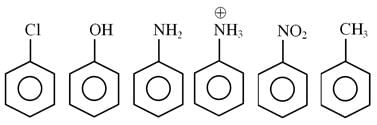

Detailed Solution: Question 24
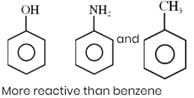
*Answer can only contain numeric values
JEE Main Chemistry Test- 3 - Question 25

Number of d-orbitals used in the hybridisation of ICl3 is = x and number of lone pair at central atom = y find x + y = ?


Detailed Solution: Question 25


sp3d    [x = 1; y = 2]
lp = 2
x + y = 1 + 2 = 3

360 docs|100 tests
Information about JEE Main Chemistry Test- 3 Page
In this test you can find the Exam questions for JEE Main Chemistry Test- 3 solved & explained in the simplest way possible. Besides giving Questions and answers for JEE Main Chemistry Test- 3, EduRev gives you an ample number of Online tests for practice
Download as PDF