
Basic Concept of Rotating Electrical Machines Machines- 2 - Free MCQ Practice
MCQ Practice Test & Solutions: Test: Basic Concept of Rotating Electrical Machines of Electrical Machines- 2 (15 Questions)
You can prepare effectively for Electrical Engineering (EE) Topicwise Question Bank for Electrical Engineering with this dedicated MCQ Practice Test (available with solutions) on the important topic of "Test: Basic Concept of Rotating Electrical Machines of Electrical Machines- 2". These 15 questions have been designed by the experts with the latest curriculum of Electrical Engineering (EE) 2026, to help you master the concept.
Test Highlights:
- - Format: Multiple Choice Questions (MCQ)
- - Duration: 45 minutes
- - Number of Questions: 15
Sign up on EduRev for free to attempt this test and track your preparation progress.

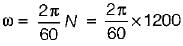
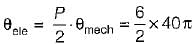
A 6-pole machine is rotating at a speed of 1200 rpm. This speed in electrical radians per sec and mechanical radian per sec are respectively given by
Detailed Solution: Question 1
In an alternator, frequency per revolution is equal to
Detailed Solution: Question 2

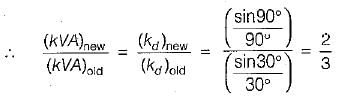
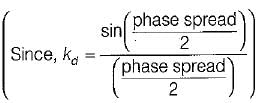
A three - phase alternator is wound with a 60 degree phase spread armature winding and develops 300 kVA. If the armature is reconnected utilizing all the coils for single-phase operation with a phase spread of 180 degree, the new rating of the machine will be
Detailed Solution: Question 3

A synchronous machine has full-pitch coils having coil-span of 12 slots. For eliminating third harmonic, the coil-span should be
Detailed Solution: Question 4

The 5th harmonic mmf wave, produced by 3-phase currents flowing in 3-phase balanced winding, rotates w.r.t fundamental field (Ns = speed of fundamental mmf wave) at a speed of
Detailed Solution: Question 5
 w.r.t observer in space while the fundamental field rotates at a speed of Ns in space.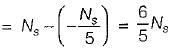
Match List- I (Power losses) with List - II (Dependent upon) and select the correct answer using the codes given below the lists:
List-I
A. Stray load loss
B. Brush constant loss
C. Hysteresis loss
D. No-load rotational loss
List-Il
1. Load
2. Value of flux
3. Rotor rotation
4. Square of load
Codes:
A B C D
(a) 3 1 4 2
(b) 4 1 2 3
(c) 3 4 2 1
(d) 4 1 3 2
List-I
A. Stray load loss
B. Brush constant loss
C. Hysteresis loss
D. No-load rotational loss
List-Il
1. Load
2. Value of flux
3. Rotor rotation
4. Square of load
Codes:
A B C D
(a) 3 1 4 2
(b) 4 1 2 3
(c) 3 4 2 1
(d) 4 1 3 2
Detailed Solution: Question 6


Output rating of
1. dc generators is in kVA.
2. ac motor is in kW.
3. ac generator is in kVA.
4. dc motors is in kW.
5. induction motors is in h.p.
6. synchronous motors is in kVA.
From these, the correct statements are:
1. dc generators is in kVA.
2. ac motor is in kW.
3. ac generator is in kVA.
4. dc motors is in kW.
5. induction motors is in h.p.
6. synchronous motors is in kVA.
From these, the correct statements are:
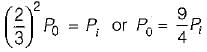
If Pi be the iron loss and P0 be the ohmic ioss on full load, then which of the following conditions has to be satisfied to obtain maximum efficiency at 2/3 full load?
Detailed Solution: Question 8
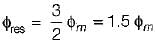
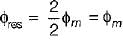
If ϕm is the maximum value of flux due to any one phase, the resultant flux in 3-phase and 2-phase ac machines would be given by
Detailed Solution: Question 9
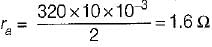
Resistance of one conductor for a dc machine is 10 mΩ. What would be the armature circuit resistance if the dc machine with 640 conductors and 8 poles is wave-connected ?
Detailed Solution: Question 10
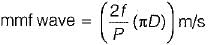
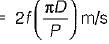
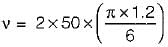
A 6-pole, 50 Hz, 3-phase induction motor has a stator bore diameter of 1.2 meters, its stator is cut and laid out flat, so that rotating mmf wave now becomes a travelling mmf wave. What is the linear velocity of the travelling mmf wave in meters per second ?
Detailed Solution: Question 11

Assertion (A) : In a rotating electrical machine, having 2 poles on the stator and 4 poles on the rotor, the net electromagnetic torque developed is zero.
Reason (R) : In all rotating electrical machines, the number of rotor poles must be equal to the number of stator poles for development of electromagnetic torque.
Reason (R) : In all rotating electrical machines, the number of rotor poles must be equal to the number of stator poles for development of electromagnetic torque.
Assertion (A) : Exciting winding is one which produces working flux.
Reason (R) : Armature winding in one in which the working emf is induced by the working flux,
Reason (R) : Armature winding in one in which the working emf is induced by the working flux,
Assertion (A) : At the time of winding design of three-phase alternators, the attention is mainly directed for the attenuation of triplen harmonics, by adopting a chording angle of 60° electrical.
Reason (R): Three-phase alternators are invariably star-connected to eliminate triplen harmonics from the line e.m.f.
Reason (R): Three-phase alternators are invariably star-connected to eliminate triplen harmonics from the line e.m.f.
Detailed Solution: Question 14
