CBSE Class 4  >  Class 4 Test  >  Science  >  Test: The Solar System- 1 - Class 4 MCQ

The Solar System- 1 - Free MCQ Practice Test with solutions, Class 4 Science


MCQ Practice Test & Solutions: Test: The Solar System- 1 (10 Questions)

You can prepare effectively for Class 4 Science for Class 4 with this dedicated MCQ Practice Test (available with solutions) on the important topic of "Test: The Solar System- 1". These 10 questions have been designed by the experts with the latest curriculum of Class 4 2026, to help you master the concept.

Test Highlights:

  • - Format: Multiple Choice Questions (MCQ)
  • - Duration: 15 minutes
  • - Number of Questions: 10

Sign up on EduRev for free to attempt this test and track your preparation progress.

Test: The Solar System- 1 - Question 1

Which of the following statements is correct.
Statement A: Asteroids can be very large or as small as a grain of sand.
Statement B: Pluto is the ninth planet in the solar system.

Detailed Solution: Question 1

Asteroids can vary significantly in sizes. It can be very large or as small as a grain of sand. Pluto is not a planet anymore. It was the ninth planet of the solar system till 2006 after which it was given the status of dwarf planet.

Test: The Solar System- 1 - Question 2

Which of the following planets are very cold and are called ice giants?

Detailed Solution: Question 2

Uranus and Neptune are very cold and these two planets are called ice giants because they consist of ice.

Test: The Solar System- 1 - Question 3

What is the largest planet in our solar system?

Detailed Solution: Question 3

Jupiter is the largest planet in our solar system. It is so big that more than 1,300 Earths could fit inside it! Jupiter is known for its big red spot, which is actually a huge storm that has been going on for many years. Isn't that amazing?

Test: The Solar System- 1 - Question 4

The north pole has ______ all the time during summer in the northern hemisphere.

Detailed Solution: Question 4

During summer in the northern hemisphere, the north pole has sunshine all the time. This means it is always daytime there, and the sun does not set for six months.

Test: The Solar System- 1 - Question 5

State whether the following statement is True or False:

Earth is one of the planets with life because it has the right temperature, water, air with oxygen, and a Moon.

Detailed Solution: Question 5

Yes, the statement is True. Earth is a special planet in our solar system because it has all the things needed for life to exist - the right temperature, water, air with oxygen, and a Moon that helps in various ways. 

Test: The Solar System- 1 - Question 6

Solve the riddle.                                        
No matter how hard you look, you'll never find me.
Unless you have a telescope to help you see.
I was once called a planet, but not anymore.
Now I'm just a "Dwarf Planet," but too important to ignore.Which planet am I?

Detailed Solution: Question 6
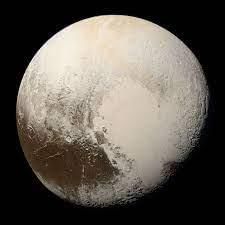
The planet is Pluto. It is now called a dwarf planet and not as the ninth planet. It is the farthest from earth.

Pluto - Wikipedia

Test: The Solar System- 1 - Question 7

Which of the following is true?
Statement A: Sun is the hottest planet in the solar system.
Statement B: Sun is revolving around the Earth in an elliptical orbit.

Detailed Solution: Question 7

Sun is a star and not a planet. Venus is the hottest planet in the solar system. Earth along with all other planets is revolving around the sun and not the other way round. Sun is constant in its position and is not moving around any heavenly body.

Test: The Solar System- 1 - Question 8

Which planet is known as the Red Planet?

Detailed Solution: Question 8

Mars is known as the Red Planet because its surface is covered with red dust, giving it a reddish appearance. Interestingly, this red dust is due to iron oxide, commonly known as rust.

Test: The Solar System- 1 - Question 9

Which planet has the most number of moons?

Detailed Solution: Question 9

Saturn currently holds the record for the most number of moons in our solar system, surpassing Jupiter. As of the latest observations, Saturn is known to have 146 moons, and Jupiter has 95.

Test: The Solar System- 1 - Question 10

Which of the following is NOT a terrestrial planet?

Detailed Solution: Question 10

Neptune is not a terrestrial planet; it is a gas giant. Terrestrial planets, like Earth, Mars, and Venus, are composed primarily of rock and metal.

48 videos|193 docs|34 tests
Information about Test: The Solar System- 1 Page
In this test you can find the Exam questions for Test: The Solar System- 1 solved & explained in the simplest way possible. Besides giving Questions and answers for Test: The Solar System- 1, EduRev gives you an ample number of Online tests for practice
48 videos|193 docs|34 tests
Download as PDF