
Probability- Assertion & Reason Type Questions - Free with Solutions
MCQ Practice Test & Solutions: Test: Probability- Assertion & Reason Type Questions (10 Questions)
You can prepare effectively for Class 9 Class 9: Additional Practice with this dedicated MCQ Practice Test (available with solutions) on the important topic of "Test: Probability- Assertion & Reason Type Questions". These 10 questions have been designed by the experts with the latest curriculum of Class 9 2026, to help you master the concept.
Test Highlights:
- - Format: Multiple Choice Questions (MCQ)
- - Duration: 20 minutes
- - Number of Questions: 10
Sign up on EduRev for free to attempt this test and track your preparation progress.

Direction: In the following questions, a statement of Assertion is given followed by a corresponding statement of Reason just below it. Of the statements, mark the correct
answer as
Assertion : Two well balanced dice are rolled and the numbers that turn up are observed. Then the number of elements in sample space is 12.
Reason : When two dice are rolled, number of elements in sample space is 6 x 6.
Detailed Solution: Question 1
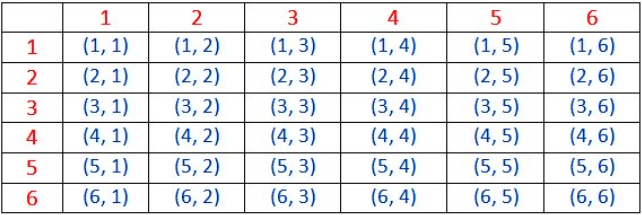
Direction: In the following questions, a statement of Assertion is given followed by a corresponding statement of Reason just below it. Of the statements, mark the correct
answer as
Assertion : Two coins are tossed. Number of elements in the sample space is 4.
Reason : When a coin is tossed n times then the number of elements in its sample space is 2n.
Detailed Solution: Question 2

Direction: In the following questions, a statement of Assertion is given followed by a corresponding statement of Reason just below it. Of the statements, mark the correct
answer as
Assertion : A fair die is rolled. Then the probability of getting an even number is 1/2 and probability of getting an odd number is 1/2.
Reason : Possible outcomes when a fair die is rolled is (1, 2, 3, 4, 5, 6).
Detailed Solution: Question 3
Direction: In the following questions, a statement of Assertion is given followed by a corresponding statement of Reason just below it. Of the statements, mark the correct
answer as
Assertion : If E1, E2 , .........., En are n elementary events associated to a random experiment, then P(E1) + P(E2) PE +.....+ P(En) = 1
Reason : For any event ‘A’ associated to an experiment, we have -1 ≤ P(A) ≤ 1
Detailed Solution: Question 4
Direction: In the following questions, a statement of Assertion is given followed by a corresponding statement of Reason just below it. Of the statements, mark the correct
answer as
Assertion : In a class there are x boys. and y girls, A student is selected at random, then the probability of selecting a girl is y/x.
Reason : Probability of an event E of an experiment is ratio of the number of trials in which event E has happened to the total number of trials.
Detailed Solution: Question 5
Direction: In the following questions, a statement of Assertion is given followed by a corresponding statement of Reason just below it. Of the statements, mark the correct
answer as
Assertion : A die is thrown. Let E be the event that number appears on the upper face is less than 1, then P(E) = 1/6
Reason : Probability of impossible event is 0.
Detailed Solution: Question 6
Direction: In the following questions, a statement of Assertion is given followed by a corresponding statement of Reason just below it. Of the statements, mark the correct
answer as
Assertion : Tossing a coin 50 times is called an event.
Reason : The possible outcomes of an experiment are called events.
Detailed Solution: Question 7
Direction: In the following questions, a statement of Assertion is given followed by a corresponding statement of Reason just below it. Of the statements, mark the correct
answer as
Assertion : A coin is tossed two times. Probability of getting at least two heads is 1/4.
Reason : When a coin is tossed two times, then the sample space is {HH, HT, TH, TT}
Detailed Solution: Question 8
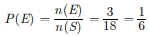
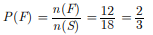
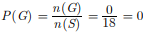
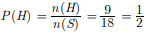
A die is rolled if the number on a die is even then a coin is tossed once and if the number on a die is odd, then a coin is tossed twice. Match the events in Column-I with their probabilities in Column-II
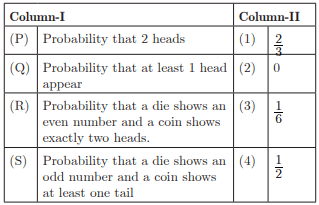
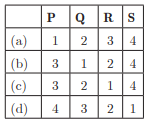
Detailed Solution: Question 9

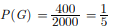
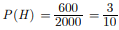
A NGO selected 2000 families at random and surveyed them to determine number of children in a family. The data is given below:
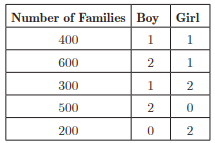
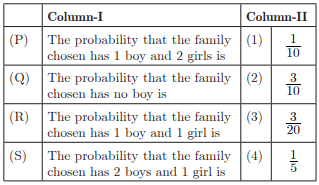
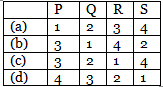
If one family is chosen at random then, match the Column-I with their corresponding probabilities in Column-II.
Detailed Solution: Question 10
4 docs|108 tests |
