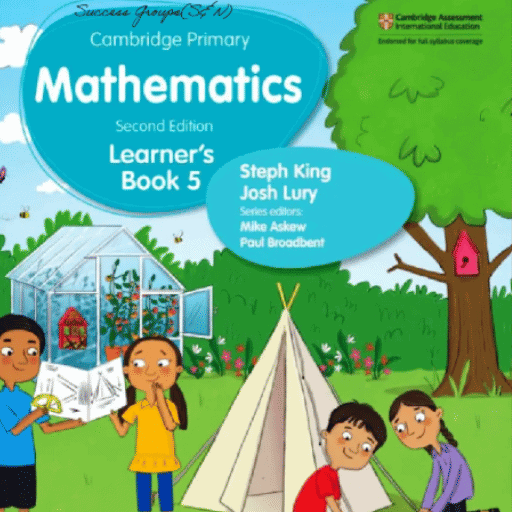
 | PARTNER COURSE IGCSE Year 5 Maths Notes, MCQs & Worksheets7,859 students learning this week · Last updated on Apr 10, 2026 |
IGCSE Year 5 Maths Notes, MCQs Study Material



Trending Courses for Class 5

Year 5 Mathematics IGCSE Cambridge: Complete Course Overview
Year 5 Mathematics IGCSE Cambridge is an internationally recognized qualification designed specifically for students aged 9-10 years, offering a comprehensive foundation in mathematical concepts. This course, developed by Cambridge Assessment International Education, has become increasingly popular among Indian families seeking world-class mathematics education for their children. The Year 5 Mathematics IGCSE curriculum provides structured learning across multiple mathematical domains, preparing students for advanced studies while building strong problem-solving abilities.
The Cambridge Year 5 Maths syllabus covers eight major topic areas that blend practical applications with theoretical understanding. Students exploring the Year 5 IGCSE Mathematics course will discover that it emphasizes not just calculation accuracy but also logical reasoning and mathematical communication. Whether you're a parent seeking the best Year 5 Mathematics IGCSE study material or a student beginning your journey, understanding this complete course structure is essential for successful preparation.
Core Curriculum Structure
The Year 5 IGCSE Mathematics course is organized into interconnected topic areas that build progressively on each other. Each component serves as a stepping stone toward developing mathematical confidence and competence. The curriculum balances computational skills with conceptual understanding, ensuring students grasp the 'why' behind mathematical procedures, not just the 'how'.
- Number concepts and decimal operations
- Calculation methods for various numerical problems
- Fractions, percentages, and division relationships
- Geometry, angles, and spatial awareness
- Position, movement, and coordinate geometry
- Statistical methods and data handling
- Probability and likelihood concepts
- Time measurement and practical applications
Understanding Decimal Numbers in Year 5 IGCSE Maths
Decimal numbers form the foundation of modern mathematics, and mastering them in Year 5 is crucial for all subsequent learning. When students study introducing decimal numbers, they learn how to express parts of a whole using a decimal point. This concept bridges the gap between whole numbers and fractions, making it absolutely essential for Class 5 Mathematics IGCSE preparation.
Understanding decimal numbers Year 5 involves recognizing place values to the right of the decimal point. Students learn that each position represents a power of ten, whether tenths, hundredths, or thousandths. Our guide on decimal numbers operations provides practical examples and worked solutions that make this abstract concept tangible and understandable.
Decimal Concepts and Applications
Year 5 decimal numbers worksheets typically focus on reading, writing, ordering, and comparing decimal values. Students practice converting between decimals and fractions, essential for building conceptual bridges. The ability to work with decimal numbers IGCSE effectively opens doors to understanding percentages, money transactions, and measurement conversions – all practical skills needed in daily life.
Mastering Fractions, Percentages and Division for Class 5
Fractions represent one of the most challenging yet rewarding topics in Year 5 Maths Cambridge curriculum. Students encounter fractions and division relationships that help them understand how division naturally creates fractional parts. This connection proves invaluable when solving real-world problems involving sharing, portions, and distribution.
The relationship between fractions and percentages is particularly important in Class 5 Mathematics IGCSE. When learning fractions and percentages, students discover that percentages are simply fractions with a denominator of 100. This insight transforms how they approach problems involving discounts, interests, and comparative analysis. Additionally, understanding fractions greater than, less than, equal concepts enables students to compare fractions with different denominators effectively.
Fractional Thinking and Problem-Solving
Comparing fractions Year 5 requires converting them to common denominators or using visual representations. Students who master this skill develop stronger mathematical intuition and can tackle more complex calculations in later years. The ability to work with fractions, percentages, and division interconnectedly makes students remarkably confident in handling Year 5 calculation methods across various contexts.
Angles, Shapes and Symmetry: Year 5 Geometry Concepts
Geometry forms an essential component of the Cambridge Year 5 Maths syllabus, developing spatial reasoning and visual-mathematical thinking. When students explore angles and shapes with symmetrical patterns, they begin recognizing mathematical properties in the physical world around them. This connection between abstract mathematics and concrete reality makes learning memorable and meaningful.
Year 5 geometry IGCSE includes understanding angle properties, classifying shapes, and identifying symmetrical patterns. Students learn that angles are measured in degrees and that different shapes have specific angle properties. The study of perimeter and area calculations teaches students to measure and compare geometric properties using real measurements, making mathematics practical and applicable.
Symmetry in Geometry
Symmetry Year 5 Maths helps students appreciate geometric beauty and understand patterns. Whether exploring line symmetry, rotational symmetry, or symmetrical patterns in nature, students develop visual-spatial skills essential for advanced mathematics. These concepts form the foundation for later geometry studies including transformations and coordinate geometry.
Positive and Negative Numbers: Calculation Strategies for IGCSE Year 5
Working with positive and negative numbers represents a significant conceptual leap in Year 5 learning. Understanding positive and negative numbers requires students to think beyond counting and incorporate the concept of direction and magnitude. This mathematical development is crucial for physics, chemistry, and higher mathematics studies.
Students master Year 5 calculation methods by practicing addition and subtraction with integers across the number line. Our resource on addition and subtraction techniques provides step-by-step strategies that make these calculations intuitive. When students understand why negative plus negative equals a larger negative, they've truly grasped the underlying logic.
Statistical Methods for Class 5: Bar Charts, Dot Plots, Mode and Median
Data handling and interpretation skills are increasingly important in our information-rich world. Year 5 students studying bar charts and dot plots learn to represent numerical information visually and extract meaningful insights from data. These statistical methods Year 5 IGCSE skills develop critical thinking and analytical abilities applicable across all subjects.
Understanding Mode and Median through our comprehensive guide on mode and median calculations helps students analyze datasets effectively. Students learn that mode represents the most frequently occurring value while median shows the middle value, each providing different insights about data sets. Data handling Year 5 extends beyond calculations to include proper representation and interpretation of information.
Data Representation and Analysis
| Statistical Concept | Definition | When Used |
|---|---|---|
| Mode | Most frequently occurring value | Finding most popular items |
| Median | Middle value when ordered | Finding typical central value |
| Bar Chart | Visual representation using bars | Comparing categories |
| Dot Plot | Data shown as dots on number line | Showing frequency distribution |
Probability Concepts for Year 5 Cambridge IGCSE Mathematics
Probability introduces students to mathematical thinking about uncertainty and chance. When students first encounter probability concepts, they develop language for discussing likelihood – terms like 'certain,' 'likely,' 'unlikely,' and 'impossible' become mathematically precise. This foundational understanding of probability concepts Class 5 enables students to make informed decisions based on likelihood assessments.
Basic probability IGCSE Year 5 typically involves simple experiments and predictions. Students explore situations where outcomes are equally likely and learn to express probability as fractions or simple ratios. Understanding how probability connects to everyday situations – weather forecasting, game outcomes, or medical testing – makes this abstract topic concrete and relevant.
Location and Movement: Translations and Reflections in Year 5 Maths
Geometry comes alive when students study movement and transformations. Learning about translations in coordinate systems helps students understand how objects move in space while maintaining their shape and size. Our detailed resource on reflection and translation transformations covers both concepts comprehensively with visual examples.
Location and movement IGCSE Year 5 develops coordinate geometry skills essential for later mathematics. Students learn to describe positions using coordinates and understand how shapes transform through specific movements. These concepts form the foundation for understanding vectors, complex transformations, and three-dimensional geometry in advanced studies.
Time Measurement and Time Zones for IGCSE Class 5
Practical mathematics comes through clearly when studying time measurement. Our guide on measuring time covers conversion between seconds, minutes, hours, and days with real-world applications. Students practice calculating elapsed time, solving timetable problems, and understanding time intervals – skills they use daily.
Understanding time zones extends time measurement to a global perspective. Students learn how Earth's rotation creates different times across regions and practice calculating time differences. Time calculations Year 5 IGCSE make abstract concepts concrete through practical problems like flight times, international meetings, and time differences between Indian cities.
How to Solve Missing Number Problems in Year 5 Mathematics
Missing number problems develop algebraic thinking and problem-solving strategies long before formal algebra. When working with missing number problems, students learn to think backward from answers to operations. This reverse-thinking develops mathematical flexibility and deeper understanding of number relationships.
These Class 5 problems might appear as equations like: 7 + ? = 15, or ? × 3 = 24. Students develop systematic approaches to finding missing values, strengthening their computational skills and logical reasoning. Mastering missing number strategies builds confidence for handling algebraic equations in later years.
Square Numbers and Number Patterns for Cambridge Year 5
Number patterns reveal the beautiful structure underlying mathematics. Students studying square numbers discover that certain numbers can form perfect squares visually. Understanding that 16 equals 4 × 4 and represents a 4×4 grid makes the concept visual and memorable. Square numbers Year 5 learning extends to recognizing patterns and predicting subsequent squares.
Number patterns in Year 5 include arithmetic sequences, geometric sequences, and more complex patterns involving multiplication or combined operations. Students develop pattern recognition skills that strengthen logical thinking and mathematical prediction abilities. These number relationships prepare students for algebraic expressions and functional thinking in advanced mathematics.
Best Study Resources for Year 5 Mathematics IGCSE Cambridge
Finding quality Year 5 Mathematics IGCSE study material determines your preparation success significantly. The best Year 5 IGCSE Maths resources combine clear explanations, worked examples, and practice problems with answers. EduRev provides comprehensive Year 5 IGCSE Maths notes covering every topic in the Cambridge syllabus with detailed chapter-wise organization.
Effective preparation requires accessing various resource types – from conceptual explanations to practice questions. Each chapter is structured to build understanding progressively, starting with foundational concepts and advancing to application problems. Whether you prefer reading detailed explanations or working through practice problems, quality resources support your learning style.
Free Year 5 IGCSE Maths Notes and Practice Materials
Quality education shouldn't require expensive resources. Year 5 IGCSE Maths PDF materials available through EduRev provide comprehensive coverage without cost barriers. Free Class 5 IGCSE Maths notes from EduRev include worked examples, practice questions, and concept summaries organized by chapter.
Access to Year 5 Cambridge Maths worksheets free helps students practice independently and reinforce learning. IGCSE Year 5 Maths practice questions develop problem-solving confidence, while Year 5 Mathematics IGCSE revision notes refresh concepts before assessments. Free resources combined with consistent practice create powerful learning foundations.
Comprehensive Learning Resources Available
| Resource Type | Content Focus | Best For |
|---|---|---|
| Chapter-wise Notes | Concept explanations with examples | Building understanding |
| Practice Questions | Applied problem-solving exercises | Skill development |
| Worksheets | Additional practice with answers | Independent learning |
| Revision Notes | Concise concept summaries | Quick review |
Your journey through Year 5 Mathematics IGCSE Cambridge becomes significantly more manageable with properly organized resources. Whether you're exploring decimal numbers, mastering fractions and percentages, or developing geometric understanding, quality study materials from EduRev support every step. Begin your preparation today by accessing the comprehensive chapter resources provided – your mathematical foundation for future success starts here.
Year 5 Mathematics IGCSE (Cambridge) for Class 5 CBSE Exam Pattern 2026-2027
Year 5 Primary Mathematics (Cambridge) Exam Pattern for Year 5
The Year 5 Primary Mathematics exam under the Cambridge curriculum is designed to assess students' understanding and application of mathematical concepts. Understanding the exam pattern is crucial for effective preparation. Below are the key components of the exam structure:
1. Exam Structure
- Format: The exam typically consists of multiple-choice questions, short-answer questions, and problem-solving tasks.
- Duration: The total time allocated for the exam is usually around 1.5 to 2 hours.
- Sections: The exam is divided into different sections, focusing on various areas of mathematics.
2. Key Areas of Assessment
- Number and Place Value: Understanding of numbers, place value, and the ability to perform operations with whole numbers.
- Fractions, Decimals, and Percentages: Knowledge of fractions, their equivalents, as well as decimal and percentage conversions.
- Measurement: Skills in measuring length, weight, volume, and time, including conversions between units.
- Geometry: Understanding of shapes, angles, symmetry, and basic properties of 2D and 3D figures.
- Data Handling: Ability to interpret and represent data using charts, graphs, and tables.
- Algebra: Introduction to basic algebra concepts, including simple equations and patterns.
3. Scoring and Grading
- Marking Scheme: Each section has a specific number of marks allocated, contributing to the overall score.
- Grade Boundaries: The performance is graded typically on a scale from A to E, with A being the highest.
- Feedback: Students receive feedback on their performance, highlighting strengths and areas for improvement.
4. Preparation Tips
- Practice Regularly: Engage in regular practice using sample papers and past exam questions.
- Understand Concepts: Focus on understanding mathematical concepts rather than rote memorization.
- Time Management: Develop effective time management skills to complete the exam within the allotted time.
- Use Resources: Utilize high-quality study materials and resources available on platforms like EduRev for comprehensive preparation.
In conclusion, understanding the Year 5 Primary Mathematics exam pattern is essential for effective preparation. Students should focus on mastering the key areas of assessment and practice regularly to build confidence and achieve success in their exams.


Year 5 Mathematics IGCSE (Cambridge) Syllabus 2026-2027 PDF Download
Year 5 Primary Mathematics (Cambridge) Syllabus
The Year 5 Primary Mathematics syllabus is designed to develop a strong foundation in mathematical concepts and skills. This syllabus encompasses a variety of topics, ensuring that students gain a comprehensive understanding of mathematics. Below is a detailed breakdown of the Year 5 syllabus.
Year 5 The Number System
- Understanding whole numbers, place value, and number lines.
- Recognizing and working with negative numbers.
- Introduction to prime and composite numbers.
Year 5 2D Shape and Pattern
- Identifying and classifying 2D shapes (triangles, quadrilaterals, circles).
- Exploring symmetry and patterns in shapes.
- Creating and extending patterns using 2D shapes.
Year 5 Numbers and Sequences
- Understanding number sequences and identifying patterns.
- Working with odd and even numbers.
- Exploring arithmetic sequences.
Year 5 Averages
- Calculating the mean, median, and mode of a set of numbers.
- Understanding the concept of range in data sets.
Year 5 Addition and Subtraction
- Using mental strategies for addition and subtraction.
- Solving multi-digit addition and subtraction problems.
- Understanding and applying the concept of regrouping.
Year 5 3D Shapes
- Identifying and classifying 3D shapes (cubes, spheres, pyramids).
- Exploring the properties of 3D shapes.
- Understanding volume and surface area concepts.
Year 5 Fractions, Decimals and Percentages
- Understanding fractions and their equivalent forms.
- Converting between fractions, decimals, and percentages.
- Solving problems involving fractions, decimals, and percentages.
Year 5 Probability
- Understanding the concept of probability and chance.
- Using probability scales to represent likelihood.
- Conducting simple probability experiments.
Year 5 Addition and Subtraction of Fractions
- Adding and subtracting fractions with like denominators.
- Finding common denominators for unlike fractions.
- Solving word problems involving fraction addition and subtraction.
Year 5 Angles
- Identifying different types of angles (acute, obtuse, right).
- Measuring angles using a protractor.
- Understanding complementary and supplementary angles.
Year 5 Multiplications and Division
- Understanding multiplication facts and tables.
- Applying long division and short division methods.
- Solving word problems involving multiplication and division.
Year 5 Data
- Collecting, organizing, and presenting data using charts and graphs.
- Interpreting data and drawing conclusions.
- Understanding the importance of data representation.
Year 5 Ratio and Proportion
- Understanding the concept of ratio and proportion.
- Solving problems involving ratios in real-life contexts.
- Identifying equivalent ratios.
Year 5 Area and Perimeter
- Calculating the area and perimeter of various shapes.
- Understanding the relationship between area and perimeter.
- Solving real-world problems involving area and perimeter.
Year 5 Multiplying and Dividing Fractions and Decimals
- Multiplying and dividing fractions with whole numbers.
- Understanding the rules for multiplying and dividing decimals.
- Solving problems involving fractional and decimal calculations.
Year 5 Time
- Understanding time concepts (hours, minutes, seconds).
- Reading and interpreting clocks and calendars.
- Calculating elapsed time and scheduling events.
Year 5 Number and The Laws of Arithmetic
- Understanding the properties of operations (associative, commutative).
- Applying the order of operations in calculations.
- Using arithmetic to solve real-life problems.
Year 5 Position and Direction
- Understanding coordinates and grid systems.
- Identifying and describing positions using direction and movement.
- Exploring transformations (translations, rotations, reflections).
This comprehensive Year 5 Primary Mathematics syllabus ensures that students are well-equipped with essential mathematical skills, preparing them for future academic challenges. Each topic is designed to engage students and enhance their understanding of mathematics in everyday life.
This course is helpful for the following exams: Class 5
How to Prepare Year 5 Mathematics IGCSE (Cambridge) for Class 5?
How to Prepare Year 5 Primary Mathematics (Cambridge) for Year 5?
Preparing for Year 5 Primary Mathematics (Cambridge) involves a combination of understanding the curriculum, practicing key concepts, and developing problem-solving skills. Here are effective strategies to help students excel in this course offered by EduRev:
1. Understand the Curriculum
- Familiarize yourself with the Year 5 Primary Mathematics (Cambridge) curriculum objectives.
- Identify key topics such as numbers, geometry, measurement, and data handling.
2. Create a Study Schedule
- Allocate specific times for studying Year 5 Primary Mathematics (Cambridge) concepts.
- Ensure that the study schedule includes regular reviews and practice sessions.
3. Utilize Practice Resources
- Use worksheets and practice tests specifically designed for Year 5 Primary Mathematics (Cambridge).
- Engage with interactive activities and games that reinforce mathematical skills.
4. Focus on Problem-Solving Skills
- Encourage critical thinking by solving word problems related to Year 5 Primary Mathematics (Cambridge).
- Teach different strategies for tackling complex problems, such as drawing diagrams or breaking down tasks.
5. Encourage Group Study
- Form study groups with peers to discuss Year 5 Primary Mathematics (Cambridge) topics.
- Collaborate on challenging exercises to enhance understanding through discussion.
6. Seek Help When Needed
- Do not hesitate to ask teachers or tutors for clarification on difficult concepts in Year 5 Primary Mathematics (Cambridge).
- Utilize EduRev resources for additional explanations and guidance.
7. Monitor Progress
- Regularly assess your understanding of Year 5 Primary Mathematics (Cambridge) through quizzes and self-tests.
- Reflect on areas of improvement and adjust study methods accordingly.
Conclusion
By following these strategies, students can confidently prepare for Year 5 Primary Mathematics (Cambridge) and enhance their mathematical abilities. Consistent practice and engagement with the material will lead to success in the course offered by EduRev.
Importance of Year 5 Mathematics IGCSE (Cambridge) for Class 5
Importance of Year 5 Primary Mathematics (Cambridge) Course for Year 5
The Year 5 Primary Mathematics (Cambridge) Course offered by EduRev plays a crucial role in the educational journey of students. This course not only aligns with international standards but also lays a strong foundation for future mathematical learning. Below are some key reasons highlighting its importance:
1. Enhanced Understanding of Mathematical Concepts
- The course covers essential mathematical concepts such as addition, subtraction, multiplication, and division.
- Students engage with real-world problems, fostering a deeper understanding of how mathematics applies to everyday life.
2. Development of Critical Thinking Skills
- By tackling challenging problems, students enhance their critical thinking and problem-solving skills.
- The curriculum encourages analytical thinking, which is vital for academic success and everyday decision-making.
3. Preparation for Future Learning
- The Year 5 course sets the stage for more advanced mathematical topics in subsequent years.
- A strong foundation in Year 5 ensures students are well-prepared for the complexities of secondary mathematics.
4. Interactive Learning Experience
- EduRev’s course incorporates interactive elements that make learning engaging and enjoyable.
- Visual aids and practical activities help reinforce concepts, catering to different learning styles.
5. Assessment and Feedback
- Regular assessments provide students with immediate feedback on their progress.
- This helps identify areas for improvement and ensures that students stay on track with their learning goals.
6. Boosting Confidence in Mathematics
- As students master new concepts, they gain confidence in their mathematical abilities.
- Increased confidence can lead to a more positive attitude towards learning and a greater willingness to tackle challenges.
7. Support for Diverse Learning Needs
- The course is designed to cater to a wide range of learning abilities, ensuring that every student can thrive.
- Individualized learning paths allow students to progress at their own pace, ensuring mastery of each topic.
Conclusion
The Year 5 Primary Mathematics (Cambridge) Course by EduRev is essential for young learners. It not only equips them with important mathematical skills but also prepares them for future academic challenges. By fostering a love for mathematics and enhancing critical thinking abilities, this course lays the groundwork for lifelong learning and success.
Year 5 Mathematics IGCSE (Cambridge) for Class 5 FAQs
| 1. How do I solve fraction problems in Year 5 mathematics? |  |
| 2. What are the main topics covered in IGCSE Cambridge Class 5 mathematics? | |
| 3. How do I calculate area and perimeter of rectangles and squares? | |
| 4. What's the easiest way to understand decimal places in Year 5? | |
| 5. How do I convert fractions to percentages for Class 5 exams? | |
| 6. What types of geometry questions appear in IGCSE Year 5 assessments? | |
| 7. How do I interpret data from bar charts and line graphs in Year 5 mathematics? | |
| 8. What strategies help solve word problems in Year 5 maths? | |
| 9. How do I master times tables and mental arithmetic for Class 5? | |
| 10. What exam question formats should I expect in Year 5 IGCSE mathematics? | |
Best Year 5 Mathematics IGCSE (Cambridge) for Class 5 NCERT Solutions and Study Materials
 | View your Course Analysis |  |
 | Create your own Test | |




 Documents
 Tests
Tests Top teachers of India
 | Explore Courses for Class 5 exam |  |


