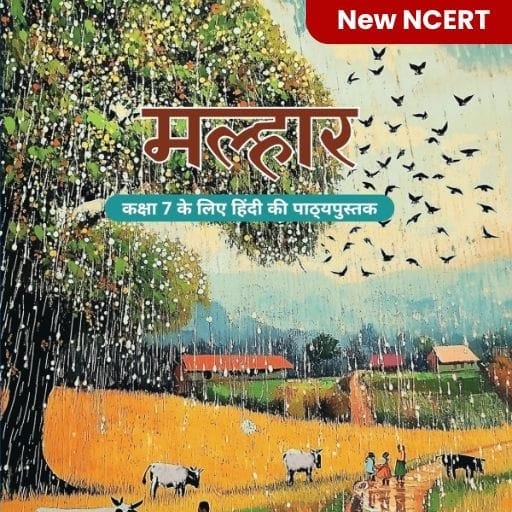
 | INFINITY COURSE Class 7 Hindi (Malhar) - New NCERT Solutions & Notes38,282 students learning this week · Last updated on Apr 10, 2026 |
Class 7 Hindi (Malhar) - New Study Material








Trending Courses for Class 7

Class 7 Hindi Malhar NCERT Course Overview
Class 7 Hindi Malhar is the official NCERT textbook designed for Hindi language learning under the new NCERT curriculum. As part of the Hindi (Course A) stream, this course plays a crucial role in developing language comprehension, literary appreciation, and cultural awareness among students. Published by the National Council of Educational Research and Training (NCERT), New Delhi, the Hindi Malhar Class 7 textbook aligns with the National Education Policy (NEP) 2020, ensuring that students receive contemporary and well-structured Hindi education.
The Class 7 Hindi NCERT course encompasses a diverse range of literary content, including poetry, prose, and interviews that showcase classical and contemporary themes. With contributions from legendary poets like Meera Bai and Girdhar Kavirai, this textbook offers students an enriching learning experience. Whether you're preparing for examinations or simply wanting to strengthen your Hindi language skills, understanding the structure and content of Hindi Malhar Class 7 is essential for success.
What Makes Hindi Malhar NCERT Special?
The New NCERT Hindi Class 7 textbook stands out because it balances traditional literary excellence with modern pedagogical approaches. The course structure ensures that students develop not just language skills but also critical thinking abilities through literary analysis.
Key Chapters in Hindi Malhar Class 7 Textbook
The Hindi Malhar NCERT textbook for Class 7 contains 10 primary chapters covering both poetry and prose. These chapters are thoughtfully curated to develop reading comprehension, vocabulary, and an appreciation for Hindi literature. Let's explore the main chapters that form the backbone of your Class 7 Hindi study material:
Poetry Chapters (कविता)
The poetry section introduces students to different poetic forms and styles. Start with माँ, कह एक कहानी, a beautiful narrative poem that explores the relationship between mother and child. This chapter sets the foundation for understanding how poets use storytelling within verse.
Continue your journey through फूल और काँटा, which presents a philosophical perspective on nature and life's contrasts. For a deeper understanding of classical Hindi poetry, explore गिरीधर कविराय की कुंडलिया, where you'll encounter the traditional Kundaliya form with its unique rhyme scheme and wisdom-laden verses.
The seasonal beauty of Hindi literature comes alive through वर्षा-बहार, celebrating the monsoon season. Don't miss चिड़िया, a charming poem about birds that offers subtle life lessons, and the devotional masterpiece मीराँ के पद, featuring the saint-poet Meera's spiritually profound verses.
Prose Chapters (गद्य)
The prose section develops your storytelling comprehension skills. Begin with तीन बुद्धिमान, a tale about three wise individuals that imparts valuable moral lessons. Explore environmental consciousness through पानी रे पानी, which discusses the importance of water conservation, a topic highly relevant to contemporary India.
Health awareness forms another important theme in the curriculum through नहीं होना बीमार, emphasizing the significance of maintaining good health and hygiene practices.
Interview Section (साक्षात्कार)
The interview format provides unique insights into real personalities. बिरजू महाराज से साक्षात्कार is a fascinating conversation with the legendary Kathak dancer Pandit Birju Maharaj, offering students a glimpse into the world of classical Indian dance and artistic dedication.
Free Study Materials for Class 7 Hindi (Malhar)
Having access to comprehensive Class 7 Hindi study material is essential for scoring well in your examinations. EduRev offers an extensive range of free study materials specifically designed for Class 7 Hindi Malhar students, helping you prepare effectively without additional expenses.
Available Resource Types
| Resource Type | Benefits | Best For |
|---|---|---|
| Flashcards | Quick memorization and revision | Last-minute preparation |
| Mind Maps | Visual learning and concept connections | Understanding chapter themes |
| PowerPoint Presentations | Engaging visual learning experience | Classroom discussions |
| Worksheets with Solutions | Practice with immediate feedback | Regular practice and assessment |
Access our Flashcards for quick vocabulary and concept revision. These are perfect when you need rapid memorization before exams. For visual learners, our Mindmaps present complex chapter concepts in easy-to-understand visual formats that help you see connections between ideas.
Teachers and students alike benefit from our PPTs, which provide structured presentation materials suitable for classroom use or self-study sessions. Most importantly, practice your skills with our Worksheet with Solutions, which offers Class 7 Hindi practice questions complete with detailed answers to help you understand the reasoning behind each response.
Chapter-wise Summary: माँ, कह एक कहानी और अन्य पाठ
Understanding the essence of each chapter is crucial for Class 7 Hindi success. Here's what you need to know about major chapters to strengthen your Hindi comprehension:
माँ, कह एक कहानी (Mother, Tell a Story)
This opening chapter captures the beautiful relationship between a mother and child through poetry. It explores themes of love, protection, and the timeless appeal of storytelling in Indian culture.
तीन बुद्धिमान (Three Wise People)
A narrative prose piece that teaches wisdom through a story of three intelligent individuals facing challenges. This chapter helps develop your story analysis and moral comprehension skills.
अन्य महत्वपूर्ण पाठ (Other Important Chapters)
From पानी रे पानी's environmental message to चिड़िया's gentle wisdom, each chapter builds your overall language competency. मीराँ के पद introduces you to devotional poetry and bhakti literature, essential for cultural literacy.
Hindi Grammar Topics for Class 7 Students
Strong grammar fundamentals are the foundation of excellent Hindi performance. Class 7 Hindi grammar covers essential concepts that every student must master for clear, correct communication.
Key Grammar Areas
- संज्ञा (Nouns): Understanding different types and their usage
- सर्वनाम (Pronouns): Personal, demonstrative, and relative pronouns
- विशेषण (Adjectives): Descriptive and quantitative adjectives
- क्रिया (Verbs): Past, present, and future tenses with proper conjugation
- पूर्वसर्ग (Prepositions): Spatial and temporal relationships
- समास (Compound Words): Breaking down and understanding complex terms
- अलंकार (Literary Devices): Metaphor, simile, and other figures of speech
Our comprehensive Hindi Grammar section covers all these topics with examples from the textbook, making NCERT Hindi grammar Class 7 easy to understand and apply in practice.
Best Preparation Tips for Class 7 Hindi Malhar
Preparing for Class 7 Hindi requires a strategic approach that combines regular reading, writing practice, and conceptual understanding. Here are proven preparation strategies used by successful students:
Daily Reading Habit
Dedicate 20-30 minutes daily to reading chapters from your textbook. This builds vocabulary and helps you internalize sentence structures. Reading aloud helps with pronunciation and understanding the emotional tone of poems.
Writing and Vocabulary Practice
Maintain a vocabulary notebook where you write new words with their meanings and example sentences. This active engagement strengthens retention far better than passive reading.
Regular Revision Schedule
Create a revision timetable that covers each chapter at least twice before your examination. Space out your study sessions rather than cramming, as spaced repetition significantly improves long-term retention.
Use Multiple Learning Formats
Don't rely solely on textbooks. Combine your reading with our visual aids like mind maps and flashcards to engage different learning styles and maintain interest.
Worksheet with Solutions for Class 7 Hindi Practice
Regular practice through worksheets is non-negotiable for achieving excellent marks in Class 7 Hindi. Our Class 7 Hindi worksheet with solutions provides structured practice opportunities that mirror actual examination patterns.
Why Worksheets Matter
Worksheets serve multiple purposes: they help identify weak areas, build examination confidence, and improve time management skills. With detailed solutions provided, you can self-assess and understand where you need additional focus.
Types of Questions in Worksheets
| Question Type | Skills Tested | Preparation Benefit |
|---|---|---|
| Comprehension | Reading and understanding | Improves analytical thinking |
| Grammar Exercises | Language rules application | Strengthens grammatical accuracy |
| Writing Tasks | Expression and creativity | Develops communication skills |
| Literary Analysis | Critical thinking | Deepens textual understanding |
Important Poems and Prose in Hindi Malhar Syllabus
Understanding the distinction between different literary forms strengthens your overall Hindi competency. The Hindi Malhar syllabus beautifully balances both poems and prose to develop well-rounded language skills.
Significance of Poetry
Poems in Class 7 Hindi Malhar introduce you to various poetic techniques, imagery, and emotional expression. From the maternal warmth of माँ, कह एक कहानी to the spiritual devotion in मीराँ के पद, poetry teaches you how language can convey profound emotions efficiently.
Importance of Prose
Prose chapters develop your narrative comprehension and teach life lessons through storytelling. तीन बुद्धिमान illustrates wisdom through narrative, while पानी रे पानी addresses contemporary environmental concerns. This mix ensures you're not just learning language but also developing awareness of important social themes.
Understanding Mirabai and Girdhar Kavirai's Poetry
Two legendary poets feature prominently in Class 7 Hindi Malhar: Meera Bai and Girdhar Kavirai. Understanding their works is essential for cultural literacy and appreciating Hindi literature's depth.
Meera Bai (1498-1547)
Meera Bai was a remarkable saint-poet who dedicated her poetry to Krishna. Her verses, called पद (padas), express intense devotion and spiritual longing. When you study मीराँ के पद, you're engaging with some of the most revered devotional literature in Hindi. Her poetry remains relevant today because it speaks to universal human emotions of love and longing.
Girdhar Kavirai
Girdhar Kavirai was a classical poet known for the Kundaliya form. His work गिरीधर कविराय की कुंडलिया exemplifies how classical poets used traditional verse forms to convey wisdom and social commentary. The Kundaliya's unique structure, with its interlocking rhyme scheme, makes it a challenging yet rewarding poetic form to study.
Free PDF Download Resources for Class 7 Hindi
In today's digital age, having access to Class 7 Hindi free PDF resources ensures you can study anytime, anywhere. EduRev provides comprehensive study materials in downloadable formats for your convenience.
Types of Available PDFs
- Chapter summaries and quick notes for rapid revision
- Grammar rules compiled in organized formats
- Solved previous year practice questions
- Character sketches and literary analysis guides
- Word-meaning lists for vocabulary building
- Sample answers for writing exercises
Having these Hindi Malhar PDF download resources ensures you're never without study material, whether you're commuting, waiting between classes, or preparing at home. Digital formats make it easy to search for specific topics and maintain organized notes.
Flashcards and Mind Maps for Hindi Learning
Visual and interactive learning tools dramatically improve retention and understanding. Our Class 7 Hindi flashcards and Hindi mind maps Class 7 are designed specifically for students who learn best through visual representation.
How Flashcards Help
Flashcards enable spaced repetition learning, where you review material at increasing intervals. This method aligns with how human memory works, significantly improving long-term retention of vocabulary, definitions, and key concepts.
Benefits of Mind Maps
Mind maps show the relationship between different concepts within a chapter. They help you see the big picture while understanding how individual ideas connect, which is especially valuable for literary analysis and understanding complex themes in poems like मीराँ के पद or गिरीधर कविराय की कुंडलिया.
How to Score Well in Class 7 Hindi Malhar
Achieving excellent marks in Class 7 Hindi Malhar requires understanding what examiners look for and preparing systematically to meet those expectations.
Focus on Comprehension Skills
Most questions test your understanding of chapters rather than mere memorization. Read chapters carefully, focusing on understanding the author's message and the emotions conveyed, especially in poetry like चिड़िया and फूल और काँटा.
Practice Writing Regularly
Writing skills are crucial for Hindi examinations. Practice writing character sketches, plot summaries, and analytical essays regularly. Use our worksheet resources to refine your writing based on detailed solutions provided.
Master Grammar Fundamentals
Don't neglect grammar topics covered in Hindi Grammar for Class 7. Grammar questions often appear in objective sections and contribute significantly to overall marks.
Time Management in Exams
During the examination, allocate time proportionally to different question types. Reading questions thoroughly, planning your answers, and writing clearly within time limits are skills that practice develops.
Biographies and Interviews: बिरजू महाराज से साक्षात्कार
The interview format in Hindi Malhar introduces you to real personalities and their achievements. बिरजू महाराज से साक्षात्कार provides rare insights into the life of Pandit Birju Maharaj, one of India's greatest Kathak dancers.
Learning from Interviews
Interview chapters teach you conversational Hindi and expose you to how accomplished individuals discuss their life and work. Birju Maharaj's interview covers topics like artistic dedication, learning from gurus, and the preservation of classical Indian dance traditions.
Examination Significance
Questions from interview chapters often test comprehension of biographical details, understanding of artistic concepts, and the ability to summarize key ideas. Reading this chapter carefully ensures you're prepared for all question types that might appear in your examination.
Your journey through Class 7 Hindi Malhar is about much more than passing an examination—it's about developing a lifelong appreciation for Hindi literature and language. With the resources, tips, and structured study materials available, you have everything needed to excel in this beautiful language and achieve the marks you deserve. Start your preparation today with EduRev's comprehensive free study materials, and watch your Hindi skills flourish.
Hindi (Malhar) Class 7 - New NCERT CBSE Exam Pattern 2026-2027
Hindi (Malhar) Class 7 - New NCERT Exam Pattern for Class 7
The NCERT curriculum for Hindi (Malhar) in Class 7 is designed to enhance students' understanding of the language through various engaging components. Below is an overview of the exam pattern that students can expect.
1. Exam Structure
- Subjective Questions: These questions require detailed answers, encouraging students to express their thoughts and understanding of the texts.
- Objective Questions: Multiple Choice Questions (MCQs) and fill-in-the-blanks that test students' recall and comprehension skills.
- Long Answer Questions: Students will need to write comprehensive answers to demonstrate their grasp of themes and characters.
2. Distribution of Marks
- Language Skills: 20 marks
- Literary Appreciation: 30 marks
- Grammar and Composition: 20 marks
- Project Work: 10 marks
- Internal Assessment: 20 marks
3. Key Areas of Focus
- Reading Comprehension: Understanding and interpreting texts accurately.
- Grammar: Mastery of Hindi grammar rules including tenses, sentence structure, and punctuation.
- Writing Skills: Creative and structured writing practices, including essays and letters.
- Literature: Analysis of poems, stories, and plays included in the syllabus.
4. Preparation Tips
- Regular Revision: Consistent review of learned concepts to reinforce memory.
- Practice Sample Papers: Solving previous years' question papers for better understanding of the exam format.
- Group Study: Collaborating with peers to clarify doubts and share knowledge.
- Seek Feedback: Discussing answers with teachers to improve writing and comprehension skills.
Understanding this exam pattern will help students prepare effectively and perform well in their Hindi (Malhar) Class 7 examinations. Focus on the key areas and practice regularly to excel!


Hindi (Malhar) Class 7 - New NCERT Syllabus 2026-2027 PDF Download
Class 7 Hindi Syllabus (Malhar) - New NCERT
The Class 7 Hindi syllabus under the New NCERT framework focuses on enhancing students' understanding of the Hindi language and its literature through various engaging texts. Below is a detailed syllabus highlighting key components of the curriculum.
1. माँ, कह एक कहानी
- This story emphasizes the importance of maternal love and the bond between a mother and child.
- Key themes include sacrifice, affection, and family values.
2. तीन बुद्धिमान
- A tale that illustrates the significance of wisdom and intelligence in overcoming challenges.
- Students will learn about problem-solving and critical thinking through the actions of three wise characters.
3. फूल और काँटा
- This piece explores the duality of beauty and pain, represented by flowers and thorns.
- Discussions will revolve around the metaphorical implications of pleasure and suffering in life.
4. पानी रे पानी
- A poetic exploration of water, its significance in nature, and the need for conservation.
- Students will engage in discussions about environmental issues related to water scarcity.
5. नहीं होना बीमार
- A story that deals with health and well-being, encouraging students to maintain a healthy lifestyle.
- Key takeaways include the importance of hygiene and preventive health measures.
6. गिरीधर कविराय की कुंडलिया
- An examination of the poetic works of Girdhar Kaviraj, focusing on his unique style and themes.
- Students will analyze the cultural context of his poetry and its relevance today.
7. वर्षा-बहार
- A celebration of the monsoon season, capturing the beauty and joy it brings.
- Students will explore the literary devices used to describe the natural environment during this season.
8. बिरजू महाराज से साक्षात्कार
- An interview with the legendary Kathak dancer Birju Maharaj, discussing his life and art.
- Emphasis on the cultural significance of dance in Indian tradition.
9. चिड़िया
- A simple yet profound narrative about a bird, symbolizing freedom and the joys of nature.
- Lessons on empathy and respect for all living beings will be discussed.
10. मीराँ के पद
- A study of the devotional poems of Meera Bai, focusing on her love for Lord Krishna.
- Students will learn about Bhakti poetry and its impact on Indian literature.
Conclusion
The Class 7 Hindi syllabus from the New NCERT encourages a comprehensive understanding of literature, culture, and language. Each story and poem is carefully chosen to foster critical thinking, empathy, and a deeper appreciation for the Hindi language. Through engaging discussions and activities, students will not only improve their language skills but also enrich their knowledge of Indian heritage and values.
This course is helpful for the following exams: Class 7
How to Prepare Hindi (Malhar) Class 7 - New NCERT?
How to Prepare Hindi (Malhar) Class 7 - New NCERT for Class 7?
Preparing for Hindi (Malhar) Class 7 - New NCERT can be an enriching experience, and with the right approach, students can excel in their studies. Here are some effective strategies to help you prepare for this course offered by EduRev:
1. Understand the Syllabus
Start by familiarizing yourself with the syllabus for Hindi (Malhar) Class 7 - New NCERT. Knowing the topics and chapters included will help you plan your study schedule effectively.
2. Study the Textbook Thoroughly
The primary resource for Hindi (Malhar) Class 7 - New NCERT is the textbook itself. Read each chapter carefully, taking notes on important themes, characters, and literary devices.
3. Practice Writing Skills
Hindi (Malhar) Class 7 - New NCERT emphasizes writing skills. Regularly practice writing essays, letters, and summaries to improve your proficiency and expressiveness in Hindi.
4. Engage in Regular Revision
Revising the material covered in Hindi (Malhar) Class 7 - New NCERT is crucial for retention. Schedule weekly revision sessions to go over what you have learned and reinforce your knowledge.
5. Utilize Supplementary Resources
In addition to the primary textbook, consider using supplementary materials such as reference books, online resources, and practice papers related to Hindi (Malhar) Class 7 - New NCERT to enhance your understanding.
6. Participate in Group Discussions
Engaging in discussions with classmates can help clarify doubts and deepen your understanding of the material in Hindi (Malhar) Class 7 - New NCERT. Group studies can also make learning more enjoyable.
7. Practice Past Year Papers
Solving past year papers for Hindi (Malhar) Class 7 - New NCERT can give you insight into the exam format and the type of questions that may be asked. This practice will also boost your confidence.
8. Seek Help When Needed
If you encounter difficulties while studying Hindi (Malhar) Class 7 - New NCERT, don’t hesitate to ask your teachers or peers for assistance. Understanding concepts clearly is key to success.
9. Maintain a Positive Attitude
Finally, approach your preparation for Hindi (Malhar) Class 7 - New NCERT with a positive mindset. Stay motivated and believe in your ability to master the content.
By following these strategies, students can effectively prepare for Hindi (Malhar) Class 7 - New NCERT and achieve academic success. Remember, consistency and dedication are essential to your learning journey in this course offered by EduRev.
Importance of Hindi (Malhar) Class 7 - New NCERT
Importance of Hindi (Malhar) Class 7 - New NCERT Course for Class 7
The Hindi (Malhar) Class 7 course, based on the New NCERT syllabus, holds significant value for students in their academic journey. Below are the key reasons why this course is essential:
1. Foundation in Language Skills
- The course focuses on developing basic language skills, including reading, writing, and comprehension.
- Students enhance their vocabulary and grammatical knowledge through engaging lessons.
2. Cultural Understanding
- The curriculum introduces students to various aspects of Indian culture and heritage.
- It fosters an appreciation for literature, poetry, and folk traditions, enriching students' cultural perspectives.
3. Critical Thinking and Expression
- Students are encouraged to think critically and express their thoughts clearly.
- Activities such as essay writing and discussions help improve their analytical skills.
4. Enhanced Communication
- Proficiency in Hindi is crucial for effective communication in various contexts.
- The course equips students with the necessary skills to articulate their ideas confidently.
5. Preparation for Higher Studies
- A strong foundation in Hindi prepares students for advanced studies in language and literature.
- It lays the groundwork for future academic pursuits and competitive examinations.
6. Interactive Learning Experience
- EduRev's course offers interactive learning materials, making the study of Hindi enjoyable.
- Engaging assignments and assessments help reinforce learning and keep students motivated.
7. Accessibility of Resources
- The course provides easy access to a variety of learning resources, including textbooks, videos, and practice exercises.
- This ensures that students can study at their own pace and revisit challenging topics.
In conclusion, the Hindi (Malhar) Class 7 - New NCERT course from EduRev is an invaluable resource for students. It not only enhances language skills but also nurtures cultural appreciation and critical thinking, preparing them for a successful academic future.
Hindi (Malhar) Class 7 - New NCERT FAQs
| 1. What are the main stories and chapters in Hindi Malhar Class 7 NCERT textbook? |  |
| 2. How do I write character sketches for Hindi Class 7 exam questions? | |
| 3. What are the important grammar topics in Class 7 Hindi Malhar for exams? | |
| 4. How can I improve my Hindi comprehension and reading skills for Class 7? | |
| 5. What types of questions come in Class 7 Hindi exams from Malhar textbook? | |
| 6. How do I answer short answer questions correctly in Hindi Class 7? | |
| 7. What vocabulary words and idioms should I focus on for Class 7 Hindi? | |
| 8. How do I prepare for Hindi Class 7 poem comprehension questions? | |
| 9. What are the best revision techniques for Hindi Malhar Class 7 before exams? | |
| 10. How do I score well on Hindi Class 7 extract-based and unseen passage questions? | |
Best Hindi (Malhar) Class 7 - New NCERT NCERT Solutions and Study Materials
 | View your Course Analysis |  |
 | Create your own Test | |



|
 Videos
 Documents
 Tests
Tests Ratings
 | Explore Courses for Class 7 exam |  |


