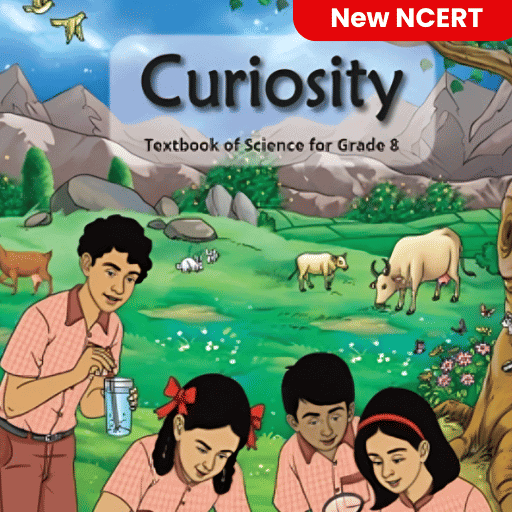
 | INFINITY COURSE Class 8 Science Curiosity New NCERT Solutions, MCQs25,104 students learning this week · Last updated on Apr 06, 2026 |
Class 8 Science Curiosity New NCERT Study Material










Trending Courses for Class 8

What is Science Curiosity Class 8 New NCERT Course?
Science Curiosity Class 8 is the latest NCERT Science textbook introduced as part of India's revised National Curriculum Framework (NCF) aligned with the National Education Policy 2020. This new course represents a significant shift from traditional science education, focusing on developing scientific temper and critical thinking among Class 8 students across CBSE and other major Indian boards.
The Science Curiosity Class 8 textbook integrates Physics, Chemistry, and Biology through an inquiry-based learning approach. Rather than presenting science as isolated subjects, this new curriculum encourages students to explore real-world applications and develop hands-on understanding of scientific concepts. The course emphasises observation, experimentation, and problem-solving skills that are essential for competitive examinations and higher studies.
One of the defining features of the New NCERT Class 8 Science course is its reduced content load compared to previous textbooks. This approach allows students to focus on conceptual clarity rather than rote memorisation. The course integrates indigenous knowledge systems and local contexts, making science education more relatable and culturally relevant for Indian students.
Key Characteristics of the New Course
- Hands-on activities and practical experiments throughout the chapters
- Integration of local contexts and indigenous knowledge
- Emphasis on competency-based learning outcomes
- Reduced syllabus with deeper conceptual understanding
- Multiple illustrations, case studies, and real-life applications
- Focus on developing scientific attitude and inquiry skills
Complete Class 8 Science Syllabus 2026: New NCERT Curriculum Overview
The CBSE Class 8 Science syllabus 2026 under the new NCERT framework consists of 14 comprehensive chapters that cover Physics, Chemistry, and Biology topics. Understanding the complete Class 8 Science syllabus is crucial for effective exam preparation and securing good marks in your assessments.
The CBSE syllabus Class 8 Science 2026 is strategically designed to build foundational concepts that support higher secondary science education. Each chapter in the New NCERT syllabus Class 8 Science progressively builds upon previous knowledge, creating a coherent learning pathway for students.
Complete Chapter-wise Breakdown
| Chapter Number | Chapter Name | Primary Focus Area |
|---|---|---|
| 1 | Exploring the Investigative World of Science | Scientific Methods and Investigation |
| 2 | The Invisible Living World: Beyond Our Naked Eye | Microorganisms and Microscopy |
| 3 | Health: The Ultimate Treasure | Health and Nutrition |
| 4 | Electricity: Magnetic and Heating Effects | Electromagnetism and Heat |
| 5 | Exploring Forces | Motion and Forces |
| 6 | Pressure, Winds, Storms, and Cyclones | Atmospheric Physics |
| 7 | Particulate Nature of Matter | Atomic Structure |
| 8 | Nature of Matter: Elements, Compounds, and Mixtures | Chemical Classification |
| 9 | The Amazing World of Solutes, Solvents, and Solutions | Solutions Chemistry |
| 10 | Light: Mirrors and Lenses | Optics |
| 11 | Keeping Time with the Skies | Astronomy |
| 12 | How Nature Works in Harmony | Ecosystems and Ecology |
| 13 | Our Home: Earth, a Unique Life Sustaining Planet | Earth Science |
This NCERT Class 8 Science chapters list provides a comprehensive overview of the exam syllabus. For detailed preparation on Exploring the Investigative World of Science, explore how scientific investigation forms the foundation of all science learning.
Exploring the Investigative World of Science Science Curiosity
- Chapter Notes: Exploring the Investigative World of Science
- Short and Long Answer Questions: Exploring the Investigative World of Science
- Worksheet: Exploring the Investigative World of Science
- Worksheet Solutions: Exploring the Investigative World of Science
- More Mind Maps for Exploring the Investigative World of Science Science Curiosity class 7
Best Free Study Material for Class 8 Science NCERT 2026
Finding reliable and comprehensive free Class 8 Science study material is essential for students preparing for their examinations. The best Class 8 Science notes should cover all topics systematically while being easy to understand and revise quickly before exams.
Free Class 8 Science resources available online include chapter notes, worksheets with solutions, sample papers, and visual learning aids. These NCERT Class 8 Science notes free download options help students prepare without additional financial burden, making quality education accessible to all Indian students.
Types of Free Study Material Available
- Chapter-wise Notes: Comprehensive summaries covering all important concepts and definitions
- NCERT Solutions: Detailed answers to textbook questions with step-by-step explanations
- Worksheets: Practice problems with solutions for reinforcing concepts
- Flashcards: Quick revision cards highlighting key terms and concepts
- Mind Maps: Visual representations showing relationships between concepts
- Sample Papers: Previous year question papers for exam practice
- PPT Presentations: Visual learning aids for better concept understanding
Access comprehensive Chapter Notes that provide detailed explanations of all topics in a student-friendly format.
Chapter Notes Science Curiosity
Chapter-wise Topics Covered in Science Curiosity Class 8
Understanding chapter-wise topics in NCERT Class 8 Science helps students plan their preparation strategy systematically. Each chapter covers specific learning outcomes and competencies as defined in the new curriculum framework.
Biology Chapters
The biology portion includes microorganisms, health, and ecosystem concepts. Start with The Invisible Living World: Beyond Our Naked Eye to understand microscopic organisms, followed by Health: The Ultimate Treasure for nutritional science.
The Invisible Living World Beyond Our Naked Eye Science Curiosity
- Chapter Notes: The Invisible Living World: Beyond Our Naked Eye
- Worksheet-1: The Invisible Living World: Beyond Our Naked Eye
- Worksheet Solutions-1: The Invisible Living World: Beyond Our Naked Eye
- Test: The Invisible Living World: Beyond Our Naked Eye
- More Mind Maps for The Invisible Living World Beyond Our Naked Eye Science Curiosity class 7
Health The Ultimate Treasure Science Curiosity
Physics Chapters
Physics topics include electricity, forces, pressure, light, and astronomy. Master Electricity: Magnetic and Heating Effects and Exploring Forces for understanding fundamental physics concepts. Light: Mirrors and Lenses covers optics comprehensively.
Electricity Magnetic and Heating Effects Science Curiosity
- Chapter Notes- Electricity: Magnetic and Heating Effects
- Short and Long Answer Questions: Electricity: Magnetic and Heating Effects
- NCERT Textbook: Electricity: Magnetic and Heating Effects
- Very Short Answer Questions: Electricity: Magnetic and Heating Effects
- More Mind Maps for Electricity Magnetic and Heating Effects Science Curiosity class 7
Exploring Forces Science Curiosity
Chemistry Chapters
Chemistry concepts include matter classification and solutions. Study Particulate Nature of Matter and Nature of Matter: Elements, Compounds, and Mixtures for foundational chemistry knowledge.
Particulate Nature of Matter Science Curiosity
- Chapter Notes: Particulate Nature of Matter
- Worksheet: Particulate Nature of Matter
- Worksheet Solutions: Particulate Nature of Matter
- Matter in Our Surroundings - I
- More Mind Maps for Particulate Nature of Matter Science Curiosity class 7
Nature of Matter Elements
- Mind Map: Nature of Matter: Elements, Compounds, and Mixtures
- Chapter Notes: Nature of Matter: Elements, Compounds, and Mixtures
- Short and Long Answer Questions: Nature of Matter: Elements, Compounds, and Mixtures
- Visual Worksheet: Types of Mixtures (with Solutions)
- More Mind Maps for Nature of Matter Elements class 7
Light Mirrors and Lenses Science Curiosity
How to Prepare for Class 8 Science Exam: Best Study Strategies
Effective Class 8 Science preparation tips involve a structured approach combining conceptual understanding with regular practice. The best way to study Class 8 Science is to balance theory learning with practical applications and problem-solving.
Strategic Preparation Approach
- Understand Concepts First: Don't memorise definitions. Focus on understanding the "why" behind each concept before memorising the "what".
- Regular Practice: Solve Worksheets with Solutions daily to reinforce learning and identify weak areas.
- Revision Strategy: Use Flashcards and Mindmaps for quick revision before exams.
- Practice Questions: Attempt Very Short Questions Answer and Short & Long Questions Answer to build answer-writing skills.
- Mock Tests: Solve Sample Papers under timed conditions to simulate exam environment.
Worksheets with Solutions Science Curiosity
- Worksheet: Exploring the Investigative World of Science
- Worksheet Solutions: Exploring the Investigative World of Science
- Worksheet-1: The Invisible Living World: Beyond Our Naked Eye
- Worksheet Solutions-1: The Invisible Living World: Beyond Our Naked Eye
- More Mind Maps for Worksheets with Solutions Science Curiosity class 7
Flashcards Science Curiosity
Mindmaps Science Curiosity
- Mind Map: Exploring the Investigative World of Science
- Mind Map: The Invisible Living World: Beyond Our Naked Eye
- Mind Map: Health: The Ultimate Treasure
- Mind Map: Electricity: Magnetic and Heating Effects
- More Mind Maps for Mindmaps Science Curiosity class 7
Very Short Questions Answer Science Curiosity
- Very Short Answer Questions: Exploring the Investigative World of Science
- Very Short Answer Questions: The Invisible Living World: Beyond Our Naked Eye
- Short Answer Questions: The Invisible Living World: Beyond Our Naked Eye
- Very Short Answer Questions: Health: The Ultimate Treasure
- More Mind Maps for Very Short Questions Answer Science Curiosity class 7
Free NCERT Class 8 Science Notes, Worksheets, and Solutions
Quality Class 8 Science notes are fundamental to exam success. Best Class 8 Science notes combine conceptual clarity with visual representations and real-world examples that help students retain information longer.
Free Class 8 Science worksheets with detailed solutions allow students to practice independently and check their understanding immediately. These NCERT Class 8 Science solutions are available in multiple formats including PDF for convenient offline access.
Practice Resources Categories
- Topic-wise Class 8 Science notes covering every important concept
- NCERT Science solutions with alternative methods and shortcuts
- Class 8 Science worksheet collection with progressive difficulty levels
- Question banks with answers for comprehensive practice
Important Topics in Class 8 Science: Physics, Chemistry, and Biology
Certain topics in Class 8 Science require deeper understanding due to their foundational importance. Pressure, Winds, Storms, and Cyclones introduces atmospheric physics with real-world relevance for Indian students.
The Amazing World of Solutes, Solvents, and Solutions builds essential chemistry foundations. How Nature Works in Harmony explains ecosystem concepts crucial for environmental awareness.
Pressure
- Worksheet: Pressure, Winds, Storms, and Cyclones
- Worksheet Solutions: Pressure, Winds, Storms, and Cyclones
- Mind Map: Pressure, Winds, Storms, and Cyclones
- Very Short Answer Questions: Pressure, Winds, Storms, and Cyclones
- More Mind Maps for Pressure class 7
The Amazing World of Solutes
- Chapter Notes: The Amazing World of Solutes, Solvents, and Solutions
- Worksheet: The Amazing World of Solutes, Solvents, and Solutions
- Worksheet Solutions: The Amazing World of Solutes, Solvents, and Solutions
- Flashcards: The Amazing World of Solutes, Solvents, and Solutions
- More Mind Maps for The Amazing World of Solutes class 7
Class 8 Science Practice Resources: Sample Papers, Unit Tests, and Case-Based Questions
Regular practice with varied question types strengthens exam preparation. Class 8 Science sample papers 2026 provide authentic exam-like experience, while Class 8 Science unit tests assess chapter-by-chapter progress.
Modern Class 8 Science case based questions develop application skills and analytical thinking. These resources prepare students for the evolving assessment patterns used by CBSE and other boards.
Practice Resource Types
- Sample Papers for full-length exam practice
- Unit Tests for chapter-wise assessment
- Case-Based Questions for practical application skills
Sample Papers Science Curiosity Class 8 New NCERT
- Class 8 Science: Sample Paper - 1
- Class 8 Science: Sample Paper Solutions- 1
- Class 8 Science: Sample Paper - 2
- Class 8 Science: Sample Paper Solutions - 2
- More Sample Papers Science Curiosity Class 8 New NCERT
Unit Tests Science Curiosity
Case Based Questions Science Curiosity
Key Chapters in New NCERT Class 8 Science Textbook
Certain chapters carry more weightage in CBSE examinations and require focused attention. Science Curiosity Class 8 - New NCERT overview provides complete curriculum understanding.
Our Home: Earth, a Unique Life Sustaining Planet concludes the course with comprehensive Earth science concepts. Keeping Time with the Skies introduces fascinating astronomy topics.
Our Home Earth
- Chapter Notes: Our Home: Earth, a Unique Life-Sustaining Planet
- NCERT Solutions: Earth, a Unique Life Sustaining Planet
- Worksheet: Our Home: Earth, a Unique Life Sustaining Planet
- Worksheet Solutions: Our Home: Earth, a Unique Life Sustaining Planet
- More Mind Maps for Our Home Earth class 7
Keeping Time with the Skies Science Curiosity
Class 8 Science Study Tools: Flashcards, Mind Maps, and PPTs
Visual learning tools significantly improve retention and understanding. Class 8 Science flashcards enable active recall practice, while Class 8 Science mind maps show concept interconnections.
Class 8 Science PPT presentations break complex topics into digestible visual formats. These Class 8 Science presentations work particularly well for visual learners preparing for competitive examinations and regular school assessments.
Understanding the New NCERT Science Curriculum for Class 8 Students
The New NCERT Science curriculum represents a paradigm shift in how science is taught to Indian students. Rather than disconnected topics, the new approach emphasises integrated learning where students see science as interconnected knowledge systems.
For comprehensive curriculum understanding, access the CBSE Syllabus Class 8 document and explore PPTs for visual curriculum overview.
This curriculum emphasises competency development over content coverage, making it more relevant for students' future academic and professional growth. Success in this course requires understanding not just facts, but developing scientific thinking and problem-solving approaches that transcend classroom learning.
Science Curiosity Class 8 - New NCERT CBSE Exam Pattern 2026-2027
Science Curiosity Class 8 - New NCERT Exam Pattern for Class 8
Understanding the exam pattern is crucial for students to navigate through their academic journey effectively. The New NCERT Exam Pattern for Class 8 Science emphasizes a comprehensive assessment approach that balances conceptual understanding with practical application. Below are the key components of the exam pattern:
1. Exam Structure
- Formative Assessment: Continuous evaluation through classwork, quizzes, and projects.
- Summative Assessment: Term-end examinations focusing on core concepts and application.
2. Types of Questions
- Objective Type Questions: Multiple choice questions (MCQs) and fill-in-the-blanks.
- Short Answer Questions: Questions requiring concise explanations or definitions.
- Long Answer Questions: Detailed responses that demonstrate in-depth understanding.
3. Marks Distribution
- Formative Assessment: Typically contributes 20-30% of the total marks.
- Summative Assessment: Accounts for the remaining 70-80% of the total marks.
4. Practical Assessments
- Lab Work: Hands-on experiments that enhance theoretical knowledge.
- Practical Exams: Evaluation based on performance during lab sessions.
5. Skill Development
- Critical Thinking: Encourages students to analyze and interpret scientific data.
- Problem-Solving: Engages students in real-world applications of scientific principles.
In conclusion, the New NCERT Exam Pattern for Class 8 Science is designed to foster a well-rounded understanding of science among students. By being aware of the exam structure, types of questions, marks distribution, and the importance of practical assessments, students can effectively prepare and excel in their examinations.


How to Prepare Science Curiosity Class 8 - New NCERT?
How to Prepare Science Curiosity Class 8 - New NCERT for Class 8?
Preparing for the Science Curiosity Class 8 - New NCERT can be an exciting journey for students. This course is designed to enhance your understanding of scientific concepts while sparking your curiosity about the world around you. Here are some effective strategies to help you excel in this course:
1. Understand the Syllabus
Familiarize yourself with the Science Curiosity Class 8 - New NCERT syllabus. Knowing the topics and chapters covered will help you allocate your study time effectively.
2. Utilize NCERT Textbooks
The Science Curiosity Class 8 - New NCERT course is based on the prescribed NCERT textbooks. Make sure to read the chapters thoroughly, as they are structured to provide a comprehensive understanding of each topic.
3. Make Notes
While studying, take notes of key concepts, definitions, and important diagrams. This will not only help in revision but will also reinforce your learning as you prepare for the Science Curiosity Class 8 - New NCERT assessments.
4. Conduct Experiments
Hands-on experiments are a crucial part of science education. Engage in simple experiments at home or in the lab to strengthen your understanding of practical applications of scientific theories covered in the Science Curiosity Class 8 - New NCERT.
5. Solve Previous Year Papers
Practice is essential for mastering science concepts. Solve previous year question papers related to the Science Curiosity Class 8 - New NCERT to familiarize yourself with the exam format and question types.
6. Participate in Discussions
Engage in discussions with your peers or teachers about the topics covered in the Science Curiosity Class 8 - New NCERT. This will provide different perspectives and enhance your understanding of complex concepts.
7. Use Online Resources
Leverage online resources like videos, quizzes, and interactive simulations that relate to your Science Curiosity Class 8 - New NCERT course material. These resources can make learning more engaging and help clarify difficult topics.
8. Stay Curious
Finally, maintain a curious mindset. Ask questions, seek answers, and explore beyond the syllabus. This curiosity will not only help you in the Science Curiosity Class 8 - New NCERT course but will also foster a lifelong love for science.
By following these strategies, students can effectively prepare for the Science Curiosity Class 8 - New NCERT course, ensuring a thorough understanding of scientific principles and concepts.
Importance of Science Curiosity Class 8 - New NCERT
Importance of Science Curiosity Class 8 - New NCERT Course for Class 8
The Science Curiosity Class 8 course, based on the new NCERT curriculum, plays a pivotal role in shaping young minds. It fosters a deeper understanding of scientific concepts while encouraging inquisitive thinking. Here’s a look at its significance:
1. Building a Strong Foundation
This course offers a solid grounding in fundamental scientific principles, ensuring that students grasp essential concepts that will be crucial for their future studies in science.
2. Encouraging Critical Thinking
Through engaging activities and experiments, the course promotes critical thinking. Students learn to analyze information, ask questions, and draw conclusions based on evidence.
3. Enhancing Curiosity
The curriculum is designed to spark curiosity. It encourages students to explore the world around them, leading them to discover and understand various scientific phenomena.
4. Promoting Practical Learning
Hands-on experiments and projects are integral to the course, allowing students to apply theoretical knowledge. This practical approach deepens understanding and retention of scientific concepts.
5. Preparing for Future Challenges
With the rapid advancement of technology and science, this course prepares students to face future challenges. It equips them with problem-solving skills that are essential in today's world.
6. Fostering a Scientific Temper
By instilling a scientific temper in students, the course encourages them to approach problems logically and with a questioning mindset, essential for innovation and progress.
7. Engaging Learning Experience
The interactive and collaborative nature of the course makes learning enjoyable. It fosters teamwork and communication skills among students, enhancing their overall educational experience.
In conclusion, the Science Curiosity Class 8 course is not just about learning facts; it's about nurturing a generation of thinkers, innovators, and problem solvers. It lays the groundwork for a lifelong love of science and learning.
Science Curiosity Class 8 - New NCERT FAQs
| 1. What topics are covered in Class 8 Science NCERT? |  |
| 2. How should I prepare for Class 8 Science to score well in exams? | |
| 3. What are the best ways to understand difficult science concepts in Class 8? | |
| 4. How do I remember science formulas and definitions for Class 8 exams? | |
| 5. Why is NCERT important for Class 8 Science studies? | |
| 6. What practical experiments should Class 8 students perform for science? | |
| 7. How can I improve my science practical skills for Class 8 assessments? | |
| 8. What is the difference between physical and chemical changes in Class 8 Science? | |
| 9. How do Class 8 Science chapters on light and sound connect to daily life? | |
| 10. What should Class 8 students focus on in ecology and environmental science chapters? | |
Best Science Curiosity Class 8 - New NCERT NCERT Solutions and Study Materials
 | View your Course Analysis |  |
 | Create your own Test | |



|
 Videos
 Documents
 Tests
Tests Ratings
 | Explore Courses for Class 8 exam |  |


