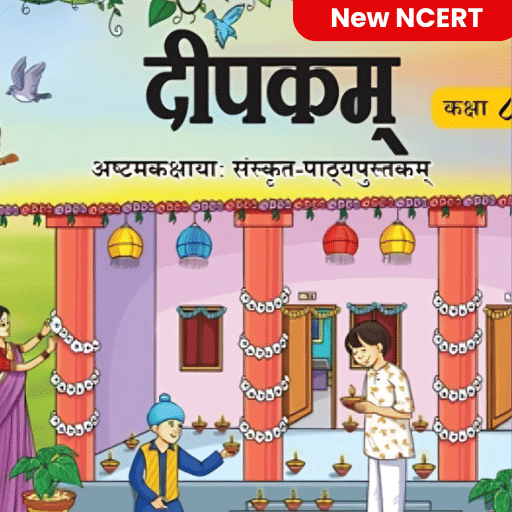
 | INFINITY COURSE Class 8 Sanskrit Deepakam New NCERT Solutions, MCQs10,452 students learning this week · Last updated on Apr 06, 2026 |
Class 8 Sanskrit Deepakam New NCERT Study Material








Trending Courses for Class 8

What is Sanskrit Deepakam Class 8 New NCERT Course?
Sanskrit Deepakam is the official NCERT textbook for Class 8 Sanskrit students across India, designed under the new NCERT curriculum for CBSE and schools following the national syllabus. This comprehensive course aims to build your Sanskrit language proficiency through a carefully curated blend of prose passages, poetic compositions, and structured grammar lessons that make learning this ancient language engaging and practical.
The Class 8 Sanskrit New NCERT course is structured to develop four key language skills: reading comprehension, writing ability, conversational Sanskrit, and grammatical accuracy. Unlike rote learning approaches, Deepakam focuses on thematic learning where each chapter carries meaningful moral, patriotic, or contemporary messages alongside language instruction. This approach helps students connect with Sanskrit not just as a subject but as a living tradition relevant to modern India.
Whether you're appearing for your school exams or aiming to build a strong Sanskrit foundation for competitive examinations, understanding the structure and content of Sanskrit Deepakam Class 8 New NCERT is your first step toward success. The course integrates contemporary themes like Digital India with classical Sanskrit literature, making it uniquely suited to 21st-century learners.
Complete NCERT Class 8 Sanskrit Syllabus and Chapter List
The Sanskrit Deepakam Class 8 syllabus is thoughtfully organized into distinct sections, each serving a specific pedagogical purpose. The textbook contains ten main lesson chapters, followed by dedicated grammar and pronunciation sections. Understanding this complete structure helps you plan your study schedule effectively and ensures comprehensive exam preparation.
Main Lesson Chapters
The ten core chapters of NCERT Class 8 Sanskrit cover diverse themes that blend cultural values, contemporary issues, and linguistic development:
- संगच्छध्वं संवदध (Sangacchadhvam Samvadadha): A lesson on unity and cooperation, emphasizing how individuals working together can achieve common goals. Study this chapter to understand fundamental Sanskrit vocabulary related to collaboration and collective action.
- अल्पानामपि वस्तूनां संहतिः कार्यसाधिका: This chapter illustrates how small things united become powerful, a perfect example for Class 8 Sanskrit learners to grasp the concept of teamwork and collective strength. Access detailed notes here.
- सुभाषितरसं पीत्वा जीवनं सफलं कुरु: A lesson centered on Subhashitas (Sanskrit aphorisms) offering practical life wisdom. Subhashitam Class 8 Sanskrit covers moral and philosophical teachings essential for character development. Explore this important chapter.
- प्रणम्यो देशभक्तोऽयं गोपबन्धुर्महामनाः: A tribute to Gopabandhu Das, a patriotic freedom fighter. Gopabandhu Das Class 8 Sanskrit teaches students about nationalism and sacrifice. Learn about this patriotic lesson.
- गीता सुगीता कर्तव्य: Draws from the Bhagavad Gita, teaching duty and righteousness through Sanskrit verses. Access Geeta Sugeeta Kartavya Class 8 content.
- डिजिभारतम् - युगपरिवर्तनम: A contemporary chapter on Digital India, showing how Sanskrit adapts to modern technological themes. Study Digital Bharat Sanskrit Class 8.
- मञ्जुलमञ्जूषा सुन्दरसुरभाषा: Celebrates the beauty and sweetness of the Sanskrit language itself. Explore this chapter.
- पश्यत कोणमैशान्यं भारतस्य मनोहरम्: Focuses on the natural beauty and cultural richness of Northeast India. Discover this regional focus chapter.
- कोऽरुक्? कोऽरुक्? कोऽरुक्?: A dialogue about health awareness and wellness. Study this health-related chapter.
- सन्निमित्ते वरं त्यागः: A narrative spanning two parts about sacrifice for greater good. Read part 1 and part 2 of this important story.
संगच्छध्वं संवदध Sanskrit
- Chapter Notes: संगच्छध्वं संवदध
- NCERT Textbook: संगच्छध्वं संवदध
- NCERT Solutions: संगच्छध्वं संवदध
- 1-Day Study Plan: संगच्छध्वं संवदध
- More study material of संगच्छध्वं संवदध Sanskrit
अल्पानामपि वस्तूनां संहतिः कार्यसाधिका Sanskrit
सुभाषितरसं पीत्वा जीवनं सफलं कुरु Sanskrit
- NCERT Textbook: सुभाषितरसं पीत्वा जीवनं सफलं कुरु
- Chapter Notes: सुभाषितरसं पीत्वा जीवनं सफलं कुरु
- NCERT Solutions: सुभाषितरसं पीत्वा जीवनं सफलं कुरु
- 1-Day Study Plan: सुभाषितरसं पीत्वा जीवनं सफलं कुरु
- More study material of सुभाषितरसं पीत्वा जीवनं सफलं कुरु Sanskrit
प्रणम्यो देशभक्तोऽयं गोपबन्धुर्महामनाः Sanskrit
Key Chapters in Class 8 Sanskrit Deepakam Textbook
Each chapter in the Class 8 Sanskrit Deepakam textbook serves multiple purposes beyond simple language teaching. They develop your ability to comprehend Sanskrit texts, extract meaning from classical literature, and apply grammatical concepts practically.
Why These Chapters Matter for Your Exam Preparation
The chapters in Class 8 Sanskrit all chapters are carefully selected to cover essential vocabulary, common grammatical constructions, and important themes that frequently appear in examinations. The moral and philosophical lessons also help develop your ability to answer comprehension-based questions that require understanding the deeper meaning of Sanskrit passages.
For instance, studying सम्यग्वर्णप्रयोगेण ब्रह्मलोके महीयते will strengthen your understanding of proper letter usage and pronunciation rules, critical for scoring well in grammar sections of your Class 8 Sanskrit exams.
सम्यग्वर्णप्रयोगेण ब्रह्मलोके महीयते Sanskrit
Sanskrit Grammar for Class 8: Vyakaranam, Shabdarupani and Dhaturupani
Grammar is the backbone of Sanskrit learning, and the Class 8 Sanskrit grammar section provides systematic instruction in three critical areas: Vyakaranam (general grammar rules), Shabdarupani (word forms), and Dhaturupani (verb conjugations). Mastery of these sections is essential for securing good marks in Class 8 Sanskrit exams.
व्याकरणम् (Vyakaranam) - Sanskrit Grammar Foundation
The Vyakaranam section covers fundamental Sanskrit grammar rules including parts of speech, basic sentence structures, and morphological rules. Understanding Class 8 Sanskrit grammar through this section helps you identify word forms, understand sentence construction, and write correct Sanskrit sentences.
व्याकरणम् Sanskrit
शब्दरूपाणि (Shabdarupani) - Word Declensions
Sanskrit word forms follow specific declension patterns based on gender, number, and case. The Shabdarupani section systematically presents word declensions that you must memorize for exam success. Regular practice with Shabdarupani Class 8 material helps you instantly recognize word forms in texts and construct sentences correctly.
शब्दरूपाणि Sanskrit
धातुरूपाणि (Dhaturupani) - Verb Conjugations
Verbs are equally important as nouns in Sanskrit. The Dhaturupani section provides verb conjugations in different tenses, persons, and numbers. Mastering Dhaturupani Class 8 Sanskrit enables you to understand and construct sentences involving various verbal actions and states.
धातुरूपाणि Sanskrit
Best Study Materials for Class 8 Sanskrit - Notes, Worksheets & Solutions
Effective exam preparation requires combining textbook learning with supplementary study materials. EduRev and similar platforms offer comprehensive resources specifically designed for Class 8 Sanskrit learners preparing for CBSE examinations.
Chapter-Wise Notes and Summaries
Chapter Notes for Class 8 Sanskrit provide condensed summaries of each lesson, highlighting key vocabulary, important phrases, and main ideas. These notes are invaluable when you're revising before exams or need quick references while studying.
Chapter Notes Sanskrit
Flashcards for Vocabulary Building
Flashcards are excellent tools for memorizing Sanskrit vocabulary and their meanings. Using flashcards regularly helps you build a strong word bank, essential for reading comprehension and writing tasks in your Class 8 Sanskrit exam.
Flashcards Sanskrit
Visual Learning with Mind Maps
Mind Maps for Class 8 Sanskrit transform complex concepts into visual representations, making it easier to understand relationships between ideas. Mind maps are particularly helpful for chapters dealing with moral lessons or complex narratives.
Mind Maps Sanskrit
Practice and Assessment
Worksheet & Worksheet Solutions provide ample practice opportunities. Regular solving of Class 8 Sanskrit worksheets helps you identify weak areas, improve speed, and build confidence before the actual examination.
Worksheet Worksheet Solutions Sanskrit
How to Prepare for CBSE Class 8 Sanskrit Exam?
Preparing for your CBSE Class 8 Sanskrit exam requires a strategic approach combining textbook study, grammar practice, and regular revision. Here's a structured preparation strategy that has proven effective for numerous Class 8 students:
Create a Structured Study Schedule
- Allocate specific days for learning new chapters and days for grammar practice
- Reserve time for vocabulary building and conjugation practice
- Include weekly revision sessions to consolidate learning
- Dedicate final weeks entirely to practice papers and problem-solving
Master Grammar First
Before diving deep into chapters, establish a strong grammatical foundation. Class 8 Sanskrit grammar focusing on Shabdarupani and Dhaturupani should be your priority, as these concepts apply across all chapters and are frequently tested in exams.
Regular Reading Practice
Read each chapter multiple times—first for understanding the story, then for comprehension details, and finally to identify grammatical patterns. This repeated exposure helps you naturally absorb vocabulary and recognize word forms in different contexts.
Write Summary Notes
Creating your own summary notes while studying helps with retention. Write down new vocabulary, important phrases, and grammatical observations from each chapter. These personalized notes often prove more useful during revision than pre-made materials.
Important Subhashitas and Moral Lessons in Class 8 Sanskrit
The Sanskrit Deepakam Class 8 curriculum places significant emphasis on Subhashitas—short Sanskrit verses containing life wisdom and moral teachings. Understanding these lessons goes beyond language learning; they develop your critical thinking and ethical consciousness.
Learning from Subhashitam Class 8 Sanskrit
Subhashitas in the Class 8 Sanskrit curriculum teach valuable lessons about character, ethics, perseverance, and wisdom. Each Subhashitam is typically accompanied by explanations and applications to modern life, helping you understand how ancient Sanskrit wisdom remains relevant today.
Incorporating Moral Lessons into Exam Answers
When answering comprehension questions about chapters containing Subhashitas, go beyond literal translation. Explain the underlying message, provide modern examples, and demonstrate how the lesson applies to contemporary situations. This approach typically earns higher marks from examiners.
Sanskrit Pronunciation Guide: Varna Uchcharan Shiksha for Class 8
Correct pronunciation is fundamental to Sanskrit learning. The Varna Uchcharan Shiksha (Pronunciation Guide) section teaches proper articulation of Sanskrit phonemes, including the unique sounds absent in English.
Why Pronunciation Matters
While written exams don't directly test pronunciation, understanding Varna Uchcharan Class 8 material helps you recognize sounds in Sanskrit words, improving reading comprehension and spelling accuracy. Additionally, many schools include oral examinations where proper pronunciation directly impacts your score.
Focus on mastering the Sanskrit alphabet's proper pronunciation, including the distinction between voiced and unvoiced consonants, and the unique vowels of Sanskrit that don't have direct English equivalents.
वर्णोच्चारण शिक्षा १ Sanskrit
Free Chapter Notes and Mind Maps for Class 8 Sanskrit Deepakam
Quality study materials need not be expensive. Several platforms offer free Class 8 Sanskrit notes and visual learning tools that complement your textbook study effectively.
The Sanskrit Deepakam Class 8 New NCERT main page serves as your central hub for accessing all related materials, notes, and resources. Bookmarking this page ensures you can quickly navigate to any chapter or resource you need.
Digital India and Contemporary Topics in Class 8 Sanskrit Curriculum
A notable feature of the new NCERT Class 8 Sanskrit curriculum is its inclusion of contemporary themes. The Digital Bharat Sanskrit Class 8 chapter demonstrates how Sanskrit adapts to modern contexts, encouraging students to see Sanskrit as a living, evolving language rather than a purely historical subject.
This contemporary focus reflects modern Indian education's recognition that classical languages must remain relevant to current learners. By studying chapters on Digital India and contemporary issues through the Sanskrit medium, you develop practical language skills while engaging with current events.
Class 8 Sanskrit Question Papers and Practice Worksheets
Regular practice with question papers and worksheets is essential for Class 8 Sanskrit exam success. Different question types—translation, comprehension, grammar exercises, and written responses—require different approaches and preparation strategies.
Types of Questions to Expect
- Comprehension Questions: Based on chapter passages, testing your understanding and analytical skills
- Translation Exercises: Converting Sanskrit to English or vice versa
- Grammar Exercises: Identifying word forms, conjugating verbs, and applying grammatical rules
- Creative Writing: Composing short Sanskrit sentences or paragraphs on given topics
- Vocabulary Application: Using learned words in contextually appropriate sentences
Practicing with Class 8 Sanskrit worksheet solutions helps you understand marking patterns and examiner expectations, ultimately improving your exam performance.
Understanding Sanskrit Word Forms and Verb Conjugations in Class 8
Sanskrit's complex system of word forms and verb conjugations can seem overwhelming initially, but systematic learning breaks this challenge into manageable parts. Sanskrit word forms vary based on three primary parameters: gender (masculine, feminine, neuter), number (singular, dual, plural), and case (nominative through locative).
Word Form Patterns in Sanskrit
Each Sanskrit noun follows specific declension patterns based on its stem. By learning major noun classes and their declension patterns, you can predict the correct form of any noun in any grammatical context. This systematic approach is far more effective than memorizing individual forms.
Verb Form Patterns
Similarly, Sanskrit verbs follow regular patterns for different tenses (present, past, future), persons (first, second, third), and numbers (singular, dual, plural). Regular practice conjugating verbs helps you recognize verb forms instantly while reading Sanskrit texts.
For comprehensive guidance, refer to the CBSE Class 8 Syllabus which outlines exactly which word forms and verb conjugations you're expected to master for your examination.
Your Sanskrit Deepakam Class 8 journey is a gateway to understanding one of humanity's oldest and most sophisticated languages. By systematically working through chapters, mastering grammar, practicing regularly, and utilizing available study materials, you'll not only excel in your Class 8 Sanskrit exam but also develop a genuine appreciation for this remarkable language that has shaped Indian civilization for millennia.
Sanskrit (Deepakam) Class 8 - New NCERT for Class 8 CBSE Exam Pattern 2026-2027
Sanskrit (Deepakam) Class 8 - New NCERT Exam Pattern for Class 8
The examination pattern for Sanskrit (Deepakam) in Class 8, as per the New NCERT guidelines, is designed to evaluate students' understanding and proficiency in the language. Below are the key components of the exam pattern:
1. Exam Structure
- Formative Assessments: Continuous assessments throughout the year, including class participation, quizzes, and projects.
- Summative Assessments: A final examination at the end of the academic year that covers the entire syllabus.
2. Question Types
- Objective Questions: Multiple-choice questions (MCQs) to test basic understanding.
- Short Answer Questions: Questions that require concise responses and explanations.
- Long Answer Questions: Detailed responses that require critical thinking and in-depth knowledge.
- Translation Exercises: Translating sentences or passages from Sanskrit to the students' native language and vice versa.
3. Syllabus Coverage
- Textbook Content: Key chapters and lessons from the NCERT prescribed textbook.
- Grammar and Composition: Focus on grammatical structures, vocabulary, and sentence formation.
- Literary Appreciation: Understanding and appreciation of selected Sanskrit literature and poetry.
4. Marking Scheme
- Formative Assessments: Typically contribute around 20% to the final grade.
- Summative Assessment: Generally accounts for 80% of the total marks.
5. Preparation Tips
- Regular Practice: Engage in daily reading and writing exercises.
- Revision: Regularly revise grammar rules and vocabulary.
- Mock Tests: Take practice tests to familiarize yourself with the exam format.
By understanding the exam pattern, students can effectively prepare for their Sanskrit examinations and improve their overall performance in the subject.


Sanskrit (Deepakam) Class 8 - New NCERT Syllabus 2026-2027 PDF Download
Class 8 Sanskrit Syllabus - Deepakam
This syllabus outlines the key components and topics for Class 8 Sanskrit (Deepakam) as per the New NCERT curriculum. The focus is on enhancing the understanding of the Sanskrit language through various literary and grammatical elements.
Class 8 Sanskrit Curriculum Overview
- Textbook: New NCERT Class 8 Sanskrit (Deepakam)
- Core Themes: Language, Literature, Grammar, Culture
Key Modules and Topics
- संगच्छध्वं संवदध: Emphasis on cooperation and communication within communities.
- अल्पानामपि वस्तूनां संहतिः कार्यसाधिका: Understanding the significance of small things in achieving goals.
- सुभाषितरसं पीत्वा जीवनं सफलं कुरु: Learning from wise sayings to lead a successful life.
- प्रणम्यो देशभक्तोऽयं गोपबन्धुर्महामनाः: Exploring themes of patriotism and respect towards one's country.
- गीता सुगीता कर्तव्य: The importance of duty as highlighted in the Bhagavad Gita.
- डिजिभारतम्- युगपरिवर्तनम: Digital India and its transformative impact on society.
- मञ्जुलमञ्जूषा सुन्दरसुरभाषा: Appreciation of beautiful language and its nuances.
- पश्यत कोणमैशान्यं भारतस्य मनोहरम्: Discovering the beauty of India through various perspectives.
- कोऽरुक् ? कोऽरुक् ? कोऽरुक् ?: Engaging with riddles and puzzles to enhance cognitive skills.
- सन्निमित्ते वरं त्यागः (क-भागः): Understanding the value of sacrifice in different contexts.
- सन्निमित्ते वरं त्यागः (ख-भागः): Further exploration of sacrifice and its implications.
- सम्यग्वर्णप्रयोगेण ब्रह्मलोके महीयते: The significance of proper pronunciation in Sanskrit.
Grammar and Language Skills
- वर्णोच्चारण-शिक्षा १: Introduction to correct phonetics and pronunciation.
- व्याकरणम्: Comprehensive study of Sanskrit grammar rules and structures.
- शब्दरूपाणि: Learning various forms of words to enhance vocabulary.
- धातुरूपाणि: Exploration of verb forms and their applications in sentences.
Conclusion
This Class 8 Sanskrit syllabus aims to foster a deep understanding of the Sanskrit language, its literature, and its grammatical intricacies. By engaging with diverse themes and practical language exercises, students are encouraged to appreciate the richness of Sanskrit and its relevance in today's world.
This course is helpful for the following exams: Class 8
How to Prepare Sanskrit (Deepakam) Class 8 - New NCERT for Class 8?
How to Prepare Sanskrit (Deepakam) Class 8 - New NCERT for Class 8?
Preparing for Sanskrit (Deepakam) Class 8 - New NCERT can be both exciting and challenging. Here are some effective strategies that can help students excel in their studies.
Understand the Syllabus
Before diving into preparations, it’s essential to thoroughly understand the syllabus for Sanskrit (Deepakam) Class 8 - New NCERT. Familiarize yourself with the chapters, topics, and types of questions that may appear in exams.
Utilize NCERT Textbooks
The primary resource for Sanskrit (Deepakam) Class 8 - New NCERT is the official NCERT textbook. Make sure to read each chapter carefully and grasp the core concepts. Pay attention to vocabulary, grammar rules, and sentence structures.
Practice Regularly
Regular practice is key to mastering Sanskrit. Solve exercises and assignments provided in the Sanskrit (Deepakam) Class 8 - New NCERT textbook. Make use of additional practice papers and quizzes to test your understanding.
Make Use of EduRev Resources
EduRev offers an array of resources tailored for Sanskrit (Deepakam) Class 8 - New NCERT. These include study materials, video lectures, and practice questions that can enhance your learning experience. Take advantage of these resources for a comprehensive preparation.
Group Study Sessions
Studying with peers can be very beneficial. Form study groups to discuss difficult topics or practice together. This collaborative approach can enhance understanding and retention of the material covered in Sanskrit (Deepakam) Class 8 - New NCERT.
Revise Regularly
Sanskrit requires consistent revision to retain information effectively. Set aside time each week to review what you have learned in Sanskrit (Deepakam) Class 8 - New NCERT. This will reinforce your knowledge and boost your confidence.
Seek Help When Needed
If you find certain topics challenging, don’t hesitate to seek help from teachers or classmates. Utilize online forums or discussions, especially those available on EduRev, to clarify doubts related to Sanskrit (Deepakam) Class 8 - New NCERT.
Mock Tests
Taking mock tests can help you assess your preparation level. EduRev offers mock tests specifically designed for Sanskrit (Deepakam) Class 8 - New NCERT. These tests can help you manage your time and improve your exam-taking skills.
Stay Positive and Motivated
Lastly, maintaining a positive attitude is crucial. Stay motivated throughout your preparation journey for Sanskrit (Deepakam) Class 8 - New NCERT. Celebrate small achievements and keep reminding yourself of your goals.
By following these strategies, you can effectively prepare for Sanskrit (Deepakam) Class 8 - New NCERT and perform well in your exams. Good luck!
Importance of Sanskrit (Deepakam) Class 8 - New NCERT for Class 8
Importance of Sanskrit (Deepakam) Class 8 - New NCERT Course for Class 8
Sanskrit, often referred to as the mother of many languages, holds a significant place in the educational curriculum of Class 8 through the NCERT course. The "Deepakam" course aims to introduce students to the richness of this ancient language while enhancing their linguistic and analytical skills. Here are some key points highlighting the importance of this course:
1. Foundation of Language Skills
The Deepakam course emphasizes the basics of Sanskrit, enabling students to build a strong foundation in language comprehension and usage. This foundational knowledge is crucial for mastering other languages.
2. Cultural Heritage
Studying Sanskrit allows students to connect with India's rich cultural heritage. It opens doors to ancient texts, scriptures, and philosophical works that are pivotal in understanding Indian history and culture.
3. Cognitive Development
Learning Sanskrit enhances cognitive skills. The structure and grammar of Sanskrit are complex, which helps in developing critical thinking, problem-solving abilities, and analytical skills.
4. Linguistic Diversity
Sanskrit serves as a root for many modern languages in India. By learning Sanskrit, students gain insights into the linguistic diversity and evolution of languages like Hindi, Bengali, and Kannada.
5. Boosts Academic Performance
Research indicates that students who study classical languages like Sanskrit tend to perform better in other subjects, particularly in mathematics and science, due to improved logical reasoning and analytical skills.
6. Promotes Discipline and Focus
The study of Sanskrit requires attention to detail and regular practice, which cultivates discipline and focus among students. These traits are invaluable for overall academic success.
7. Enrichment of Vocabulary
Engaging with Sanskrit vocabulary enriches students' language skills, enhancing their ability to express thoughts clearly and effectively in both written and spoken communication.
8. Encourages Respect for Diversity
By learning about Sanskrit and its literature, students develop an appreciation for different cultures and philosophies, fostering respect for diversity and encouraging a global perspective.
In conclusion, the Sanskrit (Deepakam) Class 8 NCERT course plays a vital role in shaping students' understanding of language, culture, and critical thinking. It is a valuable addition to their educational journey, equipping them with skills that extend beyond the classroom.
Sanskrit (Deepakam) Class 8 - New NCERT for Class 8 FAQs
| 1. How do I learn Sanskrit grammar for Class 8 NCERT effectively? |  |
| 2. What are the best strategies to improve Sanskrit vocabulary and word retention? | |
| 3. How much time should I spend preparing Sanskrit for Class 8 exams? | |
| 4. What's the difference between Sanskrit prose and poetry passages in Class 8 lessons? | |
| 5. How do I translate Sanskrit sentences correctly without making common mistakes? | |
| 6. Why is understanding Sanskrit verb forms and tenses so important for Class 8? | |
| 7. What should I focus on when solving Sanskrit comprehension passages? | |
| 8. How can I practise Sanskrit composition and writing skills for Class 8 assessments? | |
| 9. What's the best way to memorise Sanskrit declension patterns and noun forms? | |
| 10. How do I prepare for Sanskrit writing and translation sections in Class 8 exams? | |
Best Sanskrit (Deepakam) Class 8 - New NCERT for Class 8 NCERT Solutions and Study Materials
 | View your Course Analysis |  |
 | Create your own Test | |



|
 Videos
 Documents
 Tests
Tests Ratings
 | Explore Courses for Class 8 exam |  |


