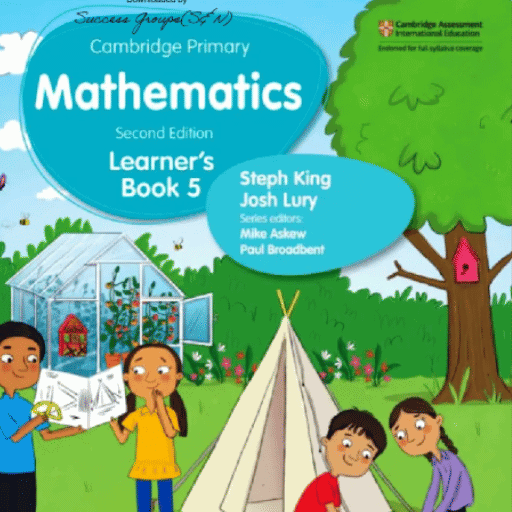
 | INFINITY COURSE IGCSE Year 5 Maths Notes, MCQs & WorksheetsKeystone Instructors · Last updated on Apr 10, 2026 |
IGCSE Year 5 Maths Notes, MCQs Study Material




Trending Courses for Year 4

What is Year 5 Mathematics IGCSE Cambridge Curriculum?
Year 5 Mathematics IGCSE Cambridge is a comprehensive international qualification designed for students aged 9-10 years, offering a structured approach to mathematical learning that goes beyond traditional curricula. This course provides a global standard for mathematical education, equipping Indian students with skills that are recognised internationally while maintaining strong conceptual foundations.
The Year 5 Cambridge IGCSE Mathematics curriculum is organised around eight major content areas that build upon foundational knowledge. Unlike conventional Indian mathematics syllabi, the Cambridge IGCSE approach emphasises problem-solving, reasoning, and real-world applications alongside procedural fluency. This balanced methodology helps students develop both computational skills and mathematical thinking abilities.
For Indian families considering international education pathways, understanding what Year 5 IGCSE Mathematics Cambridge covers is essential. The course prepares students not just for higher-level IGCSE examinations but also develops critical thinking skills valuable across all academic disciplines.
Core Philosophy of Cambridge IGCSE Mathematics
The curriculum follows a mastery-based approach where students develop deep understanding of mathematical concepts before progressing to advanced topics. This differs from the traditional "teach and move on" methodology, ensuring that every child genuinely understands the "why" behind mathematical principles.
Best Resources for Year 5 IGCSE Mathematics Free Study Materials
Finding quality Year 5 IGCSE Mathematics free study materials can be challenging, but EduRev offers comprehensive resources that Indian students can access easily. These materials include chapter-wise notes, worked examples, and practice problems designed specifically for the Cambridge curriculum.
Year 5 Mathematics IGCSE PDF download resources on EduRev are meticulously organised by topic, making it simple for students to locate exactly what they need. Whether you're focusing on specific problem areas or doing comprehensive revision, having access to best Year 5 IGCSE Maths resources ensures consistent preparation.
Key Resources Available
- Detailed chapter notes covering all Year 5 Cambridge Mathematics topics
- Worked solutions showing step-by-step problem-solving approaches
- Practice exercises with varying difficulty levels
- Visual aids and diagrams explaining complex concepts
- Year 5 IGCSE Mathematics notes PDF in downloadable format
When preparing for Year 5 Mathematics, having access to free Year 5 Cambridge IGCSE resources eliminates financial barriers to quality education. EduRev's curated collection ensures that every topic receives adequate coverage with examples relevant to the international curriculum.
Understanding Decimal Numbers in Year 5 Cambridge IGCSE Mathematics
Decimal numbers represent one of the foundational concepts in Year 5 Mathematics IGCSE, building upon whole number understanding to introduce fractional values in a place-value system. Introducing decimal numbers Cambridge style means starting with concrete representations before moving to abstract notation.
Decimal numbers Year 5 IGCSE typically begin with tenths and hundredths, helping students visualise how the decimal point creates place values less than one. This conceptual understanding is crucial because it underpins later work with percentages, money calculations, and measurement.
Core Decimal Number Concepts
Students learn to read, write, and compare decimal numbers with increasing precision. For instance, understanding that 0.5 is equivalent to 5/10 helps connect fractions to decimals-a key insight for mathematical fluency. Practice with real-world contexts like currency and measurements makes decimal learning tangible.
Explore our detailed guide on introducing decimal numbers to understand how place value systems work in the decimal system.
How to Master Fractions and Percentages in IGCSE Year 5
Fractions and percentages are interconnected concepts that many Year 5 students find challenging. However, with systematic understanding and practice, these become powerful tools for solving real-world problems from discounts to probability.
The Year 5 IGCSE approach to fractions and percentages starts with understanding parts of a whole. Students learn fractions and division through concrete activities before progressing to symbolic representation. Understanding fractions Year 5 Cambridge involves recognising equivalent fractions, comparing fractions using greater than, less than, and equal notation, and eventually converting between fractions and percentages.
Practical Approaches to Learning Fractions
| Concept | Year 5 Focus | Real-World Application |
|---|---|---|
| Equivalent Fractions | Recognising different representations of the same value | Scaling recipes, adjusting quantities |
| Comparing Fractions | Using denominators to determine larger/smaller values | Sharing resources fairly |
| Fractions to Percentages | Converting between representations | Understanding discount percentages in shopping |
For comprehensive understanding, explore resources on fractions and division and fractions and percentages to master both topics systematically.
Comparing fractions Year 5 requires understanding denominators and numerators deeply. Students should practice ordering fractions mentally before using written methods, building confidence gradually.
Angles, Shapes, and Symmetry: Complete Guide for Year 5 Students
Geometry in Year 5 IGCSE Mathematics Cambridge extends beyond simple shape identification to deeper understanding of properties, relationships, and transformations. Angles and shapes Year 5 IGCSE covers classification, properties, and measurement of 2D figures.
Symmetrical patterns Cambridge IGCSE introduces students to reflective and rotational symmetry, developing spatial reasoning essential for higher mathematics. Students learn to identify lines of symmetry, create symmetrical designs, and understand how symmetry appears in nature and architecture.
Key Geometry Topics
- Identifying and naming angles (acute, right, obtuse)
- Understanding properties of common 2D shapes
- Recognising and creating symmetrical patterns
- Exploring rotational and reflective symmetry
- Calculating perimeter and area of regular shapes
Our guides on angles and shapes with symmetrical patterns and perimeter and area provide detailed explanations with visual examples.
Positive and Negative Numbers: Essential Concepts for Cambridge IGCSE
Positive and negative numbers IGCSE introduces students to the complete number system, extending beyond natural numbers to include integers. This concept is fundamental for understanding temperature, financial transactions, and advanced mathematics.
In Year 5 Mathematics IGCSE, students learn to order positive and negative numbers on a number line, perform basic operations, and understand the context where negative numbers appear. The Cambridge approach emphasises practical applications like temperature changes and bank transactions to make abstract concepts concrete.
Detailed explanations are available in our resource on calculation with positive and negative numbers, which covers all essential operations and problem-solving approaches.
Statistical Methods for Year 5: Bar Charts, Mode, and Median Explained
Statistical methods Year 5 IGCSE Cambridge introduces data handling through collection, representation, and interpretation. Bar charts and dot plots Year 5 are primary tools for displaying categorical and numerical data visually.
Understanding mode and median IGCSE Year 5 develops students' ability to describe data using summary statistics. Mode (most frequent value) and median (middle value) provide different perspectives on datasets, helping students make informed conclusions about data.
Data Handling Skills
| Statistical Concept | Definition | Year 5 Application |
|---|---|---|
| Mode | Most frequently occurring value | Most popular choice in surveys |
| Median | Middle value when ordered | Representative average without extremes |
| Bar Charts | Visual representation using bars | Comparing quantities across categories |
Explore comprehensive guides on bar charts and dot plots and mode and median for practical examples and exercises.
Probability Basics for Year 5 IGCSE Mathematics Students
Probability Year 5 Cambridge introduces the language and concepts of chance and likelihood. Students learn that probability ranges from impossible (0) to certain (1), and develop intuition about likelihood through experiments and games.
Rather than formal probability formulas, Year 5 focuses on identifying outcomes, describing likelihood using words (impossible, unlikely, even chance, likely, certain), and conducting simple probability experiments. This foundation prepares students for more sophisticated probability work in higher years.
Discover more in our resource on probability, which includes practical experiments and real-world examples.
Perimeter and Area Calculations in Cambridge IGCSE Year 5
Perimeter and area calculations IGCSE Year 5 develops measurement skills essential for practical applications and advanced mathematics. Students learn that perimeter measures the distance around a shape while area measures the space enclosed.
Year 5 students work primarily with rectangles and squares, using formulas (Perimeter = 2(l+w), Area = l×w) and developing intuition about how changes in dimensions affect measurements. Understanding these relationships helps students solve real-world problems involving gardens, rooms, and playing fields.
For detailed worked examples, visit our comprehensive guide on perimeter and area.
Location and Movement: Translations and Reflections in Year 5 Maths
Location and movement Year 5 IGCSE develops spatial awareness and understanding of geometric transformations. Translations Year 5 IGCSE involve moving shapes without rotation or flipping, while reflections create mirror images across a line.
Students learn to describe movements using coordinates and directional language, developing the foundations for coordinate geometry. These concepts connect to real-world navigation, design, and architecture.
Explore our resources on translations and reflection and translation for interactive explanations and practice problems.
Time Zones and Time Measurement for IGCSE Year 5 Students
Time concepts in Year 5 Cambridge IGCSE extend beyond telling time to understanding time zones, duration calculations, and time measurement precision. Measuring time Year 5 IGCSE involves working with seconds, minutes, hours, and days systematically.
Time zones Year 5 Cambridge teaches students that different regions experience different times simultaneously, providing geographical and mathematical understanding. Students learn to calculate time differences and solve problems involving events across time zones.
Comprehensive resources are available on measuring time and time zones.
Square Numbers and Missing Number Problems for Cambridge IGCSE
Square numbers Year 5 Mathematics introduces students to the concept of multiplying a number by itself (e.g., 5×5=25). This foundational understanding supports later work in algebra, geometry, and number theory.
Missing number problems Cambridge IGCSE develops algebraic thinking by asking students to find unknown values in equations. These problems strengthen mental calculation and equation-solving skills essential for mathematical development.
Learn more through our guides on square numbers and missing number problems.
Free PDF Download Resources for Year 5 Mathematics IGCSE
Accessing Year 5 Mathematics study guide PDF materials through EduRev ensures students have offline resources for consistent preparation. Free Year 5 Mathematics IGCSE notes 2026 are regularly updated to reflect the latest curriculum standards and teaching methodologies.
Cambridge IGCSE Maths Year 5 free download options include complete chapter notes, summary sheets, and practice problems. Additionally, comprehensive resources on addition and subtraction and decimal numbers support conceptual understanding across core topics.
Finally, visit our resource on comparing fractions to strengthen skills in fraction comparison-a crucial competency for mathematical success.
Year 5 Mathematics IGCSE preparation becomes manageable and effective when students have access to well-organised, comprehensive study materials. Whether focusing on specific challenging topics or completing systematic revision, EduRev's collection of free resources supports every student's unique learning journey through Cambridge IGCSE Mathematics.
Year 5 Mathematics IGCSE (Cambridge) for Year 4 Exam Pattern 2026-2027
Year 5 Mathematics IGCSE (Cambridge) Exam Pattern for Year 4
The Year 5 Mathematics IGCSE (Cambridge) exam pattern is designed to prepare students for the challenges of the IGCSE curriculum. Understanding the exam format is crucial for effective preparation. Below are the key components of the exam pattern.
1. Structure of the Exam
- Duration: The exam typically lasts for 2 hours.
- Number of Papers: Students usually undertake two papers – Paper 1 (without calculator) and Paper 2 (with calculator).
2. Types of Questions
- Multiple Choice Questions: Assess students’ knowledge and understanding in a concise format.
- Short Answer Questions: Require students to show their working and reasoning.
- Long Answer Questions: Involve more complex problems that test higher-order thinking skills.
3. Topics Covered
- Number and Algebra: Basic arithmetic, fractions, percentages, and algebraic expressions.
- Geometry: Properties of shapes, area, volume, and angles.
- Data Handling: Statistics, probability, and interpreting graphs.
4. Assessment Objectives
- Knowledge: Understanding mathematical concepts and terminology.
- Application: Applying knowledge to solve problems in real-life contexts.
- Analysis: Interpreting and analyzing data effectively.
5. Weightage of Marks
- Paper 1: Typically accounts for 50% of the total marks.
- Paper 2: Usually contributes the remaining 50%.
6. Preparation Tips
- Practice Past Papers: Familiarize yourself with the exam format and types of questions.
- Understand Key Concepts: Focus on understanding rather than memorization.
- Time Management: Practice completing questions within the time limit to enhance speed and efficiency.
By understanding the Year 5 Mathematics IGCSE (Cambridge) exam pattern, Year 4 students can take proactive steps in their preparation, enhancing their chances of success in the IGCSE examinations.


Year 5 Mathematics IGCSE (Cambridge) Syllabus 2026-2027 PDF Download
Year 4 Mathematics IGCSE (Cambridge) Syllabus
This Year 4 Mathematics syllabus is designed to prepare students for the IGCSE examination by enhancing their understanding of key mathematical concepts. Below is a detailed outline of topics covered throughout the year.
Year 4 Number: Introducing Decimal Numbers
- Understanding the concept of decimal numbers
- Identifying the place value in decimal numbers
- Comparing and ordering decimal numbers
Year 4 Angles and Shapes: Symmetrical Patterns
- Identifying lines of symmetry in shapes
- Creating symmetrical patterns using various materials
- Understanding the properties of symmetrical shapes
Year 4 Calculation: Positive and Negative Numbers
- Understanding positive and negative numbers
- Performing calculations with positive and negative integers
- Real-life applications of positive and negative numbers
Year 4 Time: Measuring Time
- Reading and interpreting time on analog and digital clocks
- Calculating time intervals
- Understanding the concept of AM and PM
Year 4 Statistical Methods: Bar Charts and Dot Plots
- Constructing and interpreting bar charts
- Creating dot plots for data representation
- Analyzing data trends through graphical methods
Year 4 Fractions and Division
- Understanding the concept of fractions as parts of a whole
- Dividing whole numbers by fractions
- Real-world applications of fractions and division
Year 4 Number: Decimal Numbers
- Further exploration of decimal numbers and their operations
- Rounding decimal numbers to the nearest whole number
- Adding and subtracting decimal numbers
Year 4 Probability
- Understanding basic probability concepts
- Calculating the probability of simple events
- Using probability in everyday situations
Year 4 Calculation: Addition and Subtraction
- Mastering addition and subtraction of whole numbers
- Solving word problems involving addition and subtraction
- Exploring mental math strategies for quick calculations
Year 4 Location and Movement: Translations
- Understanding translations in geometry
- Applying translations to move shapes on a grid
- Identifying the coordinates of translated shapes
Year 4 Fractions and Percentages
- Understanding the relationship between fractions and percentages
- Converting fractions to percentages and vice versa
- Real-world applications of fractions and percentages
Year 4 Angles and Shapes: Perimeter and Area
- Calculating the perimeter of various shapes
- Understanding the concept of area and how to calculate it
- Exploring real-world applications of perimeter and area
Year 4 Number: Square Numbers
- Understanding square numbers and their properties
- Calculating square numbers up to 12²
- Applying square numbers in problem-solving scenarios
Year 4 Location and Movement: Reflection and Translation
- Understanding reflections in geometry
- Applying both reflection and translation to shapes
- Identifying coordinates after reflection and translation
Year 4 Calculation: Missing Number Problems
- Solving equations with missing numbers
- Applying logical reasoning to find unknowns
- Using missing number problems in real-life contexts
Year 4 Statistical Methods: Mode and Median
- Understanding the concepts of mode and median
- Calculating mode and median from data sets
- Interpreting results in real-world data contexts
Year 4 Fractions: Greater than, Less than, Equal
- Comparing and ordering fractions
- Identifying equivalent fractions
- Using fraction comparisons in problem-solving
Year 4 Time: Time Zones
- Understanding the concept of time zones
- Calculating time differences between zones
- Real-world applications of time zones in travel and communication
This comprehensive Year 4 Mathematics syllabus aims to build a strong foundation for students as they progress towards their IGCSE qualifications, ensuring they are well-prepared for future mathematical challenges.
This course is helpful for the following exams: Year 4
How to Prepare Year 5 Mathematics IGCSE (Cambridge) for Year 4?
How to Prepare Year 5 Mathematics IGCSE (Cambridge) for Year 4?
Preparing for the Year 5 Mathematics IGCSE (Cambridge) can be an exciting journey for Year 4 students. With the right strategies and resources, students can build a solid foundation in mathematics that will benefit them as they progress into Year 5. Here are some effective tips to help students transition smoothly into the Year 5 Mathematics IGCSE (Cambridge).
1. Understand the Curriculum
It is essential to familiarize yourself with the Year 5 Mathematics IGCSE (Cambridge) curriculum. This includes understanding the topics covered, such as:
- Numbers and Operations
- Algebra
- Geometry
- Statistics and Probability
By knowing what to expect, students can focus on key areas during their Year 4 studies.
2. Strengthen Fundamental Skills
The Year 5 Mathematics IGCSE (Cambridge) heavily relies on the foundational skills acquired in Year 4. Focus on the following:
- Basic Arithmetic: Ensure proficiency in addition, subtraction, multiplication, and division.
- Fractions and Decimals: Understanding these concepts is crucial as they form the basis of more advanced topics.
- Measurement and Geometry: Familiarize yourself with basic shapes, perimeter, area, and volume.
Building these fundamental skills will make the transition to Year 5 much smoother.
3. Practice Regularly
Regular practice is vital for success in the Year 5 Mathematics IGCSE (Cambridge). Here’s how to make it effective:
- Daily Math Exercises: Set aside time each day to practice math problems related to the Year 5 syllabus.
- Use Past Papers: Familiarizing yourself with past IGCSE papers can provide insight into the exam format and question types.
Consider using resources from EduRev specifically designed for Year 5 Mathematics IGCSE (Cambridge) to find relevant practice materials.
4. Develop Problem-Solving Strategies
Mathematics is not just about calculations; it requires critical thinking and problem-solving skills. Encourage students to:
- Break Down Problems: Teach them how to analyze and break down complex problems into manageable parts.
- Explore Multiple Solutions: Encourage creative thinking by exploring different methods to solve the same problem.
These strategies will be invaluable as they tackle the Year 5 Mathematics IGCSE (Cambridge) challenges.
5. Seek Help When Needed
If students are struggling with certain topics or concepts, it’s essential to seek help. This can be through:
- Tutoring: Consider finding a tutor who specializes in Year 5 Mathematics IGCSE (Cambridge).
- Study Groups: Encourage collaboration with peers to solve problems and clarify doubts.
Utilizing resources from EduRev can also provide additional support tailored to the Year 5 Mathematics IGCSE (Cambridge).
6. Stay Positive and Motivated
Lastly, maintaining a positive attitude towards mathematics is crucial. Celebrate small achievements and remind students that persistence is key. Use motivational quotes or success stories related to mathematics to inspire them.
By following these steps, students can effectively prepare for the Year 5 Mathematics IGCSE (Cambridge) while still in Year 4. A strong foundation will not only boost their confidence but also pave the way for academic success.
Importance of Year 5 Mathematics IGCSE (Cambridge) for Year 4
Importance of Year 5 Mathematics IGCSE (Cambridge) Course for Year 4
The transition from Year 4 to Year 5 marks a crucial phase in a student's mathematical journey. The Year 5 Mathematics IGCSE (Cambridge) course offered by EduRev serves as an essential foundation for students in Year 4. Here are some key reasons why this course is significant:
1. Strengthening Fundamental Concepts
The Year 5 IGCSE Mathematics course builds on the foundational skills acquired in Year 4. By reinforcing basic concepts, students gain confidence and competence in mathematics.
2. Preparing for Future Challenges
As the IGCSE curriculum is designed to challenge students, early exposure allows Year 4 students to familiarize themselves with the structure and expectations of the course. This preparation helps them tackle future mathematical challenges with greater ease.
3. Enhancing Problem-Solving Skills
The course focuses on developing critical thinking and problem-solving abilities. These skills are not only vital for mathematics but also applicable across various subjects and real-life situations.
4. Encouraging a Positive Attitude Towards Mathematics
Engaging with the Year 5 IGCSE content can spark a greater interest in mathematics. A positive attitude towards the subject can motivate students to explore mathematical concepts more deeply.
5. Building a Stronger Mathematical Foundation
The skills and knowledge gained in the Year 5 IGCSE course set the stage for advanced mathematical concepts in future years. A robust foundation ensures students are well-prepared for higher-level mathematics.
6. Interactive Learning Experience
EduRev's course offers an interactive learning environment where Year 4 students can engage with the material in innovative ways, making the learning process enjoyable and effective.
7. Personalized Learning Pathways
The course allows for personalized learning experiences, enabling students to progress at their own pace, ensuring they fully understand each concept before moving forward.
8. Assessment Readiness
Regular assessments and practice tests included in the course prepare Year 4 students for the formal assessments they will encounter in Year 5, reducing anxiety and improving performance.
In summary, the Year 5 Mathematics IGCSE (Cambridge) course offered by EduRev is instrumental for Year 4 students. It equips them with essential skills, fosters a love for mathematics, and lays a solid groundwork for their academic future.
Year 5 Mathematics IGCSE (Cambridge) for Year 4 FAQs
| 1. How do I solve fractions addition and subtraction problems in Year 5 Maths? |  |
| 2. What are the main topics I need to study for Year 5 Mathematics IGCSE Cambridge? | |
| 3. How do I calculate the area and perimeter of rectangles and triangles? | |
| 4. What's the difference between factors and multiples in Year 5 Maths? | |
| 5. How do I convert between fractions, decimals, and percentages? | |
| 6. What methods can I use for long multiplication and division? | |
| 7. How do I identify and describe properties of 2D and 3D shapes? | |
| 8. What strategies help with solving word problems in Year 5 Maths? | |
| 9. How do I understand ratio and proportion in simple contexts? | |
| 10. What are the best ways to practise data handling and interpreting graphs? | |
 | View your Course Analysis |  |
 | Create your own Test | |



|
 Documents
 Tests
Tests Ratings
 | Explore Courses for Year 4 exam |  |


