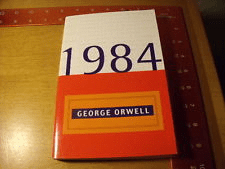
 | INFINITY COURSE 1984 Summary – themes, dystopia & controlAaditya Kothari · Last updated on Apr 14, 2026 |
1984 Summary – themes, dystopia Study Material


Trending Courses for Novels

1984 by George Orwell: Complete Plot Summary
George Orwell's "1984" stands as one of the most influential novels of the 20th century, and it remains essential reading for students across India preparing for literature examinations. Published in 1949, this dystopian masterpiece continues to captivate readers with its chilling portrayal of totalitarian control and surveillance. If you're studying "1984 by George Orwell" for your exams, understanding the complete plot is fundamental to grasping its deeper meanings and themes.
The novel follows Winston Smith, a low-ranking member of the Party who works at the Ministry of Truth in Oceania. Winston begins as a seemingly obedient citizen, but harbors dangerous thoughts of rebellion. The story opens with Winston secretly purchasing a diary-an act of thoughtcrime in itself-and documenting his doubts about the Party's absolute authority. His journey from quiet dissent to active rebellion, and ultimately to betrayal, forms the backbone of this gripping 1984 plot summary.
Throughout the narrative, Orwell weaves a complex tale of surveillance, control, and psychological manipulation. Winston's relationship with Julia, another Party member, represents his most dangerous act of defiance. Their secret romance and meetings in supposedly safe locations drive the central conflict of the novel. Want to explore the thematic depths of their relationship? Check out our detailed analysis of themes in 1984 to understand how love becomes both salvation and vulnerability.
The Three Acts of Rebellion
Winston's rebellion unfolds in three critical phases. First comes his private diary entries and thoughts of resistance. Second is his relationship with Julia and their secret meetings. Third, and most crucially, is his apparent recruitment by O'Brien, a high-ranking Inner Party member who claims to be part of a secret resistance movement. This final act proves to be Winston's undoing, as O'Brien is actually a loyal Party operative conducting an elaborate trap.
themes in 1984
What is 1984 About? Understanding Orwell's Dystopian Masterpiece
"What is 1984 about?" is often the first question students ask when approaching this dense novel. At its core, this 1984 book explores the dangers of unchecked governmental power and the erosion of individual freedom. The novel presents a totalitarian society where the Party controls not just actions, but thoughts, language, and even memories themselves.
Oceania, the superstate where the story is set, represents an extreme version of authoritarianism. The Party's grip on power is maintained through constant surveillance via telescreens, manipulation of historical records, and control of the population's very ability to think independently. Understanding "what is 1984 about" requires recognizing that it's fundamentally a warning about how totalitarian systems operate and maintain control over their citizens.
The novel's relevance to contemporary discussions about privacy, surveillance technology, and government oversight has made it increasingly important in modern curricula. Indian students preparing for literature examinations will find that this 1984 novel analysis remains strikingly relevant to current events and social structures, making it excellent material for critical thinking and essay writing.
The Central Question of Control
At its heart, "what is 1984 story" about is the question of how much control a government can maintain over human consciousness itself. The Party in Oceania doesn't just rule through force-it controls language, rewrites history, and manipulates reality itself to maintain absolute power. This represents perhaps the most terrifying aspect of the dystopia Orwell imagined.
Major Themes in 1984: Totalitarianism, Surveillance, and Control
The 1984 themes that George Orwell explores are as relevant today as when he wrote them in 1948. Understanding these major themes is essential for any student of literature, particularly those appearing for examinations in India. The primary themes in 1984 include totalitarianism, surveillance, manipulation of truth, and the struggle between individual freedom and state authority.
| Major Theme | Key Elements | Relevance |
|---|---|---|
| Totalitarianism | Party's absolute power, elimination of privacy, control of all aspects of life | Demonstrates dangers of unchecked governmental authority |
| Surveillance | Telescreens, monitoring of citizens, informants, constant observation | Raises concerns about privacy in the digital age |
| Truth Manipulation | Rewriting of history, Newspeak, propaganda, denial of reality | Shows how information control shapes societies |
| Psychological Control | Doublethink, thoughtcrime, fear-based conditioning | Examines how systems control minds, not just bodies |
Understanding 1984 Totalitarianism
The 1984 totalitarianism depicted in Orwell's novel represents the ultimate form of political control. The Party maintains its grip through multiple mechanisms working in concert. Citizens cannot escape observation, cannot think freely, and cannot even trust their own memories. This comprehensive approach to control makes 1984 totalitarianism a fascinating study in how power structures operate at their most extreme.
The 1984 Surveillance State
Perhaps no theme is more relevant to modern readers than 1984 surveillance. The telescreens in every home represent an early exploration of how technology can be weaponized for monitoring populations. The constant 1984 surveillance creates a panopticon effect where citizens must always assume they are being watched. This psychological dimension of surveillance-the internalized fear even when no one is actively monitoring-proves more effective than any physical restraint.
To deepen your understanding of surveillance and control mechanisms, explore our comprehensive themes analysis which covers how Orwell uses surveillance as both plot device and thematic core.
comprehensive themes analysis
Winston Smith: Character Analysis and Development
Winston Smith represents the everyman caught in an oppressive system, making him a relatable protagonist for readers across cultures. His character analysis reveals layers of complexity that make 1984 character study compelling. As the protagonist, Winston Smith's journey from doubt to rebellion to ultimate submission forms the emotional core of the novel.
At the beginning, Winston Smith is merely a cog in the machinery of the Party. His work at the Ministry of Truth involves rewriting historical records to match the Party's current narrative. This position gives him unique insight into how the Party operates and how it manipulates reality. His Winston Smith character development throughout the novel shows him gradually becoming more rebellious, more desperate to break free from the Party's control.
Winston's Rebellion and Fall
Winston Smith's character analysis must include examination of his motivations for rebellion. He is driven by a desire for truth, freedom, and authentic human connection. His relationship with Julia represents both his greatest hope and his fatal vulnerability. The Winston Smith character arc demonstrates how even those who rebel against oppressive systems can be broken by them.
The turning point in Winston's story comes in Room 101, where the Party forces him to confront his worst fear. This moment reveals that Winston Smith's psychological resistance cannot withstand the Party's torture. His ultimate betrayal of Julia demonstrates the Party's complete control not just over bodies, but over human loyalty and love itself.
Big Brother and The Party: Symbolism and Significance
"Big Brother" has become synonymous with invasive surveillance and authoritarian control, thanks largely to Orwell's creation. Understanding what Big Brother represents in 1984 is crucial for comprehending the novel's deeper meanings. Big Brother 1984 symbolizes not just the leader of Oceania, but the omnipresent authority figure who watches everything and controls everyone.
Interestingly, Big Brother is never shown directly in the novel. This absence is significant-Big Brother becomes more powerful precisely because he is mythological, omnipresent in propaganda but never physically present. The Party itself functions as the true locus of power, with Big Brother serving as the symbolic figurehead that unifies the population's fear and obedience.
The Party's Control Mechanisms
The Party's power structure reveals how totalitarian systems maintain control through multiple interlocking mechanisms. The novel presents four ministries that encapsulate the Party's control:
- Ministry of Truth: Controls all information and history
- Ministry of Peace: Wages constant warfare
- Ministry of Love: Conducts torture and interrogation
- Ministry of Plenty: Controls rationing and scarcity
Julia, O'Brien, and Other Key Characters in 1984
While Winston Smith dominates the narrative, the characters in 1984 surrounding him are equally significant. Julia 1984 serves as Winston's romantic interest and fellow rebel. O'Brien 1984 represents the Party's intelligence apparatus and ultimately proves to be the architect of Winston's downfall. Understanding the main characters in 1984 requires examining how each contributes to Orwell's larger themes.
Julia represents a different form of rebellion-not ideological but physical and sensual. Her resistance to the Party's control over sexuality and pleasure contrasts with Winston's intellectual rebellion. However, her apparent strength proves as illusory as Winston's when faced with torture and psychological pressure. The character of Julia 1984 demonstrates that no form of individual resistance can triumph against the Party's comprehensive control systems.
O'Brien: The Party's Face
O'Brien 1984 is perhaps the most chilling character in the novel because he understands the system and chooses to perpetuate it. His initial appearance as a potential ally makes his true nature as an Inner Party operative all the more shocking. O'Brien 1984 embodies the Party's ultimate victory-not just controlling dissent, but controlling the dissidents themselves.
For deeper character insights, consult our detailed character analysis resource which provides comprehensive examination of all major and minor characters in the novel.
character analysis resource
Thoughtcrime, Newspeak, and Doublethink Explained
Three concepts form the philosophical foundation of the Party's control: thoughtcrime, Newspeak, and doublethink. Thoughtcrime 1984 refers to thoughts or beliefs that contradict Party ideology. Crucially, thoughtcrime doesn't require any external action-merely thinking forbidden thoughts constitutes a crime. This concept pushes the boundaries of what we traditionally understand as crime and punishment.
Newspeak 1984 represents the Party's systematic reduction of language to prevent independent thought. By eliminating words that express dissent or alternative ideas, the Party makes certain thoughts literally unthinkable. For instance, the word "freedom" is eventually removed from the language entirely. Newspeak 1984 is perhaps Orwell's most lasting contribution to political discourse-the term "Orwellian" often refers to this kind of linguistic manipulation.
Doublethink Explained
Doublethink 1984 involves accepting two contradictory beliefs simultaneously without cognitive dissonance. Citizens are trained to accept that the Party is both peaceful and warlike, both powerful and under threat. Doublethink 1984 represents the ultimate victory of the Party's psychological control-citizens can no longer rely on logic or reason to navigate reality.
| Concept | Definition | Purpose for the Party |
|---|---|---|
| Thoughtcrime | Criminal thoughts against Party ideology | Eliminates internal dissent and freedom of mind |
| Newspeak | Reduced language preventing complex thought | Makes dissent literally unthinkable and inexpressible |
| Doublethink | Accepting contradictions without question | Prevents logical resistance and critical thinking |
The Role of Surveillance and Technology in 1984
The 1984 surveillance system represents perhaps the most technologically advanced instrument of control in Orwell's dystopia. The telescreens serve as both entertainment devices and monitoring instruments, unable to be turned off by citizens. This dual-purpose technology embodies how the Party integrates control into daily life seamlessly.
The surveillance and technology in 1984 aren't presented as solely external-they become internalized. Citizens begin to self-censor, assuming they are always watched. This psychological internalization of surveillance proves more effective than any physical restraint. The role of surveillance and technology in 1984 extends beyond mere monitoring to include the shaping of consciousness itself.
Love and Rebellion in Orwell's 1984
Love and rebellion intertwine throughout 1984, with Winston's relationship with Julia representing the most human form of resistance to the Party's control. Love and rebellion in Orwell's 1984 are inherently linked because the Party understands that human connection and intimacy pose existential threats to absolute control. The Party's prohibition on sexuality and emotional attachment stems from recognition that love creates loyalties that transcend state authority.
However, Orwell demonstrates that love alone cannot withstand the Party's comprehensive machinery of control. The final tragedy of love and rebellion in 1984 comes in Room 101, where both protagonists betray each other under torture. This represents not just individual failure but the impossibility of human resistance within such a system.
Ministry of Truth and Government Propaganda in 1984
The Ministry of Truth and government propaganda in 1984 represent Orwell's exploration of how information control shapes reality itself. Winston's work at the Ministry of Truth involves constant revision of historical records to align with the Party's current narrative. The Ministry of Truth and government propaganda in 1984 demonstrate how totalitarian systems maintain power through control of information and narrative.
This concept remains startlingly relevant to contemporary discussions about misinformation, propaganda, and institutional truth-telling. The Ministry of Truth serves as a metaphor for how propaganda operates in real-world systems, making Orwell's work essential reading for anyone seeking to understand media, power, and information control.
1984 Study Guide: Key Quotes and Analysis
A comprehensive 1984 study guide must include important quotes from 1984 that encapsulate the novel's central themes. Key quotes from 1984 reveal Orwell's philosophical concerns and provide anchors for essay writing and examination preparation. The important quotes from 1984 that appear frequently in study guides include statements about truth, power, and control.
For Indian students preparing for literature examinations, having a solid 1984 book guide with analyzed quotations can significantly enhance understanding and examination performance. The 1984 study guide approach should involve not just memorizing quotes but understanding their context and significance within the larger narrative.
To access our complete 1984 notes and detailed study materials, visit our summary resource which provides organized study notes and key quotations with explanatory analysis.
summary resource
Historical Context: Why Orwell Wrote 1984
Understanding why Orwell wrote 1984 requires examining the historical context of post-World War II Europe. George Orwell wrote 1984 while suffering from tuberculosis in the late 1940s, completing it in 1948. The historical context of 1984 includes witnessing the rise of totalitarian regimes in the Soviet Union, Nazi Germany, and Fascist Italy. These real-world examples of absolute governmental control motivated Orwell to create a speculative fiction warning against totalitarianism.
The novel's title, often considered an inversion of 1948, was chosen deliberately to suggest both proximity and distance-the threat described could happen soon or might be perpetually distant. The historical context of why Orwell wrote 1984 reveals his belief that vigilance against totalitarianism required constant effort and public awareness.
Symbolism in 1984: Room 101, Big Brother, and More
Symbolism in 1984 permeates the novel, with physical locations and concepts serving as representations of larger thematic concerns. Room 101 meaning represents the intersection of personal psychology and political power-it contains each individual's worst fear, making it the ultimate instrument of psychological control. The symbolism in 1984 of Room 101 extends beyond physical torture to encompass the violation of the human psyche itself.
The 1984 literary devices Orwell employs-from the symbolism of the telescreen to the irony in 1984 of the ministry names-all work together to create a coherent and terrifying vision of totalitarian control. Understanding the literary devices in 1984 and the symbolism in 1984 enhances appreciation for Orwell's craft and strengthens analytical essays.
Our comprehensive analysis of themes and symbolism breaks down each symbolic element and its significance to the overall narrative and thematic structure of the novel.
1984 - Summary, Themes & Characters for Novels Exam Pattern 2026-2027
1984 - Summary, Themes & Characters Exam Pattern for Novels
Summary:
1984, written by George Orwell, is a dystopian novel set in a totalitarian society ruled by the Party led by Big Brother. The story follows the life of Winston Smith, a low-ranking member of the Party who begins to question the Party's oppressive regime. Winston secretly rebels against the surveillance and control imposed by the Party and engages in a forbidden love affair with Julia, a fellow Party member. As their rebellion unfolds, they face the consequences of challenging the Party's power and control.
Themes:
1. Totalitarianism: The novel explores the dangers of a totalitarian regime where the government has complete control over its citizens' thoughts, actions, and even history. Orwell portrays a society devoid of individual freedom and privacy.
2. Surveillance and Control: The Party's use of advanced technology, such as telescreens and hidden microphones, enables constant surveillance over its citizens. The theme highlights the invasion of privacy and the manipulation of information to maintain power.
3. Manipulation of Truth: The Party controls reality by constantly altering historical records and spreading propaganda. The novel warns about the dangers of a society where truth is manipulated and the past is rewritten to fit the government's narrative.
4. Power and Corruption: 1984 explores the corrupting influence of power and the extent to which individuals are willing to go to maintain control. The Party's leaders exploit and manipulate their subjects, leading to the degradation of morality and the suppression of individuality.
Characters:
1. Winston Smith: The protagonist and an employee of the Ministry of Truth. Winston rebels against the Party's oppression and seeks freedom and truth.
2. Julia: Winston's love interest and a fellow Party member. Julia shares Winston's rebellious spirit and engages in an illicit affair with him.
3. Big Brother: The enigmatic and omnipresent leader of the Party. Big Brother represents the ultimate symbol of power and control.
4. O'Brien: A high-ranking member of the Party who becomes involved in Winston's rebellion. O'Brien initially appears sympathetic to Winston's cause but later reveals himself as a loyal supporter of the Party.
5. Emmanuel Goldstein: A figurehead of the resistance movement against the Party. Goldstein is portrayed as the Party's primary enemy and serves as a tool for the Party to maintain control and justify their oppressive actions.
In conclusion, 1984 is a thought-provoking novel that delves into the themes of totalitarianism, surveillance, manipulation of truth, and the corrupting influence of power. The memorable characters in the story bring these themes to life, making it a significant work of dystopian literature.


1984 - Summary, Themes & Characters Syllabus 2026-2027 PDF Download
Novels Summary:
1984 is a dystopian novel written by George Orwell in 1949. Set in a totalitarian society ruled by the Party, the story follows Winston Smith, a low-ranking member of the Party who begins to question the oppressive regime he lives under. As Winston rebels against the Party's control and attempts to preserve his individuality, he becomes involved in a forbidden love affair and joins a secret resistance movement called the Brotherhood. The novel explores themes of government surveillance, psychological manipulation, and the power of language.
Novels Themes:
1. Totalitarianism: One of the central themes of 1984 is the dangers of totalitarianism. The Party exercises complete control over every aspect of its citizens' lives, suppressing individuality, manipulating history, and monitoring their every move. Orwell's novel serves as a warning against the potential abuse of power by governments.
2. Government Surveillance: The novel portrays a society where every action and thought is monitored by the Party through advanced surveillance techniques. Big Brother, the Party's leader, is always watching, and the constant fear of being caught is used to control the population. This theme highlights the invasion of privacy and the loss of personal freedom.
3. Psychological Manipulation: The Party in 1984 uses various psychological techniques to control and manipulate its citizens. Newspeak, the Party's language, is designed to limit thought and eliminate dissent. Doublethink, the ability to hold contradictory beliefs, is encouraged to maintain conformity. The novel explores the ways in which language and manipulation can shape reality.
4. Rebellion and Individualism: Winston Smith's journey in the novel is a struggle against conformity and a quest for individuality. Despite living in a society that suppresses independent thought, he rebels against the Party and seeks to find his true self. The theme of rebellion highlights the importance of preserving one's individuality and resisting oppressive regimes.
Novels Characters:
1. Winston Smith: The protagonist of the novel, Winston is a middle-aged man who works for the Party as a record editor. He becomes disillusioned with the Party's ideology and begins to rebel against its control, leading him into a dangerous journey of self-discovery.
2. Julia: Winston's love interest, Julia is a young woman who also works for the Party. She shares Winston's rebellious spirit and engages in a secret affair with him. Julia represents the desire for freedom and the pursuit of pleasure in a repressive society.
3. O'Brien: O'Brien is a high-ranking member of the Party who appears friendly and sympathetic towards Winston at first. However, it is later revealed that he is a loyal supporter of the Party and plays a crucial role in Winston's capture and torture.
4. Big Brother: The enigmatic leader of the Party, Big Brother symbolizes the omnipresent surveillance and control exerted by the government. While his existence is uncertain, his image is plastered everywhere, reminding citizens of their constant surveillance.
5. Emmanuel Goldstein: Goldstein is the supposed leader of the Brotherhood, a resistance movement against the Party. He is portrayed as the Party's ultimate enemy and serves as a symbol for the Party's scapegoat and source of fear.
In conclusion, 1984 is a thought-provoking novel that explores themes of totalitarianism, government surveillance, psychological manipulation, and the importance of individualism. Through its memorable characters and compelling storyline, George Orwell's masterpiece continues to resonate with readers, reminding us of the dangers of unchecked power and the importance of defending our freedom and autonomy.
This course is helpful for the following exams: Novels
How to Prepare 1984 - Summary, Themes & Characters for Novels?
How to Prepare 1984 - Summary, Themes & Characters for Novels?
Preparing for a novel like "1984" requires a thorough understanding of its summary, key themes, and characters. Here are some essential steps to help you prepare for studying this iconic novel:
1. Familiarize Yourself with the Summary
Before delving into the themes and characters, it is crucial to have a clear understanding of the novel's summary. "1984" is a dystopian novel written by George Orwell and published in 1949. It is set in a totalitarian society ruled by the Party, led by Big Brother. The story follows the protagonist, Winston Smith, as he rebels against the oppressive government and seeks freedom and individuality.
2. Explore the Key Themes
"1984" addresses several important themes, which are worth exploring in detail:
- Totalitarianism: The novel depicts a society where the government controls every aspect of people's lives, suppressing individuality and freedom.
- Surveillance and Privacy: The Party's use of technology to monitor and control its citizens is a central theme, highlighting the dangers of surveillance and invasion of privacy.
- Manipulation of Truth: The Party's control over information and its ability to rewrite history demonstrates the dangers of a government manipulating the truth to maintain power.
- Language and Thought Control: Newspeak, a language created by the Party, restricts and manipulates people's thoughts, limiting their ability to think critically.
- Rebellion and Resistance: Winston's rebellion against the Party and his desire for freedom explore the theme of resistance against a tyrannical regime.
3. Analyze the Key Characters
To fully comprehend the novel, it is essential to analyze the key characters and their roles:
- Winston Smith: The protagonist of the story who questions the Party's ideologies and seeks individuality.
- Julia: Winston's love interest and fellow rebel against the Party.
- O'Brien: A member of the Inner Party who appears to sympathize with Winston but ultimately betrays him.
- Big Brother: The enigmatic and omnipresent leader of the Party.
- Mr. Charrington: The owner of an antique shop who plays a significant role in Winston's rebellion.
Conclusion
By familiarizing yourself with the summary, exploring the key themes, and analyzing the main characters, you will be well-prepared to study "1984." Remember to engage in critical thinking and reflect on the novel's messages and its relevance to the world today. Enjoy the journey of discovering the depths of this timeless dystopian classic!
Importance of 1984 - Summary, Themes & Characters for Novels
The 1984 - Summary, Themes & Characters course offered by EduRev is a valuable resource for those interested in exploring the iconic dystopian novel written by George Orwell. This course delves into the key aspects of the novel, providing a comprehensive understanding of its plot, themes, and characters.
Summary
The course begins with a detailed summary of the novel, offering a concise overview of the storyline. It explores the world of Oceania, a totalitarian society ruled by the Party and its enigmatic leader, Big Brother. The protagonist, Winston Smith, rebels against the oppressive regime, leading to a series of events that challenge his beliefs and ideals.
Themes
The course delves into the various themes presented in 1984, shedding light on the dystopian society Orwell paints with his words. Students will gain insight into the themes of government surveillance, thought control, manipulation of truth, and the dangers of totalitarianism. The course also explores the concept of individuality, exploring the struggle of the protagonist to maintain his identity in a society that seeks to suppress it.
Characters
Understanding the characters in 1984 is crucial to fully comprehend the novel's intricate narrative. The course provides in-depth analysis of the key characters, including Winston Smith, Julia, O'Brien, and Big Brother. Students will explore their motivations, relationships, and the role they play in highlighting the themes and messages conveyed by Orwell.
By taking this course, students will gain a deeper appreciation for the significance of 1984 as a literary masterpiece. They will develop a better understanding of the narrative structure, themes, and characters, enabling them to engage in thought-provoking discussions and analysis of the novel. This course is an excellent resource for literature enthusiasts, students, and anyone interested in understanding the societal implications depicted in 1984.
Join the 1984 - Summary, Themes & Characters course on EduRev and embark on a journey to explore the dystopian world created by George Orwell. Expand your knowledge, enhance your critical thinking skills, and discover the timeless relevance of this powerful novel.
1984 - Summary, Themes & Characters for Novels FAQs
| 1. What are the main themes in 1984 by George Orwell? |  |
| 2. Who is Winston Smith and what is his role in 1984? | |
| 3. What does Big Brother represent in 1984? | |
| 4. How does the Party use language to control people in 1984? | |
| 5. What is the significance of the Room 101 scene in 1984? | |
| 6. What is doublethink and why is it important in 1984? | |
| 7. Who is O'Brien and what does he represent in 1984? | |
| 8. What happens to Winston at the end of 1984 and what does it mean? | |
| 9. How does 1984 show the dangers of propaganda and misinformation? | |
| 10. What is the Party's motto and what does each slogan mean in 1984? | |
 | View your Course Analysis |  |
 | Create your own Test | |



|
 Documents
 Ratings
 | Explore Courses for Novels exam |  |


