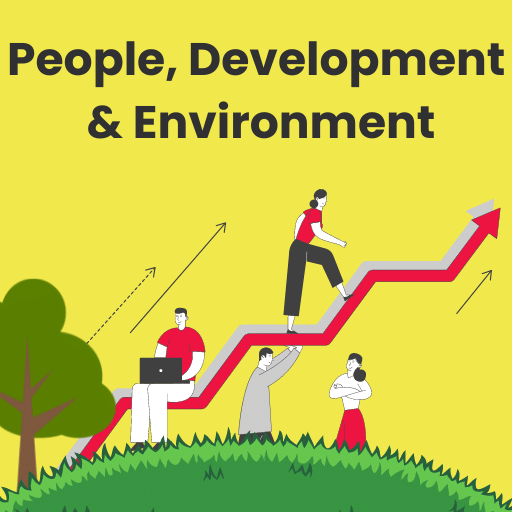
 | INFINITY COURSE UGC NET People, Development and Environment for UGC NET - Notes, MCQs22,421 students learning this week · Last updated on Apr 14, 2026 |
UGC NET People, Development and Environment Study Material





Trending Courses for UGC NET

What is People, Development and Environment in UGC NET?
People, Development and Environment is a critical section of the UGC NET examination that tests your understanding of how human activities intersect with environmental systems and development goals. As an aspirant preparing for UGC NET 2026, you need to comprehend the intricate relationships between population growth, economic development, and environmental sustainability. This section carries significant weightage and appears across all subject papers in UGC NET, making it essential for anyone aiming to secure a merit position.
This foundational section covers the complex interplay between human societies and natural ecosystems. It examines how development initiatives impact environmental health and vice versa. Understanding these concepts is crucial for clearing the UGC NET examination and building a strong foundation for an academic career. The People, Development and Environment for UGC NET 2026 syllabus emphasizes both theoretical knowledge and practical applications relevant to contemporary environmental challenges facing India and the world.
Why This Section Matters
The UGC NET environment paper section has gained prominence due to global concerns about climate change, resource depletion, and sustainability. Examiners specifically look for candidates who can connect development aspirations with environmental conservation. This demonstrates your ability to think critically about real-world problems—a quality highly valued in academic and research settings.
Understanding Development and Environment Relationship for UGC NET
The relationship between development and environment forms the backbone of the People, Development and Environment UGC NET syllabus. Development typically refers to improvements in living standards, economic growth, and infrastructure expansion. However, traditional development models often come at the cost of environmental degradation.
To understand this relationship better, explore our detailed chapter on Development & Environment which covers sustainable development concepts, the Millennium Development Goals, and how the Sustainable Development Goals (SDGs) attempt to balance growth with environmental protection.
Key Concepts in Development and Environment
- Sustainable Development: Meeting present needs without compromising future generations' ability to meet theirs
- Green Economy: Economic growth that protects environmental systems and reduces carbon footprint
- Circular Economy: Moving away from linear "take-make-dispose" models to closed-loop systems
- Environmental Degradation: The decline in environmental quality due to anthropogenic activities
For UGC NET environment preparation, understanding these interconnections is vital. Development projects in India—such as dam construction, mining operations, and industrial expansion—often trigger environmental challenges including habitat loss and water pollution.
Human and Environment Interaction: Key Concepts for UGC NET
Human and environment interaction encompasses all ways our species influences and depends on natural systems. This section of the UGC NET environment syllabus examines anthropogenic impacts—changes directly caused by human activity. Our detailed resource on Human & Environment interaction provides comprehensive coverage of these critical concepts.
Major Areas of Human-Environment Interaction
| Interaction Type | Examples | Environmental Impact |
|---|---|---|
| Resource Extraction | Mining, logging, fishing | Habitat destruction, biodiversity loss |
| Agriculture | Crop production, livestock farming | Soil degradation, water pollution |
| Urbanization | City expansion, infrastructure | Urban heat islands, waste generation |
| Industrial Activity | Manufacturing, energy production | Air pollution, greenhouse gas emissions |
Population growth significantly amplifies human-environment interactions. With India's population exceeding 1.4 billion people, the pressure on natural resources—water, forests, minerals, and energy—continues to mount. Understanding ecosystem services—the benefits humans receive from nature including clean air, water purification, and pollination—is essential for UGC NET environment paper preparation.
Major Environmental Issues Covered in UGC NET Syllabus
The UGC NET environment section covers pressing environmental issues that demand immediate attention. Our comprehensive guide on Environmental Issues addresses all major topics you'll encounter in the examination.
Critical Environmental Issues for Examination
- Climate Change and Global Warming: Rising temperatures, changing precipitation patterns, and extreme weather events
- Deforestation: Loss of forest cover reducing carbon sinks and biodiversity
- Water Scarcity and Pollution: Depletion of groundwater and contamination of water bodies
- Air Pollution: Urban smog, industrial emissions, and vehicular pollution affecting millions
- Waste Management: Growing challenges in handling municipal, industrial, and hazardous waste
- Ocean Acidification: Changes in marine chemistry threatening aquatic life
- Biodiversity Loss: Extinction rates exceeding natural background levels
These environmental issues for UGC NET preparation often appear in questions that ask you to analyze causes, consequences, and mitigation strategies. India faces particular challenges with air quality in major cities, water scarcity in agricultural regions, and deforestation in biodiversity hotspots.
Impact of Pollutants on Human Health: UGC NET Topics
Understanding how environmental pollutants affect human wellbeing is crucial for the UGC NET environment preparation. Our detailed resource on Impacts of Pollutants on human health breaks down the health consequences of environmental degradation.
Major Pollutants and Health Effects
| Pollutant Type | Sources | Health Effects |
|---|---|---|
| Particulate Matter (PM2.5, PM10) | Industrial emissions, vehicle exhaust, dust | Respiratory diseases, asthma, lung cancer |
| Heavy Metals | Mining, industrial discharge, batteries | Neurological damage, organ failure |
| Chemical Pollutants | Industrial waste, pesticides, pharmaceuticals | Endocrine disruption, reproductive issues |
| Biological Pathogens | Sewage, contaminated water, animal waste | Infectious diseases, gastrointestinal illnesses |
For the UGC NET, you should understand that pollutants and human health connections reveal how environmental degradation directly threatens public health. India's cities often report air quality indices in hazardous ranges, and waterborne diseases remain significant health challenges.
Natural and Energy Resources for UGC NET Preparation
Resource management is central to sustainable development. Our comprehensive guide on Natural & Energy Resources covers both renewable and non-renewable resources essential for UGC NET environment study plan.
Types of Resources
- Renewable Energy Sources: Solar, wind, hydroelectric, biomass, and geothermal power offering sustainable alternatives
- Non-Renewable Resources: Fossil fuels and minerals with finite reserves requiring careful management
- Water Resources: Critical for agriculture, industry, and drinking purposes with growing scarcity concerns
- Forest Resources: Providing timber, medicinal plants, and carbon sequestration services
Energy resources are particularly important for UGC NET environment notes as India transitions toward renewable energy. Understanding energy conservation, efficiency improvements, and India's Green Hydrogen Mission launched recently demonstrates awareness of contemporary environmental initiatives.
Natural Hazards and Disasters: Important Topics for UGC NET
Natural hazards represent another critical dimension of the UGC NET environment syllabus. Our detailed resource on Natural Hazards & Disasters covers disaster management and risk reduction strategies.
Major Natural Hazards
Geological hazards include earthquakes, volcanic eruptions, and tsunamis occurring suddenly with devastating impacts. Hydro-meteorological hazards encompass floods, droughts, and cyclones often intensified by climate change. Landslides and avalanches pose risks in mountainous regions. For UGC NET preparation, understanding disaster risk reduction, early warning systems, and community resilience is essential, particularly relevant to India's vulnerability to monsoon-related disasters.
Environmental Acts and Conventions for UGC NET
Knowledge of environmental legislation is fundamental for the UGC NET environment section. Our comprehensive guide on Important Acts & Conventions details both Indian and international environmental frameworks.
Key Indian Environmental Acts
- Environment Protection Act, 1986—The umbrella legislation for environmental protection in India
- Wildlife Protection Act, 1972—Conserving endangered species and habitats
- Forest Conservation Act, 1980—Regulating forest land use and protection
- Water Pollution Control Act, 1974—Managing water quality and industrial discharge
- Air Pollution Control Act, 1981—Controlling atmospheric pollution
- Biological Diversity Act, 2002—Protecting biodiversity and regulating bioprospecting
- National Green Tribunal Act, 2010—Providing faster dispute resolution on environmental matters
International Conventions
Important international frameworks include the Montreal Protocol protecting the ozone layer, the Kyoto Protocol and Paris Agreement addressing climate change, and the Convention on Biological Diversity promoting ecosystem conservation. These international environmental conventions for UGC NET are frequently tested.
How to Prepare for People, Development and Environment for UGC NET
Developing an effective UGC NET environment preparation strategy requires structured planning and consistent effort. Our preparation guide on How to prepare for People, Development and Environment for UGC NET provides detailed study strategies tailored for success.
Effective Study Strategies for UGC NET Environment Section
- Create Concept Maps: Connect related topics to understand the bigger picture. Use our Mind Maps resource for visual learning
- Use Flashcards: Memorize acts, conventions, and their years efficiently with our Flashcards
- Study Current Issues: Follow recent environmental news and policy announcements relevant to UGC NET environment notes
- Practice Previous Year Questions: Familiarize yourself with question patterns and difficulty levels
- Use Visual Aids: Our PPTs break down complex topics into digestible segments
- Regular Revision: Review notes weekly to strengthen retention of environmental acts and concepts
- Group Study: Discuss topics with peers to gain different perspectives on environmental issues
An effective UGC NET environment study plan should allocate time proportionally to different topics based on weightage and your comfort level. Begin with foundational concepts, progress to complex issues, and conclude with revision of important environmental conventions and acts.
Best Books and Study Material for People, Development and Environment UGC NET
Quality study material forms the foundation of successful UGC NET preparation. The People, Development and Environment UGC NET notes should cover all syllabus areas comprehensively. EduRev provides excellent free PDF notes and resources for UGC NET environment paper, including organized notes, flashcards, and visual aids that make learning efficient.
Focus on materials that explain concepts clearly rather than just listing information. The best books for People, Development and Environment UGC NET combine theoretical knowledge with practical examples relevant to India's environmental context.
Free PDF Notes and Resources for UGC NET Environment Paper
EduRev offers comprehensive UGC NET environment study material free download in PDF format, making quality education accessible to all aspirants. Free PDF notes People Development Environment UGC NET cover all major topics, important acts, and key concepts systematically. These UGC NET environment free notes are regularly updated to reflect current environmental issues and policy changes.
The advantage of using organized study materials is that they highlight important topics People Development Environment UGC NET and provide clear explanations that save valuable preparation time. Regular consultation of these resources strengthens your understanding of complex environmental relationships and helps you develop answers to People Development Environment UGC NET questions with confidence.
Important Topics in People, Development and Environment for UGC NET
While the entire syllabus requires attention, certain topics appear more frequently in UGC NET environment previous year questions. The most important topics environment UGC NET include the relationship between development and environmental degradation, major environmental acts, international conventions particularly the Paris Agreement and Montreal Protocol, and contemporary issues like climate change and biodiversity loss.
Key concepts such as sustainable development, ecosystem services, and human-environment interactions form the foundation for more complex questions. Understanding how pollutants affect human health and the importance of natural resources in development planning are equally critical for securing good marks in this section.
Effective Study Strategies for UGC NET Environment Section
Success in the UGC NET environment section requires a multi-faceted approach. Rather than rote memorization, focus on understanding underlying principles and their applications. Connect different concepts to see how environmental issues interrelate—for instance, how deforestation contributes to climate change and biodiversity loss simultaneously.
Allocate dedicated time to learning environmental acts and international conventions, as these are factual questions where accuracy determines success. Prepare short notes for each act mentioning the year of enactment, key provisions, and relevance to contemporary issues. For the UGC NET environment preparation 2026, staying updated with recent environmental conferences, India's updated climate commitments, and new policy initiatives is essential.
Practice answering questions in timed conditions to develop speed and accuracy. Analyze previous year questions to identify recurring themes and question formats. This helps you anticipate what examiners might ask and prepare targeted responses.
People, Development and Environment for UGC NET Exam Pattern 2026-2027
The UGC NET exam pattern includes a section on People, Development and Environment, which tests the candidate's understanding of the interlinkages between society, environment and development. This section is crucial for candidates aspiring to pursue research in social sciences and environmental studies.
Key Pointers:
1. Interlinkages between society, environment and development: This section tests the candidate's understanding of the complex interplay between society, environment and development. Candidates need to understand the social, economic, political and environmental factors that shape development outcomes.
2. Sustainable development: Sustainable development is a key theme in this section. Candidates need to understand the concept of sustainable development, its importance in the current global context and the challenges associated with achieving sustainable development.
3. Environmental degradation: This section also tests the candidate's understanding of the various forms of environmental degradation, including air pollution, water pollution, deforestation, desertification and climate change. Candidates need to understand the causes and consequences of environmental degradation.
4. Environmental policies and regulations: Candidates need to have a good understanding of the various environmental policies and regulations that have been enacted at the national and international levels. This includes policies related to climate change, biodiversity conservation, pollution control and natural resource management.
5. Social dimensions of development: This section also tests the candidate's understanding of the social dimensions of development. Candidates need to understand the role of social institutions, such as family, religion, caste and gender, in shaping development outcomes.
6. Human development: Candidates need to have a good understanding of the concept of human development, its various dimensions and the challenges associated with achieving human development.
Conclusion:
In conclusion, the People, Development and Environment section of the UGC NET exam pattern is a crucial section for candidates aspiring to pursue research in social sciences and environmental studies. Candidates need to have a good understanding of the interlinkages between society, environment and development, the concept of sustainable development, environmental degradation, environmental policies and regulations, social dimensions of development and human development.


People, Development and Environment for UGC NET Syllabus 2026-2027 PDF Download
The UGC NET exam is a national level examination conducted by the National Testing Agency (NTA) to determine the eligibility of candidates for the post of Assistant Professor and/or Junior Research Fellowship in Indian universities and colleges. The People, Development and Environment syllabus for UGC NET covers various topics related to human development and environmental issues. Let us take a detailed look at the syllabus below.
Development & Environment
- Concept of sustainable development
- Social, economic and environmental dimensions of sustainable development
- Indicators of sustainable development
- Poverty and inequality in the context of sustainable development
- Economic growth and environmental degradation
- Role of technology in sustainable development
Human & Environment interaction
- Concept of human ecology
- Ecological footprint
- Environmental ethics
- Environmental impact assessment
- Environmental governance
- Environmental movements in India
Environmental Issues
- Air pollution
- Water pollution
- Soil pollution
- Noise pollution
- Solid waste management
- Climate change
Impacts of Pollutants on human health
- Air pollutants and their impact on human health
- Water pollutants and their impact on human health
- Soil pollutants and their impact on human health
- Noise pollution and its impact on human health
Natural & Energy Resources
- Non-renewable energy resources
- Renewable energy resources
- Forest resources
- Water resources
- Mineral resources
Natural Hazards & Disasters
- Earthquakes
- Tsunamis
- Cyclones
- Floods
- Landslides
- Droughts
Important Acts & Conventions
- Environmental Protection Act, 1986
- Forest Conservation Act, 1980
- Water (Prevention and Control of Pollution) Act, 1974
- Wildlife Protection Act, 1972
- Convention on Biological Diversity
- United Nations Framework Convention on Climate Change
The above syllabus is not exhaustive, and candidates are advised to refer to the official UGC NET website for a detailed syllabus. It is important to note that the syllabus may change from time to time, and candidates should keep themselves updated with any changes.
This course is helpful for the following exams: UGC NET
How to Prepare People, Development and Environment for UGC NET?
Understand the Syllabus: The first step to preparing for any exam is to understand the syllabus thoroughly. The People, Development and Environment category covers various topics such as Human Development, Globalization, Sustainable Development, Environmental Studies, and many more. It is essential to understand the syllabus and identify the significant topics to focus on during the preparation.
Refer to Standard Textbooks: Referring to standard textbooks is crucial for preparing for any exam. The People, Development and Environment category has numerous textbooks available in the market. Some of the popular ones include "Human Development" by Diane E. Papalia and Sally Wendkos Olds, "Globalization and Its Discontents" by Joseph Stiglitz, and "Our Common Future" by Gro Harlem Brundtland. These textbooks cover the topics in detail and provide an in-depth understanding of the subject.
Practice Previous Year Question Papers: Practicing previous year question papers is an excellent way to prepare for the UGC NET exam. It helps in understanding the exam pattern, the types of questions asked, and the time management required during the exam. Solving previous year question papers also helps in identifying the areas that need more attention and focus.
Take Online Mock Tests: Taking online mock tests is an effective way to prepare for the exam. EduRev offers UGC NET mock tests that are specifically designed for the People, Development and Environment category. These mock tests help in assessing your preparation level, identifying strengths and weaknesses, and improving time management skills.
Stay Updated: The People, Development and Environment category covers current topics related to human development, sustainable development, and environmental studies. It is essential to stay updated with the latest developments in these fields. Reading newspapers, magazines, and online articles can help in staying updated with current affairs and developments.
Revise and Repeat: Revision is crucial for retaining information and concepts. It is essential to revise the topics regularly and ensure that you have a clear understanding of the concepts. Repeating the same topics multiple times can help in remembering and retaining information.
In conclusion, preparing for the People, Development and Environment category for the UGC NET exam requires a systematic approach, dedication, and hard work. Following the tips mentioned above can help in preparing effectively and achieving success in the exam.
Importance of People, Development and Environment for UGC NET
The UGC NET exam is one of the most prestigious exams in India, and cracking it requires a comprehensive understanding of various topics. One of the crucial topics that UGC NET aspirants should focus on is 'People, Development and Environment.' It has become an essential area of study due to its high weightage in the exam and its relevance in today's world.
Why is People, Development and Environment important for UGC NET?
The 'People, Development and Environment' topic has been included in the UGC NET syllabus to assess the candidate's understanding of social, economic, and ecological issues that affect people's lives. It tests the candidate's knowledge of the relationship between people, development, and the environment. This topic is crucial in understanding the impact of human activities on the environment and the need for sustainable development.
Key Pointers to focus on while studying People, Development and Environment
1. Understanding the concept of Sustainable Development and its importance.
2. Knowledge of Environmental laws, policies, and regulations.
3. Understanding the effects of climate change on the environment and human life.
4. Understanding the relationship between biodiversity and human life.
5. Knowledge of various environmental issues such as pollution, deforestation, and global warming.
6. Understanding the role of society and the government in promoting sustainable development.
Benefits of studying People, Development and Environment for UGC NET
1. Helps in understanding the impact of human activities on the environment.
2. Enhances knowledge of environmental laws, policies, and regulations.
3. Provides insights into sustainable development and its importance.
4. Develops an understanding of the relationship between people, development, and the environment.
5. Helps in answering questions related to the environment and sustainable development in the UGC NET exam.
In conclusion, People, Development and Environment is a crucial topic that candidates must focus on while preparing for the UGC NET exam. It is a topic that is relevant in today's world and requires a comprehensive understanding of various issues related to the environment and sustainable development. EduRev provides an excellent platform for candidates to prepare for this topic and excel in the UGC NET exam.
People, Development and Environment for UGC NET FAQs
| 1. What are the main topics covered in People, Development and Environment for UGC NET? |  |
| 2. How do I prepare environmental sustainability concepts for UGC NET exam? | |
| 3. What is the difference between development and environmental degradation in UGC NET context? | |
| 4. Which environmental policies and acts should I focus on for UGC NET? | |
| 5. How do I answer case study questions on development-environment conflicts in UGC NET? | |
| 6. What demographic and population concepts are important for UGC NET People and Development? | |
| 7. How should I prepare human-environment interaction topics for UGC NET exam? | |
| 8. What is the role of institutions and governance in environmental management for UGC NET? | |
| 9. How do I connect climate change and development issues for UGC NET answers? | |
| 10. What practice strategies help master UGC NET People, Development and Environment questions? | |
 | View your Course Analysis |  |
 | Create your own Test | |



|
 Videos
 Documents
 Tests
Tests Ratings
 | Explore Courses for UGC NET exam |  |


