NCERT Solutions for Class 11 Chemistry - Chapter-wise Explained
Having access to well-explained NCERT Solutions is invaluable when working through the Class 11 Chemistry syllabus. Our solutions cover every chapter - from Some Basic Concepts of Chemistry and States of Matter to Equilibrium, Hydrocarbons, and Environmental Chemistry - with clear, step-by-step reasoning. These solutions are particularly helpful for understanding how to approach multi-step numerical problems in Thermodynamics and Stoichiometry. Students who regularly refer to detailed NCERT solutions alongside their textbooks develop a much deeper conceptual understanding of the subject.
Some Basics Concepts of Chemistry
| Importance & Scope of Chemistry 10 pages |  |
| Laws of Chemical Combinations 11 pages | |
| NCERT Solutions: Some Basic Concepts of Chemistry 14 pages | |
| Dalton's Atomic Theory 3 pages | |
| Scientific Notation & Significant Figures 6 pages | |
| Nature of Matter & Its Properties 5 pages | |
| Mind Map: Some Basic Concepts of Chemistry 1 page | |
| Atomic & Molecular Mass and Mole Concept 13 pages | |
| Solved Examples: Some Basic Concepts of Chemistry 23 pages | |
| Percentage Composition, Empirical & Molecular Formula 9 pages | |
| Stoichiometry & Concentration Terms 11 pages | |
| Solved Examples: Some Basic Concepts of Chemistry- 2 14 pages | |
| Short Answer Questions: Some Basic Concepts of Chemistry 7 pages | |
| NCERT Textbook: Some Basic Concepts Of Chemistry 28 pages | |
| Solved Examples: Some Basic Concepts of Chemistry 2 pages | |
| Assertion & Reason Type Questions: Some Basic Concepts of Chemistry 5 pages | |
| Index: Some Basic Concepts of Chemistry 1 page | |
| Important Formulas & Rapid Revision: Some Basic Concepts of Chemistry 3 pages | |
| Flashcards: Some Basic Concepts of Chemistry 44 cards | |
States of Matter
| Intermolecular Forces: Definition and Types 6 pages | |
| The Gaseous State 16 pages | |
| NCERT Textbook: States of Matter (Old NCERT) 24 pages | |
| Question Bank (Solutions): Gaseous State 14 pages | |
| Short & Long Answer Questions: States of Matter 15 pages | |
| NCERT Solutions: States of Matter (Old NCERT) 9 pages | |
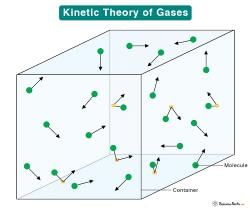
| Kinetic Theory of Gases 5 pages | |
| Question Bank: Gaseous State 10 pages | |
| Solved Examples: States of Matter 20 pages | |
| Quick Revision: States of Matter 7 pages | |
| Index: States of Matter 1 page | |
Structure of Atom
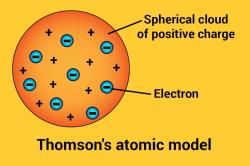
| Atomic Models: Dalton, Thomson & Rutherford 11 pages | |
| Question Bank: Structure of Atom 8 pages | |
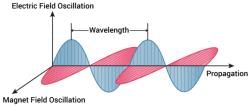
| Electromagnetic Radiation: Wave & Particle Nature 16 pages | |
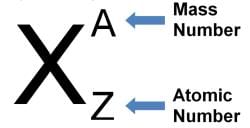
| Atomic Number & Mass Number, Isotopes & Isobars 5 pages | |
| Question Bank: Structure of Atom - 2 24 pages | |
| Quick Revision: Structure of Atom 4 pages | |
| NCERT Solutions: Structure of Atom 36 pages | |
| NCERT Textbook: Structure of Atom 45 pages | |
| Atomic Spectrum & Bohr's Model of Hydrogen Atom 9 pages | |
| Mind Map: Structure of Atom 1 page | |
| Dual Nature of Matter & Heisenberg's Uncertainty Principle 5 pages | |
| Quantum Numbers, Orbitals & Their Shapes 6 pages | |
| Energies of Orbitals & Filling of Orbitals 5 pages | |
| Electronic Configuration of Atoms 4 pages | |
| Quantum Mechanical Model of Atom 9 pages | |
| Important Notes: Structure of Atom 14 pages | |
| Solved Examples: Structure of Atom 1 page | |
| Index: Structure of Atom 1 page | |
Revision Notes for Class 11 Chemistry - Download Free PDF
Concise, well-organized revision notes can save hours of study time while still covering everything you need to know. Our Class 11 Chemistry revision notes are available as free PDF downloads, covering all major chapters including Chemical Bonding, Structure of Atom, Thermodynamics, Redox Reactions, and Organic Chemistry fundamentals. Each set of notes is structured to highlight key definitions, important formulas, reaction types, and common conceptual pitfalls. Having a reliable set of notes means you can revise efficiently even when time is limited - especially in the days leading up to exams.
Chemical Bonding
| Chemical Bonding: Definition & Types 17 pages | |
| Question Bank: Chemical Bonding & Molecular Structure 17 pages | |
| NCERT Solutions: Chemical Bonding & Molecular Structure 23 pages | |
| Question Bank (Solutions): Chemical Bonding & Molecular Structure 33 pages | |
| Types of Chemical Bonds 11 pages | |
| Mind Map: Chemical Bonding & Molecular Structure 1 page | |
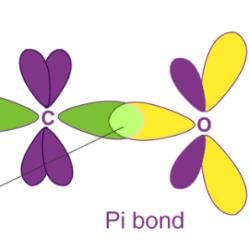
| Valence Bond Theory, Hybridization & Molecular Orbital Theory 9 pages | |
| Short Answer Questions: Chemical Bonding & Molecular Structure 20 pages | |
| VSEPR Theory: Definition, Postulates & Limitations 8 pages | |
| Valence Bond Theory 2 pages | |
| Short Answer Questions: Chemical Bonding & Molecular Structure - 2 6 pages | |
| Index: Chemical Bonding and Molecular Structure 1 page | |
| NCERT Textbook: Chemical Bonding & Molecular Structure 36 pages | |
| Quick Revision: Chemical Bonding & Molecular Structure 5 pages | |
Thermodynamics
| Thermodynamics: Common Terms, State Function, Reversible & Irreversible Processes 10 pages | |
| 2nd & 3d Law: Entropy Change & Spontaneity 9 pages | |
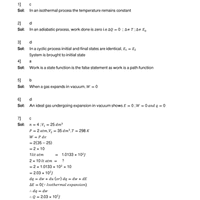
| NCERT Solutions: Thermodynamics 10 pages | |
| First Law of Thermodynamics 5 pages | |
| Adiabatic Expansion: Reversible & Irreversible 4 pages | |
| Question Bank: Thermodynamics 15 pages | |
| Question Bank (Solutions): Thermodynamics 14 pages | |
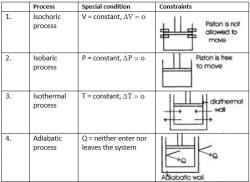
| Thermodynamic Processes & Internal Energy 7 pages | |
| Internal Energy as a State Function, Heat & Work 5 pages | |
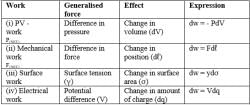
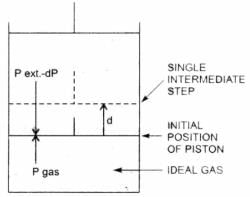
| Pressure-Volume Work & Work Done Calculations 8 pages | |
| Enthalpy, Heat, Internal Energy & Work Done Calculations in Different Processes 12 pages | |
| Enthalpy, Heat Capacities & Thermochemistry 15 pages | |
| Second & Third Law of Thermodynamics 8 pages | |
| Solved Examples for JEE: Thermodynamics 16 pages | |
| NCERT Textbook: Thermodynamics 32 pages | |
| Quick Revision: Thermodynamics 3 pages | |
| Index: Thermodynamics 1 page | |
| Carnot Cycle & Gibbs Energy Change 10 pages | |
| Carnot cycle & Gibbs Energy Change: Spontaneous & Non Spontaneous Process 9 pages | |
Equilibrium
| Equilibrium in Physical Processes 6 pages | |
| NCERT Solutions: Equilibrium 26 pages | |
| Question Bank: Ionic Equilibrium 22 pages | |
| Equilibrium in Chemical Processes: Dynamic Equilibrium 2 pages | |
| Question Bank: Chemical Equilibrium 20 pages | |
| Question Bank (Solutions): Chemical Equilibrium 27 pages | |
| Short & Long Answer Questions: Equilibrium 17 pages | |
| Short & Long Answer Questions: Equilibrium - 2 3 pages | |
| Law of Chemical Equilibrium & Equilibrium Constant 9 pages | |
| Equilibria: Types & Relation Between K, Q & G 9 pages | |
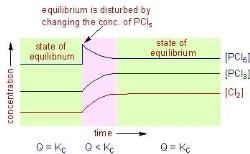
| Factors Affecting Equilibria & Le Chatelier's Principle 10 pages | |
| NCERT Textbook: Equilibrium 53 pages | |
| Acids, Bases & Salts 9 pages | |
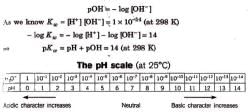
| Ionic Equilibrium, Ostwald’s Dilution Law & Related Concepts 8 pages | |
| Solved Objective Problems: Chemical Equilibrium 7 pages | |
| Solubility Equilibria of Sparingly Soluble Salts 6 pages | |
| Index: Equilibrium 10 pages | |
| Quick Revision: Equilibrium 5 pages | |
| Indicators, Acids, Bases & Salts 26 pages | |
Important Formulas and Concept Summaries for Grade 11 Chemistry
Chemistry at the Grade 11 level involves a wide range of formulas, laws, and conceptual frameworks that students need to keep organized and accessible. Our formula sheets and concept summaries make it easy to review the most important material at a glance. Some of the key areas covered include:
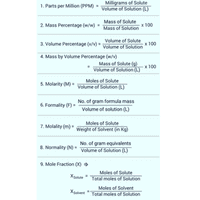
- Mole Concept formulas and unit conversions
- Gas Laws including the Ideal Gas Equation and van der Waals corrections
- Thermodynamic relations: Enthalpy, Entropy, and Gibbs Free Energy
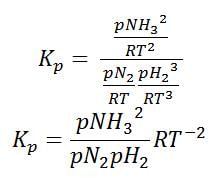
- Equilibrium constants and expressions for homogeneous and heterogeneous systems
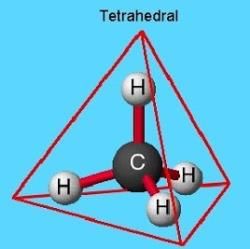
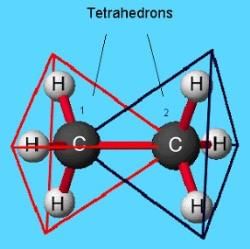
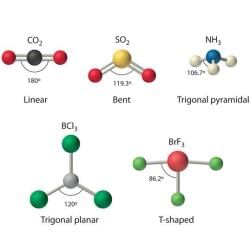
- Hybridisation rules and VSEPR geometry predictions
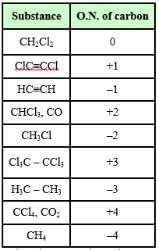
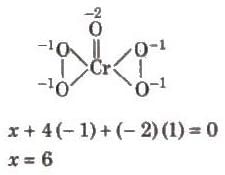
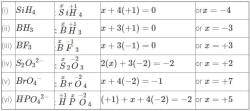
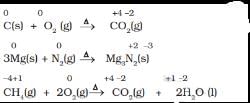
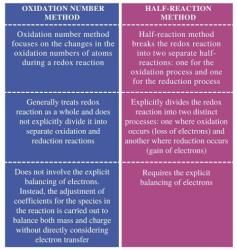
- Oxidation number rules and balancing redox equations
Keeping these summaries handy during study sessions helps reinforce learning and makes last-minute revision significantly more productive.
Redox Reactions
| NCERT Textbook: Redox Reactions 21 pages | |
| NCERT Solutions: Redox Reactions 26 pages | |
| Question Bank: Redox Reactions 9 pages | |
| Short & Long Answer Questions: Redox Reactions 4 pages | |
| Types of Redox Reactions 4 pages | |
| Balancing Redox Equations 7 pages | |
| Question Bank (Solutions): Redox Reactions 11 pages | |
| Quick Revision: Redox Reactions 2 pages | |
| Index: Redox Reactions 1 page | |
| Redox Reactions: Oxidation & Reduction, Oxidation Number 12 pages | |
Hydrogen
| Hydrogen: Position of Hydrogen, Isotopes, Properties & Uses 9 pages | |
| NCERT Textbook: Hydrogen (Old NCERT) 15 pages | |
| NCERT Solutions: Hydrogen 21 pages | |
| Short & Long Answer Questions: Hydrogen 8 pages | |
| Hydrides & Hydrogen Economy 5 pages | |
| Question Bank: Hydrogen 7 pages | |
| Question Bank (Solutions): Hydrogen 5 pages | |
| Dihydrogen: Structure, Properties, Preparation & Uses 5 pages | |
| Water: Structure, Properties & Hardness of Water 6 pages | |
| Quick Revision: Hydrogen 4 pages | |
| Hydrogen Peroxide: Structure, Preparation, Properties & Uses 4 pages | |
s Block Element
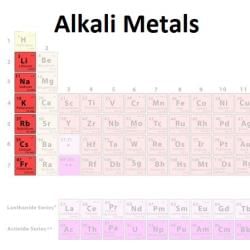
| Group-1 Elements: Alkali Metal 8 pages | |
| Important Compounds of Sodium 6 pages | |
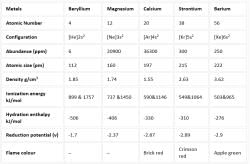
| Group-2 Elements: Alkaline Earth Metals 10 pages | |
| NCERT Solutions: The s-Block Elements 22 pages | |
| Question Bank: The s-Block Elements 14 pages | |
| Question Bank (Solutions): The s-Block Elements 9 pages | |
| Important Compounds of Calcium 10 pages | |
| Biological Importance of Na, K, Mg & Ca 3 pages | |
| Anomalous Properties of Lithium & Beryllium 3 pages | |
| NCERT Textbook: The s-Block Elements (Old NCERT) 16 pages | |
| Characteristics of Compounds of the Alkali Metals 3 pages | |
| Characteristics of Compounds of the Alkaline Earth Metals 8 pages | |
| Quick Revision: The s-Block Elements 2 pages | |
| Index: The s-block elements 1 page | |
Comprehensive Study Material for CBSE Class 11 Chemistry - Topic-wise Notes
Our topic-wise study material is designed to support every stage of a student's preparation - from first reading a chapter to doing a final review before exams. The notes go beyond plain definitions and include explanations of underlying principles, worked examples, and connections between related topics such as the relationship between atomic structure and chemical bonding, or between thermodynamics and equilibrium. Chapters covering Organic Chemistry - including classification, nomenclature, isomerism, and reaction mechanisms - are presented in a logical sequence that builds understanding progressively. This CBSE-aligned study material is structured to ensure that students not only memorize facts but genuinely understand the subject well enough to apply it in any question format.
p Block Elements
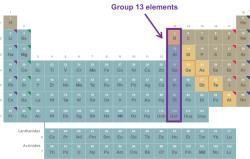
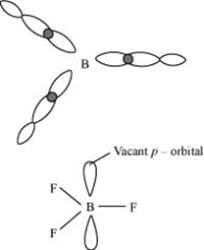
| Group-13 Elements: Boron Family 11 pages | |
| NCERT Textbook: The p-Block Elements (Group 13-14) 19 pages | |
| NCERT Solutions: The p-Block Elements 19 pages | |
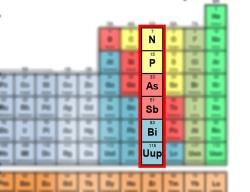
| Group 15 Elements: Nitrogen Family 9 pages | |
| Mind Map: Structure of Atom 1 page | |
| Group-14 Elements: Carbon Family 10 pages | |
| Group-16 Elements: Oxygen Family 8 pages | |
| Group 17 Elements: Halogens Family 10 pages | |
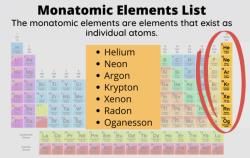
| Group-18: Inert Gases 4 pages | |
| Quick Revision: The p-Block Elements 9 pages | |
| Index: The p-Block elements 1 page | |
Introduction to Organic Chemistry
| Introduction to Organic Chemistry 2 pages | |
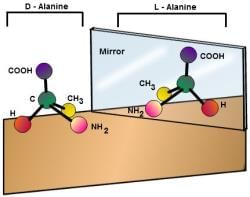
| Optical Isomerism 18 pages | |
| NCERT Textbook: Some Basic Principles & Techniques 39 pages | |
| NCERT Solutions: Organic Chemistry - Some Basic Principles & Techniques 29 pages | |
| Quick Revision: Organic Chemistry - Some basic Principles & Techniques 7 pages | |
| Nomenclature of Organic Compounds 11 pages | |
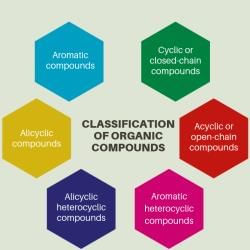
| Classification of Organic Compounds 3 pages | |
| Geometrical Isomerism 3 pages | |
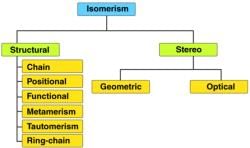
| Structural Isomerism 13 pages | |
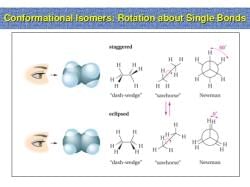
| Conformational Isomerism 11 pages | |
| Covalent Bond Fission: Homolytic & Heterolytic 7 pages | |
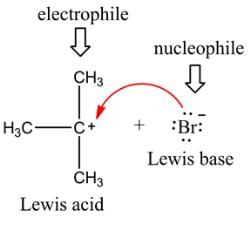
| Electrophiles & Nucleophiles 2 pages | |
| Acidity & Basicity of Organic Compounds 10 pages | |
| Nomenclature of Organic Compounds having Functional Groups 5 pages | |
| Practical Organic Chemistry Tips Lab Experiments 4 pages | |
| Methods of Purification of Organic Compounds 9 pages | |
| Short & Long Answer Questions: Organic Chemistry - Some Basic Principles & Techniques 9 pages | |
| Fundamental Concepts in Organic Reaction Mechanism 11 pages | |
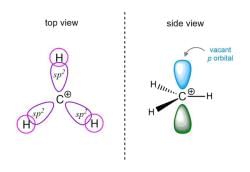
| Carbocation & Carbanions 6 pages | |
| Qualitative & Quantitative Analysis of Organic Compounds 7 pages | |
Hydrocarbons
| Hydrocarbons: Classification, Properties, Preparation & Uses 10 pages | |
| Alkanes: Preparation, Properties & Conformations 13 pages | |
| Alkenes: Nomenclature, Properties & Preparation 11 pages | |
| NCERT Solutions: Hydrocarbons 10 pages | |
| Physical Properties of Alkanes 5 pages | |
| Aromatic Hydrocarbons: Nomenclature, Properties, Reactions, Uses & Polycyclic Aromatic Hydrocarbons 6 pages | |
| Question Bank: Hydrocarbons 14 pages | |
| Question Bank (Solutions): Hydrocarbons 10 pages | |
| Short & Long Answer Questions: Hydrocarbons 10 pages | |
| Alkynes: Nomenclature, Properties & Preparation 8 pages | |
| Petrochemical: Petroleum, LPG & CNG 1 page | |
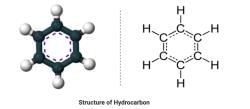
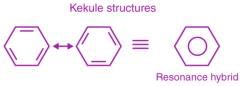
| Benzene: Resonance, Aromaticity, Preparation, & Properties 2 pages | |
| NCERT Textbook: Hydrocarbons 33 pages | |
| Isomerism in Alkanes, Alkenes & Alkynes 6 pages | |
| Quick Revision: Hydrocarbons 16 pages | |
Environmental Chemistry
| NCERT Textbook: Environmental Chemistry 17 pages | |
| NCERT Solutions: Environmental Chemistry (Old NCERT) 12 pages | |
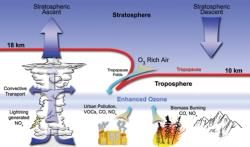
| Detailed Overview: Environmental Chemistry 16 pages | |
| Water, Soil & Radioactive Pollution, Green Chemistry 6 pages | |
| Quick Revision: Environmental Chemistry 3 pages | |
Sample Question Paper
| Sample Question Paper 1: Chemistry, Class 11 6 pages | |
| Sample Solution Paper 1: Chemistry, Class 11 12 pages | |
| Sample Question Paper 2: Chemistry, Class 11 6 pages | |
| Sample Solution Paper 2: Chemistry, Class 11 12 pages | |
| Sample Question Paper 3: Chemistry, Class 11 6 pages | |
| Sample Solution Paper 3: Chemistry, Class 11 13 pages | |
| Sample Question Paper 4: Chemistry, Class 11 6 pages | |
| Sample Solution Paper 4: Chemistry, Class 11 16 pages | |
| Past Year Paper with solution: Chemistry, 2019, Class 11 12 pages | |
| Past Year Paper with solution: Chemistry, 2018, Class 11 15 pages | |
| Past Year Paper with solution: Chemistry, 2017, Class 11 13 pages | |
Mindmap
| Mind Map: Some Basic Concepts Of Chemistry 1 page | |
| Mind Map: Structure of Atom 1 page | |
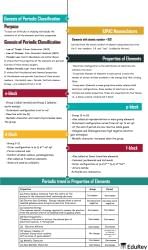
| Mind Map: Classification of Elements & Periodicity in Properties 1 page | |
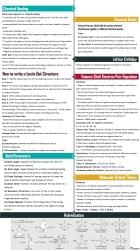
| Mind Map: Chemical Bonding and Molecular Structure 1 page | |
| Mind Map: States of matter: Gases, Liquids and Solids (Old NCERT) 1 page | |
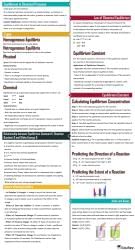
| Mind Map: Equilibrium 1 page | |
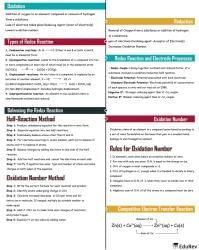
| Mind Map: Redox Reaction 1 page | |
| Mind Map: Thermodynamics 1 page | |
| Mind Map: The p-block Elements 1 page | |
| Mind Map: s-block Elements (Old NCERT) 1 page | |
| Mind Map: Hydrogen 1 page | |
| Mind Map: Organic Chemistry: Some basic Principles and Techniques 1 page | |
| Mind Map: Environment Chemistry 1 page | |
| Mind Map: Hydrocarbons 1 page | |
NCERT Exemplar
| NCERT Exemplar: Some Basic Concepts of Chemistry & Stoichiometry 19 pages | |
| NCERT Exemplar: Chemical Bonding & Molecular Structure 10 pages | |
| NCERT Exemplar: Classification of Elements & Periodicity in Properties 13 pages | |
| NCERT Exemplar: Structure of Atom 21 pages | |
| NCERT Exemplar: Thermodynamics 26 pages | |
| NCERT Exemplar: Thermodynamics - 2 13 pages | |
| NCERT Exemplar: Redox Reactions 16 pages | |
| NCERT Exemplar: Equilibrium 26 pages | |
| NCERT Exemplar: Hydrogen (Old NCERT) 24 pages | |
| NCERT Exemplar: The s-Block Elements - 1 (Old NCERT) 8 pages | |
| NCERT Exemplar: The p-Block Elements (NEET) 25 pages | |
| NCERT Exemplar: Hydrocarbons 21 pages | |
| NCERT Exemplar: Some Basic Principles & Techniques 34 pages | |
| NCERT Exemplar: Environmental Chemistry (Old NCERT) 24 pages | |