Prepare for AI & ML Exam
with EduRev
AI & ML syllabus





















What Is Artificial Intelligence and Machine Learning? Core Concepts Explained
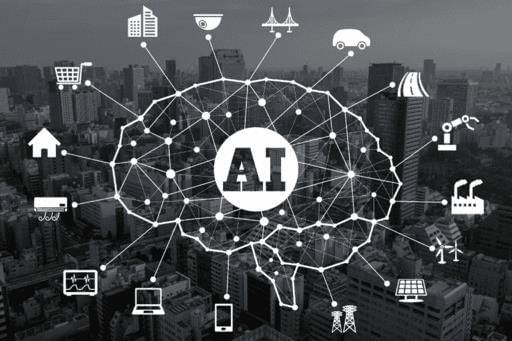
Artificial Intelligence and Machine Learning are two of the most talked-about technologies in 2025 - and for good reason. AI is the broader discipline focused on building systems that can simulate human-like reasoning, learning, and decision-making. Machine Learning, a powerful subset of AI, enables systems to learn directly from data and improve over time without being explicitly programmed for every task.
Going a step further, Deep Learning is a subset of ML that uses multi-layered neural networks to model complex patterns - driving breakthroughs in image recognition, natural language processing, and generative AI. Understanding the fundamentals of artificial intelligence and machine learning is the first step for anyone serious about building a career in this field.
Key Types of Machine Learning
- Supervised Learning: The model trains on labeled data - used in classification and regression tasks.
- Unsupervised Learning: The model discovers patterns in unlabeled data - used in clustering and dimensionality reduction.
- Reinforcement Learning: An agent learns through interaction, earning rewards or penalties based on actions.
If you want a solid grounding in these concepts, start with the Artificial Intelligence: A Fundamental Guide - an excellent resource covering the core building blocks of AI from scratch.
Best AI and Machine Learning Courses for Beginners and Professionals
With so many options available, choosing the best AI and ML course can be overwhelming - especially for students and working professionals in India who want structured, exam-ready content. EduRev offers a curated set of AI and machine learning courses designed for both beginners and advanced learners.
| Course | Best For |
|---|---|
| Machine Learning with Python | Beginners starting with ML |
| Machine Learning with Java | Enterprise and Java developers |
| TensorFlow: Learning Made Easy | Deep learning practitioners |
| PyTorch: A Complete Guide | Research-oriented learners |
| Apache Spark: Master Machine Learning | Big data and ML engineers |
Whether you are appearing for an AI ML certification exam or simply looking to upskill, these courses on EduRev cover the right topics in a progressive, learner-friendly manner.
Machine Learning with Python vs Java: Which Language Should You Learn First?
This is one of the most common questions among students preparing for AI ML exams. The honest answer depends on your goals and background.
Python is the clear frontrunner for most learners. Its simple syntax, combined with a rich ecosystem of libraries like NumPy, Pandas, Scikit-learn, and Matplotlib, makes it the preferred choice for machine learning with Python for beginners. Nearly all major ML frameworks - TensorFlow, PyTorch, and PySpark - offer robust Python support.
Java, on the other hand, is preferred in enterprise environments where scalability and performance are critical. Libraries such as Weka, Deeplearning4j, and MOA make machine learning with Java a viable option. Java also integrates naturally with Apache Spark's Java API, making it relevant for large-scale distributed systems.
Explore the Torch: A Practical Hands-On Tutorial to understand low-level deep learning concepts that underpin modern frameworks like PyTorch.
If you are new to the field, start with Python. If you are a Java developer looking to integrate ML into enterprise systems, the machine learning with Java tutorial on EduRev is the right place to begin.
Getting Started with PyTorch and TensorFlow: A Beginner's Comparison
PyTorch and TensorFlow are the two dominant deep learning frameworks in 2025. Both are open-source and widely used, but they differ in philosophy and use case.
PyTorch vs TensorFlow: Key Differences
| Feature | PyTorch | TensorFlow |
|---|---|---|
| Developed by | Meta AI (Facebook) | |
| Computation Graph | Dynamic (define-by-run) | Static (with dynamic option via Keras) |
| Primary Use | Academic research, experimentation | Production deployment, industry |
| High-Level API | PyTorch Lightning | Keras (default in TF 2.x) |
PyTorch's dynamic computation graph makes debugging intuitive, which is why it remains the framework of choice for most academic researchers. TensorFlow, backed by Google, excels in deploying models at production scale, especially on cloud platforms like Google Cloud's Vertex AI.
Get started with the PyTorch: A Complete Guide for a thorough walkthrough, or check out TensorFlow: Learning Made Easy if deployment and industry applications interest you more.
How Apache Spark Is Used for Large-Scale Machine Learning
Apache Spark is an open-source, distributed computing framework maintained by the Apache Software Foundation. When datasets grow beyond what a single machine can handle, Spark becomes essential. Its built-in machine learning library, MLlib, is designed specifically for large-scale ML tasks across distributed clusters.
Spark supports APIs in Python (PySpark), Java, Scala, and R - making the Apache Spark ML pipeline accessible across multiple programming environments. Indian data engineers and ML practitioners working in industries like e-commerce, banking, and telecom increasingly rely on Spark for big data processing.
For a comprehensive understanding, the Apache Spark: Master Machine Learning course on EduRev is the best Apache Spark course for machine learning available.
Top Career Opportunities in Artificial Intelligence and Machine Learning
AI and ML continue to rank among the fastest-growing technology fields globally in 2025. For Indian professionals, this translates into significant job opportunities across sectors. Here are some of the most sought-after roles:
- Machine Learning Engineer - Builds and deploys ML models in production environments.
- Data Scientist - Extracts insights from data using statistical and ML techniques.
- AI Research Scientist - Works on advancing the theoretical foundations of AI.
- MLOps Engineer - Manages the deployment, monitoring, and lifecycle of ML models.
The rise of Generative AI and Large Language Models (LLMs) has expanded the scope of AI ML career opportunities even further. Managed cloud services from AWS SageMaker, Google Vertex AI, and Azure ML are now standard tools in the industry toolkit. Hands-on knowledge of frameworks covered in the Machine Learning with Python course directly strengthens your employability.
Essential Tools, Libraries, and Frameworks Every AI and ML Learner Must Know
Mastering the right machine learning frameworks can make all the difference in your AI ML certification journey. Here is a concise reference of must-know tools:
- NumPy & Pandas - Data manipulation and numerical computing in Python.
- Scikit-learn - Industry-standard library for classical ML algorithms.
- TensorFlow & Keras - End-to-end deep learning framework for model building and deployment.
- PyTorch - Preferred framework for research and dynamic model experimentation.
- Apache Spark MLlib - Scalable ML for large datasets in distributed environments.
- Weka & Deeplearning4j - Key libraries for machine learning with Java in enterprise contexts.
The Machine Learning with Java course covers enterprise-focused tools, while the Testing 55 resource on EduRev provides additional practice material to sharpen your preparation.
How to Prepare for AI and ML Certification Exams Effectively
Preparing for an AI ML exam requires a structured approach. Here are practical tips that students appearing for AI ML certification exams in India should keep in mind:
- Build conceptual clarity first - Understand supervised, unsupervised, and reinforcement learning before diving into frameworks.
- Hands-on practice is non-negotiable - Write code daily using Python or Java to reinforce theoretical knowledge.
- Study framework-specific concepts - Know how PyTorch and TensorFlow handle model training, validation, and deployment differently.
- Focus on overfitting, regularization, and hyperparameter tuning - These topics appear frequently in ML exams.
- Use structured study material - Access AI ML study material and notes available on EduRev for focused preparation.
The Torch: A Practical Hands-On Tutorial is especially useful for understanding the foundations of deep learning frameworks before moving to PyTorch.
Key Topics Covered in Artificial Intelligence and Machine Learning Courses
A well-structured AI and machine learning course typically covers the following core areas, all of which are relevant for both certification exams and professional practice:
- Data preprocessing, feature engineering, and data pipelines
- Model training, validation, testing, and evaluation metrics
- Neural network architectures - CNNs, RNNs, and Transformers
- Overfitting, underfitting, and regularization techniques
- Hyperparameter tuning and model optimization strategies
- Model deployment and MLOps fundamentals
- Distributed ML using Apache Spark MLlib
Whether you are a beginner looking to learn machine learning from scratch or an experienced professional preparing for an AI ML certification, EduRev's course library - from the Artificial Intelligence: A Fundamental Guide to the advanced Apache Spark: Master Machine Learning course - gives you a complete, structured path to master AI and ML in 2025.
AI & ML FAQs
| 1. What is the difference between artificial intelligence and machine learning? |  |
| 2. How do neural networks actually work in machine learning? | |
| 3. What's the easiest way to start learning AI and machine learning for beginners? | |
| 4. Why is training data so important in machine learning models? | |
| 5. What are the main types of machine learning approaches I should know? | |
| 6. How do I know if my AI model is actually working well or just getting lucky? | |
| 7. What's overfitting and why does it ruin machine learning projects? | |
| 8. How do convolutional neural networks help with image recognition tasks? | |
| 9. What does it mean when someone talks about deep learning in AI? | |
| 10. Why do machine learning engineers worry so much about data bias? | |