Prepare for Year 4 Exam
with EduRev
Year 4 syllabus


All Courses





















| Why students choose EduRev for their Year 4 Exam | 4.6  (150K+ ratings) (150K+ ratings) |
 (150K+ ratings)

What Is Year 4 Curriculum and Why It Plays a Crucial Role in Your Child's Development
Year 4 is a pivotal stage in a child's academic journey, typically covering students aged 8 to 9 years. In India, this corresponds to Class 4, taught under NCERT or respective State Board frameworks. Globally, it falls under Key Stage 2 in the UK and the Australian Curriculum's primary learning structure. At this level, children move beyond basic literacy and numeracy into more structured, concept-based learning across multiple subjects.
The Year 4 curriculum is designed to build foundational skills in mathematics, English, science, social studies, and digital literacy - all while nurturing creativity, values, and physical well-being. Getting this foundation right sets children up for academic success in the years ahead. Explore our Multi Skill Foundation course to give your child a well-rounded head start across all learning areas.
Best Online Courses for Year 4 Students to Build Strong Academic Foundations
Finding the right learning resources for your child can be overwhelming. EduRev brings together a carefully curated set of Year 4 online courses that cover every important subject area - from maths and English to computer science, health education, and even music. These courses support holistic learning for primary school students and complement classroom instruction beautifully.
| Subject Area | Course Available on EduRev |
|---|---|
| Mathematics | Mathematics for Year 4 |
| Humanities & Social Science | Humanities and Social Science for Year 4 |
| Health & Physical Education | Health and Physical Education for Year 4 |
| Computer Science | Computer Science |
| Value Education | Value Education |
Whether your child needs extra practice at home or wants to explore subjects beyond the classroom, these Year 4 learning resources on EduRev are a great place to start.
Year 4 Mathematics: How to Master Numbers, Fractions, and Problem-Solving Skills
Year 4 Mathematics covers a broad range of concepts - multiplication, division, fractions, decimals, basic geometry (shapes, angles, perimeter, and area), and data interpretation. Maths problem solving for kids becomes increasingly important at this stage, as children are expected to apply concepts rather than simply memorise procedures.
Building strong mental maths habits early pays off tremendously. The Mathematics for Year 4 course on EduRev is structured to help students develop confidence with numbers and tackle progressively challenging problems.
Key Maths Topics at Year 4 Level
- Multiplication tables and division strategies
- Understanding and comparing fractions and decimals
- Perimeter, area, and basic shape properties
- Reading and interpreting simple graphs and data
- Mental maths for Year 4 - quick calculation techniques
For additional maths practice, the Aptitude Explorer with Worksheets course provides structured exercises that reinforce core maths and reasoning skills in an engaging way.
How Vedic Maths and Aptitude Reasoning Sharpen Mental Math Abilities in Young Learners
One of the most exciting tools available to young learners today is Vedic Maths - an ancient system of mathematics systematized by Jagadguru Swami Sri Bharati Krishna Tirthaji Maharaja. Based on 16 Sutras and 13 sub-sutras derived from Indian Vedic scriptures, Vedic Maths for kids simplifies complex calculations dramatically. Children who learn these techniques often find arithmetic far less intimidating and significantly faster.
The Improve Your Calculations: Vedic Maths (English) course is an excellent starting point for any young learner looking to master mental maths tricks. Complementing this with the Aptitude Reasoning course helps children develop critical thinking and pattern recognition - foundational skills that prove valuable in competitive examinations later in their academic journey.
Why Aptitude and Reasoning Matter Early
- Builds logical thinking and spatial awareness
- Prepares students for talent search and olympiad-style exams
- Improves performance across all subjects, not just maths
- Encourages structured problem-solving approaches
Cursive Writing and Reading Comprehension: Essential English Skills for Year 4 Kids
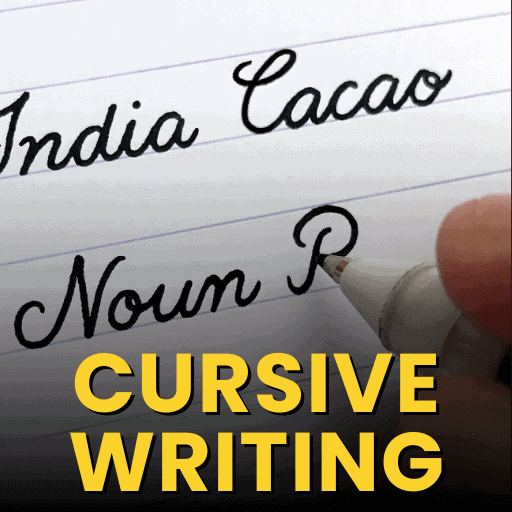
English language skills at Year 4 go well beyond grammar and spelling. Cursive writing for kids is typically refined at this stage, improving fine motor skills, letter formation, and writing fluency. Studies in education have consistently shown that children who practice cursive writing tend to develop better reading and composition skills overall.
Start with the Cursive Writing for English course or explore the Cursive Writing Course - Improve Your Handwriting for a more detailed, step-by-step approach to improving handwriting for kids.
Reading comprehension for junior classes focuses on identifying main ideas, drawing inferences, understanding vocabulary in context, and summarising passages. These skills are essential across all subjects. The Reading Comprehension for Junior Classes course on EduRev addresses these skills systematically. Pair it with the Dictionary Words course to help children expand their vocabulary steadily.
Computer Science and PowerPoint for Year 4: Building Digital Literacy from an Early Age
Digital literacy for kids is no longer optional - it is an essential life skill. Many national curricula, including Australia's Digital Technologies strand, mandate computer science learning from the primary years. At Year 4, students are introduced to basic coding logic, internet safety, and productivity tools.
The Computer Science course on EduRev introduces young learners to the fundamentals of computing in a clear, age-appropriate manner. Once children are comfortable with basic concepts, they can progress to learning presentation skills through the PowerPoint: Become an Expert course - a highly practical skill that supports school projects and future academic work alike.
Fun Learning for Kids: Sudoku, Crossword Puzzles, and Educational Games That Boost Brainpower
Learning does not always have to feel like studying. Brain games for primary school students - such as Sudoku and crossword puzzles - are excellent tools for building concentration, logical thinking, and vocabulary in an enjoyable way.
| Brain Game | Key Benefits | Course Link |
|---|---|---|
| Sudoku | Logic, concentration, patience | Master Sudoku: From Beginner to Expert |
| Crossword Puzzles | Vocabulary, spelling, general knowledge | Crossword Puzzles: Solve like a Pro |
| Fun Games | Engagement, coordination, teamwork | Fun with Games |
The Fun Learning with Games course takes this a step further by integrating educational concepts within game-based activities - making learning genuinely enjoyable for Year 4 kids.
Exploring Indian Epics: Ramayana and Mahabharata Stories to Inspire Young Minds
Indian mythology stories for kids hold timeless value. The Ramayana, attributed to the sage Valmiki, narrates the life of Prince Rama - his righteousness, courage, and ultimate victory over the demon king Ravana. The Mahabharata, composed by the sage Vyasa, is the world's longest epic poem and contains the Bhagavad Gita, conveying profound lessons about duty, justice, and moral choices.
Both epics are widely used in primary education in India to connect children with their cultural heritage while teaching important values. Explore The Legendary Tale of Ramayan: Heroes, Villains, and Divine and Mahabharat Tales: The Battle of Good and Evil on EduRev to bring these stories alive for your child.
Health, Physical Education, and Value Education: Raising Well-Rounded Year 4 Students
Academic excellence is only one piece of the puzzle. The WHO recommends at least 60 minutes of moderate-to-vigorous physical activity daily for children aged 5-17. Year 4 students who engage regularly in physical education develop better concentration, emotional regulation, and teamwork skills alongside physical fitness.
The Health and Physical Education for Year 4 course covers physical movement, personal health, hygiene, and emotional well-being in an age-appropriate, structured format. Equally important is character building - the Value Education course instils empathy, responsibility, and social awareness, all of which are emphasized in India's National Education Policy (NEP) 2020.
For children who also enjoy creative pursuits, EduRev offers beginner-friendly music courses including The Ultimate Guitar Course: From Beginner to Advanced and Piano Tutorials Course: Beginners to Advance - wonderful outlets for self-expression and cognitive development alike.
Humanities and Social Science for Year 4: Understanding the World Around Us
Humanities and Social Science (HASS) at Year 4 encourages children to explore history, geography, civics, and how communities function. Students examine topics such as local history, environmental geography, and the ways in which people interact with their world - building a sense of curiosity and social responsibility from an early age.
The Humanities and Social Science for Year 4 course on EduRev aligns with curriculum expectations and presents concepts in a manner that is engaging and accessible for young learners. To round out your child's overall development, do explore the complete suite of Year 4 courses available on EduRev - from core academics to creative skills - ensuring every dimension of your child's potential is nurtured.
Year 4 FAQs
| 1. What should I study for Year 4 exams to get good marks? |  |
| 2. How can I manage my time better for Year 4 schoolwork and revision? | |
| 3. What are the best ways to improve English reading and writing skills in Year 4? | |
| 4. How do I solve Year 4 maths problems without getting confused? | |
| 5. Why am I struggling with science topics in Year 4 and how can I improve? | |
| 6. What subjects do I need to focus on most in Year 4? | |
| 7. How can I prepare better for Year 4 tests and check my readiness? | |
| 8. What writing skills should Year 4 students have and how do I practice them? | |
| 9. How do Year 4 students remember facts better for exams without just memorising? | |
| 10. What should I do if I'm falling behind in Year 4 subjects compared to classmates? | |
 One subscription to unlock all Year 4 Courses View Pricing Plans Starting @ $1 per month | |


