Prepare for Entrepreneurship
with EduRev
Entrepreneurship syllabus


All Courses


























| Why students choose EduRev for their Entrepreneurship Exam | 4.6  (150K+ ratings) (150K+ ratings) |
 (150K+ ratings)

What is Entrepreneurship and Why Should You Learn It in Today's World?
Entrepreneurship is the process of designing, launching, and running a new business - typically starting small and scaling it into something significant. In 2025, entrepreneurship education has become one of the fastest-growing online learning categories, with thousands of aspiring founders across India looking to build the next big startup.
Whether you are a college student, a working professional, or someone with a business idea sitting in your notebook, learning entrepreneurship online gives you a structured path to turn that idea into reality. From understanding business models to mastering digital marketing, the skill set of an entrepreneur is broader - and more learnable - than ever before.
If you are just getting started, exploring the Basic Fundamentals of Business course on EduRev is an excellent first step to build your foundation.
How to Start a Startup: Step-by-Step Guide for First-Time Founders
Starting a startup is not just about having a great idea - it is about executing systematically. Here is a step-by-step breakdown that every first-time founder should follow:
- Identify a real problem that people face and are willing to pay to solve.
- Validate your idea by talking to potential customers before writing a single line of code or investing money.
- Build an MVP (Minimum Viable Product) - a simple version of your product to test the market.
- Find product-market fit - the stage where your product genuinely satisfies market demand.
- Scale your operations through hiring, marketing, and fundraising.
A scalable business model is what separates a startup from a traditional small business. If you want a comprehensive, structured approach to this journey, the Starting a Startup course on EduRev walks you through each of these stages in detail - ideal for anyone looking for a solid starting a startup guide.
Y Combinator Startup School: Everything You Need to Know
Y Combinator (YC) is widely regarded as the world's most prestigious startup accelerator, founded in 2005. Its portfolio includes companies like Airbnb, Dropbox, Stripe, Reddit, and Coinbase - with a combined valuation exceeding $600 billion as of 2025. Learning from YC's frameworks is as close as you can get to world-class startup mentorship without being in Silicon Valley.
| Program | Format | Best For |
|---|---|---|
| Startup School by Y Combinator | Self-paced online program | Aspiring founders at any stage |
| How to Start a Startup (Stanford Lecture Series) | Lecture-based course | Founders wanting deep strategic insights |
You can access the Startup School by Y Combinator (Must for Entrepreneurs) and the full Startup School Online by Y Combinator on EduRev. For a more academic approach, the How to Start a Startup by Y Combinator (Stanford Class) covers product, team, fundraising, and growth through lectures by YC partners and successful founders.
How to Use ChatGPT for Business and Entrepreneurship
ChatGPT, the large language model developed by OpenAI (publicly released in November 2022), has fundamentally changed how entrepreneurs work. As of 2025, the most advanced publicly available model is GPT-4o, supporting text, image, and voice inputs. For Indian entrepreneurs especially, ChatGPT offers powerful capabilities at a fraction of the cost of hiring full teams.
Key Ways Entrepreneurs Use ChatGPT
- Drafting and refining business plans
- Writing marketing copy and social media content
- Customer service automation and chatbot scripting
- Market research summaries and competitor analysis
- Brainstorming product ideas and naming conventions
- Code generation for MVPs and internal tools
Learning the best ChatGPT prompts for business can dramatically improve your productivity. The ChatGPT for Everything: How to Use ChatGPT? course on EduRev is a practical, beginner-friendly resource to get started with using ChatGPT for entrepreneurs effectively.
Best Books for Entrepreneurs: Must-Read Summaries and Key Takeaways
Reading widely is one habit that separates good founders from great ones. However, not every entrepreneur has time to read 300-page books from cover to cover. That is where curated summaries become invaluable. Here are five must-read books for entrepreneurs that every aspiring founder should know:
| Book | Author | Core Idea |
|---|---|---|
| The Lean Startup | Eric Ries | Build-Measure-Learn loop and MVP |
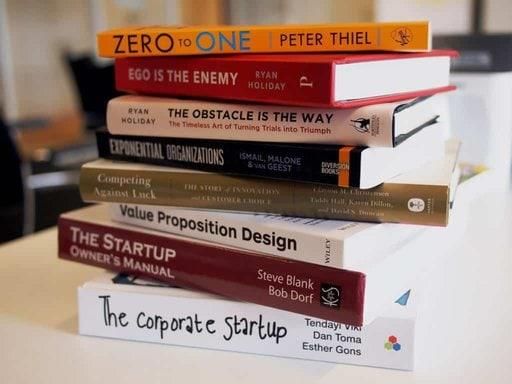
| Zero to One | Peter Thiel | Build monopolies, create something genuinely new |
| The Hard Thing About Hard Things | Ben Horowitz | Real challenges of running a startup |
| Good to Great | Jim Collins | What makes companies transition from average to exceptional |
| Start with Why | Simon Sinek | Purpose-driven leadership and business |
Rather than reading each book individually, you can access structured summaries through the Summaries: Must Read Books for Entrepreneurs course on EduRev - saving you time while delivering all the key insights.
Complete Guide to Facebook Ads and Google Adsense for Entrepreneurs
Knowing your product is only half the battle - getting it in front of the right audience is equally critical. Two of the most widely used digital monetization and advertising tools for entrepreneurs are Facebook Ads and Google AdSense.
Facebook Ads for Beginners
Meta's advertising platform reaches over 3 billion monthly active users across Facebook, Instagram, Messenger, and WhatsApp as of 2025. Key ad formats include image ads, video ads, carousel ads, and lead generation ads. For founders running lean budgets, understanding Facebook advertising deeply can significantly reduce customer acquisition costs. Start your journey with the Facebook Ads: Beginner to Expert Level course on EduRev.
Google AdSense for Content Creators and Entrepreneurs
Google AdSense is a free program that allows publishers - bloggers, website owners, and YouTubers - to earn revenue by displaying targeted ads. AdSense works on a CPC (Cost Per Click) and CPM (Cost Per Mille) model, and Google pays out once your account reaches a $100 minimum threshold. For entrepreneurs building content-driven businesses, the Google Adsense Training course covers everything from setup to maximising earnings.
Stocks, Bonds, Equity and Business Valuation: Core Concepts Explained
Every founder eventually needs to understand the financial landscape - whether you are raising a seed round, offering ESOPs to your team, or evaluating acquisition offers. Here are the core concepts:
- Stocks represent ownership (equity) in a company. When a company goes public, it issues shares through an IPO.
- Bonds are debt instruments where investors lend money to a company or government in exchange for interest payments.
- Equity in startups refers to ownership stakes held by founders, investors, and employees.
- Pre-money valuation is a company's value before new investment; post-money valuation includes the new capital received.
Common startup valuation methods include Discounted Cash Flow (DCF) Analysis, Comparable Company Analysis (Comps), the Venture Capital (VC) Method, and the Berkus Method for pre-revenue startups. For a complete understanding, explore the Stocks, Bonds, Equity and Valuation: Complete Knowledge course on EduRev.
Successful Entrepreneur Stories That Every Aspiring Founder Must Know
Nothing fuels an entrepreneur's mindset quite like real startup success stories. Here are a few journeys every aspiring Indian founder should study:
- Elon Musk - co-founded Zip2 and X.com (later PayPal), then built Tesla and SpaceX, which became the first private company to send humans to the International Space Station.
- Jeff Bezos - founded Amazon in 1994 as an online bookstore; it grew into the world's largest e-commerce and cloud computing company.
- Mark Zuckerberg - co-founded Facebook from his Harvard dorm room in 2004; Meta is now one of the most valuable companies globally.
- Brian Chesky - co-founded Airbnb, disrupting the hospitality industry through peer-to-peer home sharing before going public in December 2020.
These stories are not just inspiring - they carry practical lessons about resilience, pivoting, and building great teams. Explore the Successful Entrepreneur Stories & Startup Journey course on EduRev to learn from these journeys in a structured format.
Big Data and Business Analysis: A Beginner's Introduction for Entrepreneurs
In 2025, data is one of the most valuable assets a business can have. Big Data refers to extremely large datasets that cannot be processed using traditional tools. For entrepreneurs, understanding data basics can mean the difference between guessing and making informed decisions.
The 5 Vs of Big Data
- Volume - the scale of data generated
- Velocity - the speed at which data is created
- Variety - the different types of data (structured, unstructured)
- Veracity - the accuracy and trustworthiness of data
- Value - the usefulness and insights derived from data
Popular Big Data tools include Apache Hadoop, Apache Spark, Google BigQuery, and Amazon Redshift. For entrepreneurs wanting a foundation in data-driven decision-making, the Big Data & Analysis Tutorial: Introduction course is a great starting point.
Best Online Entrepreneurship Courses to Build a Successful Business
With so many resources available, choosing the right entrepreneurship course can feel overwhelming. EduRev brings together a curated set of courses that cover every stage of the entrepreneurial journey - from ideation to scaling.
Whether you are looking for startup basics for beginners, advanced business fundamentals, or specialized skills like digital advertising and financial valuation, EduRev has structured learning paths to help you grow. The best part is that these courses are designed to be practical, self-paced, and directly applicable to real-world business challenges.
Begin your entrepreneurship journey today by exploring the full range of courses available on EduRev and taking that first step toward building something of your own.
Entrepreneurship FAQs
| 1. What exactly is entrepreneurship and why do people keep saying it's important? |  |
| 2. What is the difference between an entrepreneur and a businessman? | |
| 3. What are the main characteristics of a successful entrepreneur? | |
| 4. How do I write a business plan for my entrepreneurship project? | |
| 5. What are the different types of entrepreneurship I should know about? | |
| 6. What is the difference between an idea and an opportunity in entrepreneurship? | |
| 7. Is there a way to remember all the entrepreneurship terms easily before my exam? | |
| 8. What is social entrepreneurship and how is it different from a regular business? | |
| 9. How do entrepreneurs usually raise money to start their business? | |
| 10. What does risk-taking mean in entrepreneurship and why is it so important? | |
| 11. How is entrepreneurship different from intrapreneurship? | |
| 12. What are the steps involved in the entrepreneurial process? | |
| 13. What government schemes in India support new entrepreneurs? | |
| 14. What is the role of innovation in entrepreneurship and how do I explain it in an exam answer? | |
| 15. How do I start preparing for my entrepreneurship exam if I have only two weeks left? | |
 One subscription to unlock all Entrepreneurship Courses View Pricing Plans Starting @ $1 per month | |


