Prepare for Database Management
with EduRev
Database Management syllabus



All Courses for Database Management























What Is Database Management and Why Is It a High-Demand IT Skill?
A Database Management System (DBMS) is software that allows users to create, store, retrieve, and manipulate data in a structured and efficient manner. In today's data-driven world, every application - from a simple e-commerce website to complex banking systems - depends on a well-designed database at its core.
For Indian IT professionals and students, database management has become one of the most sought-after skills in the job market. Companies across Bengaluru, Hyderabad, Pune, and other tech hubs actively hire professionals with expertise in relational database management systems and NoSQL databases. Whether you are a fresher or an experienced developer, investing in a solid database management course can significantly boost your career prospects.
- DBMS types include Relational (RDBMS) - using structured tables and SQL - and Non-Relational (NoSQL) systems supporting document, key-value, column-family, and graph data models.
- Core concepts like ACID properties (Atomicity, Consistency, Isolation, Durability) and database normalization are fundamental to understanding how databases ensure data integrity.
- Database indexing and query optimization are critical skills for any aspiring Database Administrator (DBA).
SQL vs NoSQL: Key Differences Every Database Learner Must Know
One of the first decisions you'll face in your database journey is choosing between SQL and NoSQL. Understanding their core differences will help you pick the right tool for any project.
| Feature | SQL (Relational) | NoSQL (Non-Relational) |
|---|---|---|
| Data Structure | Tables with rows and columns | Documents, key-value, graph, column-family |
| Schema | Fixed, predefined schema | Flexible or schema-free |
| Scalability | Vertical scaling | Horizontal scaling |
| Best For | Structured, transactional data | Unstructured or semi-structured data |
| Examples | PostgreSQL, Microsoft SQL Server, MariaDB | MongoDB, Cassandra |
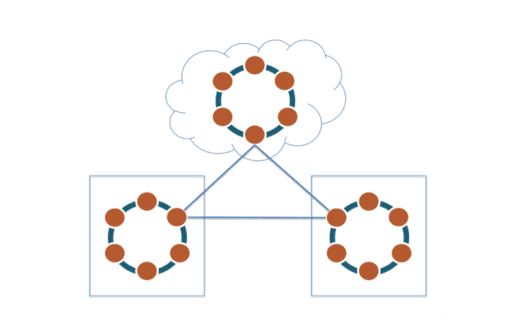
The CAP Theorem is a core concept for understanding NoSQL systems - it states that a distributed database can only guarantee two out of three properties: Consistency, Availability, and Partition Tolerance. This is essential knowledge for anyone appearing for database administration interviews or certifications in 2025.
Best Database Management Courses to Learn SQL, NoSQL, and Cloud Databases
If you are looking for the best database management course to build skills from scratch, EduRev offers a comprehensive collection covering everything from SQL basics to advanced NoSQL and cloud databases. Here is a quick overview of top courses available:
- Microsoft SQL for Beginners - ideal for those starting their SQL journey
- PostgreSQL: A Complete Tutorial - a thorough guide to one of the most popular open-source databases
- MariaDB Tutorials: A Fundamental Course - great for web developers working with the LAMP stack
- The Complete Developers Guide to MongoDB - a must for NoSQL MongoDB developers
- Cassandra: Learn and Master - for those targeting large-scale distributed systems
- Microsoft Azure: A-Z Guide - covering cloud database management end to end
These courses on EduRev are structured for both beginners and experienced learners, making it easier to progress at your own pace.
How to Learn SQL Server Administration: A Beginner's Complete Guide
Microsoft SQL Server is one of the most widely used enterprise-grade relational database systems globally, and mastering SQL Server administration opens doors to lucrative DBA roles. SQL Server supports Transact-SQL (T-SQL), Microsoft's extension of the SQL standard, used for querying, backup and recovery, performance tuning, and user access management.
Start your learning journey with the SQL Server Administration: Basic Tutorials course on EduRev, which covers all foundational concepts clearly. For learners who prefer Arabic-medium instruction, EduRev also offers the SQL Server Administration: Basic Tutorials (in Arabic) course.
Key Topics in SQL Server Administration
- Database creation, backup, and recovery strategies
- Performance tuning and query optimization
- OLTP (Online Transaction Processing) and OLAP workloads
- User access management and security best practices
MongoDB, Cassandra, and MariaDB: Understanding the Top NoSQL Database Systems
The NoSQL ecosystem is vast and each database system is designed for specific use cases. Here is a quick breakdown of three of the most popular ones:
MongoDB
MongoDB stores data in flexible, JSON-like BSON format and is ideal for content management systems, real-time analytics, and IoT applications. It supports horizontal scaling through sharding. Explore the complete MongoDB developer course on EduRev to master this technology.
Apache Cassandra
Originally developed at Facebook, Apache Cassandra is a distributed NoSQL database designed for high availability with no single point of failure. It uses CQL (Cassandra Query Language), syntactically similar to SQL, making the transition easier for SQL developers. Start mastering Cassandra database with a structured course on EduRev.
MariaDB
MariaDB is a community-developed fork of MySQL, created after Oracle acquired MySQL. It is fully compatible with MySQL and is commonly used in the LAMP stack for web applications. The MariaDB fundamental course on EduRev is a great starting point for beginners.
PostgreSQL vs Microsoft SQL: Which Relational Database Should You Learn First?
| Criteria | PostgreSQL | Microsoft SQL Server |
|---|---|---|
| License | Free, open-source | Proprietary (with free Express edition) |
| ACID Compliance | Yes | Yes |
| JSON Support | Advanced (JSON & JSONB) | Limited |
| Best For | Startups, open-source projects | Enterprise Windows environments |
PostgreSQL is an open-source object-relational database known for its ACID compliance, full-text search, and support for custom data types. It is maintained by the PostgreSQL Global Development Group. If you are keen to learn PostgreSQL thoroughly, the PostgreSQL complete tutorial on EduRev is an excellent resource.
For beginners new to SQL entirely, starting with Microsoft SQL for Beginners gives you a strong practical foundation in relational database concepts.
How Microsoft Azure Is Redefining Cloud-Based Database Management
Cloud database management is one of the fastest-growing areas in IT, and Microsoft Azure is at the forefront of this transformation. Azure offers a wide range of managed database services including Azure SQL Database, Azure Cosmos DB (a globally distributed multi-model NoSQL database), Azure Database for PostgreSQL, and Azure Database for MariaDB.
Azure Cosmos DB uniquely supports multiple data models - document, key-value, graph, and column-family - making it incredibly versatile. For Indian IT professionals aiming for cloud roles, getting certified in Azure is a major career differentiator in 2025. Begin your cloud journey with the Microsoft Azure A-Z Guide available on EduRev, which covers Azure database management comprehensively.
R Programming and Julia: Powerful Tools for Data Science and Database Analytics
Beyond traditional databases, data analytics tools like R and Julia are increasingly important for professionals working with large datasets.
R Programming for Data Science
R is a free, open-source language designed specifically for statistical computing and data analysis. Popular packages like ggplot2 (visualization), dplyr (manipulation), and caret (machine learning) make R indispensable in data science workflows. The Mastering R Programming: For Data Science and Analytics course on EduRev is highly recommended for analytics professionals.
Julia for Numerical Analysis
Julia, developed at MIT and first released in 2012, is designed for numerical analysis and computational science. It combines Python's ease of use with performance comparable to C and Fortran. If you work on scientific simulations or machine learning, the Julia Computer Language: Numerical Analysis and Computational Science course is a great resource.
Fortran for High-Performance Computing
Fortran remains relevant in computational physics, climate modeling, and aerospace engineering. EduRev offers both Introduction to Fortran Programming (Basic Level) and the Introduction to Fortran Programming (Advanced Level) for learners at different stages.
Top Career Paths in Database Administration and Data Management
Clearing a database management course and applying those skills professionally can lead to several rewarding career paths:
- Database Administrator (DBA) - manages, secures, and optimizes databases in enterprise environments
- Data Engineer - builds and maintains data pipelines and storage systems
- Cloud Database Architect - designs cloud-based database solutions on platforms like Azure
- Data Analyst / Data Scientist - uses tools like R and Julia alongside SQL for analytics
- Backend Developer - integrates databases like MongoDB, PostgreSQL, and MariaDB into applications
In India, DBA roles command attractive packages especially in BFSI, healthcare, and e-commerce sectors. Earning a database administration certification significantly strengthens your profile for these roles.
How to Choose the Right Database Management System for Your Project
Choosing the right DBMS depends on your project's specific needs. Here are key factors to consider:
- Data structure: If your data is highly structured and transactional, go with an RDBMS like PostgreSQL or SQL Server. For flexible or unstructured data, NoSQL options like MongoDB or Cassandra work better.
- Scalability needs: For applications requiring massive horizontal scaling, Cassandra and MongoDB are strong choices.
- Budget: PostgreSQL and MariaDB are open-source and free, while SQL Server and Azure services involve licensing or subscription costs.
- Ecosystem fit: If you are already working within Microsoft's ecosystem, Azure SQL Database and SQL Server integrate seamlessly.
- Team expertise: Choose a system your team can learn quickly - EduRev's structured courses make onboarding to any database technology much faster.
Whether you are a student preparing for a database management course or an IT professional looking to upskill, the right learning resources make all the difference. Explore the full range of database and programming courses on EduRev to build a skill set that is in high demand across the Indian and global IT industry in 2025.
Database Management FAQs
| 1. What exactly is a database and why do we need one? |  |
| 2. What's the difference between SQL and NoSQL databases for beginners? | |
| 3. How do primary keys and foreign keys actually work in database design? | |
| 4. What is normalisation and why do database experts keep talking about it? | |
| 5. Can you explain what ACID properties mean in simple terms? | |
| 6. What exactly happens during a database query execution process? | |
| 7. How do indexes improve database performance and when should I use them? | |
| 8. What is the difference between joins and subqueries in database operations? | |
| 9. What are the main types of database models and which one should I learn first? | |
| 10. How do transactions and locking prevent data corruption in multi-user databases? | |