CBSE Class 10  >  Class 10   >  Science   >  Flashcards: Electricity- 1
Electricity- 1
18 Flashcards
Start
Start

Flashcards: Electricity- 1

18 Flashcards

FAQs on Flashcards: Electricity- 1

1. What is electric current and how does it flow through a circuit?
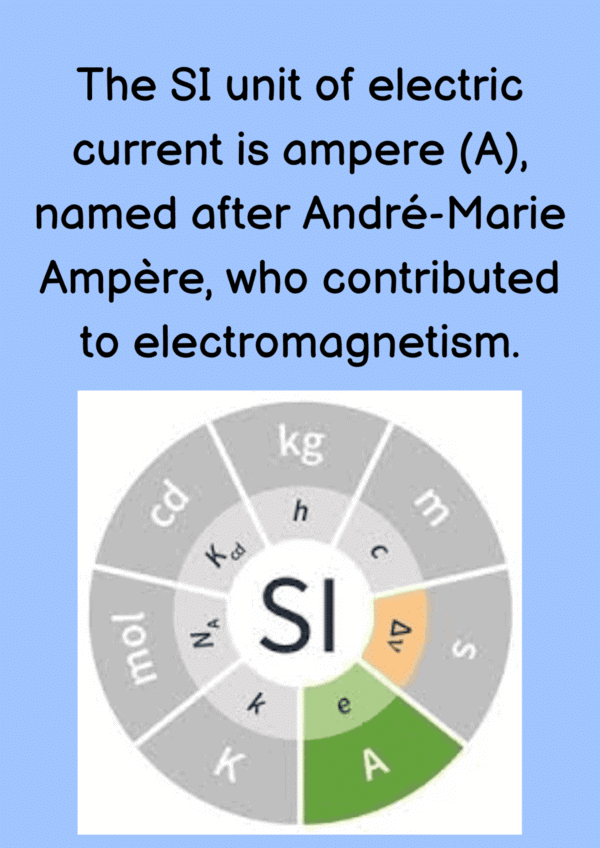
Ans. Electric current is the flow of electric charge through a conductor, measured in amperes (A). It flows from the positive terminal of a battery through the external circuit to the negative terminal. Current requires a closed circuit and a potential difference to maintain continuous flow of electrons through wires and components.
2. How do you calculate current using Ohm's Law in CBSE Class 10 exams?
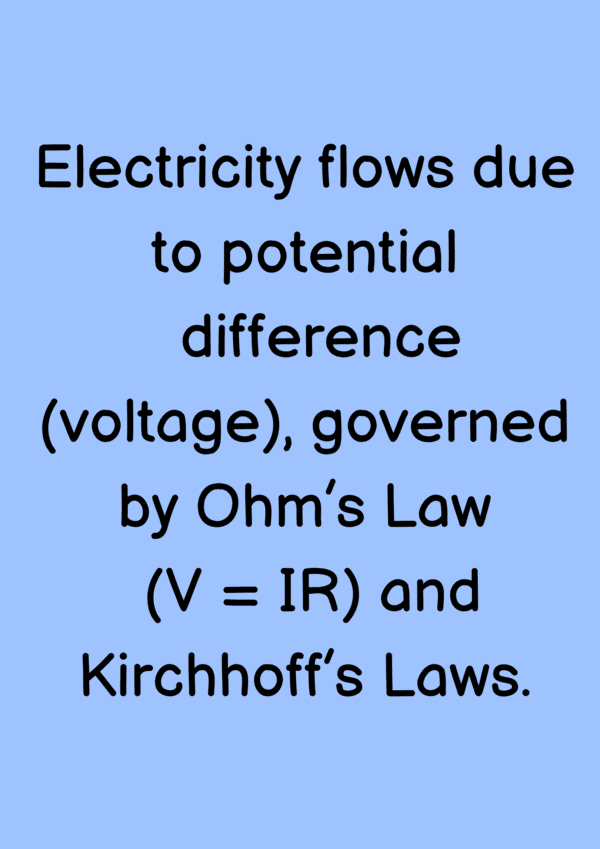
Ans. Ohm's Law states that V = IR, where voltage (V) equals current (I) multiplied by resistance (R). To find current, rearrange the formula as I = V/R. This relationship shows that current increases with higher voltage and decreases with greater electrical resistance in the circuit.
3. What's the difference between conventional current and electron flow?
Ans. Conventional current flows from positive to negative terminal, while electron flow moves from negative to positive. Scientists adopted conventional current direction before discovering electrons move oppositely. Both describe the same circuit behaviour; conventional current remains standard in electrical calculations and circuit analysis for Class 10 physics.
4. Why do some materials have high resistance while others conduct electricity easily?
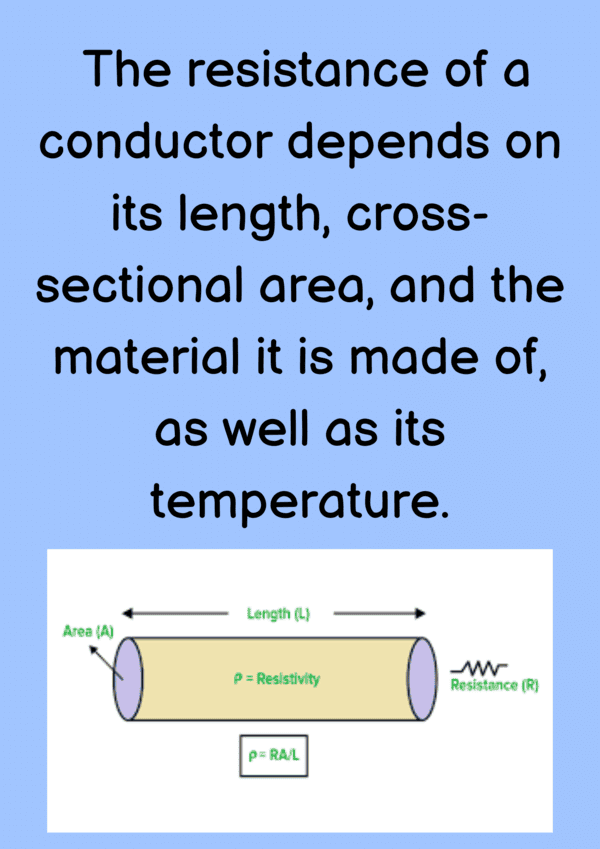
Ans. Resistance depends on material properties, length, and cross-sectional area. Conductors like copper have loosely bound electrons allowing easy flow, while insulators like rubber have tightly bound electrons. Resistivity-a material's inherent property-determines how strongly it opposes electron movement through electrical circuits.
5. How can you identify series and parallel circuits to solve electricity problems?
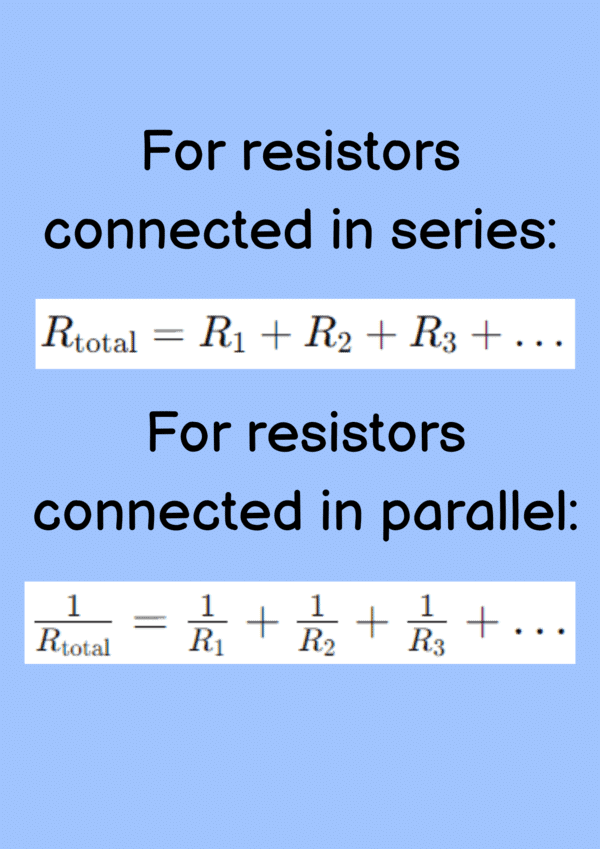
Ans. In series circuits, components connect one after another in a single path, sharing identical current but dividing voltage. Parallel circuits have multiple paths where voltage remains constant across branches but current divides. Understanding this distinction helps calculate total resistance, current distribution, and voltage drops accurately in circuit analysis.
Explore Courses for Class 10 exam
Related Searches
Flashcards: Electricity- 1, Flashcards: Electricity- 1, ppt, Exam, video lectures, mock tests for examination, Semester Notes, Previous Year Questions with Solutions, Sample Paper, MCQs, Important questions, Objective type Questions, practice quizzes, Flashcards: Electricity- 1, Viva Questions, Free, shortcuts and tricks, study material, past year papers, Extra Questions, pdf , Summary;