|  Perimeter and Area 40 Flashcards |  Start |
 | What is the definition of perimeter in relation to a closed plane figure? |  Card: 1 / 40 |
| Perimeter is the total distance around the boundary of a closed plane figure, calculated by adding the lengths of all its sides. | Card: 2 / 40 |
| The formula for calculating the perimeter of a rectangle is _____. | Card: 3 / 40 |
| Perimeter = 2 × (length + width). | Card: 4 / 40 |
| True or False: The perimeter of a polygon can be calculated if the lengths of all sides are known. | Card: 5 / 40 |
| True. | Card: 6 / 40 |
| If a rectangular garden has a length of 12 cm and a width of 8 cm, what is the perimeter? | Card: 7 / 40 |
| The perimeter is 40 cm, calculated by 2 × (12 cm + 8 cm) = 2 × 20 cm = 40 cm. | Card: 8 / 40 |
| Fill in the blank: To determine the perimeter of any polygon, you must ___ the lengths of all its sides. | Card: 9 / 40 |
| Add | Card: 10 / 40 |
| I am a shape that has four sides of equal length, and my perimeter is calculated as four times the length of one side. What am I? | Card: 11 / 40 |
| A square. 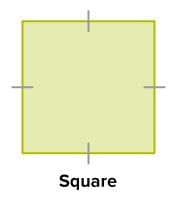 | Card: 12 / 40 |
| What practical applications can perimeter and area calculations have in everyday life? | Card: 13 / 40 |
| They can be used for tasks such as determining the amount of fencing needed for a garden or the amount of paint required to cover a wall. 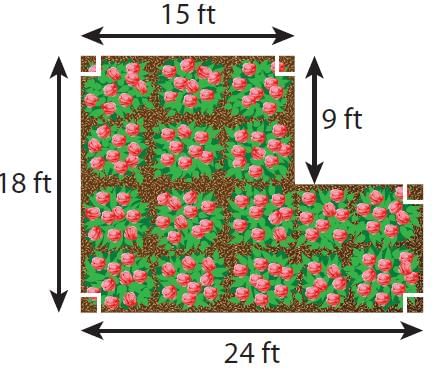 | Card: 14 / 40 |
| The perimeter of a square is calculated by the formula ___ where s is the length of a side. | Card: 15 / 40 |
| Perimeter = 4 × s 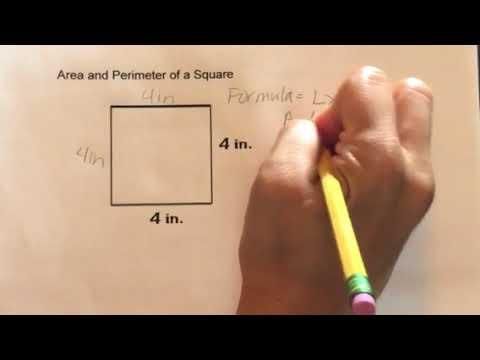 | Card: 16 / 40 |
| True or False: The perimeter of a triangle is found by multiplying the lengths of its sides. | Card: 17 / 40 |
| False. The perimeter of a triangle is the sum of the lengths of its three sides. | Card: 18 / 40 |
| What is the perimeter of a triangle with sides measuring 4 cm, 5 cm, and 7 cm? | Card: 19 / 40 |
| The perimeter is 4 cm + 5 cm + 7 cm = 16 cm. | Card: 20 / 40 |
|  Unlock all Flashcards with EduRev Infinity Plan Starting from @ ₹99 only | |
| Fill in the blank: Debojeet needs ___ meters of tape to go around his square photo frame with each side measuring 1 meter. | Card: 21 / 40 |
| 4 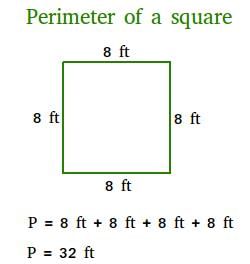 | Card: 22 / 40 |
| Riddle: I am a shape with four equal sides, and my perimeter is four times my side length. What am I? | Card: 23 / 40 |
| A square. 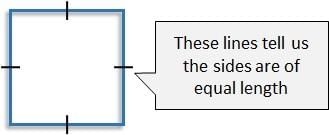 | Card: 24 / 40 |
| What are the two types of lines used to measure the perimeter of shapes created with letters? | Card: 25 / 40 |
| Straight lines and diagonal lines. 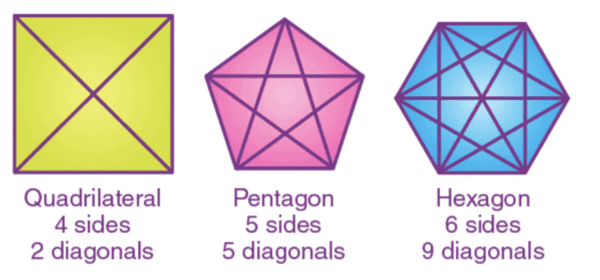 | Card: 26 / 40 |
| Calculate the perimeter of a square if each side measures 2 meters. | Card: 27 / 40 |
| Perimeter = 4 × 2 m = 8 m. | Card: 28 / 40 |
| What is the formula to calculate the perimeter of a rectangle? | Card: 29 / 40 |
| Perimeter = 2 × (Length + Width) | Card: 30 / 40 |
| True or False: The perimeter of the small path, which is 30 meters long and 20 meters wide, is 100 meters. | Card: 31 / 40 |
| True 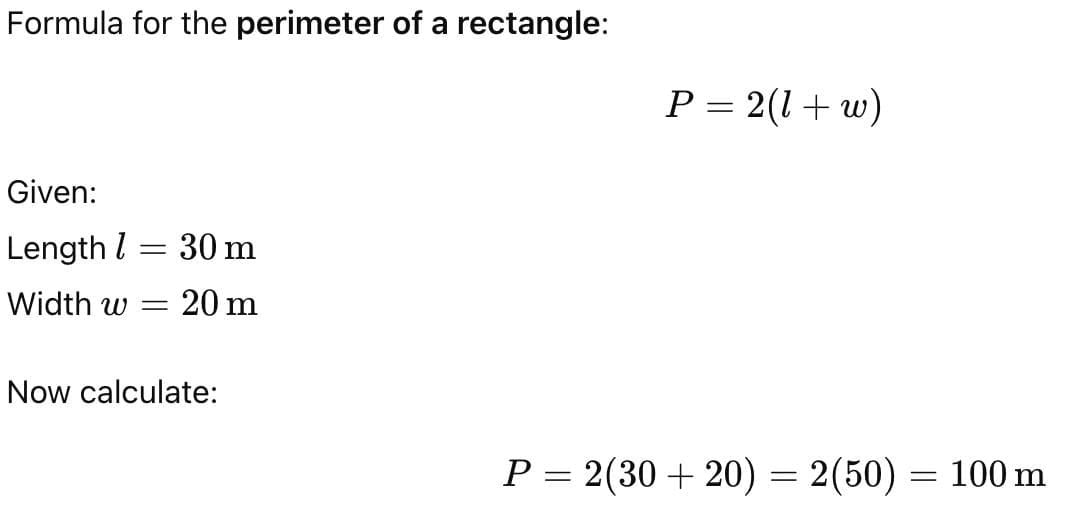 | Card: 32 / 40 |
| Riddle: I am the distance around a shape, measured in units, and I help you understand how far you must travel to go all the way around. What am I? | Card: 33 / 40 |
| Perimeter | Card: 34 / 40 |
| Fill in the blank: To calculate the perimeter of a rectangle, you need to know the ___ and ___. | Card: 35 / 40 |
| Length and Width 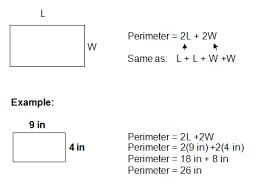 | Card: 36 / 40 |
| Multiple Choice: What is the perimeter of the big path that is 50 meters long and 30 meters wide? A) 160 m B) 100 m C) 80 m D) 200 m | Card: 37 / 40 |
| A) 160 m | Card: 38 / 40 |
| What is the perimeter of a square with a side length of 40 meters? | Card: 39 / 40 |
| The perimeter of a square is calculated as 4 × side length. Therefore, for a square with a side length of 40 meters, the perimeter is 4 × 40 m = 160 meters. | Card: 40 / 40 |
| Completed! Keep practicing to master all of them. |  Restart |