 |  Units and Measurements 32 Flashcards |  Start |
 | A physical quantity consists of a numerical value and a ___ of measurement. |  Card: 1 / 32 |
| Unit 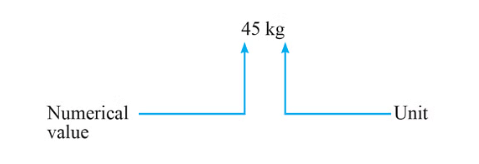 | Card: 2 / 32 |
| Fill in the blank: The larger the unit, the ___ the magnitude. | Card: 3 / 32 |
| Smaller | Card: 4 / 32 |
| Name the seven fundamental physical quantities. | Card: 5 / 32 |
| Length, Mass, Time, Electric Current, Temperature, Amount of Substance, Luminous Intensity 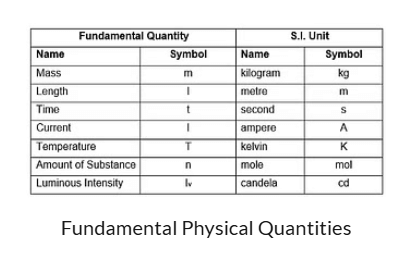 | Card: 6 / 32 |
| True or False: Derived quantities are independent of fundamental quantities. | Card: 7 / 32 |
| False. Derived quantities are calculated from fundamental quantities.  | Card: 8 / 32 |
| Length is considered a ___ quantity, while area is a ___ quantity. | Card: 9 / 32 |
| Fundamental; derived | Card: 10 / 32 |
| What is the significance of the product 'nu' in the context of physical quantities? | Card: 11 / 32 |
| The product 'nu' remains constant even when the unit changes, indicating the relationship between unit and magnitude. | Card: 12 / 32 |
| What is the significance of the International System of Units (SI) in physics? | Card: 13 / 32 |
| The International System of Units (SI) provides a globally accepted standard for measurement, enabling consistent communication and comparison of physical quantities across different fields and regions. | Card: 14 / 32 |
| Fill in the blank: The SI system consists of ___ fundamental units and ___ supplementary units. | Card: 15 / 32 |
| 7 fundamental units and 2 supplementary units 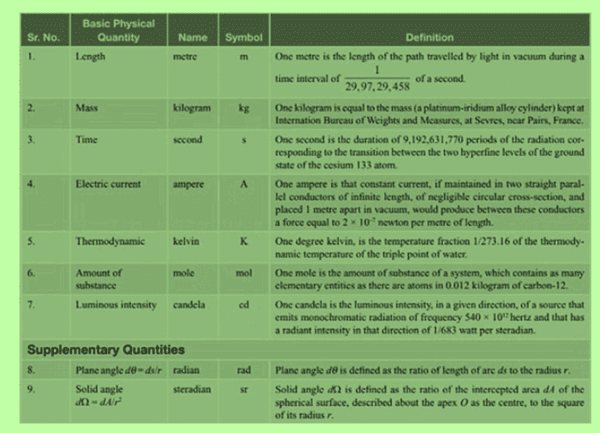 | Card: 16 / 32 |
|  Unlock all Flashcards with EduRev Infinity Plan Starting from @ ₹99 only | |
| The relationship between the magnitude and unit of a physical quantity is that they are ___ to each other. | Card: 17 / 32 |
| Inversely proportional 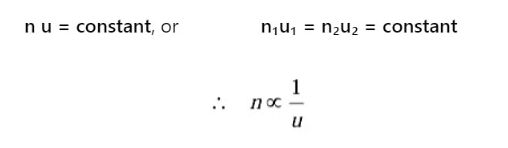 | Card: 18 / 32 |
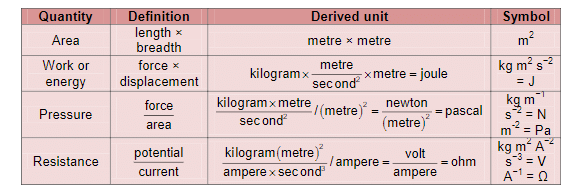
| Give an example of a derived quantity and explain how it is derived. | Card: 19 / 32 |
| Area is a derived quantity calculated by multiplying length by itself (Length²).
| Card: 20 / 32 |
| What are the three fundamental quantities in the CGS system, and their corresponding units? | Card: 21 / 32 |
| The three fundamental quantities in the CGS system are length (centimetre), mass (gram), and time (second). | Card: 22 / 32 |
| Which SI prefix corresponds to a factor of 10^-6? | Card: 23 / 32 |
| Micro (μ) | Card: 24 / 32 |
| Fill in the blank: The unit 'litre' is equivalent to ___ m³. | Card: 25 / 32 |
| 10^-3 m³ | Card: 26 / 32 |
| Multiple Choice: Which of the following is NOT part of the SI system? A) Kilogram B) Foot C) Metre D) Second | Card: 27 / 32 |
| B) Foot | Card: 28 / 32 |
| The order of magnitude of the radius of the Earth, expressed as 6.4 x 10⁶ m, is ___ m. | Card: 29 / 32 |
| 10⁷ m | Card: 30 / 32 |
| True or False: The order of magnitude for a value of 1.7 x 10⁰ m is 0. | Card: 31 / 32 |
| True | Card: 32 / 32 |
| Completed! Keep practicing to master all of them. |  Restart |



