|  India - Location 36 Flashcards |  Start |
 | India’s longitudinal extent is roughly about ___ degrees. |  Card: 1 / 36 |
| 30 degrees 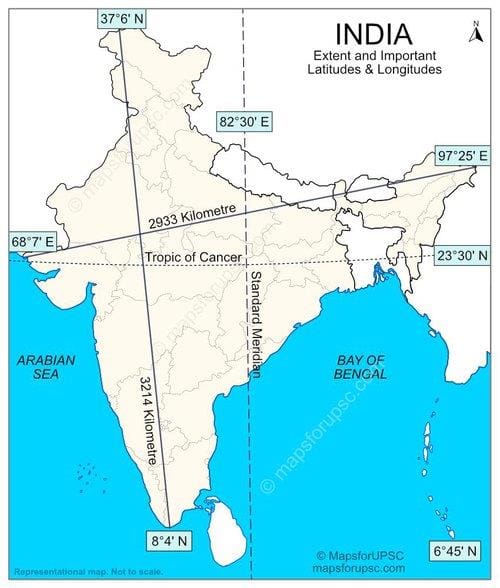 | Card: 2 / 36 |
| True or False: The distance between two longitudes increases towards the poles. | Card: 3 / 36 |
| False. The distance between two longitudes decreases towards the poles. 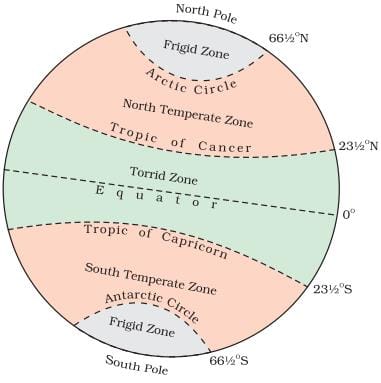 | Card: 4 / 36 |
| Fill in the blank: The southern boundary of India extends up to ___ N latitude in the Indian Ocean. | Card: 5 / 36 |
| 6°45' 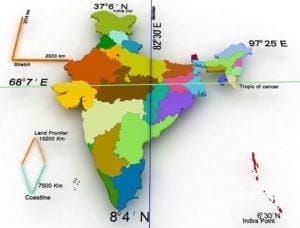 | Card: 6 / 36 |
| What is the relationship between Indian Standard Time and Greenwich Mean Time? | Card: 7 / 36 |
| Indian Standard Time is ahead of Greenwich Mean Time by 5 hours and 30 minutes. 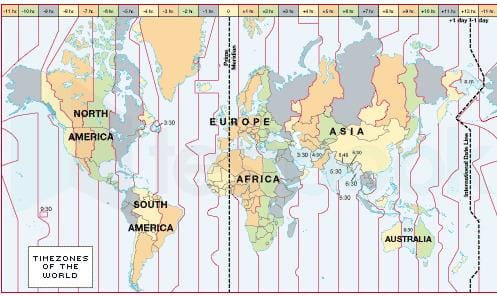 | Card: 8 / 36 |
| Fill in the blank: The distance from east to west across India is approximately ___ km. | Card: 9 / 36 |
| 2,933 km 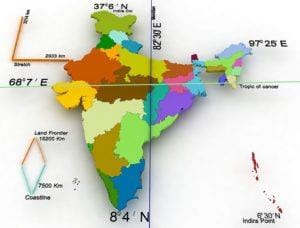 | Card: 10 / 36 |
| What geographic zones do the northern and southern parts of India lie in? | Card: 11 / 36 |
| The southern part lies within the tropics, while the northern part lies in the sub-tropical zone or warm temperate zone. 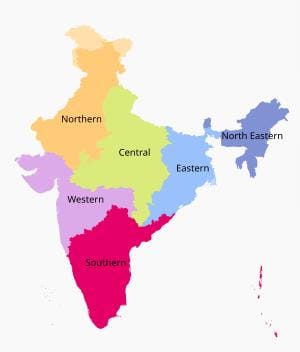 | Card: 12 / 36 |
| The Indian subcontinent is bounded by which major geographic features? | Card: 13 / 36 |
| The Indian subcontinent is bounded by the Himalayas, Hindukush, Purvachal hills, and the Indian Ocean. 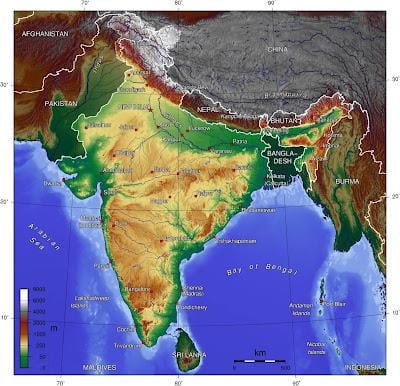 | Card: 14 / 36 |
| Fill in the blank: India's coastline extends ___ km on the mainland. | Card: 15 / 36 |
| 6100 km 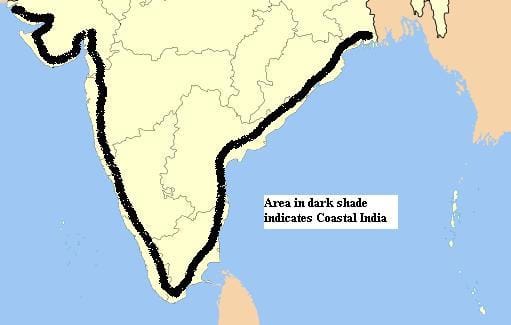 | Card: 16 / 36 |
| True or False: The Thar Desert is located in the eastern part of India. | Card: 17 / 36 |
| False. The Thar Desert is located in the western part of India. 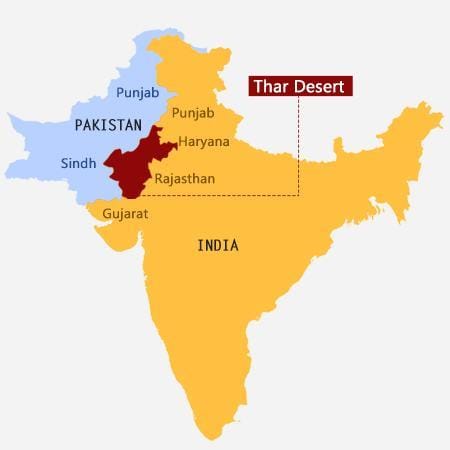 | Card: 18 / 36 |
|  Unlock all Flashcards with EduRev Infinity Plan Starting from @ ₹99 only | |
| What are the major rivers that traverse India's landscape? | Card: 19 / 36 |
| The major rivers include Ganga, Brahmaputra, Mahanadi, Krishna, Godavari, and Kaveri. 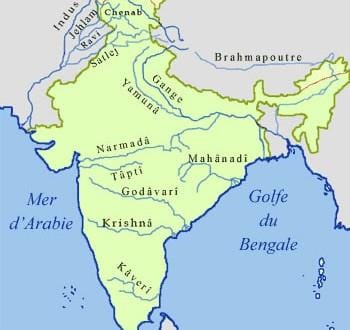 | Card: 20 / 36 |
| True or False: India has a total coastline of approximately 7,517 km, including its islands. | Card: 21 / 36 |
| True. 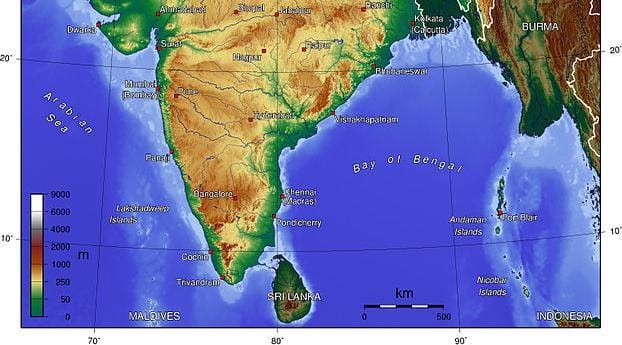 | Card: 22 / 36 |
| What types of ecosystems are supported by India's diverse physical landscape? | Card: 23 / 36 |
| India's diverse physical landscape supports varied ecosystems, including fertile river plains, forests, mountains, deserts, and coastal ecosystems 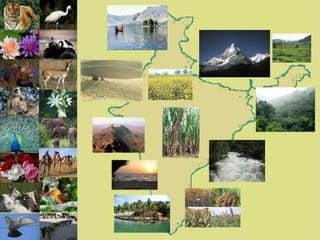 | Card: 24 / 36 |
| India shares its land borders with which neighboring countries? | Card: 25 / 36 |
| Pakistan, Afghanistan, China, Nepal, Bhutan, Bangladesh, and Myanmar. 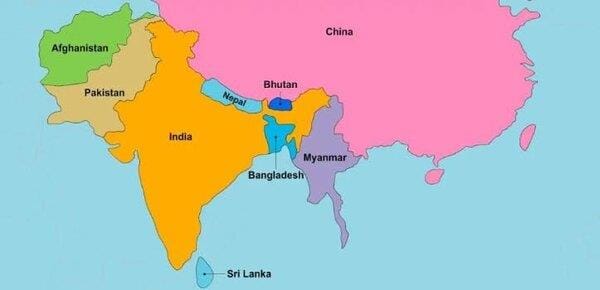 | Card: 26 / 36 |
| Fill in the blank: India's area is approximately ___ million square kilometers. | Card: 27 / 36 |
| 3.28 million square kilometers. 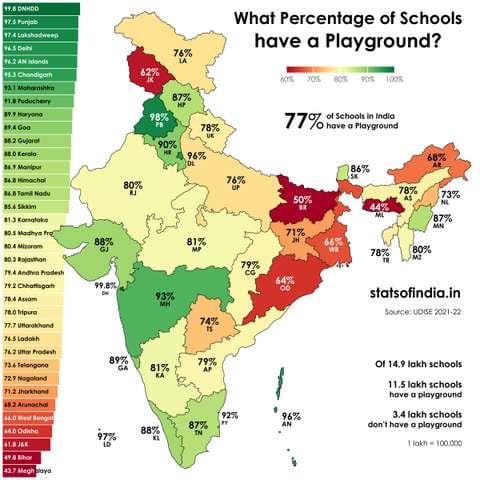 | Card: 28 / 36 |
| Short answer: What natural barrier contributes to the regional identity of the Indian subcontinent? | Card: 29 / 36 |
| The Himalayas and other mountain ranges. 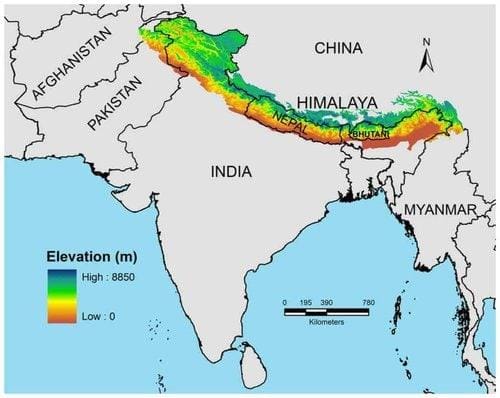 | Card: 30 / 36 |
| True or False: The distance between longitudes remains constant as one moves towards the poles. | Card: 31 / 36 |
| False. The distance between longitudes decreases towards the poles. 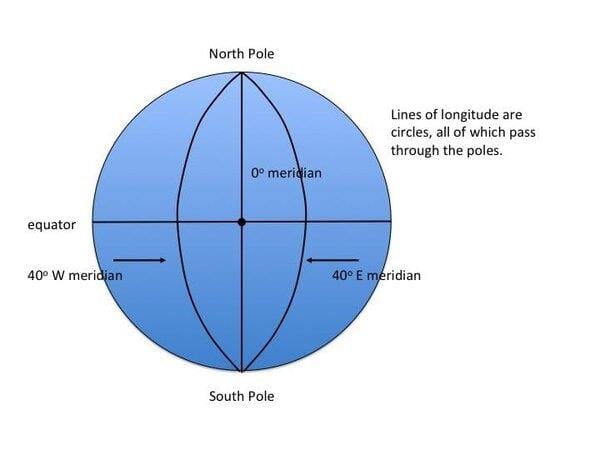 | Card: 32 / 36 |
| India's location is situated between ___ and ___ latitudes. | Card: 33 / 36 |
| 8°4′N and 37°6′ N latitudes 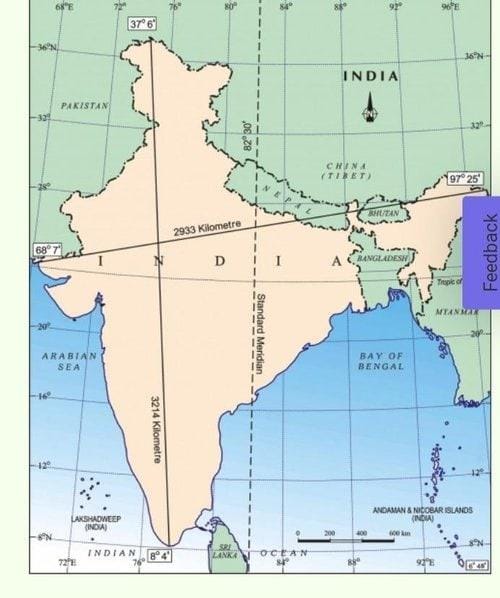 | Card: 34 / 36 |
| True or False: The standard time of a region is influenced by the height of the sun. | Card: 35 / 36 |
| Standard time is determined by the longitude (central meridian) of a region, not by the local height of the sun at different places. | Card: 36 / 36 |
| Completed! Keep practicing to master all of them. |  Restart |