|  Flashcards : Forms of Legal Enitities 30 Flashcards |  Start |
 | The primary types of business frameworks recognized in India include ___, ___, and ___. |  Card: 1 / 30 |
| Sole Proprietorship, Partnership, and Company (public or private) | Card: 2 / 30 |
| True or False: The regulation of legal entities aims solely to promote competition among businesses. | Card: 3 / 30 |
| False. The regulation also aims to protect the rights of stakeholders and ensure transparent functioning. | Card: 4 / 30 |

| What is the primary objective of regulating the legal forms of entities? | Card: 5 / 30 |
| To establish a framework for the creation, management, and dissolution of organizations while protecting stakeholder interests and ensuring fair functioning. | Card: 6 / 30 |
| A sole proprietorship is characterized by the owner having ___ liability. | Card: 7 / 30 |
| Unlimited liability, meaning the owner is personally responsible for all business debts and obligations. | Card: 8 / 30 |
| True or False: A sole proprietorship requires formal registration to be established. | Card: 9 / 30 |
| False. A sole proprietorship does not require formal registration and is established easily by an individual. | Card: 10 / 30 |
| What are the main advantages of a sole proprietorship? | Card: 11 / 30 |
| Key advantages of a sole proprietorship include quick decision-making, confidentiality, full control, profit retention, ease of formation, and tax benefits with income taxed at the owner's rate. | Card: 12 / 30 |
| True or False: A partnership has a separate legal identity from its partners. | Card: 13 / 30 |
| False. A partnership does not have a separate legal identity from its partners; the business operates under the shared name of the partners and is collectively referred to as a 'firm.' | Card: 14 / 30 |
| A successful partnership allows partners to combine their efforts and resources, but it also involves ___ for losses incurred by other partners. | Card: 15 / 30 |
|  Unlock all Flashcards with EduRev Infinity Plan Starting from @ ₹99 only | |
| Shared responsibility | Card: 16 / 30 |
| True or False: In a Limited Liability Partnership (LLP), partners have unlimited personal liability for the debts of the partnership. | Card: 17 / 30 |
| False. In an LLP, partners have limited liability, meaning they are not personally responsible for the debts of the partnership beyond their investment. | Card: 18 / 30 |
| Limited Liability Partnerships (LLPs) provide partners with ___ protection from the business's debts and liabilities. | Card: 19 / 30 |
| Limited liability | Card: 20 / 30 |
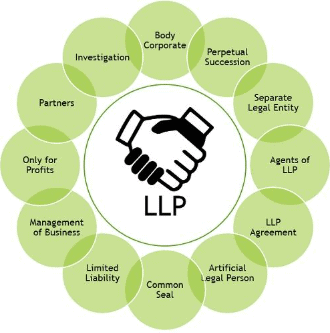
| True or False: In an LLP, partners have joint liability for the actions of other partners. | Card: 21 / 30 |
| False. Partners in an LLP are only liable up to their agreed contribution and do not have joint liability for the actions of other partners. | Card: 22 / 30 |
| A public limited company is defined under Section 2(71) of the Companies Act, 2013, as a company that is not a ___ company. | Card: 23 / 30 |
| Private | Card: 24 / 30 |

| True or False: Shareholders of a public limited company have unlimited liability for the company's debts. | Card: 25 / 30 |
| False. Shareholders have limited liability, meaning their responsibility for the company’s debts is limited to the amount they invested. | Card: 26 / 30 |
| A legal entity is recognized by law as having certain rights and responsibilities, including the ability to ___ and be ___. | Card: 27 / 30 |
| Enter into contracts; sued | Card: 28 / 30 |
| True or False: Choosing the right business structure does not affect taxes or personal liability. | Card: 29 / 30 |
| False; it affects both taxes and personal liability. | Card: 30 / 30 |
| Completed! Keep practicing to master all of them. |  Restart |