SSC CGL Exam  >  SSC CGL   >  Quantitative Aptitude  >  Flashcards: Number System
Number System
20 Flashcards
Start
Start

Flashcards: Number System

20 Flashcards

FAQs on Flashcards: Number System

1. What are natural numbers, whole numbers, and integers - how do I tell them apart?
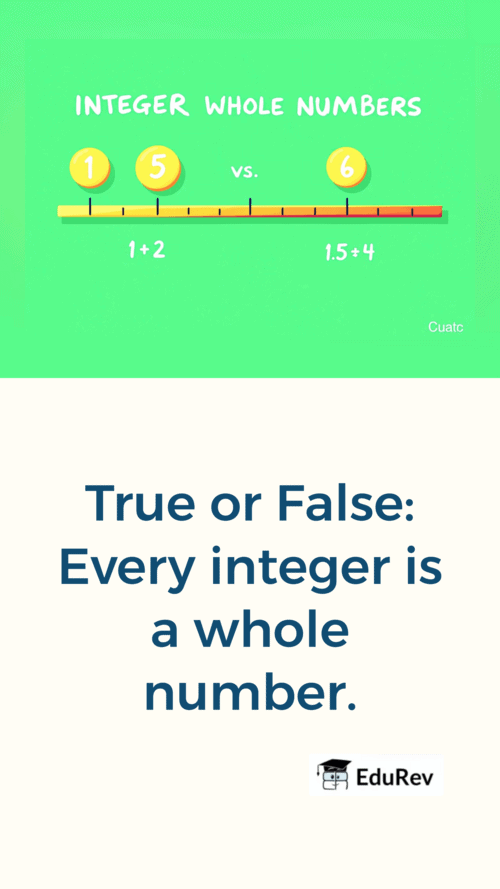
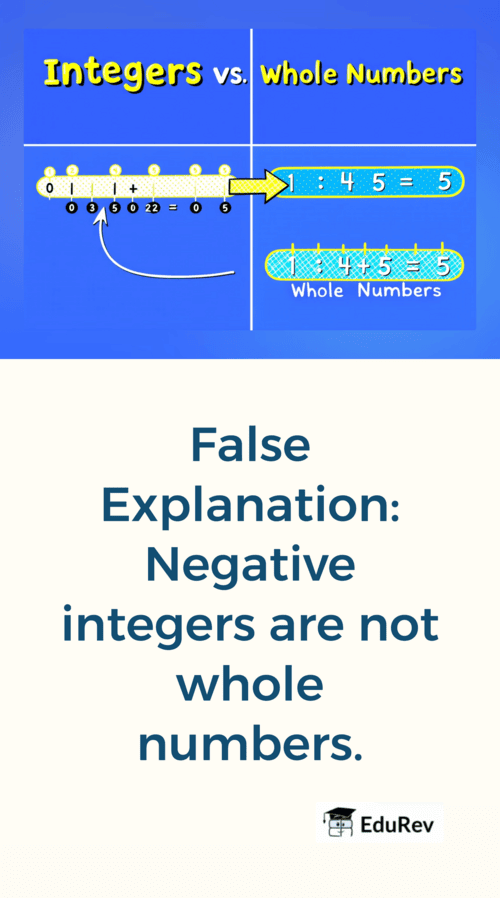
Ans. Natural numbers start from 1 and go upward (1, 2, 3...). Whole numbers include 0 plus all natural numbers. Integers extend further to include negative numbers (...-2, -1, 0, 1, 2...). Understanding these classifications helps solve SSC CGL problems faster, especially in data interpretation and quantitative reasoning sections.
2. How do I quickly identify if a number is prime or composite for exam questions?
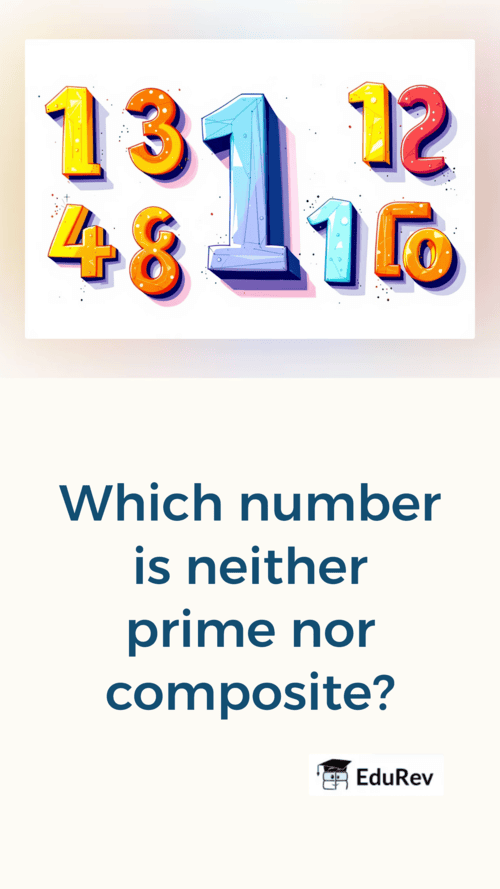
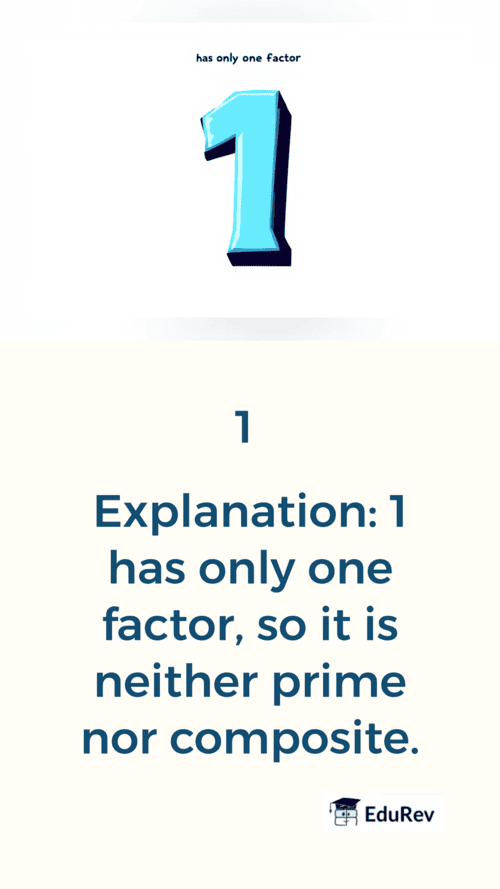
Ans. A prime number has only two divisors: 1 and itself; composite numbers have more. Check divisibility by small primes (2, 3, 5, 7) up to the square root of the number. For SSC CGL, memorising primes up to 50 saves calculation time. Flashcards on factorisation methods help build speed during practice.
3. Why does the divisibility rule for 11 work the way it does in number system problems?
Ans. The divisibility rule for 11 alternates subtraction of digits from right to left; if the result is divisible by 11, the original number is too. This stems from the fact that 10 ≡ -1 (mod 11), making alternating digit sums reveal divisibility patterns. Mastering this rule accelerates SSC CGL arithmetic calculations.
4. What's the easiest way to find HCF and LCM without spending too much time on calculations?
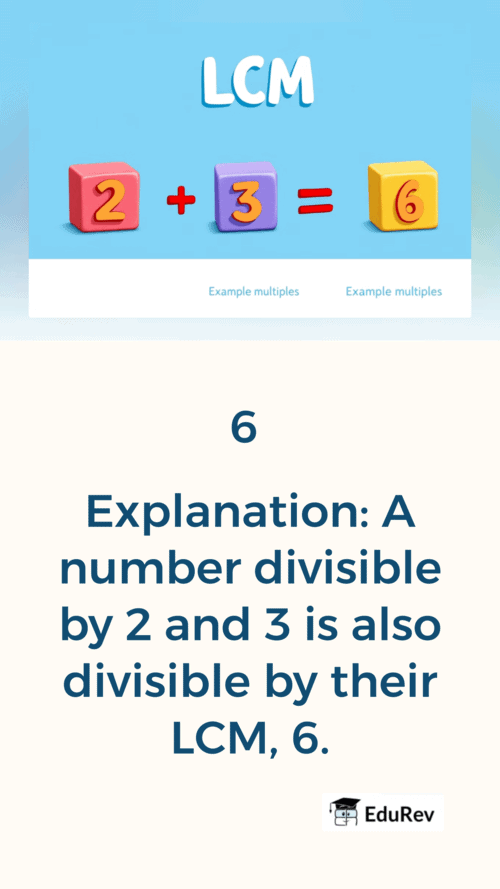
Ans. Prime factorisation method works fastest: list all prime factors, then HCF uses common factors with lowest powers, while LCM uses all factors with highest powers. For larger numbers, Euclid's algorithm reduces computation steps significantly. Practising with worksheets reinforces both methods, critical for quantitative aptitude success in SSC CGL exams.
5. When I see rational and irrational numbers mixed in a problem, how do I know what they really are?
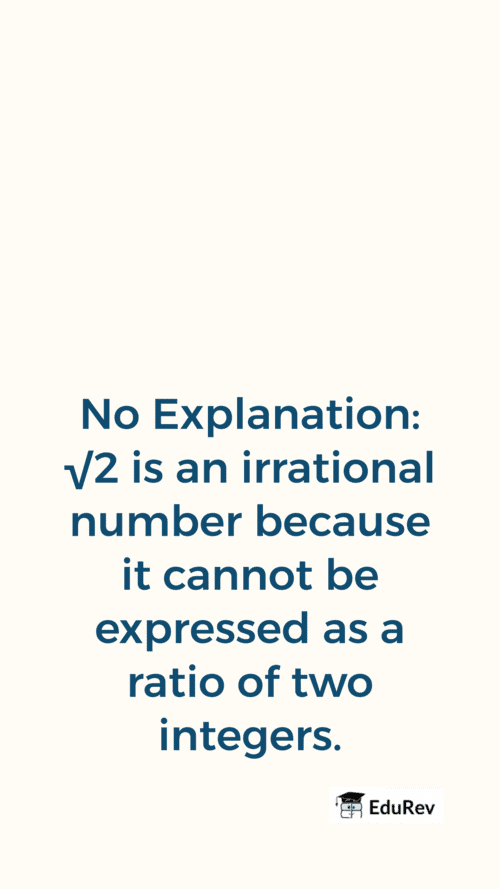
Ans. Rational numbers express as fractions (p/q) where both are integers and q ≠ 0; decimals either terminate or repeat. Irrational numbers never form exact fractions and have non-repeating, non-terminating decimals like π and √2. Recognising these distinctions helps prevent calculation errors in algebraic and geometric problem-solving across SSC CGL quantitative sections.
Explore Courses for SSC CGL exam
Related Searches
video lectures, pdf , Flashcards: Number System, practice quizzes, Important questions, Flashcards: Number System, mock tests for examination, study material, Sample Paper, Objective type Questions, MCQs, Semester Notes, shortcuts and tricks, Flashcards: Number System, Viva Questions, Previous Year Questions with Solutions, Exam, past year papers, ppt, Extra Questions, Free, Summary;