Chapter Notes - Friction


Have you noticed how drivers slow their vehicles at a traffic signal or how you apply brakes to stop a bicycle? These everyday actions are governed by a force called friction. In this chapter we will learn what friction is, why it happens, the different types of friction, the factors that affect it and how we can increase or reduce it to suit our needs.
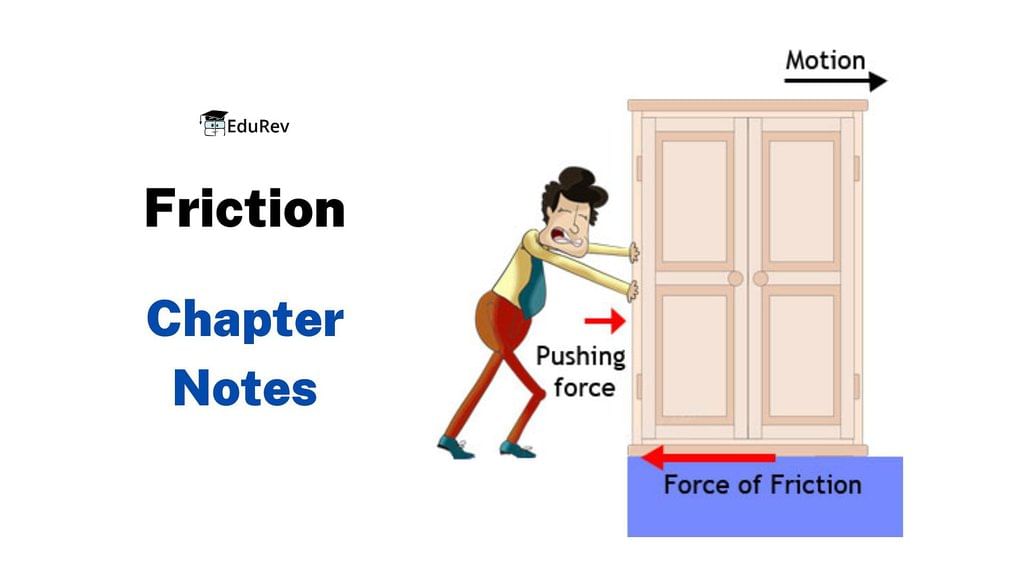
Force of Friction
Friction is a force that opposes the relative motion or the tendency of motion between two surfaces in contact. It always acts along the surface in contact and in a direction opposite to the motion (or the attempted motion) of the object.
Friction can be useful or undesirable depending on the situation. For example, sprinkling sand on ice increases friction and prevents slipping, while excessive friction between moving engine parts causes wear and wastes energy.
Examples of friction in daily life
- A moving wheel on the ground eventually stops because the ground applies a force of friction opposite to the motion of the wheel.
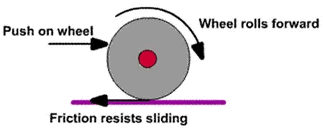
- When you apply the brakes of a bicycle, the brake pads exert friction on the wheel rim (or disc) and the bicycle slows down and stops.
- If you gently push a book across a table, it moves some distance and then comes to rest because of friction between the book and the table.
Try yourself: Which of the following best describes the role of friction in our daily lives?
Factors Affecting Friction
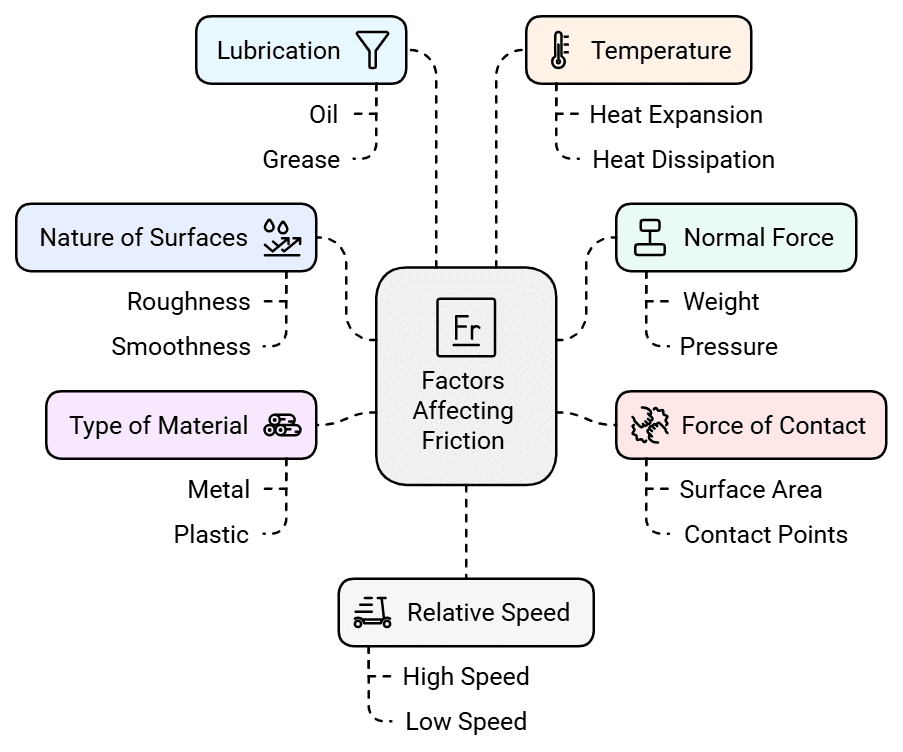
The magnitude of friction between two surfaces depends on several factors. The most important ones are listed below.
Nature of the surfaces: Rough surfaces have more irregularities and so they interlock more; this produces a larger frictional force. Smooth surfaces produce less friction.
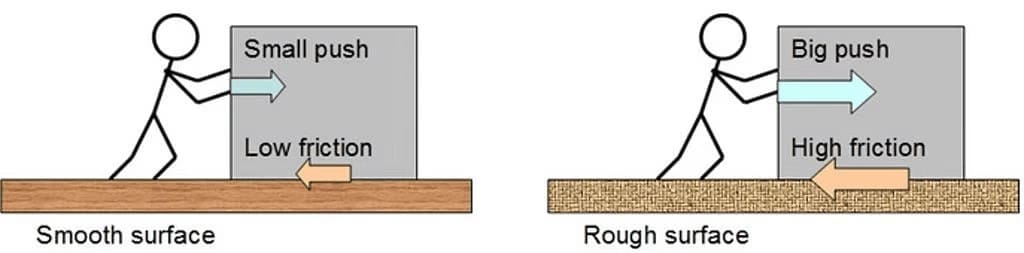
Normal force: The normal force is the perpendicular force pressing two surfaces together. The frictional force is directly proportional to this normal force - pressing surfaces together more strongly increases friction.
Applied (contact) force: When the force that tends to make one body move over another increases, the frictional force resisting that motion generally changes; a larger applied force can overcome static friction and then kinetic friction acts while the body moves.
Type of material: Different materials interact differently. For example, rubber on concrete has a higher friction than plastic on metal. This property is often summarised by the coefficient of friction for a given pair of materials (introduced later at a simple level).
Lubrication: A lubricant (oil, grease, etc.) placed between two surfaces reduces direct contact between their irregularities, thus reducing friction.
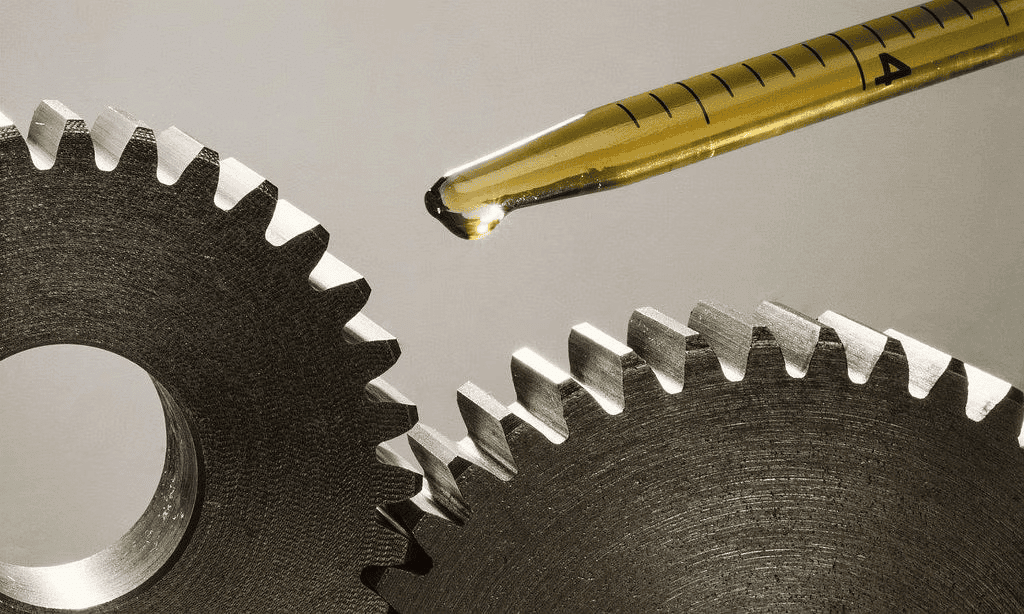
Temperature: Temperature can change the properties of surfaces or lubricants. In some cases higher temperature lowers viscosity of lubricants (reducing friction); in other cases expansion of materials due to heat can increase contact and increase friction.
Relative speed: The frictional force may depend on how fast the two surfaces slide past each other; in many everyday situations sliding friction is roughly independent of speed, but at higher speeds or in fluids friction (drag) increases with speed.
Friction: A Necessary Evil
Friction can be both helpful and harmful. It makes many daily activities possible, but it also causes energy loss and wear in machines. Below are examples that explain this dual nature.
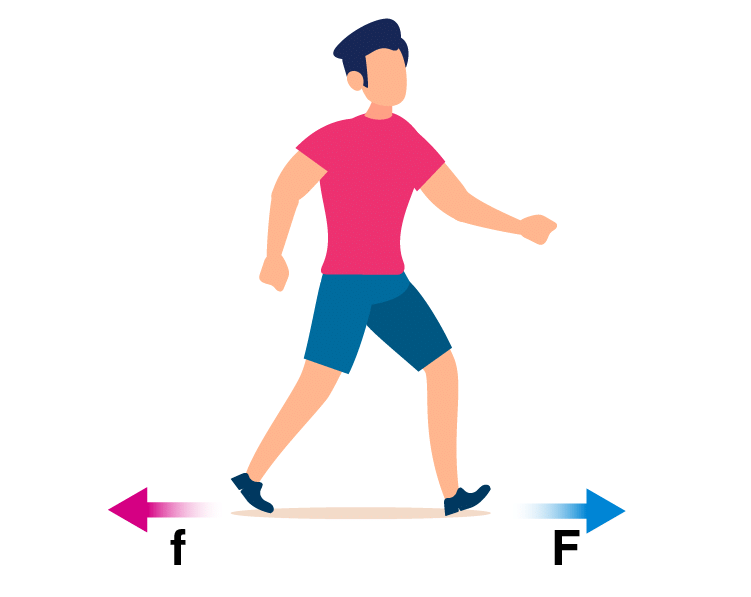
- Walking and running: Friction between our shoes and the ground provides the grip that allows us to push off and move forward. Without sufficient friction we would slip.
- Shoe soles: Grooves and tread patterns on shoe soles increase friction and improve grip; worn-out soles reduce friction and may cause slipping.
- Tyre treads: The treads on vehicle tyres improve grip (traction) with the road and are important for safe driving, especially on wet or slippery surfaces.
- Heat generation: Friction converts some kinetic energy into thermal energy. Rubbing your palms together produces heat due to friction.
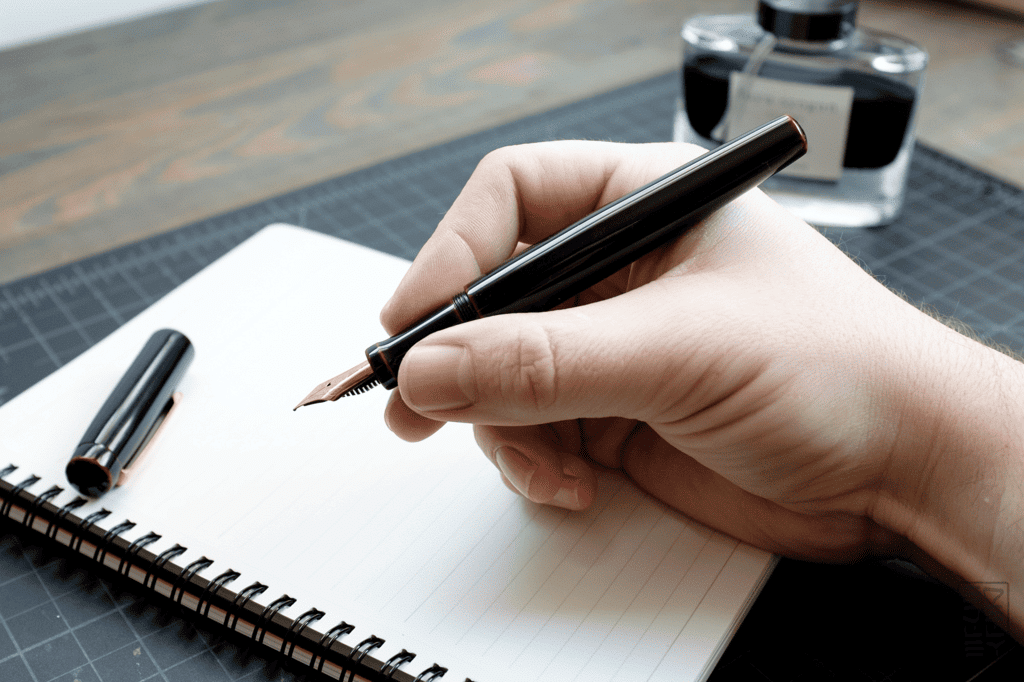
- Writing: Friction between the pen tip and the paper allows the pen to leave marks on the paper.
- Energy wastage in machines: Friction between moving parts causes generation of heat and loss of useful energy, reducing the efficiency of machines. Regular lubrication and maintenance reduce this wastage.
Increasing and Reducing Friction
Depending on the task, we may want to increase friction (for better grip) or reduce friction (to enable smooth motion). The methods below are commonly used.
Increasing friction
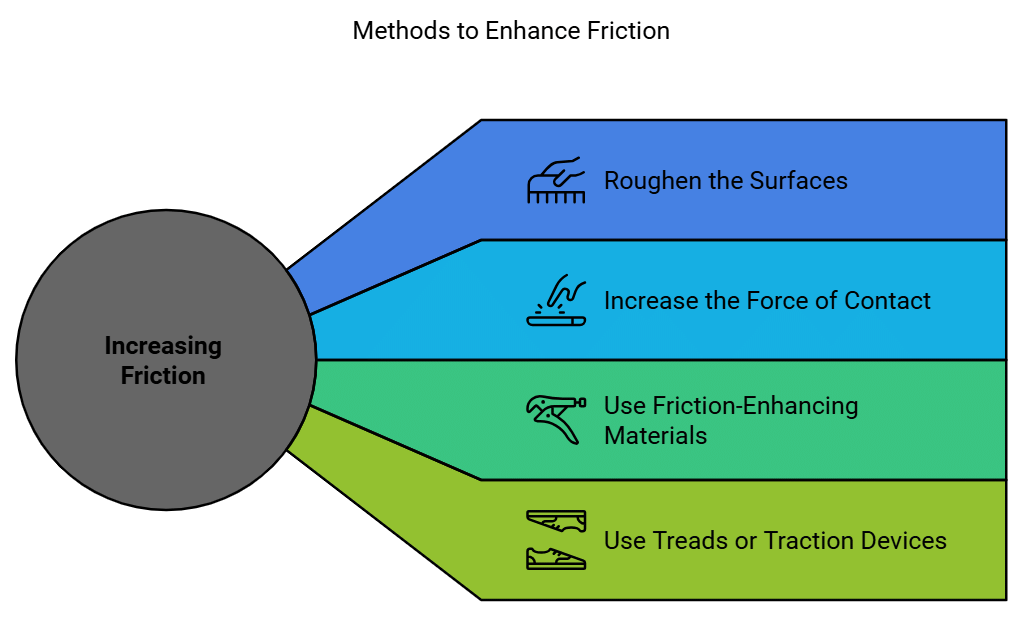
- Roughen the surfaces: Making surfaces rougher increases interlocking of irregularities and increases friction (for example, using grip tape on handles).
- Increase the contact force: Pressing two surfaces together more firmly increases friction.
- Use high-friction materials: Materials such as rubber provide higher friction; rubber mats or gloves increase grip.
- Use treads or traction devices: Treads on tyres or anti-slip soles on shoes increase friction and improve traction.
Reducing friction
- Smoothen or polish surfaces: Reducing surface roughness lowers friction; this is why polished surfaces slide more easily.
- Use lubricants: Oil, grease, or wax create a thin film between surfaces and reduce direct contact, lowering friction (for example, lubricating door hinges or bicycle chains).
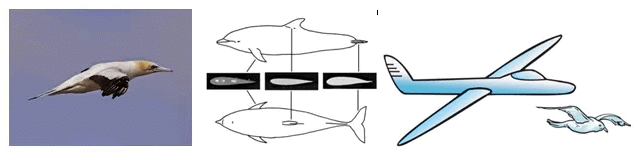
- Streamline shapes: To reduce friction with a fluid (air or water) objects are given streamlined shapes so that they move with less resistance; this is used in the design of cars, aeroplanes, boats, fish and birds.
- Use bearings: Ball or roller bearings replace sliding friction by rolling motion and greatly reduce friction in machines.
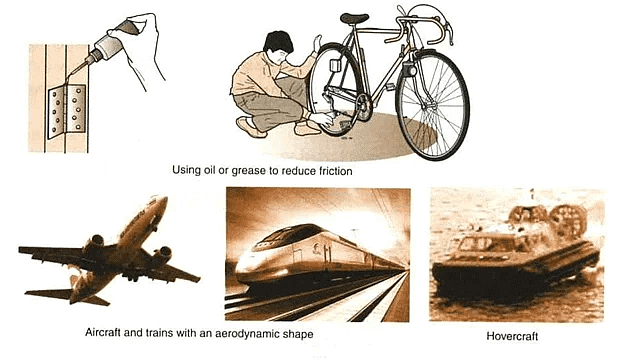 Reducing Friction
Wheels Reduce Friction
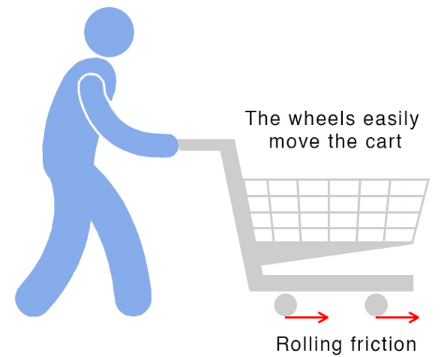
When an object rolls, the nature of contact with the surface changes and the friction opposing rolling (rolling friction) is much smaller than sliding friction. This is why wheels are used in most ground transport - they reduce the force needed to move heavy loads and make motion easier.
Friction and Its Types
Friction appears in several forms depending on the nature of motion or the medium in which motion occurs. The common types are described below.
Static friction
Static friction acts when a body is at rest relative to a surface. It prevents the body from starting to move when a small force is applied. Static friction adjusts its value up to a maximum limit to oppose the applied force. For example, when you stand on a slope without slipping, static friction between your shoes and the ground prevents you from sliding.
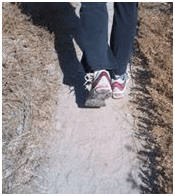 Static Friction
Sliding (kinetic) friction
Sliding friction (also called kinetic friction) acts when two surfaces slide over one another. Its value is usually less than the maximum static friction for the same pair of surfaces; that is why it is often harder to start moving an object than to keep it moving.
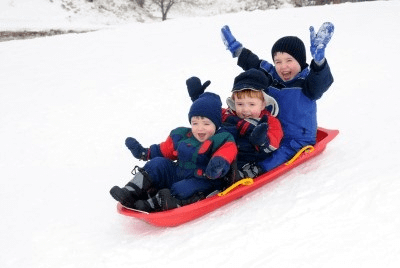 Sliding Friction
Rolling friction
Rolling friction opposes the motion when an object rolls over a surface. Rolling friction is typically much smaller than sliding friction, which is why wheels and ball bearings make movement easier. Examples include bicycle tyres rolling on the road and a ball rolling on the ground.
Fluid friction
Fluid friction (also called drag) opposes the motion of an object through a fluid (liquid or gas). Pushing your hand through water or feeling the air resistance when running are simple examples. Designers make objects streamlined - pointed at the front and tapered at the rear - to reduce fluid friction and allow easier movement through the fluid.
FAQs on Chapter Notes - Friction
| 1. What exactly is friction and why does it happen between surfaces? |  |
| 2. How do static friction and kinetic friction differ in everyday situations? | |
| 3. What factors actually increase or decrease the amount of friction between two surfaces? | |
| 4. Why do we need friction in daily life, and what problems does it cause? | |
| 5. How can I solve problems about friction force using the normal force concept for CBSE exams? | |





