Long Answer Questions: Nazism and the Rise of Hitler

Q1: Mention any five effects of the 'Great Economic Depression' on the economy of Germany.
Ans:
- Industrial production fell drastically to about 40 percent of the 1929 level, causing factories to close and output to fall sharply.
- Many workers lost their jobs or had their wages reduced, which increased poverty and insecurity among working families.
- Large numbers of unemployed youth drifted into crime or despair as opportunities for stable employment disappeared.
- The middle classes, especially salaried employees and pensioners, saw their savings and life-plans ruined as the currency lost much of its value through inflation and financial instability.
- Small businessmen, the self-employed and shopkeepers suffered heavy losses; many businesses collapsed and livelihoods were destroyed.
Q2: Why was the 'Treaty of Versailles' treated as harsh and humiliating to people of Germany? Explain.
Ans:
- Germany lost significant territory and population: overseas colonies, about a tenth of its population and 13 percent of its territory were taken away and transferred to countries such as France, Poland, Denmark and Lithuania.
- The treaty imposed severe reductions on Germany's military strength; the country was demilitarised in many respects to prevent future aggression.
- The War Guilt Clause placed sole responsibility for the First World War on Germany, which humiliated many Germans and became a source of national resentment.
- Germany was required to pay large reparations (the text here mentions a figure of 6 billion), which placed a heavy burden on its already weakened economy.
- Allied troops occupied strategic and resource-rich areas such as the Rhineland for much of the 1920s, adding to the sense of national humiliation and loss of sovereignty.
Q3: Describe any three factors that made the Weimar Republic politically fragile.
OR
Describe the problems faced by the Weimar Republic.
Ans:
- Proportional Representation: This electoral system made it difficult for any single party to win a clear majority. As a result, coalition governments were the norm and cabinets were unstable; ministries changed frequently and effective long-term policies were hard to carry out.
- Article 48: This article allowed the President to declare an emergency, suspend civil liberties and rule by decree. In practice it was used often, undermining regular parliamentary rule and making the republic vulnerable to authoritarian takeover.
- Loss of public confidence: Many Germans blamed the republic for national humiliation, economic hardship and the Versailles settlement. Democracy was new and unfamiliar to many, and growing disillusionment led people to seek radical alternatives, which weakened the democratic system further.
Q4: Explain the circumstances under which Nazism became popular in Germany. [2015, 2016]
OR
What is Nazism? How did it become popular in Germany? Explain. [2014]
Ans: Circumstances under which Nazism became popular were:
- Hitler's oratory skills: Hitler was a powerful public speaker whose passionate speeches appealed to people's emotions and sense of grievance.
- Promise of national revival: He promised to rebuild Germany into a strong, united nation, restore national dignity and undo what many Germans saw as the injustices of the Treaty of Versailles.
- Economic promises: Hitler offered employment and a more secure future for the unemployed and the youth, which attracted voters hit hard by the Depression.
- Appeal to nationalist pride: He vowed to remove foreign influence and resist perceived conspiracies against Germany, promising to make Germans proud of their country again.
- Mass politics and spectacle: The Nazis organised large rallies, public meetings and demonstrations to display strength and unity. Visual symbols - red banners with the swastika, ritualised applause and the Nazi salute - created a powerful image of order and confidence.
- Propaganda and image building: Nazi propaganda presented Hitler as a saviour; careful use of media and staged events helped build a cult of personality around him.
Q5: 'Nazi ideology was synonymous with Hitler's world view.' Explain. (CBSE 2010)
Ans:
- Nazi ideology reflected Hitler's belief in a strict racial hierarchy rather than equality between people.
- At the top of this hierarchy were the so-called Nordic or Aryan Germans, while Jews were placed at the lowest rung and labelled as racial enemies.
- Hitler and his followers adopted distorted ideas from some strands of nineteenth-century thought: they misused biological and social theories to argue that stronger races should dominate weaker ones.
- The Nazis asserted that the Aryan race was superior and must retain its purity; racial 'cleansing' and exclusion of 'undesirable' groups were presented as necessary.
- Another key element of Hitler's view was lebensraum (living space): the belief that Germany needed more territory for its people, which justified expansionist policies.
Q6: Explain any three of the following terms :
(a) Lebensraum
(b) A Racial State
(c) Propaganda
(d) Ghettoisation and concentration camps
(e) Jungvolk
Ans: (a) Lebensraum: It referred to Hitler's idea of 'living space'. He argued that Germany needed to acquire new territories (mainly in the east) to provide land and resources for the German people and to strengthen the nation's power.
(b) Racial State: The Nazis aimed to build a state based on racial purity, where only those classified as 'Aryan' were fully accepted. Individuals regarded as racially or socially 'undesirable' were excluded, persecuted, or eliminated to create this exclusive community.
(c) Propaganda: Propaganda is the deliberate use of media and public messages - films, posters, radio, speeches and rallies - to shape public opinion and spread political ideas. The Nazi regime used propaganda systematically to promote its worldview and to demonise its opponents.
(d) Ghettoisation and Concentration Camps: From 1941 Jews were required to wear identifying marks such as the yellow Star of David; they were segregated into Jewish quarters or ghettos (for example, in Lodz and Warsaw) where conditions were overcrowded and miserable. The Nazi camp system included concentration camps and extermination camps. Auschwitz, established in 1940 in occupied Poland, became the largest site of mass murder and imprisonment; around 1.1 million people - most of them Jews - were killed there. Camps were surrounded by barbed wire, guarded, and equipped for mass murder, including gas chambers in extermination centres.
(e) Jungvolk: A Nazi youth organisation for younger children (below 14). Children were enrolled early and given ideological and physical training to make them loyal to Nazi values; older boys moved on to the Hitler Youth for further indoctrination and preparation for service.
Q7: Give reasons why the Weimar Republic failed to solve the problems of Germany.
Ans:
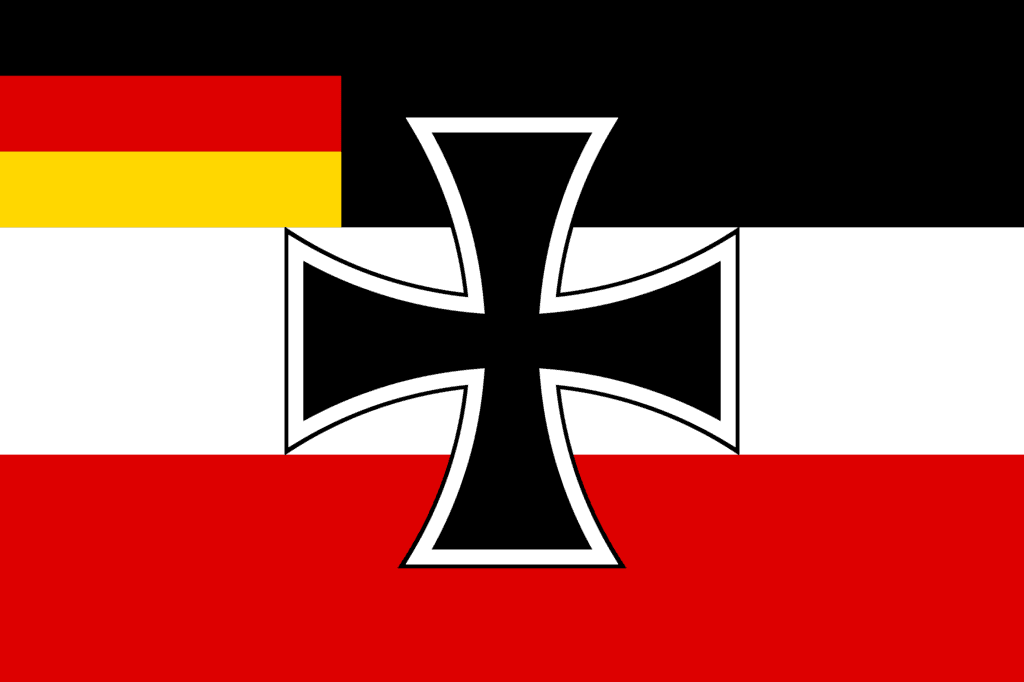 The Weimar Republic Flag
- The republic began under difficult conditions, soon after the Spartacist uprising and widespread social unrest; political divisions between Democrats, Socialists and conservatives were deep.
- Many Germans blamed the Weimar government for Germany's defeat and the harsh terms of the Versailles Treaty; this loss of prestige and legitimacy weakened popular support.
- Economic shocks-hyperinflation in the early 1920s and the Great Depression after the 1929 Wall Street crash-severely damaged the economy and the government's ability to respond effectively.
- Political weaknesses in the constitution, such as proportional representation and the emergency powers in Article 48, led to unstable coalition governments and frequent use of decrees, which undermined parliamentary democracy.
- As the republic seemed unable to deliver stability and prosperity, people lost confidence in democratic politics and turned to radical parties promising decisive action, which ultimately undermined the republic further.
Q8: Why was Nazism considered to be a negation of both democracy and socialism? (CBSE 2010)
Ans:
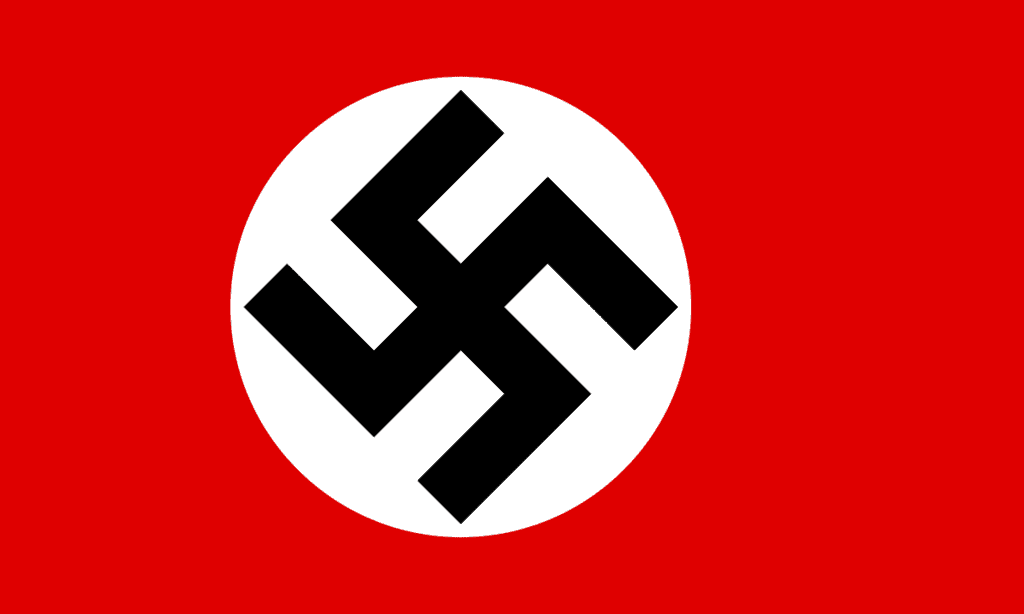 The Nazi Germany Flag
- After 30 January 1933, Hitler moved quickly to remove democratic institutions. The Reichstag Fire Decree (28 February 1933) suspended civil liberties such as freedom of speech, the press and assembly that the Weimar constitution had guaranteed.
- The Enabling Act of 23 March 1933 allowed Hitler's government to make laws without parliamentary consent, effectively establishing a dictatorship and sidelining democratic processes.
- All political parties except the Nazi Party and independent trade unions were banned. The state took control of the economy, media, the armed forces and the judiciary.
- By crushing independent labour organisations and socialist parties, and by replacing parliamentary rule with one-party rule and repressive security forces (Gestapo, SS), Nazism rejected both democratic pluralism and socialist ideas of workers' self-organisation.
Q9: Describe Hitler's rise to power with reference to his
(a) Policy towards the youth
(b) His personal qualities
(c) Development of the art of propaganda
Ans:
(a) Policy towards youth
- Hitler placed great importance on shaping the young. School education was revised and textbooks rewritten to teach Nazi ideas, including racial doctrines and loyalty to the Führer.
- Youth organisations such as the Jungvolk and the Hitler Youth provided intensive physical training and ideological instruction; children were taught to glorify violence, obey authority and reject democratic and socialist values.
- The aim was to create generations loyal to Nazi goals who would form the future workforce and soldiers of the regime.
(b) His personal qualities
- Hitler was an effective organiser, a tireless worker and a skilful public speaker. His charisma and single-mindedness helped him attract followers and unite different right-wing groups.
- His strong anti-Communist stance and promises to restore national honour appealed to nationalists, conservatives and sections of the middle classes who feared social disorder.
(c) Development of the art of propaganda
- The Nazis used propaganda with great care to shape public perceptions and mask the regime's brutality. Language and imagery were chosen to present policies positively and to hide violence behind euphemisms (for example, 'final solution' as a term for mass murder).
- Mass media - films, radio, posters and rallies - were used systematically to popularise Nazi ideas and to demonise opponents and minorities. Highly choreographed events such as the Nuremberg rallies created a strong visual and emotional impact.
Q10: Describe in detail Hitler's treatment of the Jews. (CBSE 2010)
OR
Explain Nazi ideologies regarding the Jews. [2010 (T-1)]
Ans:
- The Nazis' treatment of Jews combined long-standing religious prejudice with a racial ideology that depicted Jews as a dangerous and alien element. Jews were blamed for economic and social problems and portrayed as enemies of the nation.
- From 1933 to 1938 the regime pursued policies of legal discrimination, economic exclusion and intimidation. Notable measures included the Nuremberg Laws (1935), which stripped Jews of German citizenship and basic rights, and violent episodes such as Kristallnacht (1938), when Jewish homes, businesses and synagogues were attacked.
- From 1939 onwards the persecution escalated into mass deportations, ghettoisation and systematic mass murder. Jews were concentrated in ghettos in occupied territories and later transported to concentration and extermination camps in occupied Poland and elsewhere.
- The Nazis implemented the so-called "Final Solution", a policy of industrialised genocide carried out in extermination camps (for example, Auschwitz-Birkenau). Under this programme millions of Jews were murdered; the Holocaust resulted in the deaths of around six million Jewish men, women and children alongside millions of other victims targeted by the regime.
Q11: "The seeds of the Second World War were sown in the Treaty of Versailles." Discuss.
OR
What were the effects of the peace treaty on Germany after the First World War? [2010 (T-1)]
Ans:
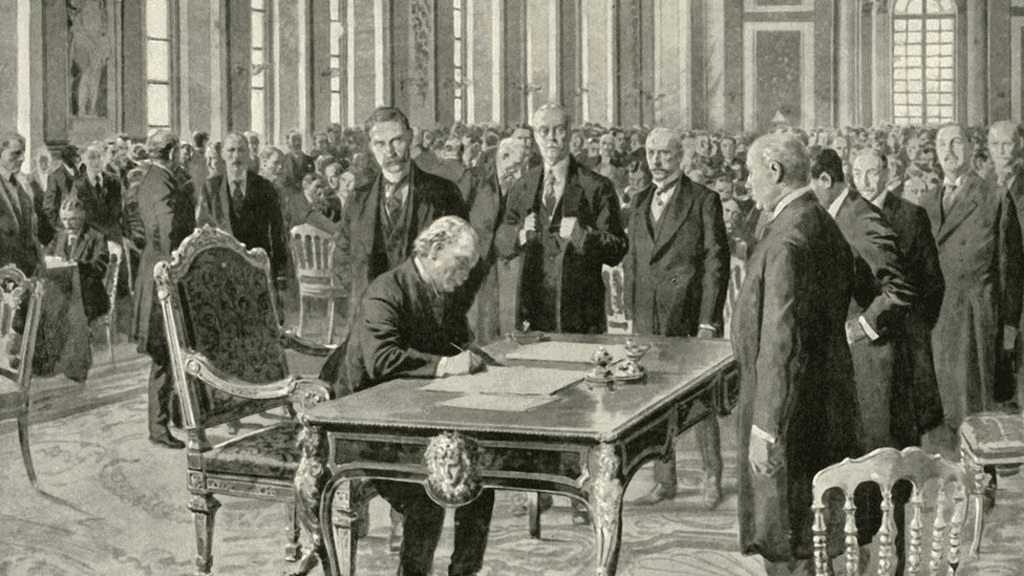 The Treaty of Versailles
- The Treaty of Versailles imposed punitive territorial losses, military restrictions and reparations that left many Germans feeling humiliated and resentful.
- These terms undermined Weimar legitimacy and fuelled revanchist and nationalist sentiments. Political leaders such as Hitler exploited these feelings by promising to overturn the treaty and restore Germany's power.
- Economic burdens and political instability created conditions in which aggressive revisionist policies and expansionism became politically attractive, contributing directly to the outbreak of the Second World War in 1939 when Germany invaded Poland.
Q12: What was the Nazi ideology of Lebensraum? How did they proceed to actualise it? [2010 (T-1)]
Ans:
- Lebensraum was the idea that Germany required additional living space, especially in the East, to provide land and resources for the German people and to secure national self-sufficiency and power.
- To actualise this idea, the Nazis pursued aggressive expansionist policies: they aimed to conquer and colonise parts of Eastern Europe, displace or eliminate local populations, and settle ethnic Germans in these territories. Military conquest, population transfers and brutal occupation policies were used to implement this programme - Poland was an early target for experimentation with these measures.
Q13: 'The Nazi regime used language and media with care and often to great effect.' Explain.
Ans:
- The regime deliberately used euphemistic and deceptive language to conceal violence and make atrocities seem administratively ordinary: examples include terms such as 'special treatment', 'final solution', 'euthanasia' and 'evacuation'.
- Media - films, radio, posters and newspapers - were tightly controlled to promote Nazi ideology and to dehumanise and stereotype the regime's victims. Films like The Eternal Jew and visual propaganda presented distorted images of Jews and other minorities to justify persecution.
- Carefully staged public spectacles, slogans and images created a strong emotional bond between the masses and the regime, helping to normalise extreme policies.
Q14: Describe the early life of Hitler prior to his assuming power as the dictator of Nazi Germany. [2010 (T-1)]
Ans:
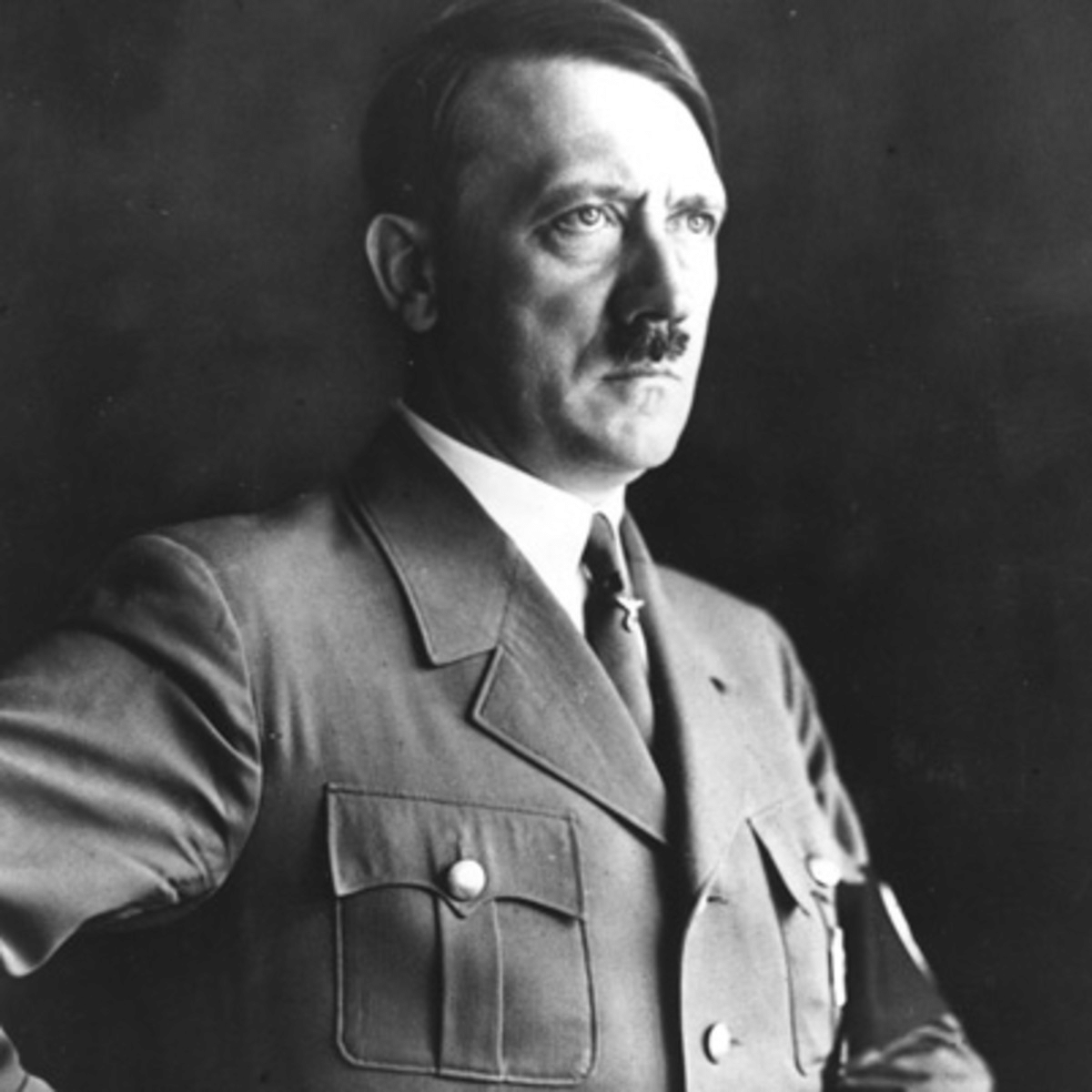 Adolf Hitler
- Adolf Hitler was born in 1889 in Braunau am Inn, Austria, and spent his early years in relative poverty.
- He moved to Munich and, when the First World War began, volunteered for the German army. He served on the Western Front as a messenger, rose to the rank of corporal and received medals for bravery.
- The German defeat and the Versailles settlement deeply affected him. In 1919 he joined the German Workers' Party; by the early 1920s he had taken control of it and it was renamed the National Socialist German Workers' Party (Nazi Party).
Q15: 'The German economy was the worst hit by the economic crisis.' Discuss.
Ans:
- Germany suffered severe economic distress in the 1920s and early 1930s. Hyperinflation in the early 1920s wiped out savings and caused extreme hardship for many families.
- After the 1929 Wall Street crash, industrial production fell to roughly 40 percent of the 1929 level and unemployment rose dramatically; at its peak about 6 million people were unemployed.
- Workers faced wage cuts or job losses; middle-class savers and pensioners lost much of their financial security as prices and currency instability destroyed savings.
- Small businesses and retailers were ruined, while agricultural prices fell sharply, affecting the peasantry. The deep economic crisis created widespread anxiety and made extremist political options more attractive to many voters.
Q16: Explain how the fragility of the Weimar Republic led to the rise of Hitler.
Ans:
- The humiliation of Versailles and the republic's association with defeat made the Weimar government unpopular and weakened its authority.
- Economic crises - hyperinflation and later the Great Depression - eroded faith in democratic institutions and increased support for radical parties promising orders and solutions.
- Political weaknesses such as proportional representation and Article 48 produced weak coalition governments and frequent use of emergency powers, creating an impression that democracy was ineffective.
- Hitler and the Nazi Party offered decisive leadership, national revival, jobs and the repudiation of Versailles; these promises attracted support from nationalists, sections of the middle class, veterans and conservatives, allowing Hitler to gain power.
Q17: Explain the social utopia of the Nazis.
Ans:
- The Nazi social utopia rejected equality in favour of a strict social and racial hierarchy, placing so-called Nordic Aryans at the top and labelling Jews and other minorities as inferior or 'undesirable'.
- They aimed to create an exclusive national community (Volksgemeinschaft) of racially 'pure' Germans, excluding or eliminating those who did not fit their ideal.
- In occupied territories, policies of expulsion, forced resettlement and mass murder were used to reshape populations so that ethnic Germans could occupy the best lands; ghettos and extermination sites became central to this murderous programme.
Q18: Why did the USA enter into the Second World War? [2010 (T-1)]
Ans:
- Initially the United States declared neutrality when the Second World War began.
- In the Pacific, Japanese expansion continued through 1941. On 7 December 1941 Japanese aircraft attacked the US naval base at Pearl Harbour in Hawaii, destroying ships and aircraft and causing heavy loss of life.
- The attack on Pearl Harbour led the United States to declare war on Japan on 8 December 1941.
- Shortly afterwards, on 11 December 1941, Germany and Italy declared war on the United States; the United States then declared war on Germany and Italy, bringing it fully into the global conflict.
FAQs on Long Answer Questions: Nazism and the Rise of Hitler
| 1. What were the main reasons Hitler and the Nazi Party rose to power in Germany? |  |
| 2. How did Nazi ideology differ from other political systems, and what made Nazism so dangerous? | |
| 3. What role did propaganda play in Hitler's consolidation of power and control over German society? | |
| 4. Why did the German people support Hitler despite the Nazi regime's brutal methods and authoritarian rule? | |
| 5. How did Hitler's territorial expansion policies and the concept of Lebensraum lead to World War II? | |





