Detailed Syllabus & Subject-wise Weightage - IIT JAM (Chemistry)


The syllabus of JAM Chemistry 2024 is divided into three parts - Physical Chemistry, Organic Chemistry, and Inorganic chemistry. So below, we have mentioned the section-wise IIT JAM Chemistry Syllabus. You should pick up one by one topic from each section and complete the IIT JAM syllabus 2024 to get a seat in the exam.
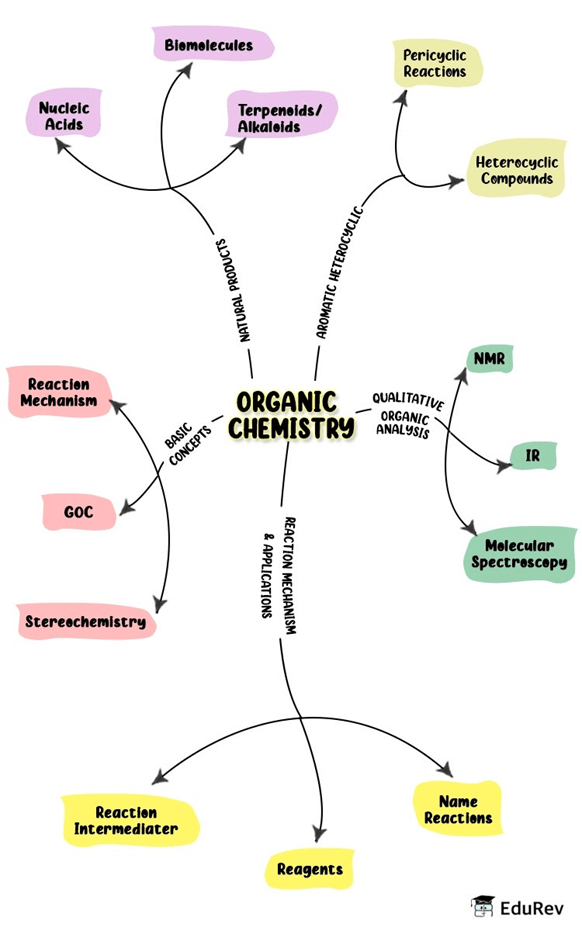
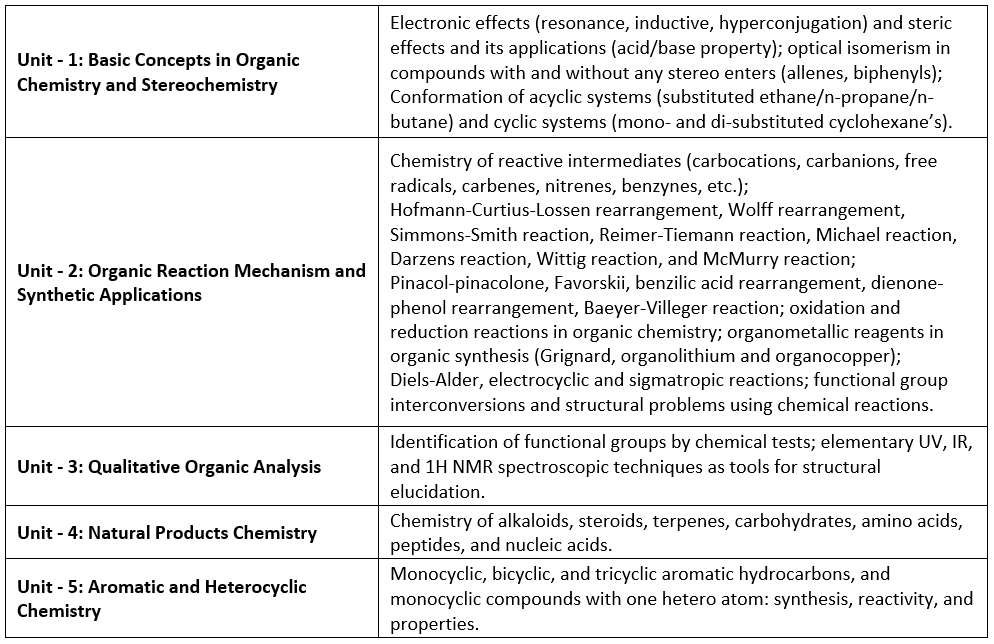
IIT JAM Organic Chemistry Syllabus
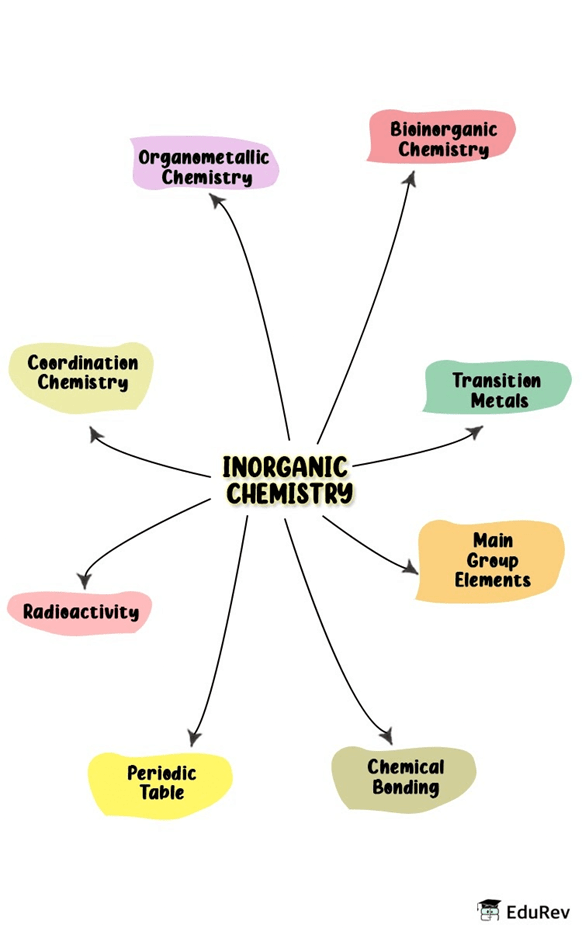
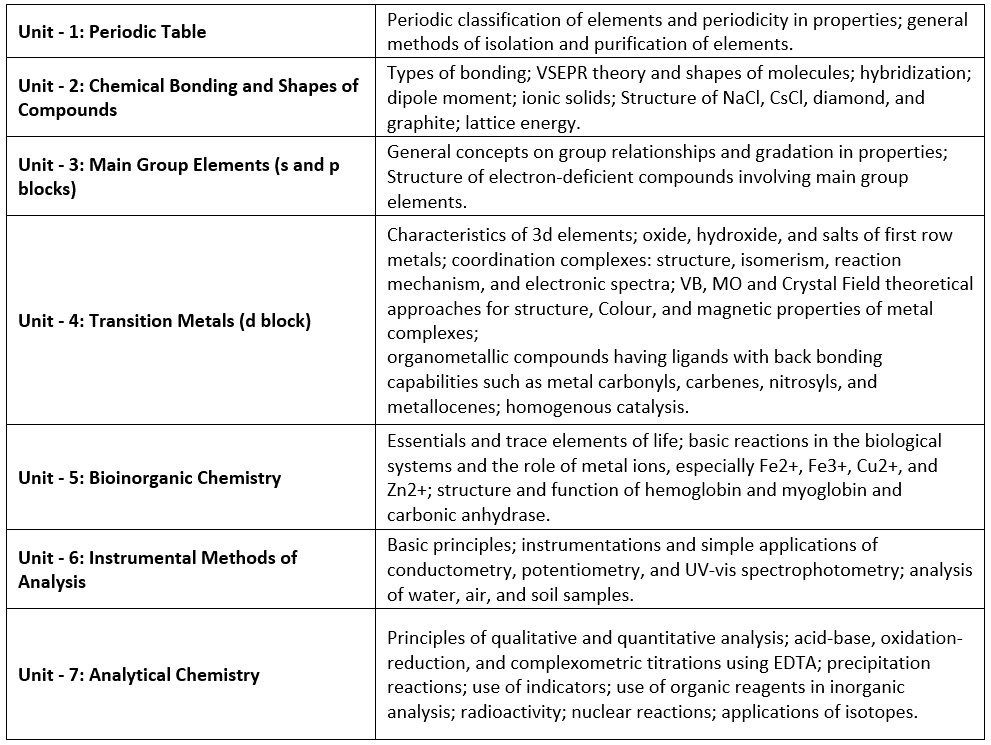
IIT JAM Syllabus for Inorganic Chemistry
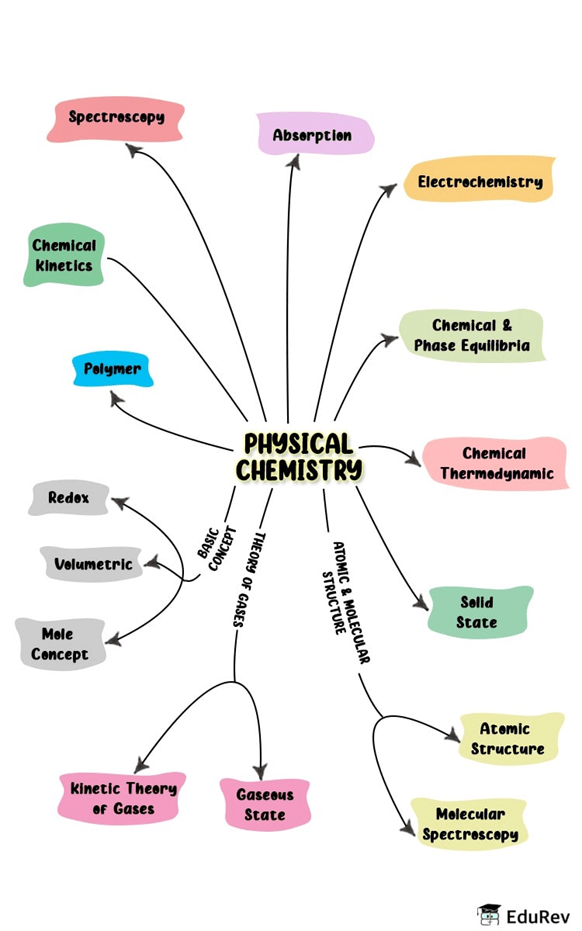
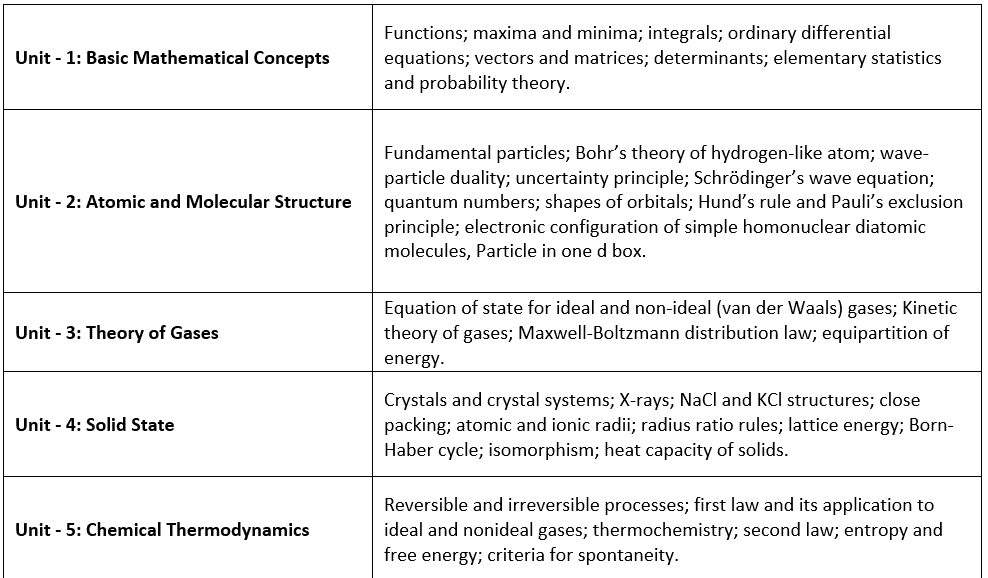
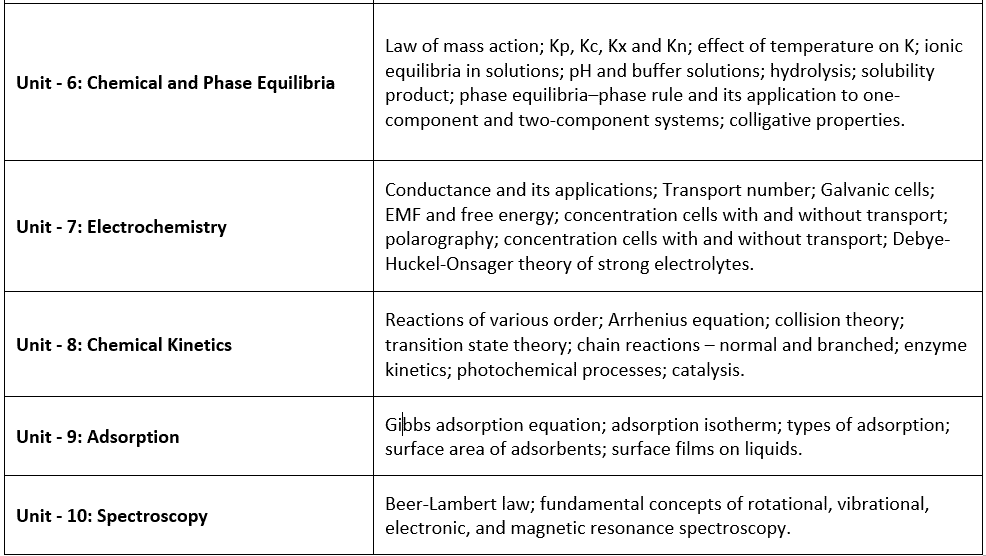
IIT JAM Syllabus for Physical Chemistry
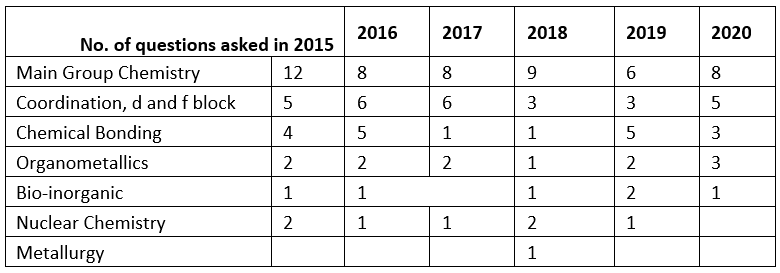
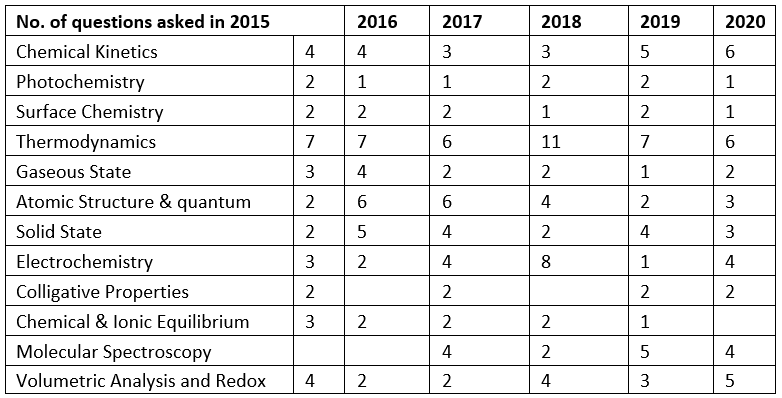
IIT JAM Topic Wise Weightage
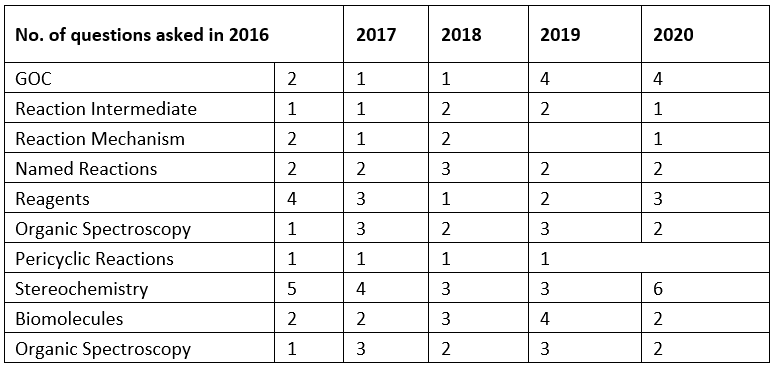
Going through the trends of previous six-year exam papers. The topic-wise weightage is-
Organic Chemistry
Inorganic Chemistry
Physical Chemistry
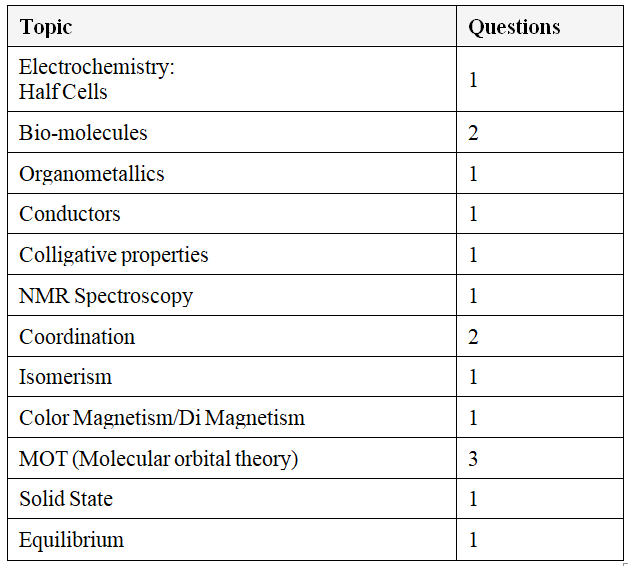
Detailed Analysis of 2023 IIT JAM Chemistry Exam:
- According to students, in Physical Chemistry calculations were a bit lengthy. But the paper could be completed on time.
- Questions from Inorganic Chemistry were less.
- Questions were observed from the Previous Year's Question Papers.
- Questions were similar to 2014, and 2018 year question papers.
- MCQ's were a bit tough and were mostly from Organic Chemistry. The student found the organic chemistry questions difficult to comprehend.
- NAT questions were from Physcial Chemistry
- MSQs were from Inorganic Chemistry
IIT JAM Exam Pattern
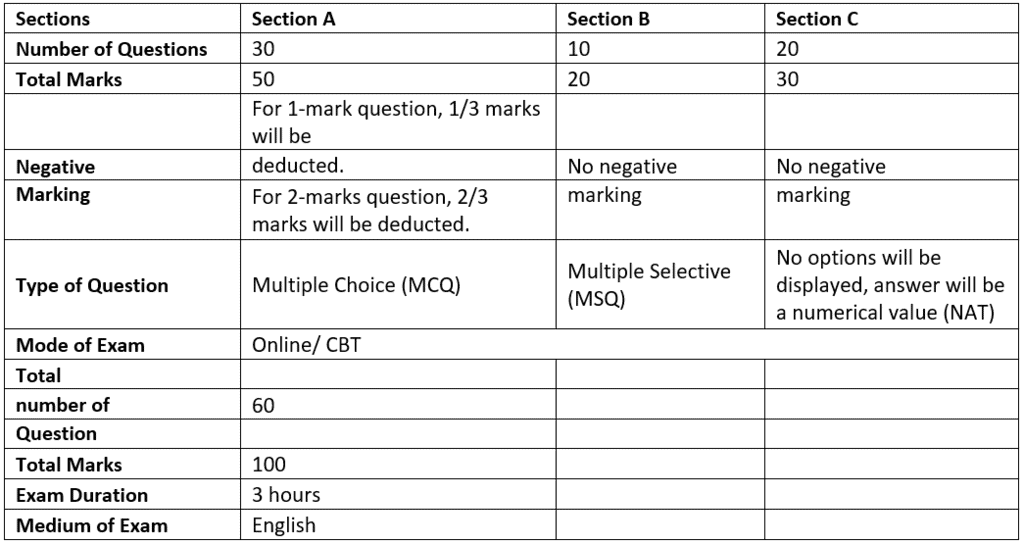
Here is the detailed IIT JAM 2024 paper pattern with the number of questions, total marks, negative marking, type of questions, etc for all 3 sections.
JAM Exam Paper of all 7 subjects will consist of three types of questions:
- Multiple Choice Questions (MCQ): As per the IIT JAM Exam Pattern 2024, each MCQ type question will have four choices out of which only one choice will be the correct answer.
- Multiple Select Questions (MSQ): Based on Paper Pattern guidelines, each MSQ type question is similar to MCQ. The only difference is, there may be one or more than one correct choice out of the four given choices. The candidate will get full marks only if he/she selects all the correct options.
- Numerical Answer Type (NAT) Questions: For each NAT type question, the answer is a real number that needs to be entered using the numerical virtual keypad. No choices will be given for these questions.
There will be a total of 60 questions carrying 100 marks. The entire paper will be divided into three sections A, B, and C. All sections are compulsory. Questions in each section are of different types as given below:
- Section A contains a total of 30 MCQs out of which 10 questions carry 1 mark each and 20 questions carry 2 marks each.
- Section B contains a total of 10 MCQs carrying two marks each.
- Section C contains a total of 20 NAT Questions out of which 10 questions carry 1 mark each and 10 questions carry 2 marks each.
IIT JAM 2024 Marking Pattern & Negative Marking
The candidates can check the marking scheme below -
In all sections, questions not attempted will result in zero marks.
In Section-A (MCQ), incorrect answers will result in negative marks:-
- For all 1 mark questions, 1/3 marks will be deducted for each wrong answer.
- For all 2 marks questions, 2/3 marks will be deducted for each wrong answer.
- For Section- B (MSQ) and Section-C (NAT), there is no negative marking.
IIT JAM Exam Pattern Guidelines
After knowing IIT JAM 2024 Paper Pattern and marking scheme, you must know about the following points.
- You can only use the online virtual calculator in the exam, no calculator from outside will be allowed.
- You can select the answers for MCQs and MCQs using the mouse only, the keyboard will be disabled in the exam.
- A scribble pad will be provided for rough work that has to be returned at the end of the exam.
- At the end of 3 hours, the computer will automatically end the exam.
The candidate must follow the guidelines provided by the IIT JAM 2024 authorities otherwise it can be counted in unfair means. It may lead to the cancellation of candidature from JAM Exam at any other stage of the exam. The candidate may be disqualified as well to appear further in IIT JAM.
Frequently Asked Questions (FAQs) Related to IIT JAM (Chemistry) Syllabus and Weightage
1. What is the syllabus for IIT JAM (Chemistry) and what is the subject-wise weightage?
Ans. The syllabus for IIT JAM (Chemistry) includes Physical Chemistry, Organic Chemistry, and Inorganic Chemistry. The subject-wise weightage for Physical Chemistry is 40%, for Organic Chemistry is 35%, and for Inorganic Chemistry is 25%.
2. How many questions are there in the IIT JAM (Chemistry) exam and what is the duration of the exam?
Ans. The IIT JAM (Chemistry) exam consists of 60 questions. The exam is for a duration of 3 hours.
3. Is there negative marking in the IIT JAM (Chemistry) exam?
Ans. Yes, there is negative marking in the IIT JAM (Chemistry) exam. For Section A (MCQ), 1/3 marks will be deducted for each wrong answer of 1 mark question and 2/3 marks will be deducted for each wrong answer of 2 marks question. In Section B (MSQ), there is no negative marking.
4. Can I appear for IIT JAM (Chemistry) exam after completing my graduation in any stream?
Ans. No, you are eligible to appear for the IIT JAM (Chemistry) exam only if you have completed a Bachelor's degree in Chemistry or a related field like Biochemistry, Biotechnology, or Physics.
5. What is the mode of examination for IIT JAM (Chemistry)?
Ans. The mode of examination for IIT JAM (Chemistry) is online computer-based.
FAQs on Detailed Syllabus & Subject-wise Weightage - IIT JAM (Chemistry)
| 1. What topics are included in IIT JAM Chemistry syllabus and how much weightage does each section carry? |  |
| 2. Which chapters in Physical Chemistry have the highest weightage in IIT JAM exams? | |
| 3. How should I prepare Organic Chemistry topics to score maximum marks in IIT JAM? | |
| 4. What is the importance of Inorganic Chemistry in IIT JAM and which subtopics should I prioritise? | |
| 5. How can I use the detailed syllabus weightage to create an effective study plan for IIT JAM Chemistry? | |